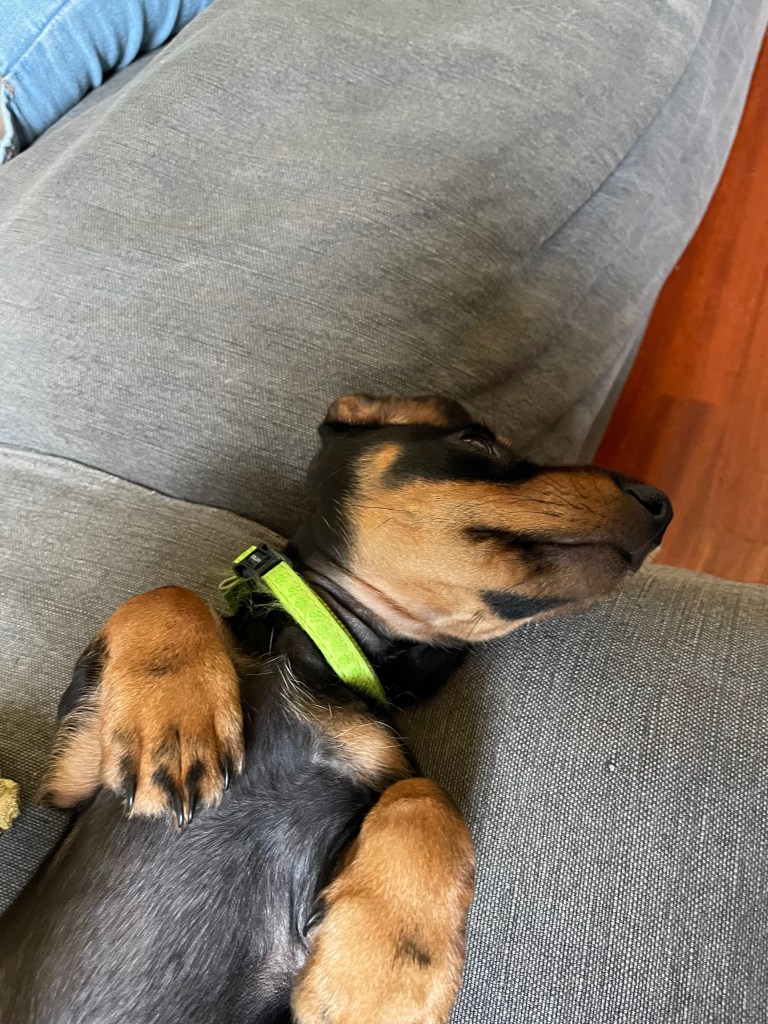
Meet Niko. He’s a three-month old dachshund and the latest addition to our family. He likes to chew, and he likes to chew. But most of all, he loves Georgia, our friend Doug’s dog. When Georgia is around, Niko becomes a good little student, following her around as well as doing dachshund-like things like charging her in attempt to make her play with him. It usually works. There’s another benefit when Georgia is around; Niko doesn’t wander off our yard, which is at the crest of a hill and beyond that it’s straight down into a gulley.

While we like to think that we, the people who brought him home, feed him, and indulge most of his whims, have a place in Niko’s heart, he is also very women-friendly. While he has his puppy holy-terror spells at home, when we take him on errands, he becomes the perfect little gentlepup. With his good looks and puppy size, he’s a natural (sorry about this–>) babe magnet. It’s true; I could safely say that most if not all of the people who react to his cuteness are women. And he likes them back, licking their hands and acting like the sleepy little puppy that he isn’t most of the time.
Okay, I exaggerate. A little. As I write this sentence, he’s tugging at my shoelace.

We haven’t had a puppy around in more than a decade. But this house needed a dog. We’d seen a listing for him online from a family in the neighboring region of Lazio (near Rome). It was an almost two-hour drive but worth it. We met a young woman in her small town, and she was actually holding sleepy little Niko. After talking about what he eats and looking at his libretto—his medical record of vaccinations, etc.—we were off, back to Umbria. The Spartan Woman hung out with him in the back seat and he slept most of the way.

Getting a dog was a good repeat lesson in Italian bureaucracy, as though we needed a refresher course. Italy, and Europe in general, have a thing for knowing how many we are and where we live. And it’s not only for humans. Dogs, too, are registered with their local comune, or municipality. Little Niko has a microchip imbedded in his shoulder that contains his info–birthdate, how many born in his litter, place of birth, and owner’s vital data. Right now he’s registered as C’s dog. We had to fill out a change in ownership form, and that form is being sent from his birthplace to our town’s healthcare center so that his chip can be updated to reflect his being part of our family. Then he can get, yes, a passport, which will permit him to travel with us.
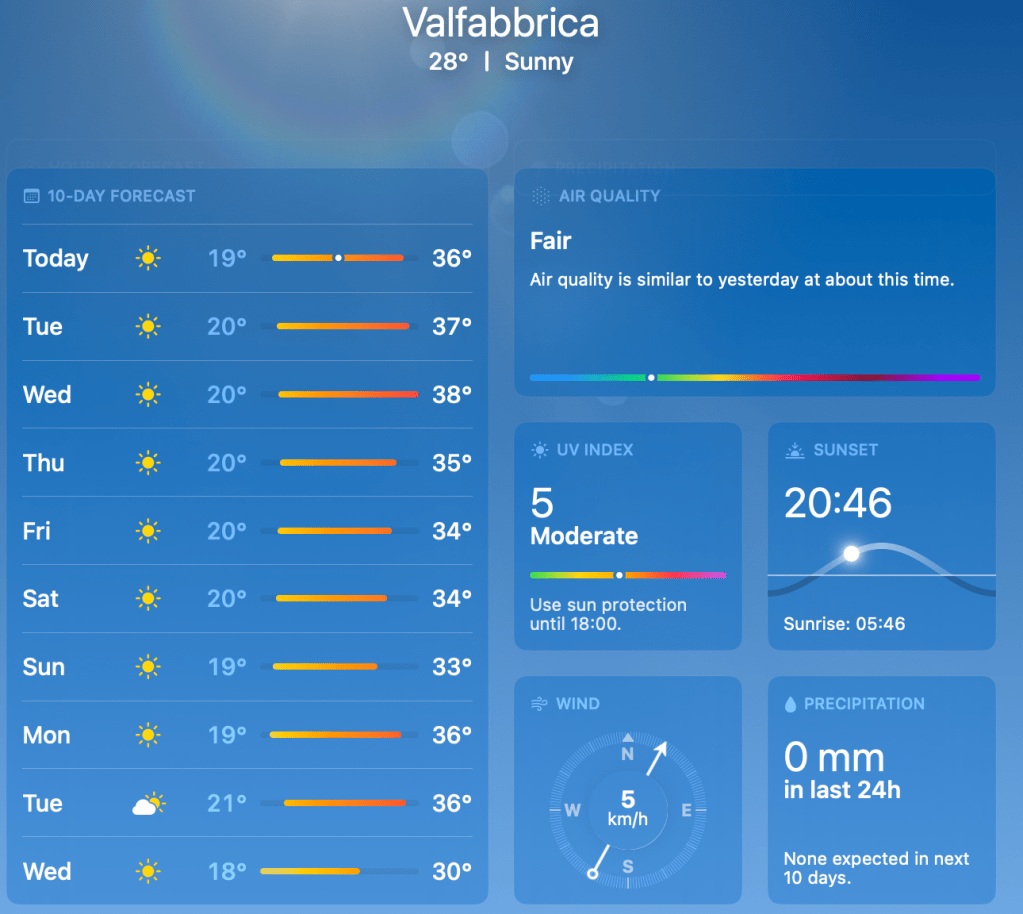
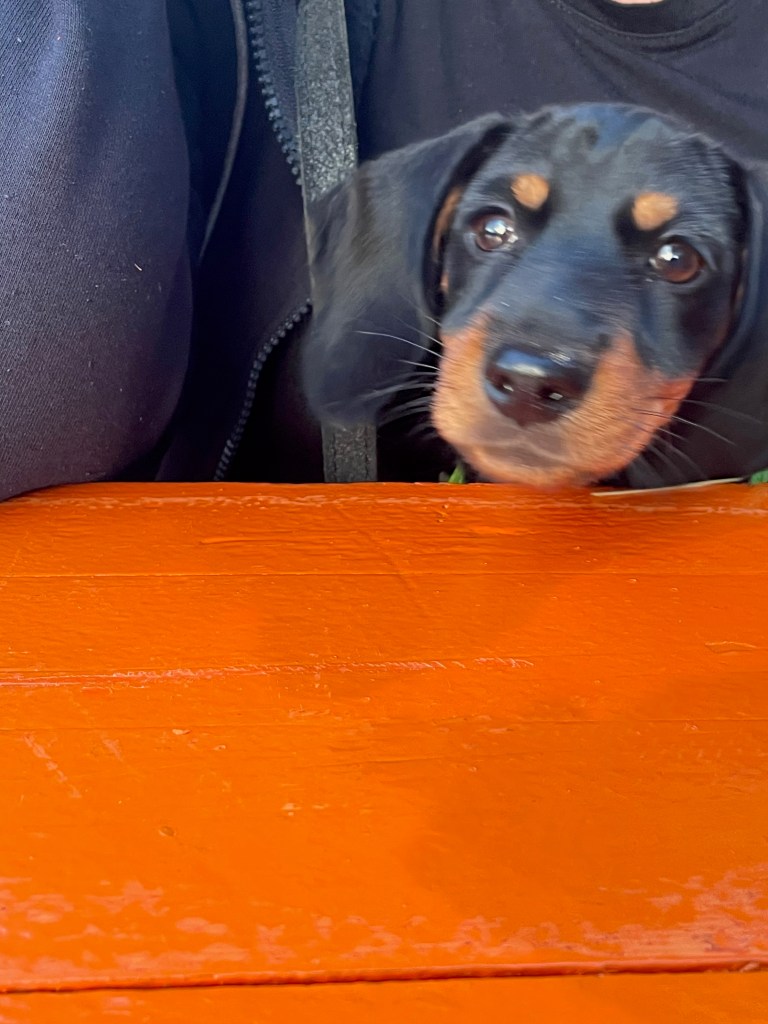
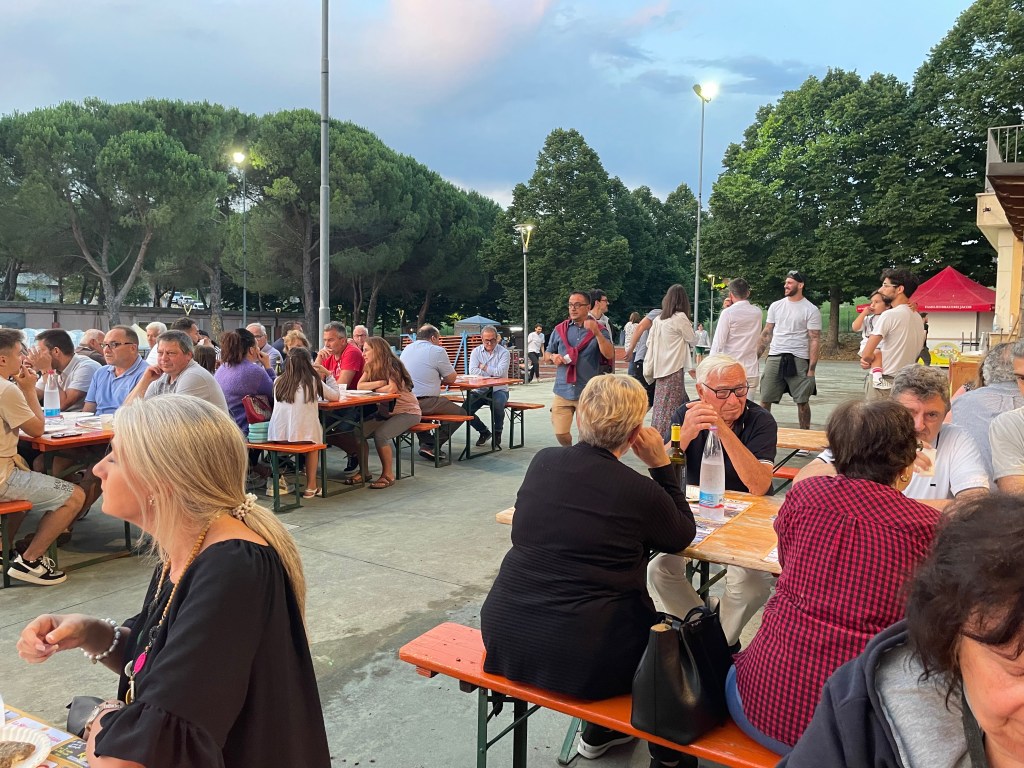
And that’s one of the good things about having a dog here. Niko has a lot more freedom here than most of his America cousins. He can come with us almost everywhere. Naturally, we take him to the pet store. He likes to choose his chew toys. But he’s also gone to the supermarket and to bars. He’s spent aperitivo time people-watching and eating prosciutto. He’s only been with us a few weeks and with the heatwave here, we haven’t gone out much. But otherwise, we’ve seen dogs on trains, in bookstores and museums, and even in pretty ritzy restaurants on a chilly winter day, happily resting under the table. We plan to take him on road trips, and the continent’s pet-friendly practices will make it pretty easy to do so.
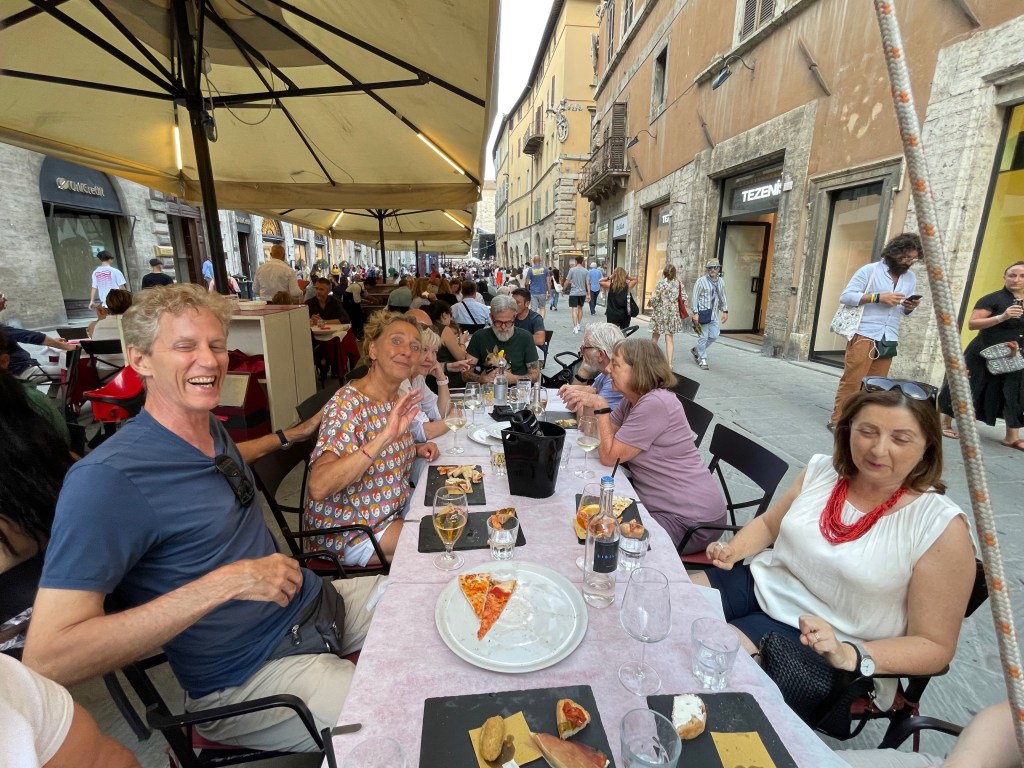
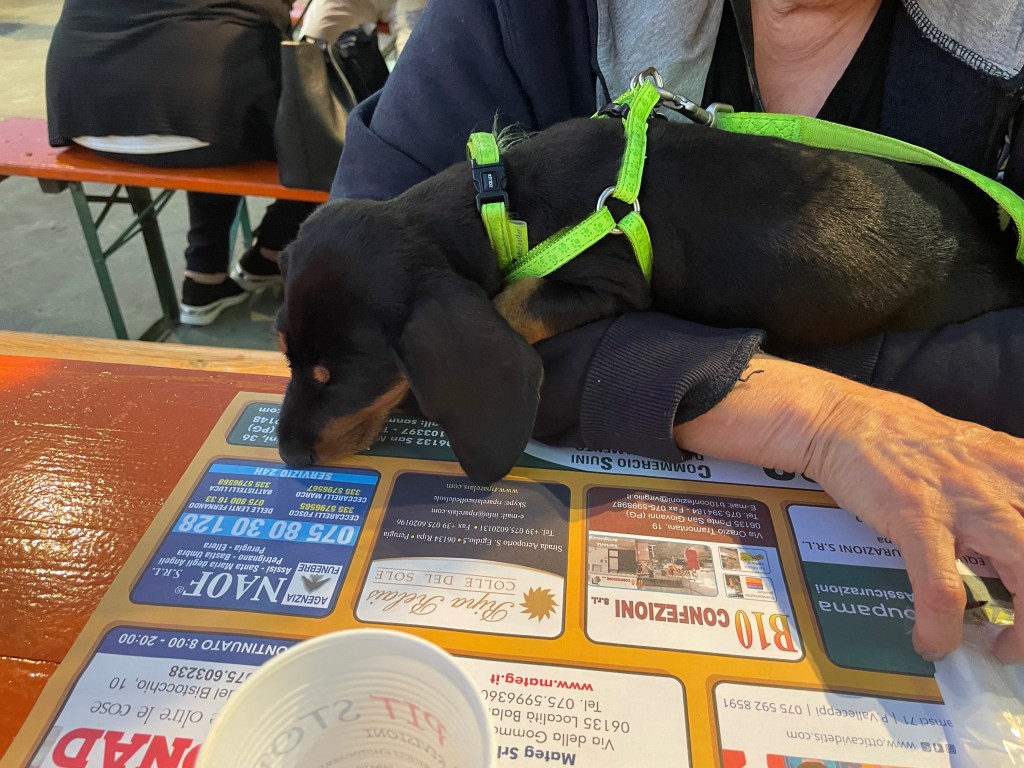
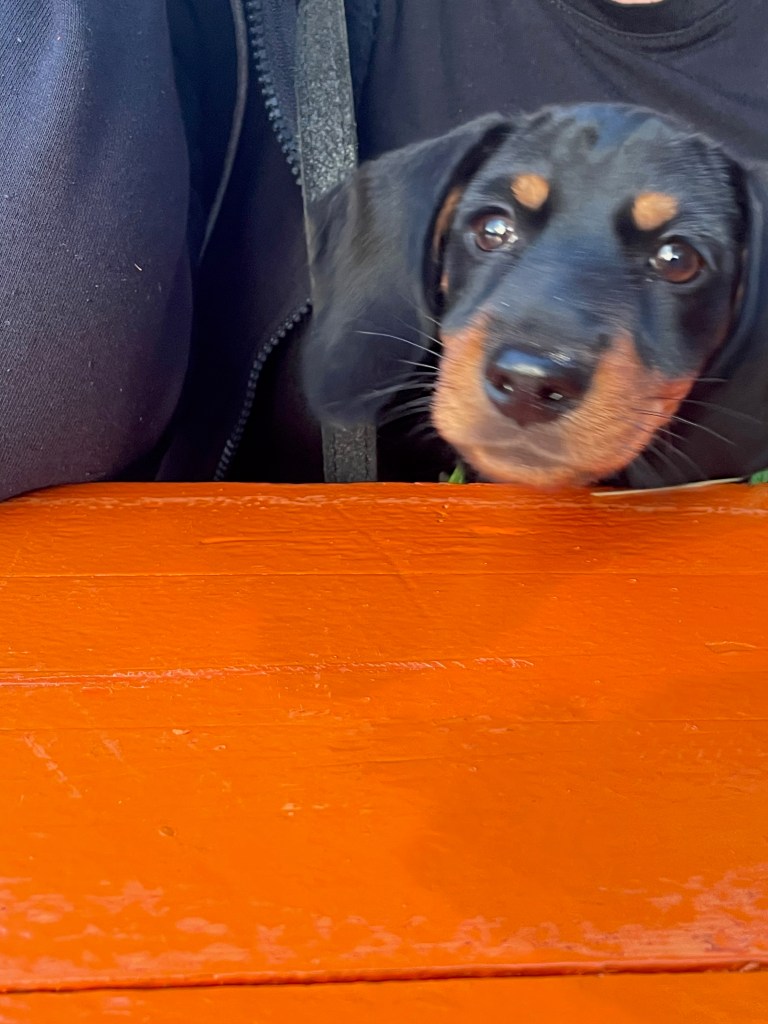
Niko gets around. When he’s not examining menus or being admired, he likes to hide under the table.
We live in a small town, so maybe our experience is different from others. Niko needs a series of vaccines, so we looked up the town’s vet. We always passed a sign pointing to an “ambulatorio veterinario,” so it was easy to find him. The vet, a man with a mellow, kind demeanor, just smiled at Niko and murmured flattering things while giving him a deworming pill. I’m so used to going to a vet’s office, checking in, giving billing info, etc., that the informality of our visit was almost a shock. When I asked the doc what I owed him, he said no charge, first visits are free.
IN A LOT OF WAYS, dog ownership pretty much sums up life here in our little town and region. Official encounters can be stiff and encumbered by rules and procedures. Yet everyday life is punctuated by small kindnesses and a gentleness that’s hard to explain if you haven’t experienced it. Some years ago I subscribed to Quora, and my feed lately is dominated by Americans (real or bots, I can’t say) comparing their great freedoms to the horrors experienced by us in Europe. Like universal healthcare.

A lot of the questions are silly. But they make me think about how people in my country of birth live and perceive the rest of the world, if they do at all. When I go back to New York for a visit, it seems very stiff and cold, and I start paying attention to people’s status—not to mention that it’s ridiculously expensive. Driving around the U.S. is weird, you have to be on guard for cops monitoring your speed and crazed pickup drivers treating their trucks as though they were Porsches. Being pulled over can be a life-threatening situation. When it comes to driving here in Italy, the onus of staying under the speed limit is on the driver; speed cameras are everywhere. Go too fast and a ticket arrives in the mail.
Here in heavily rural Umbria, there’s more of a we’re in this together feeling that I find appealing. In general, too, there’s a looser vibe. And that’s pretty recent. Italians used to be more rules-bound and have more hangups about, for example, what to wear, and when. One of our recent guests from across the pond wore jeans on a hot day because he read that Italians never wear shorts outside of beach towns. Wrong! We’re adapting to climate change here and shorts are everywhere.
Oops. I have to run after the dog. He’s got my shoe.





 (Not) A Year (Not) in tuscany