A stranger at home for the holidays

I’m still finding it a little astonishing that I took my first vacation in my native New York. We’ve been buying round trip flights from here for awhile, ever since the airline Alitalia folded its wings. But then we stayed back in NY for a few months. This time it was for a scant few weeks and we definitely were visitors this time, staying at a relative’s home and borrowing a car we’d given up. 

One of the things that happens during the holiday season (and pre-trip) is that you have to eliminate items from your to-do list. We started out with an ambitious to-do-before departure list and had to cull as we went along. I’ll get into that later, but the process led to our spending more time getting stuff done in New York. Unpleasant but necessary tasks, that is. 

With all that in mind, I’ve been trying to figure out how to organize this so it’s not just a rant about reverse cultural shock. There’s too much of that floating around online. (Hey, I’ve had feet planted in two places for so long I’m immune.) The Spartan Woman suggested the following approach:

THE GOOD

REMEMBER WHEN PASSPORT agents were surly and acted as though you were a criminal for daring to leave the country? That’s changed, at least in our experience. Maybe it’s down to our being old? I don’t know, but suddenly ICE is hiring friendly people. Or, just maybe, we’re of a certain age now and don’t look like the kind of people US immigration wants to keep out.

In any event, it was a good way to ease into the U.S. Better still was seeing our grownup kids again. Daughter no. 1 gave us a new addition to the family, a bouncing (literally) baby boy. No pictures, sorry. We’re keeping the child out of social media, at least for now. I may be a proud nonno (grandpa), but The Boy is objectively really good looking, and appears to have inherited some of his mom’s impishness. You’ll have to take my biased word for it. And though we moved, it was good to see some neighbors, and comical to see others, like the wild turkeys that have taken over the island.

One thing we miss when we’re in our Umbrian mountain retreat is multiethnic food delivery. Even on Staten Island, which is often depicted as a bigoted white people hellscape. The truth is more subtle than that, and the island’s North Shore is a paradise of ethnic restaurants. In our short time there, we ordered from Chinese, Vietnamese, Turkish, Thai, and Mexican places. We didn’t have time to have the Sri Lankan food we love.

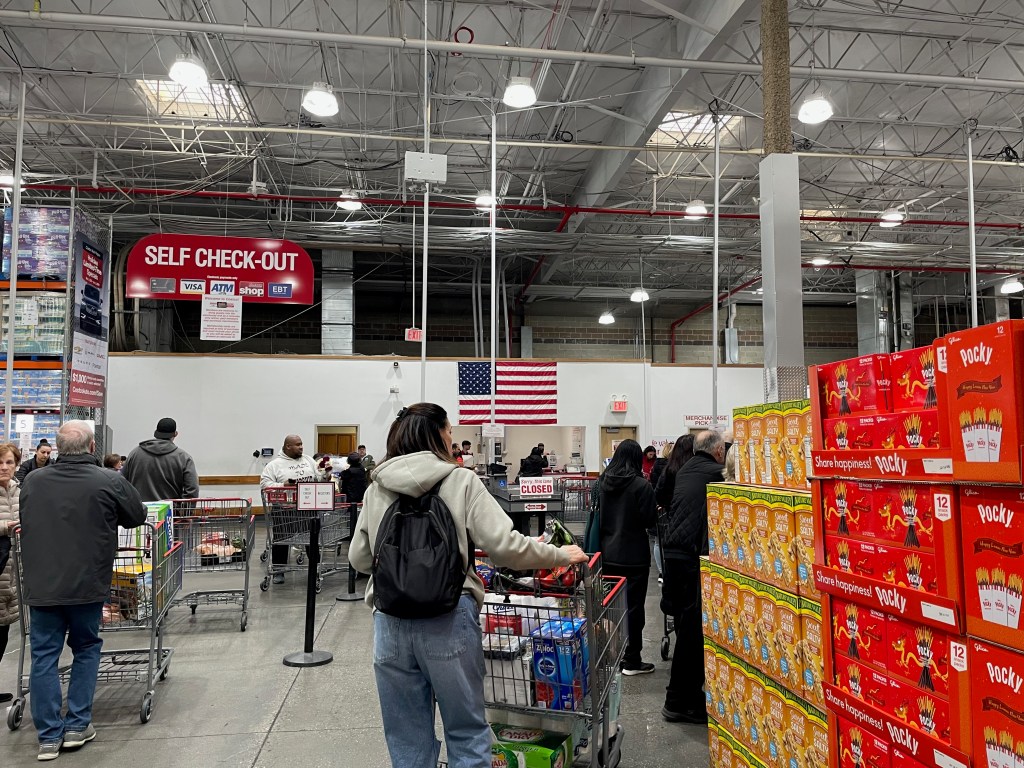
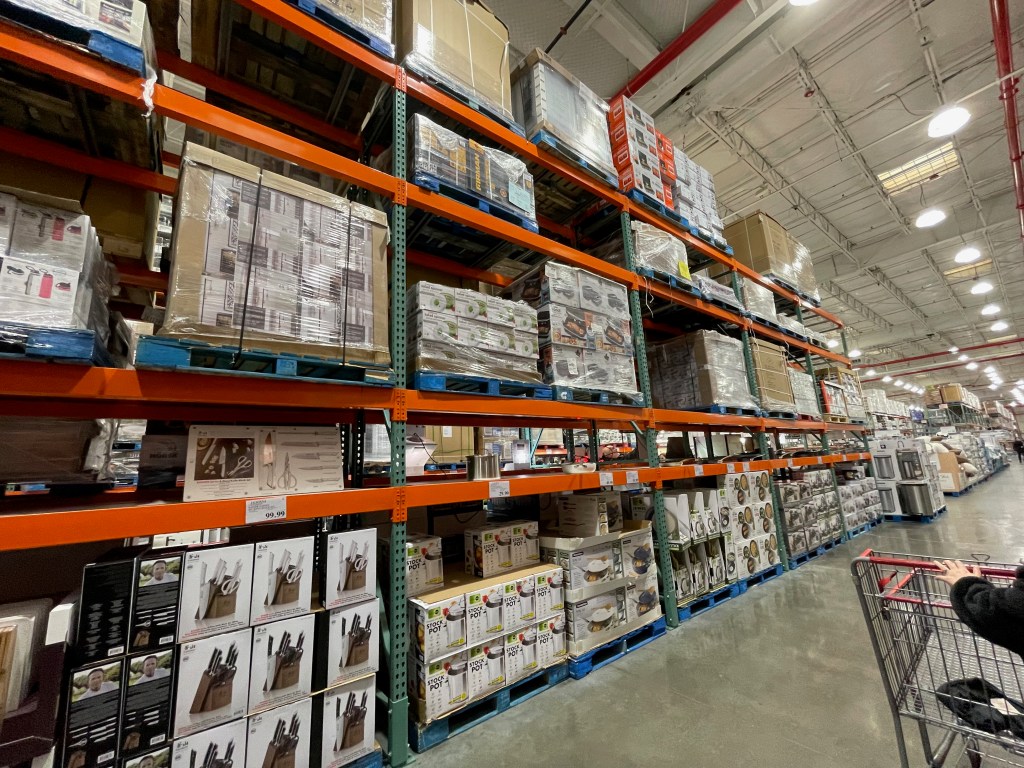
While we’re on the subject of crazy choice, Costco? I know, I know, where have I been? I finally was initiated into the cult by Daughter No. 1, just for one visit. I was overwhelmed. Not that we bought that much—we had specific goals. It wasn’t so much the crazy amount of merch for sale, even though I saw everything from espresso machines to solar panels to yoga pants to flats of every household item imaginable. But wow, in the space of less than hour I heard at least half a dozen non-English languages. That the company is fairly humane in its personnel practices compared to other giants of commerce added to my not hating it. Buon lavoro, Costco. 
I did notice one other thing immediately. As soon as we cleared customs and were in a taxi headed to our kid’s home, I pulled out my phone and wow, this 5G thing. I’d forgotten how fast it is, at least the T-Mobile version of it, and later tested it to be, in some places, a 600 mb/s download. That’s fast. And our kid has, like we did, 1 gigabyte/second fiber. Fast fiber internet has made it to Italy in general, and our town of Valfabbrica specifically. But not in the rural areas. We use a local provider here, which gives us download speeds of around 30 mb/s, which isn’t bad considering it’s wireless. But a guy can get spoiled. Still, I wouldn’t trade my life for fast downloads. Yet.

THE BAD

OH BOY, THIS. Before we left for New York, we’d wanted to get a Covid booster shot, since the latest one covers the latest known variants. Here in Umbria, you go onto the public health website and look for a location and convenient time and hit the send button and show up for the shot. But we ran out of time and figured we’d get the shot at our former local pharmacy in New York.Unfortunately, Nick up the street wasn’t handling the vaccine. So we had to look at the local megaeverythingwithpharmacy places like CVS and Walgreen.

The closest CVS told us they were out of the stuff and maybe were getting some in the future. But Walgreen’s website said make that appointment. I went through the online scheduler and completed the online medical history/consent forms for the two of us.

The day arrives, we drive a couple of miles. There’s a woman ahead of us in the vaccine line. She’s filling out the history form. “We did ours online,” I said. “I did too but they want me to fill it out here again.” The staff behind the counter is obviously overwhelmed, answering phone calls, taking in prescriptions and giving out meds to other customers. We wait and wait and wait. The nice woman in front of us was finally frustrated and disappears. They call her name, finally, to get her shot, and no one answers.

Finally, the harried clerk asks us to fill out the damn history/consent form. “I did it online,” I respond. “We’re asking people to do it here,” she says without giving me a reason. I refuse. “Sorry, I did it online and I’m not going to fill it out again. Look in your system.” There’s a standoff. Finally the overworked pharmacist tells her to dig it out of the computer. More waiting–at this point we’d been there an hour past our appointment time. We weren’t giving up. At last, the pharmacist come out and administers the shot: 75 minutes after our appointment time. We note that they have lots of people restocking the shelves with stuff like Doritos and deodorant, while the pharmacy workers look like hunted animals. American free enterprise at work.

As for this little pharmacy item (left), really?

 Finally we drive back. The main drag through that part of the island is a two lane road that was built in the 1920s and ’30s, with small shops and converted houses hosting insurance agencies and the like lining the street. But something’s out of whack. Big hulking SUVs and pickup trucks like Ford F150s dominate. It’s like the hippo dance in the Disney movie Fantasia. If the giants aren’t being driven like drunken Romans are behind the wheel, they’re creeping along because I’m sure their drivers can’t see out of them. Why do Americans need a tank to go to the drug store?

Another time I stop at a traffic light to make a left turn. One of the misplace macho drivers doesn’t think I’m moving fast enough (I am not a slow driver) and charges over on the right and without caring makes the left, causing oncoming drivers to hit their brakes. This happens over and over. All of a sudden driving in Italy seems sane.

THE MEH

LET’S TALK ABOUT prices, okay people? The U.S., once you’re been away, just seems like a giant machine designed to drain its people of their money. For instance, we buy Royal Canin dog food for our little prince Niko. It’s produced in plants around the world, but it’s a French subsidiary of the giant Mars Inc. In the U.S., a little over one kilo costs $21. The same food, but almost double the quantity, costs €21 in Italy, or about $23. The common excuse, er, rationalization is that wages are higher in the U.S. and so are fixed costs. But double? If you know, tell me why.
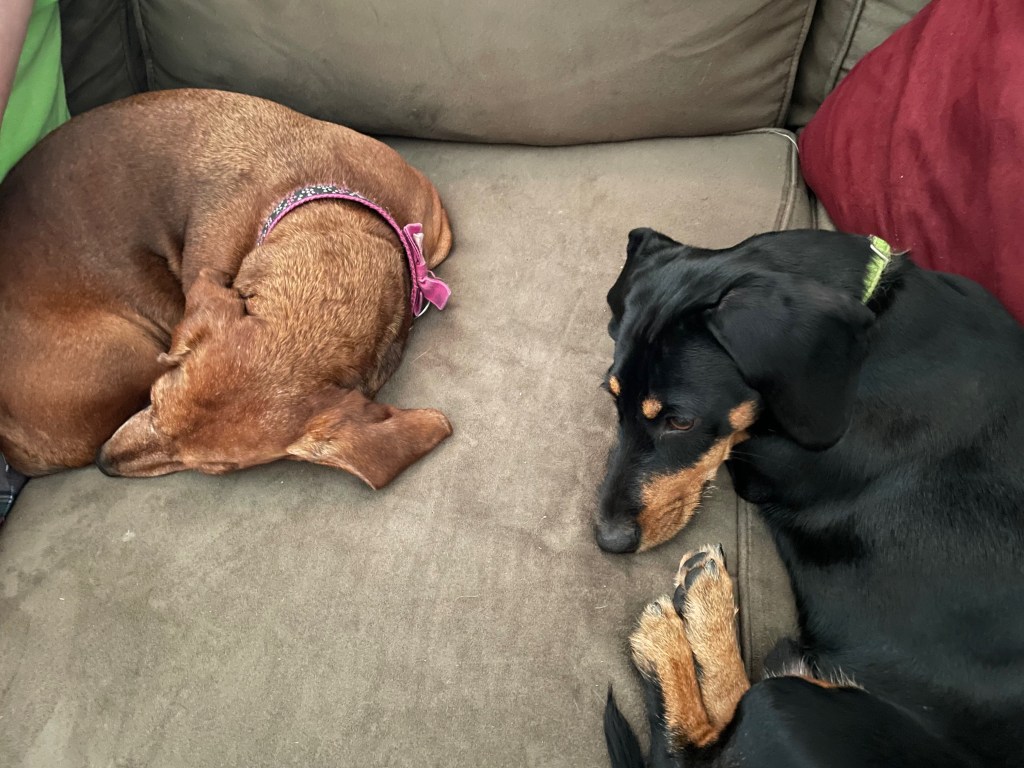
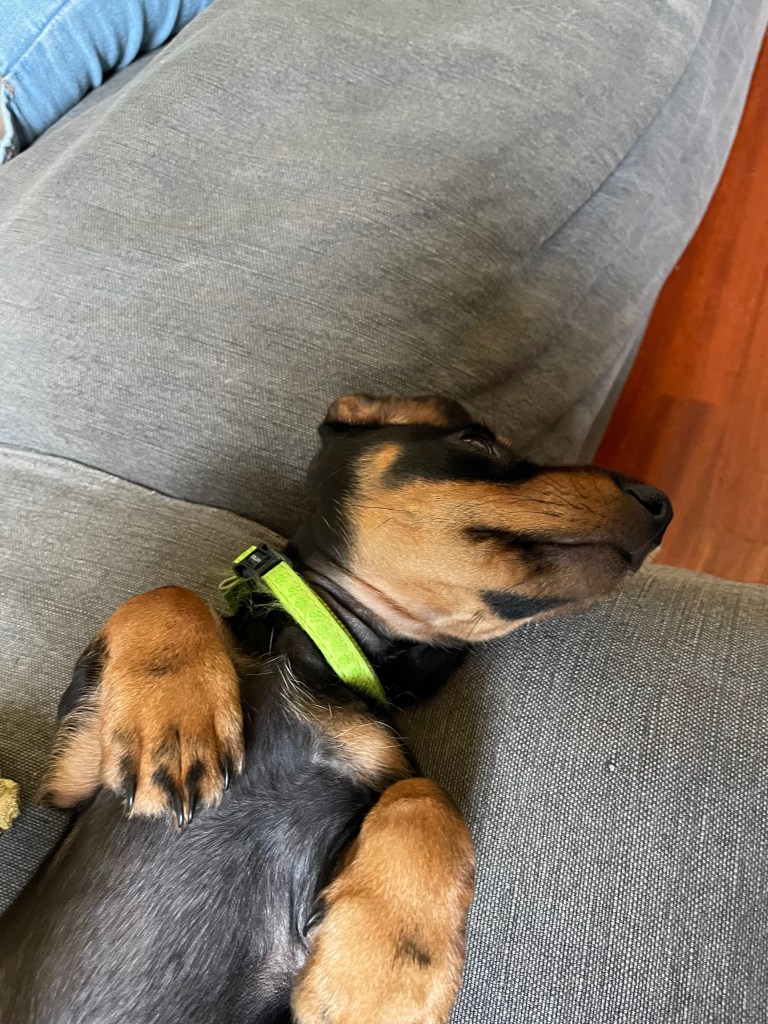
Gratuitous puppy picture: It costs twice as much to keep Lola from the U.S. (left) in Royal Canin than it does our little Niko from the suburbs of Rome.

While I’m on the subject of allocating funds….I get it. New York is constantly being rebuilt. But sorry, what’s there can be so crappy. I traipsed about the Financial District for the best part of a day to take care of a bureaucratic matter. An Italian matter. (Don’t ask.) I used to work in the neighborhood and didn’t really notice before, but the streets are in crappy condition. Sidewalks are broken up, there are shoddy barricades everywhere and in general the place doesn’t look like one of the financial and media capitals of the world. I guess I’d taken the crappiness for granted before.

/rantover. Back to Italy after this.
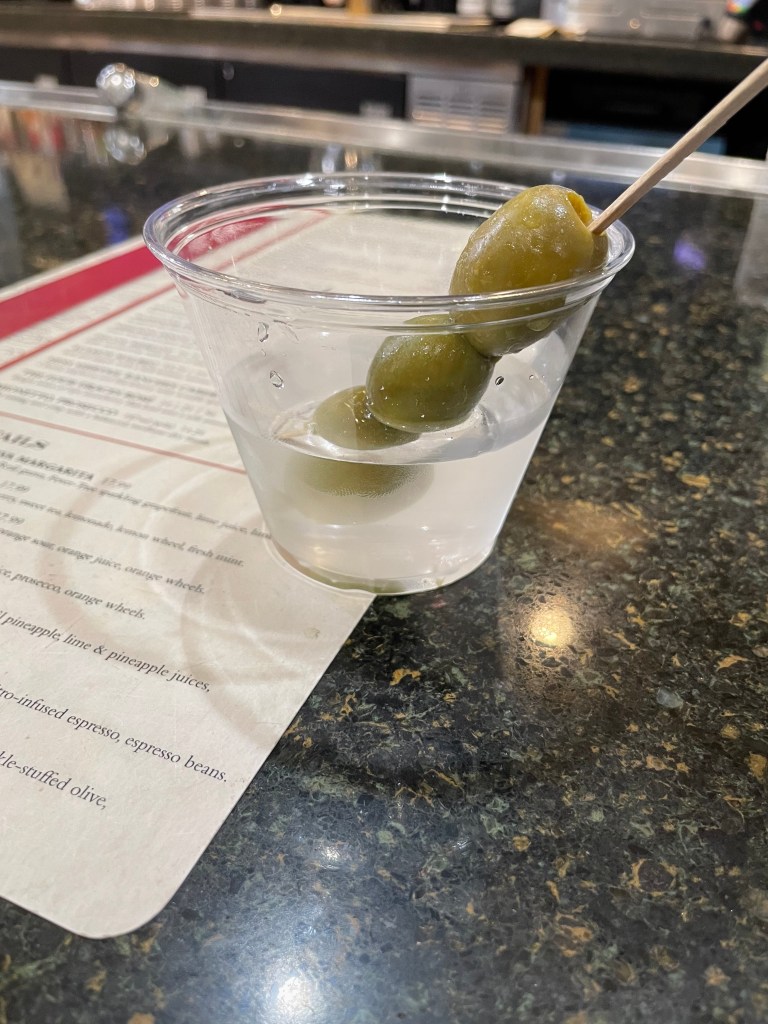
$18 for a martini served in a plastic cup?

Which brings me to the $18 plastic cup martini. We were heading back to Italy after three weeks over the holidays visiting family, getting reacquainted with the beautiful angel of a grandson, and hosting a Christmas Day bash of 20+ family and friends. With e-tickets for a business class flight on our phones, we went to Newark Liberty International Airport for a direct flight to Milan.
We flew La Compagnie, a French-based boutique airline that sells business-class only flights on narrow body A320Neo jets. Check-in at Newark was quick and easy, just as it was in Milan a few weeks prior. They even let me carry my trusty old Gretsch electric guitar on board. Our privileged status (hey, I rarely did this so I’m gonna milk it for all it’s worth) meant we didn’t have to wait in the security lines with the hoi polloi. But the Port Authority, which runs New York’s airports, had closed the lounge La Compagnie uses, so we got a $60 voucher for food and drink in the rather grotty Terminal B.

Plastic, paid with plastic

Ok, the martini. I had started drinking them before boarding long-haul flights a long time ago. There’s nothing like a little almost-pure alcohol to ease the anxiety of waiting to board a flight, not to mention softening the reality of some of those flights. So I went up to a bar and ordered my drink. The bartender did his thing and then…and then…poured it into a plastic cup. Really. Beer drinkers got glasses. Wine drinkers got glasses. Why the plastic? “We started doing this with Covid.” Are martini drinkers more prone to viral infections? Oh, and it cost $18 plus tax and tip.

C’mon now, Newark Airport. I’ve had €4 Aperol spritzes served in nice glassware in our little village, with a side of fried sage leaves, or peanuts and chips. And for $18 in one of the world’s capitals I got plastic and a charge slip asking for a tip. I didn’t use the voucher because I thought we might get a snack, since our flight was at 22:00—10 p.m. in the U.S. That Covid excuse doesn’t work. I’m told that dishwashers use very hot water and a hot drying cycle that gets rid of nasty bugs.

I’m happy to report that the $18 plastic martini was the only rough spot in a stress-free Atlantic crossing. If you’re going where La Compagnie goes (Paris, Milan, and Nice in the summer) and can afford it, go for it. (We got a promo fare, which was less than premium economy on other airlines.) The experience is nicely cosseting. Its biz class might be slightly less lavish when it comes to meals and general cushiness than on, say, Emirates. But because there are only 76 seats, you avoid a lot of the admittedly First World pain of air travel. No long lines at the gate. No yelling at passengers who dare to try to board outside of their class. The plane loads in about five minutes; deplaning is just as quick.

It’s good for dog and cat lovers, too. La Compagnie’s weight limit for having a pet in the cabin is 15 kg, or 33 pounds. Our pup Niko is only about 7 kilos, maybe edging 8 with his carrying case. It meant that airline’s staff didn’t bat an eye when we showed up at the check-in counter with him. They did check his paperwork; as a dog citizen of the European Union, Niko’s got a pet passport detailing his vaccinations, plus we had veterinarian letters certifying to his good health. But getting him checked in was a smooth deal, too.

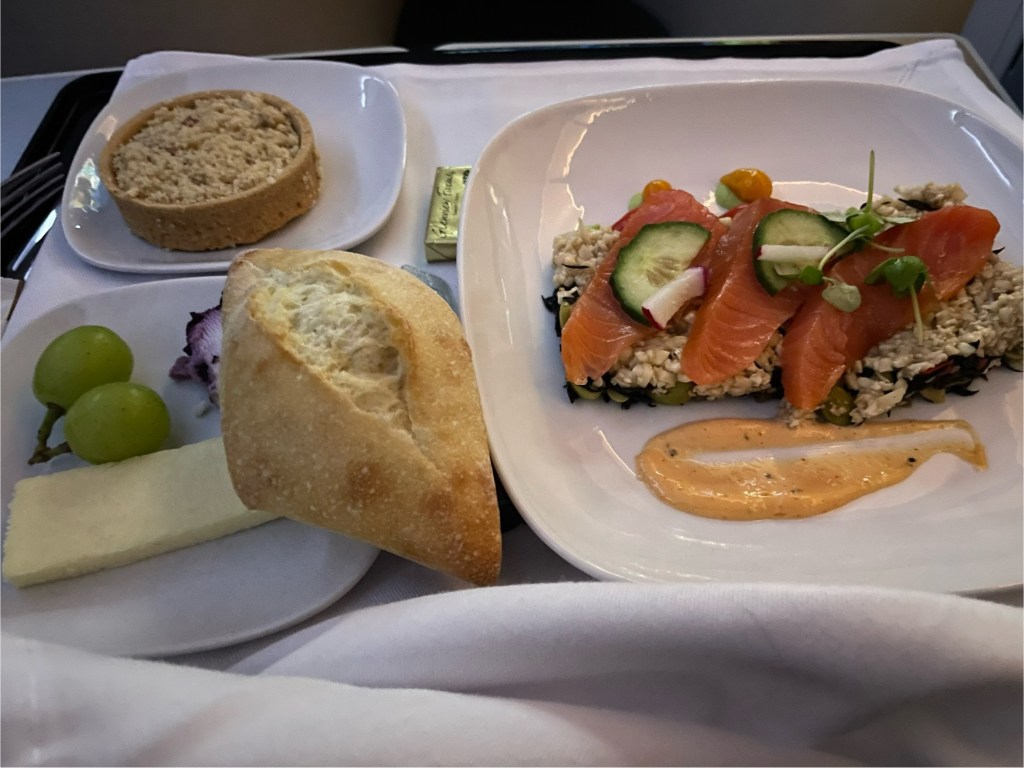
Aboard the Airbus you get the flat seat and the Champagne welcome that you’d expect of business class. We took off at around 10 pm, so the first meal was pretty light as far as biz class meals go. What’s weird in this era of micro-focused rewards and class distinctions is the equality of it all: We were all privileged, instead of being treated like crap. It made for a very low-key relaxing flight and reminded me of those videos of the so-called glory days of flying, when chefs rolled a cart laden with prime rib up the aisle and carved each piece individually (video below; photos are of our light dinner aboard La Compagnie).

The rest of the trip home was long and uneventful. We decided that landing and then driving five hours to get home wouldn’t be wise, so we found our car in Malpensa Airport’s long-term parking lot and drove about five minutes to a nearby hotel. Our intuition was correct: The Spartan Woman, the pup, and I fell asleep for an afternoon long nap after checking in. We woke up in time to find a place for dinner. And the next day we braved the straight line Milan-Bologna truck filled autostrada to get home.

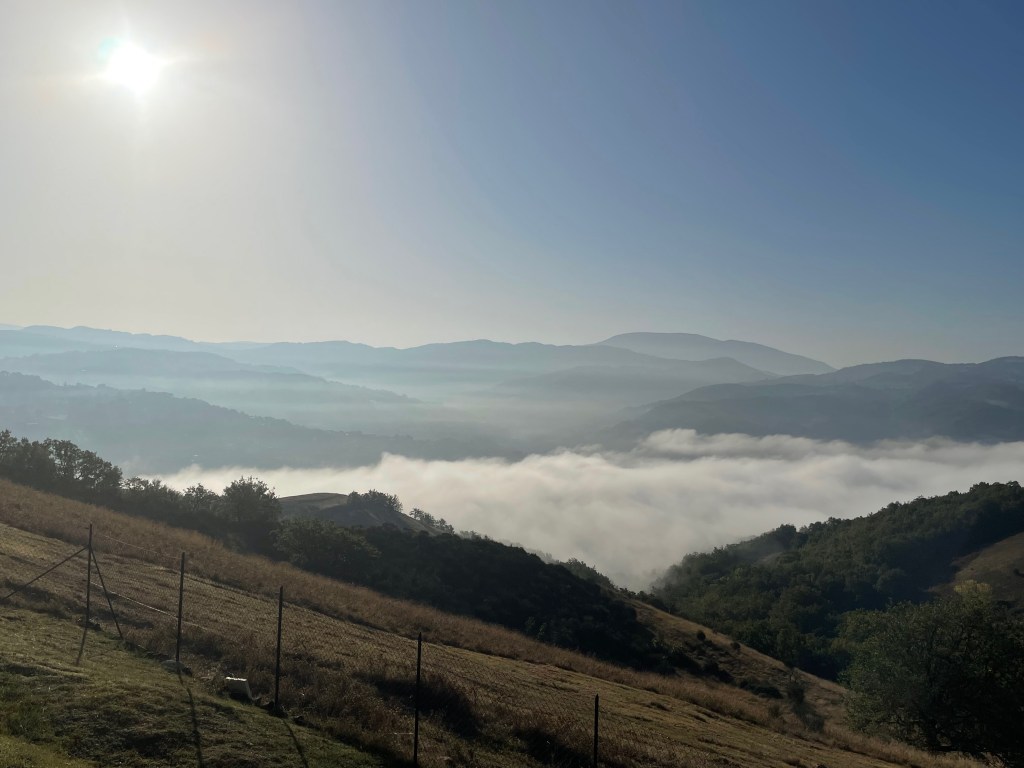
I woke up this morning to dramatic clouds, a lot of sun and our view of the nearby mountains, hamlets, and castles. It’s not perfect; I’m going to miss our little nipotino (grandson) and the rest of our crew. But after getting reacquainted with the U.S., I’ll take this quiet country life. I’ll write more in the next post about how weird it is to go back on vacation to where we lived for decades.

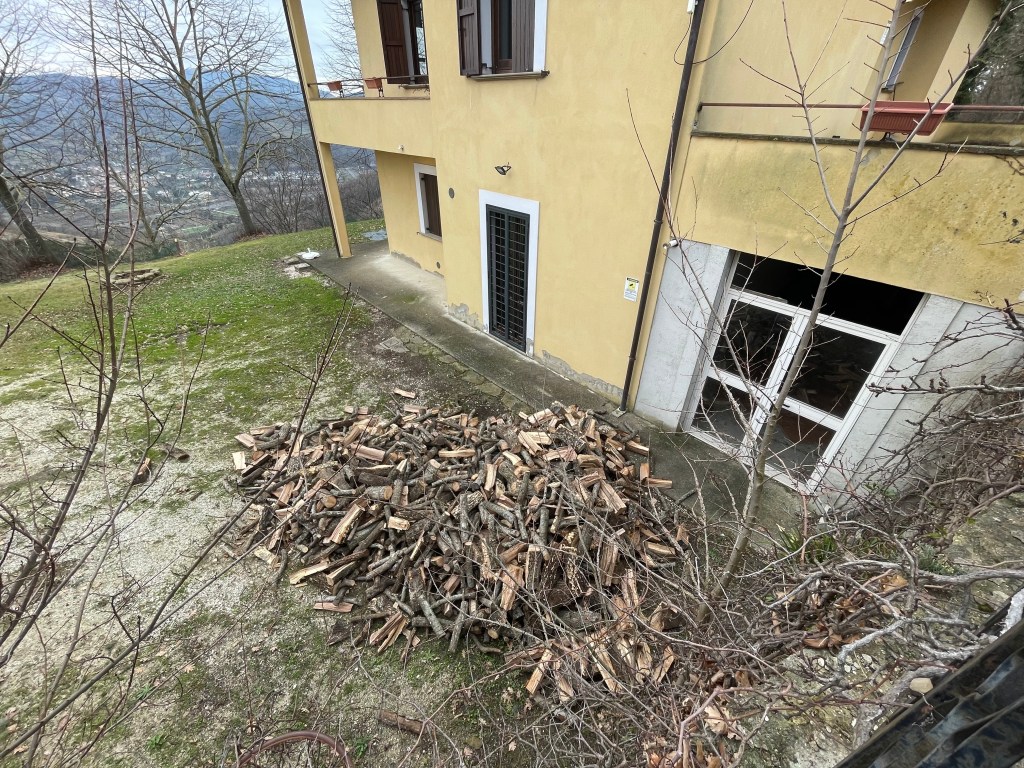
But for now, I have to stack some wood.

Commitment issues, resolved. Kind of.

Okay, like so what? It was a big deal to me. When I stand waiting for the cashier back in New York, I’m usually horrified at my fellow shoppers’ food choices, like boxes of crappy frozen meals, big bags of Doritos, chop meat, lots of meat in fact, and bottles and bottles of Coke and other soda. Call me elitist, but it’s more of a cultural gap. I was always bad at being a mainstream American because of my upbringing. I guess it’s a first-generation thing, but I always felt like I was straddling two continents, where I was born, and where my father and my maternal grandparents came from. (I love peanut butter and gochujang, though, so I’m not 100 percent Italian when it comes to food.)

Welcome to the neighborhood supermarket, Conad.

We used to come here to Italy as a sort of refuge. At first it was a couple of stolen weeks in a busy summer, then that time away got longer as I managed to do a lot of work remotely. I remember being at a P-Funk All Stars Umbria Jazz concert and looking at my phone to approve a magazine cover photo. Then when we bought a house in the country, and I didn’t have a day job to go to, we’d stay here a few months at a time. But it was always less than six months, and under the limit beyond which we’d be official Italian residents, like it or not.

I’m trying to decide whether that arrangement was either having the best of both worlds, or merely not being in either place. A certain lack of commitment, to be sure. We had lots of good reasons for waffling, like family, friends in the U.S., and there were tax implications, too. By staying in Italy for fewer than 183 days a year, but having our income sources in the U.S., we were full-time American tax residents. There’s not much to choose from in actual taxes when you total up everything you’re charged for in the U.S., but it’s definitely simpler to be a tax resident in just one place. (The United States considers you a tax resident wherever you live, forever, or until renunciation.)

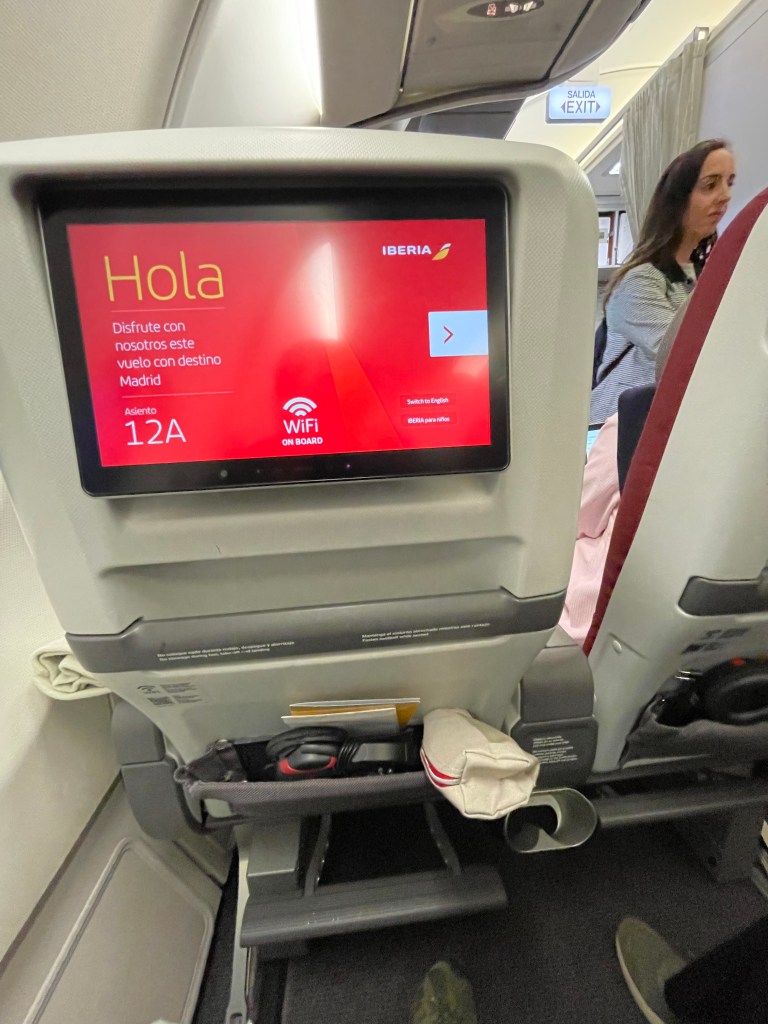
Our normal aircraft seat. Iberia, bless its corporate heart, upgraded us to business class a couple of times, for free, unrequested too.

There are disadvantages, too, to living in a couple of countries. It’s expensive. We flew more often that we really wanted to, and while being experts on which airlines have the lowest premium economy fares may be worth something, the back and forth back and forth was getting to be too much. Plus even though we’re Italian citizens, we couldn’t take full advantage of being Italian/European Union citizens. We have to carry our passports as ID instead of a simple digital ID card. We have to pay doctors privately here, rather than being full-time enrollees in Italy’s public healthcare system. (It’s not as expensive as it is in the U.S., but still….) And full-time residents don’t have to pay real estate taxes on their main dwelling.

So after years of noncommittal, not to mention 2020, The Year of Covid, we marched ourselves to our town hall and declared residency. I was nervous about doing so. The Italian consular officials in New York aren’t always the kindest, most helpful public officials. And the declaration form was detailed—to get the real estate tax exemption, it looked as though they wanted me to enumerate every square meter of our house and yard here. After realizing that it was impossible to get it all on the page, I simply printed out our property sale document and wrote in Italian, “see attached.”

We kept putting our trip into town off for mostly dumb reasons, but finally it was put up or shut up time. So a few days ago, we marched ourselves up the stairs to the demographics office window. The official took our paperwork, skimmed through it, and said, “fine. Go downstairs to the Protocol office, and tell him that I already approved the documents.” We did so, spending a few minutes while the second guy typed our info into the database. The other guy came downstairs to see how things were going, and after a short time spent chatting, they were done and we walked out into our official new town.

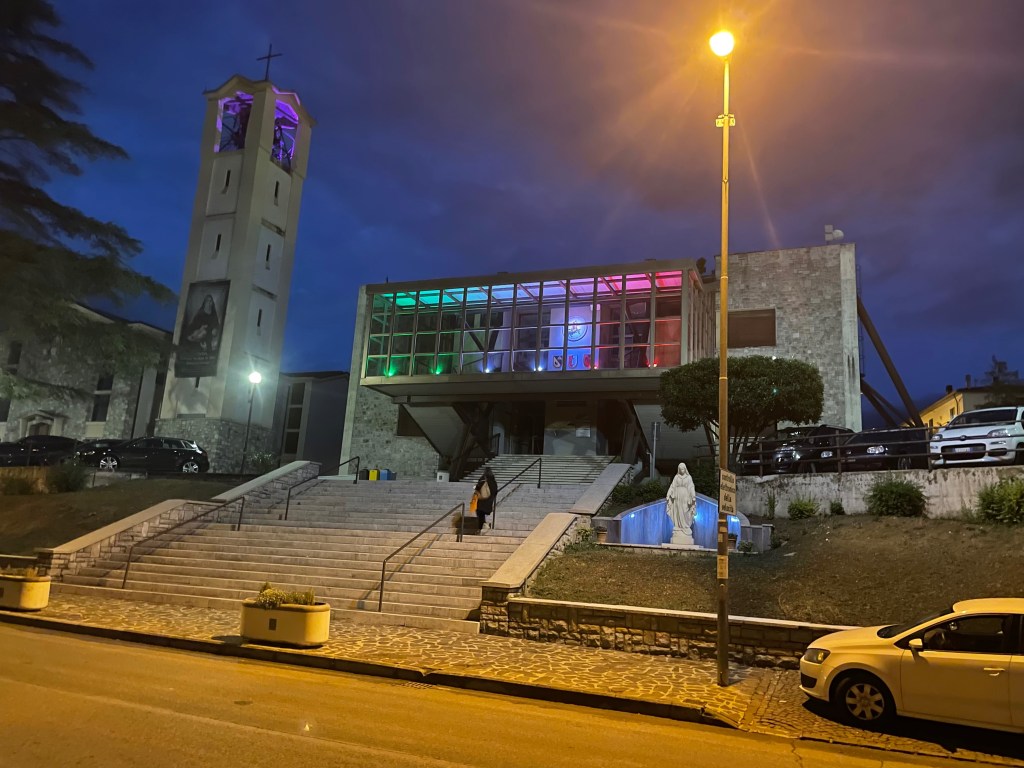
Our town hall, lit up for a fall festival

There’s more. We’ll have to convert our driver’s licenses. We have to enroll in the health system, and the local police will pay us a visit to make sure that we really live here. But things already feel more settled. I’ll tell you in later posts what makes this town so special (random photos below just for the hell of it). For now I’m just happy to be anchored in one place.

Liv breezed in for a bit, and everything moved faster

So it’s great when a kid or two comes by for a visit. This time it was Liv a/k/a Olivia, our younger daughter, and her partner Al. We got their room ready and stocked some of the foods we knew they’d like or need. So, big bunch of small hot peppers? Check. Oat milk, ditto. Restock coffee supply? Done. We took mercy on them and picked them up at Rome’s Fiumicino Airport instead of making them take the train. It’s a haul from “Alta Umbria,” but for a Monday morning just after rush hour, we just breezed in.

A lot of any visitor’s stay naturally involves food. I don’t really have to say it, but it’s pretty incredible ’round these parts. A visit to a regular supermarket is like going to an Eataly in the U.S., except that everything is half price, if that much. Back in ‘Merica, our offspring have developed some food intollerances, or so they thought. In Liv’s case, U.S. market pasta and wheat products give her a stomach ache, so she thought she’s got that fashionable gluten problem. But no. She can eat pasta and bread and pizza here, no problem. And she’s not alone—an anecdotal survey of people who live here but go to the U.S. regularly brought out a lot of the same reactions. Anyone have an idea why?

Liv and Al took two weeks of their valuable time off, so instead of sitting at home admiring the view we had to put on our tour guide hats and see stuff around this splendid little region. Not that it’s their first time around this block. Al said to me “Being here is, like, what I do now. It’s my alternate reality life.” First they had to return to Perugia, Liv’s first love and where Al has developed certain rituals. I dropped them off so they could wander around without us old people slowing them down. Despite the nasty weather, they dropped into their favorite places, Al at the porchetta stand on Piazza Matteotti, and the two of them for artisanal gelato (with flavors like gorgonzola and honey) at Lick (closed for vacation until 7 December).

ONCE THEY GOT PERUGIA OUT OF THEIR SYSTEMS, we tried to get away from the too familiar. Last year we spent a rain-drenched day in Foligno. Until then that small city was just a railroad station where we had to change for the Perugia branch line. But we discovered it’s a lively place and unlike most towns in Umbria, flat and really walkable. The window shopping is terrific, and there are tons of cafés and restaurants, many of the latter looking as though they dropped in from Williamsburg.

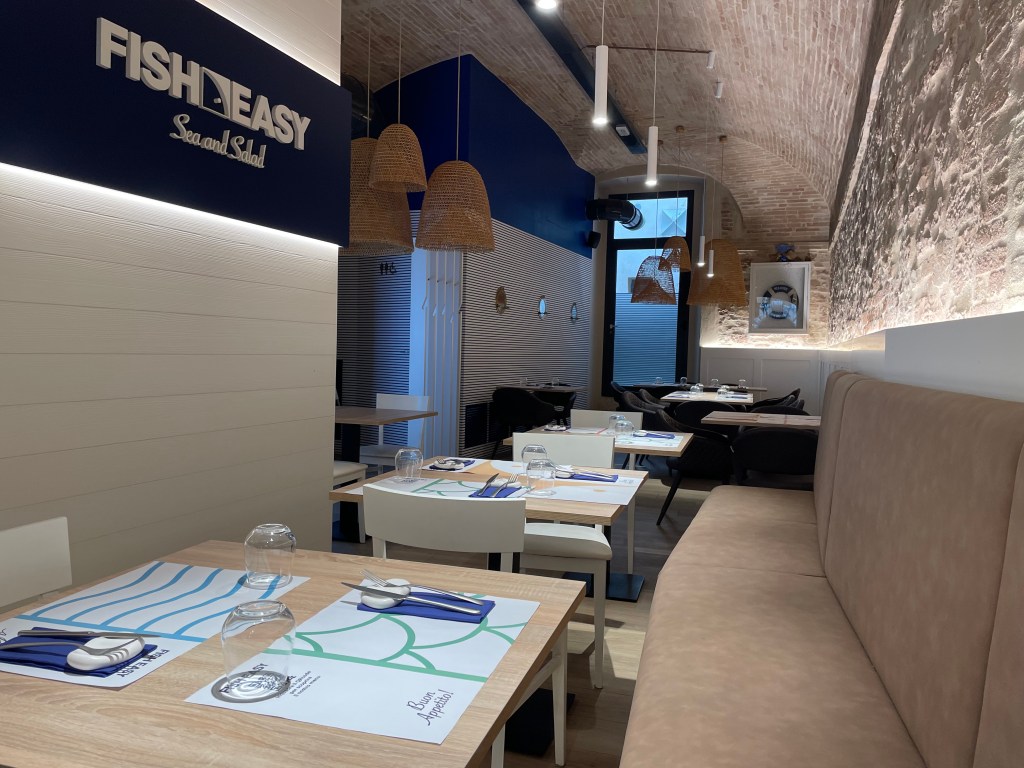
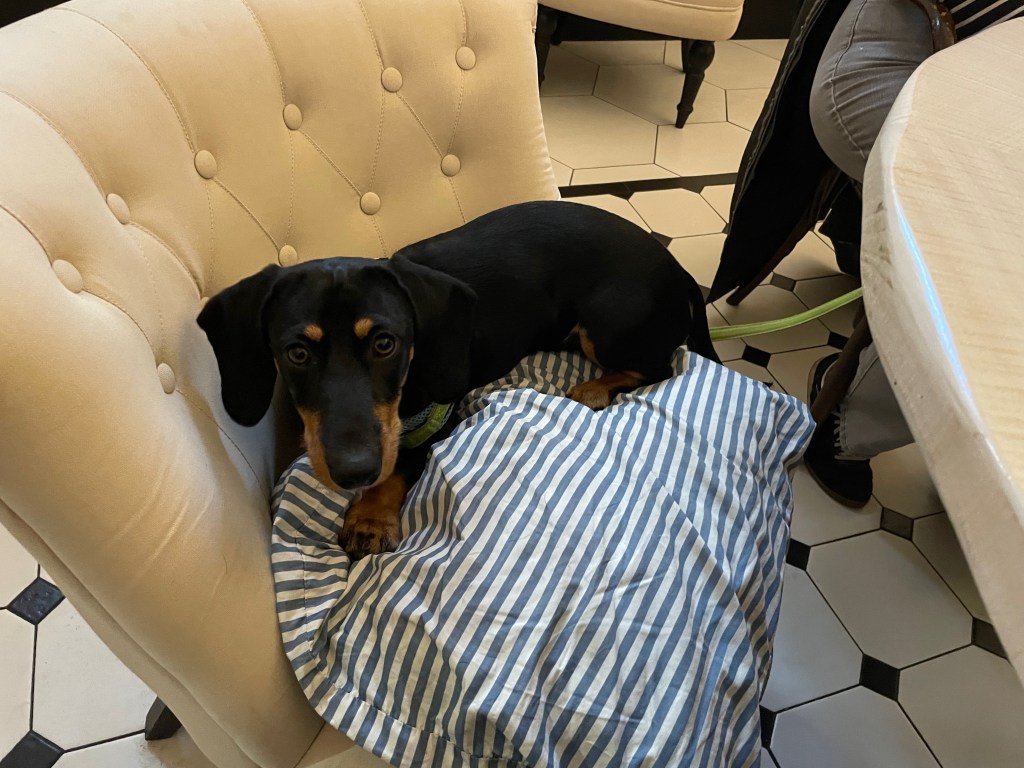
Knowing that we were going to be in Foligno long enough to have lunch, I started to surf the Web for suggestions, and ran into the service The Fork. It’s like Open Table and Resy in the U.S., but it points to places off the main tourist squares and, if you reserve a table through the site, you often get a discount. I looked through the service and got us a table at Fish Easy (that’s really its name). You can leave a note for the restaurant when you reserve, and I asked if it was okay to bring our dog. Most restaurants here are dog-friendly, but it never hurts to ask. I got a quick reply—sure, we’ll be happy to have him around. (Below, lunch at Fish Easy, with Niko hoping something falls off the table.)

The proprietor made good on his promise. Niko was our calling card, and as soon as he saw Niko leading the way, he knew it was our party of four. The place, like a lot of Foligno eateries, didn’t trade on the Olde Worlde thing, the decor and the menu was sleek and up to date.

Another day, we took advantage of the fine weather and drove across the region to the city of Orvieto, famed for its delicious white wine and its incredible Italian Gothic cathedral. I used The Fork again to find a place to eat, and it led us to Caffè Ristorante Capitano del Popolo, on, logically enough, the piazza of that name. After a funicular ride up from the train station (with plenty of free parking), we admired the Duomo, including the stunning frescoes by Luca Signorelli, before walking a few minutes away from the tourist crowds to the piazza. The market there was shutting down as we walked between stalls to the restaurant. I’d warned them, too, that we had a dog and they not only let Niko in, but gave him a plush chair, pillow, and water bowl. (Below, the Signorelli panels and a modern capolavoro.)

Like more and more restaurants here, the menu was creative but rooted in Umbrian tradition. So some familiar dishes has interesting twists, like the addition of ginger. I usually don’t eat meat, but I was pasta-ed out and went with a vegetable-forward version of chicken alla cacciatore, while my stronger-willed wife and kid had trucioli (a short pasta) with artichoke cream and mint.

Niko got his own place at the table.

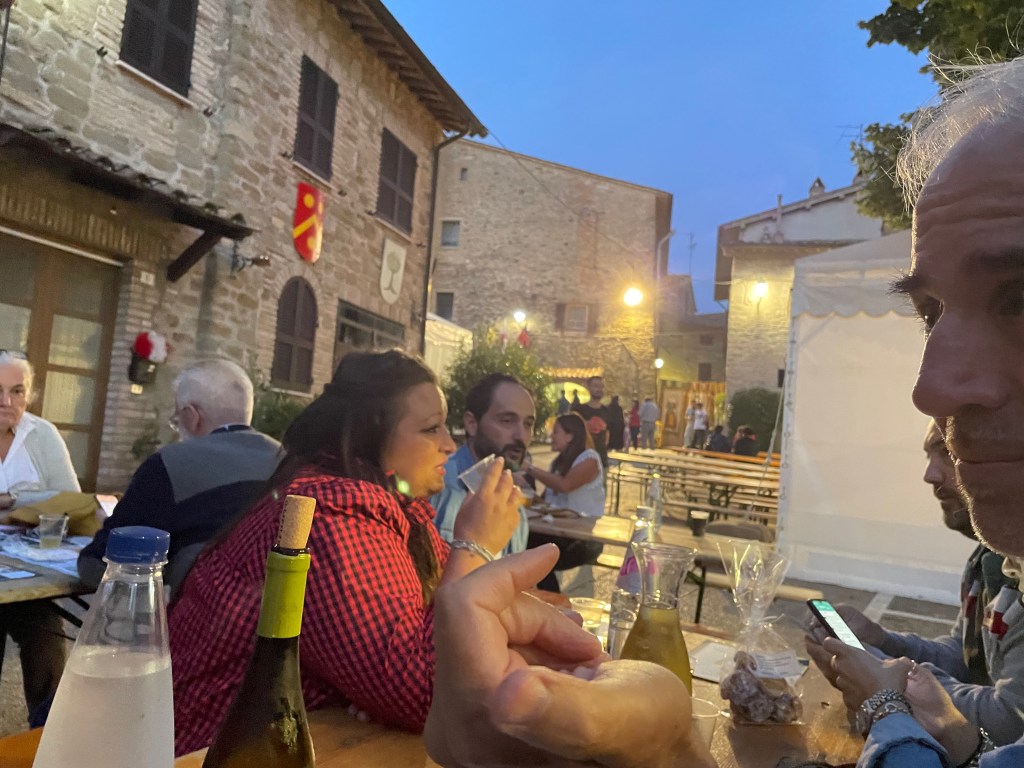
THE SPARTAN WOMAN AND I have this compulsion to show off “the real Umbria” to our guests. That usually means one of the sagras around the region. They’re usually held in the summer, when warm weather means long sultry nights, local food specialties, and kitschy line dancing to live music. Liv and Al were too late for those. But they weren’t too late for Montone’s fall festival. Plus, going there gave us an excuse to check out a different part of our area—after a few months of living here, it’s easy to get stuck in a rut of shopping, home maintenance and occasional hanging out with friends.

So, Montone. It’s said to be one of the most beautiful towns in Italy by the kinds of groups that keep track of that stuff. I can vouch that it’s awfully pretty, though I gotta say that it’s got lots of competition. The festival was fun because it got us out of the house and, with its emphasis on local foods and the chattiness of the vendors, we got an education in local foods. Really, really local foods. The hyperlocal food culture means that local towns have wineries, honey producers, and other local producers just beyond the town walls. For us that day, the nasty November weather broke and we strolled around and talked to people about cheese, pasta, and medicinal herbs and tinctures (the maker of the latter grabbed us for a good long chat).

So much for all that. The Spartan Woman, Niko the pup, and I have returned to everyday life, evading the wild boar hunters, looking at the view, and trying to decide every day what to have for lunch. And one of these days we’ll hang more pictures on the walls and make this place look more lived in—in a good way.

I do like Sundays, they’re my fun days

Sunday is still a big deal here. unlike the U.S. where it usually feels like just another day. Sure, American banks are closed, but you can pretty much do everything else. Even in New York, which still has ridiculous liquor laws, banishing meal stapes like wine to the liquor store. Unlike pretty recently, liquor stores were closed on Sunday, so if you forgot to buy wine to go with dinner you were either out of luck or making a trip over the bridge to New Jersey. That changed a few years ago, but still, store hours are limited. 

It’s true that commerce doesn’t shut down completely here in Italy any more. Supermarkets and malls (yeah, we have ’em here, too) are open. A lot of it is out of necessity, because just as in the U.S. and elsewhere, it takes two incomes to support a household. (I bet European Union rules enter into it too.) Being able to load up on groceries is a big help to harried parents. Still, Sunday has a more relaxed vibe and most people treat it as their day to hang out, have a long afternoon meal with family and friends, and maybe take a walk or a dip afterward. Just like it used to be when I was a kid in New York. 

While the sabbath obervance started as a religious thing, that’s not necessarily the case here any more. You always see on American news sites that Italy “is a Catholic country,” but it’s a much less religious place than you’d think. Anecdotally it seems that only older women and their son/husband-drivers attend Sunday mass. And surveys show that about 25 percent of Italians attend mass at least once a month; about 30 percent of Americans can say the same.

Anyway, I like Sundays. And now that I’m no longer a wage slave, I don’t have to dread Sunday evening, when thoughts of work used to cloud my mind and I’d try to distract myself by watching something good on TV. I guess it all goes back to my roots. When I was really little we’d go to my grandparents house in Brooklyn most Sundays, when my grandmother held court in her dining room filled with heavy, wood-inlayed dark furniture. My parents kept it going long after my grandparents passed on. My father would play operas on the stereo, usually Aida or Cavalleria Rusticana while my mom put together what is now usually called “Sunday sauce,” a ragù filled with various pieces of meat and meatballs.

Before dinner, my father would make whisky sours for himself and mom and maybe our neighbor Joe, a Bavarian immigrant who kept up the European habit of making the rounds of neighbors, to say hi and maybe get a drink. Sunday afternoon dinner—pranzo in Italian—was always in the dining room, except in summer when it got a lot less formal and moved out to the backyard picnic table.

WE KEPT IT UP WITH OUR KIDS, even as they became adults. I won’t bore you with details, but in the past few months before we moved here, The Spartan Woman devised the most labor-intensive Sunday meals that left the kitchen a wreck. She usually made bread or focaccia and a dessert. A couple of times, we went informal and made a few pizzas. I was assigned to primo duty, including multiple step risotti. My daughters and I drank a fair amount of wine and we took walks after dinner to work it off. Those Sundays were a good time to unwind and talk with my splendid daughters and their partners. I wish I could somehow pop into New York and do that once a week. 

But I can’t—our private jet’s in the shop for awhile—so we do what we can here. Generally we make a more involved pranzo (the main midday meal) than usual. I’ll bring out better wine. And we invite friends. It’s great when our local friends come over, because then we have a total immersion in Italian day. Living in the country, we have less one-on-one talking time. 

And I treasure the summer Sundays we’ve been having with our old friend from New York, M. Chasse. In a lot of ways, these Sundays are like our old days in New York. When our paper went out, a group of us that I like to call the Gang of Four would repair to Restaurant Florent in the meatpacking district and spend a dissolute afternoon eating and drinking, French-New York style, for hours. Except that now we have the Umbrian countryside and a couple of sweet dogs to amuse us while we relax over an hours-long meal.

Guess who came to dinner?

We’re mostly vegetarian—we’ll have fish or seafood as a decadent treat—and so is our friend. At the same time, we have no strictures on wine, coffee, after-dinner drinks, aperitifs, whatever. So last Sunday dinner was tagliatelle with zucchine cream (see my post on Italian-English veggie sex-change operations), Prosecco, seitan in the form of cutlets (I’ve yet to set down the loose recipe The Spartan Woman follows to do this) and a fresh summer salad. We had melon and limoncello for dessert. 

An afternoon dinner isn’t the only Sunday game in town. For some reason, Sunday morning’s a good time to do some hiking. We live in an area criss-crossed by trails. And we can get in the car and drive to mountaintops and parks up in the Apennines, which we did today. Sure, it was crowded—it’s a holiday weekend here, with ferragosto coming up on Tuesday. We’d usually go up to Valsorda, above the town of Gualdo Tadino, on a weekday. But sometimes it’s good to mix it up with the crowd of nature lovers and observe our fellow Italians on holiday. Plus, the pup loves to meet other dogs, and being a cute little one, he’s a women magnet.

I somehow managed to get a people-less shot. There’s a cool bar up here that’s got the best cornetti—the Italian version of croissants.

I’m always asking myself why do I do certain things—it’s in my nature to second guess everything I do, and I’ve thrown out a lot of stuff that I eventually found silly or meaningless. You know, meetings, material striving, telephone landlines, listening to Kanye West. Sunday is a keeper. We all need a commerce-free day of hedonism, whether it’s walking around a mountaintop or feeding my favorite people and keeping that connection to an increasingly distant past.

NOTE: Notayearnotintuscany is doing the Italian thing and taking the rest of August off. See you next month.

Niko in love

Meet Niko. He’s a three-month old dachshund and the latest addition to our family. He likes to chew, and he likes to chew. But most of all, he loves Georgia, our friend Doug’s dog. When Georgia is around, Niko becomes a good little student, following her around as well as doing dachshund-like things like charging her in attempt to make her play with him. It usually works. There’s another benefit when Georgia is around; Niko doesn’t wander off our yard, which is at the crest of a hill and beyond that it’s straight down into a gulley.

Georgia (left) and Niko commune over some blades of grass and weeds.

While we like to think that we, the people who brought him home, feed him, and indulge most of his whims, have a place in Niko’s heart, he is also very women-friendly. While he has his puppy holy-terror spells at home, when we take him on errands, he becomes the perfect little gentlepup. With his good looks and puppy size, he’s a natural (sorry about this–>) babe magnet. It’s true; I could safely say that most if not all of the people who react to his cuteness are women. And he likes them back, licking their hands and acting like the sleepy little puppy that he isn’t most of the time.

Okay, I exaggerate. A little. As I write this sentence, he’s tugging at my shoelace.

Niko surveys his kingdom from his living room couch perch. He is the boss of us.

We haven’t had a puppy around in more than a decade. But this house needed a dog. We’d seen a listing for him online from a family in the neighboring region of Lazio (near Rome). It was an almost two-hour drive but worth it. We met a young woman in her small town, and she was actually holding sleepy little Niko. After talking about what he eats and looking at his libretto—his medical record of vaccinations, etc.—we were off, back to Umbria. The Spartan Woman hung out with him in the back seat and he slept most of the way.

You gotta fill out the form…..

Getting a dog was a good repeat lesson in Italian bureaucracy, as though we needed a refresher course. Italy, and Europe in general, have a thing for knowing how many we are and where we live. And it’s not only for humans. Dogs, too, are registered with their local comune, or municipality. Little Niko has a microchip imbedded in his shoulder that contains his info–birthdate, how many born in his litter, place of birth, and owner’s vital data. Right now he’s registered as C’s dog. We had to fill out a change in ownership form, and that form is being sent from his birthplace to our town’s healthcare center so that his chip can be updated to reflect his being part of our family. Then he can get, yes, a passport, which will permit him to travel with us.

And that’s one of the good things about having a dog here. Niko has a lot more freedom here than most of his America cousins. He can come with us almost everywhere. Naturally, we take him to the pet store. He likes to choose his chew toys. But he’s also gone to the supermarket and to bars. He’s spent aperitivo time people-watching and eating prosciutto. He’s only been with us a few weeks and with the heatwave here, we haven’t gone out much. But otherwise, we’ve seen dogs on trains, in bookstores and museums, and even in pretty ritzy restaurants on a chilly winter day, happily resting under the table. We plan to take him on road trips, and the continent’s pet-friendly practices will make it pretty easy to do so.

Niko gets around. When he’s not examining menus or being admired, he likes to hide under the table.

We live in a small town, so maybe our experience is different from others. Niko needs a series of vaccines, so we looked up the town’s vet. We always passed a sign pointing to an “ambulatorio veterinario,” so it was easy to find him. The vet, a man with a mellow, kind demeanor, just smiled at Niko and murmured flattering things while giving him a deworming pill. I’m so used to going to a vet’s office, checking in, giving billing info, etc., that the informality of our visit was almost a shock. When I asked the doc what I owed him, he said no charge, first visits are free.

IN A LOT OF WAYS, dog ownership pretty much sums up life here in our little town and region. Official encounters can be stiff and encumbered by rules and procedures. Yet everyday life is punctuated by small kindnesses and a gentleness that’s hard to explain if you haven’t experienced it. Some years ago I subscribed to Quora, and my feed lately is dominated by Americans (real or bots, I can’t say) comparing their great freedoms to the horrors experienced by us in Europe. Like universal healthcare.

A very silly question.

A lot of the questions are silly. But they make me think about how people in my country of birth live and perceive the rest of the world, if they do at all. When I go back to New York for a visit, it seems very stiff and cold, and I start paying attention to people’s status—not to mention that it’s ridiculously expensive. Driving around the U.S. is weird, you have to be on guard for cops monitoring your speed and crazed pickup drivers treating their trucks as though they were Porsches. Being pulled over can be a life-threatening situation. When it comes to driving here in Italy, the onus of staying under the speed limit is on the driver; speed cameras are everywhere. Go too fast and a ticket arrives in the mail.

Here in heavily rural Umbria, there’s more of a we’re in this together feeling that I find appealing. In general, too, there’s a looser vibe. And that’s pretty recent. Italians used to be more rules-bound and have more hangups about, for example, what to wear, and when. One of our recent guests from across the pond wore jeans on a hot day because he read that Italians never wear shorts outside of beach towns. Wrong! We’re adapting to climate change here and shorts are everywhere.

Oops. I have to run after the dog. He’s got my shoe.

Hot vampire days

I might go for a drive today. Not because I want to go anywhere, but I can turn up the air conditioning and be almost sweat-free for a half hour or so. Until my conscience gets the best of me: Fuel for our economic little Renault costs €1.70 a litre, or $7 and change a gallon. Not bad, and probably a decent price to pay so that my brain doesn’t fry.

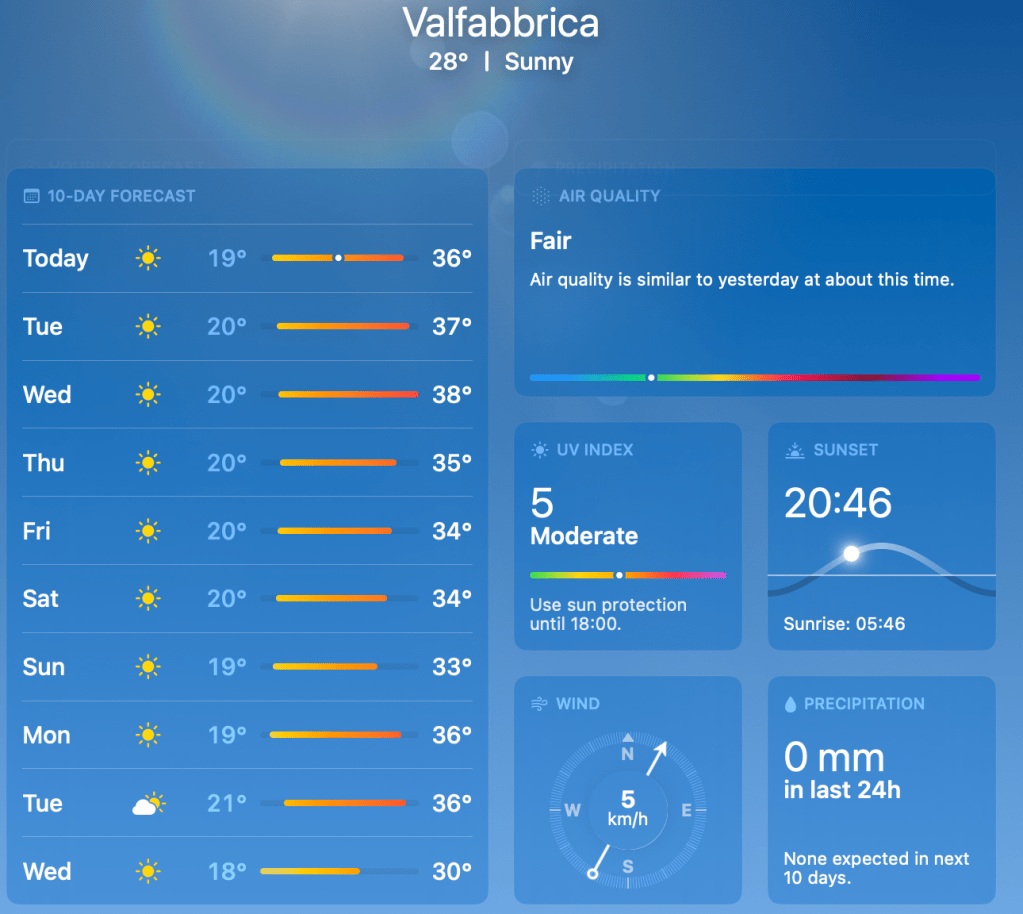
In case you’ve been offline or not paying attention, Southern Europe is in the midst of a heat wave. I forgot the heatwave’s name this week—yeah, they started naming them in Europe. Maybe Cerberus? Anyway, it’s hot. Really hot. Go out the door and flinch hot. Here’s a screen shot from my weather app:

Dog days: Niko being sensible

For the Celsius-challenged of you, 37 is body temperature; each degree C is almost 2 degrees Fahrenheit, so 38 is 100.4F. Ugh. Serves me right. A couple of years ago I boasted that we could live without air conditioning up here on our hill. My bad. Even our hyperactive puppy (and new addition to the fam) Niko has taken to sleeping in the dark during the day. Actually, all three of us do. We try to bottle the cool morning air by opening up overnight. Then in the morning, we close the shutters and lock the windows shut. Then while inside we live in the dark like vampires, trying to avoid too much movement. We make it outside to swim as the sun starts to descend late in the afternoon.

Problem is, people gotta eat. The Spartan Woman did make a supermarket run yesterday morning—lucky her, she got to turn on the A/C. Old Perugian friends were coming over and we had to feed them and us. But instead of the typical mid-day meal, we had cold stuff: cheese, a Caprese salad (tomatoes, mozzarella, and basil), and salumi (Italian charcuterie, or cold cuts). We drank cold liquids and ate in our cool (literally) downstairs kitchen.

A/C alternative. Can we get deliveries while we float?

Luckily, we were able to go swimming. We built a pool when we bought this house and it’s the best investment ever. Silly me, after last month’s endless rain, dark cool cloudy days and general low temperatures, I thought we’d hardly get any use of the “cee-ment pond,” as they called the pool in that stupid TV series The Beverly Hillbillies. Wrong! I’d live in it if I could, except that I have to swim underwater to keep the sun from overheating my head. Yeah, I know, first world problem.

So, splashing around. That’s what we did all weekend. Friends and ex-colleagues of TSW were due to arrive in Perugia on Thursday, and we were going to show them the town. But a train strike put an end to that. They rebooked for Saturday, but instead of trekking around the hilly city and dying of heat stroke, we brought them to our lair and we spent a good part of their few hours here in the pool. It was a nice change for them from touring; the videos and photos from tourist favorites like the Trevi Fountain are horrifying for this crowd-averse blogger. Take a look:

No, grazie, I’ll stay home.

We went to a truffle dinner and ended up getting to know a dentist

Summer in Umbria: festivals, swallows putting on an air show for us, cool hikes in the mountains, and dinners with friends, old and new. Hey I know it sounds impossibly idyllic, but hey, after commuting to a packed newsroom for 30 years and pretending to care what corporate lawyers do, I deserve it.

I’ve written before about the sagra (think of a town festival, usually featuring an ingredient the town is or would like to be known for) of truffles in Ripa, two towns down the road from us. Ripa has a tiny circular fortified historic center and otherwise sprawls across some suburban development and farms. The sagra is going on as I type, but a few nights ago the town held a preview dinner with a few of the dishes that would later be served to the crowd.

We figured what the hell, let’s try the dinner. At €20 each, or about $22, it seemed a bargain, with four courses and water and a coffee included (wine was extra, but at prices that beat retail in the U.S.). Besides, it’s always great to go to these communal dinners. Our town holds them every so often, and they’re terrific, with good food, interesting tablemates, and, often, a DJ.

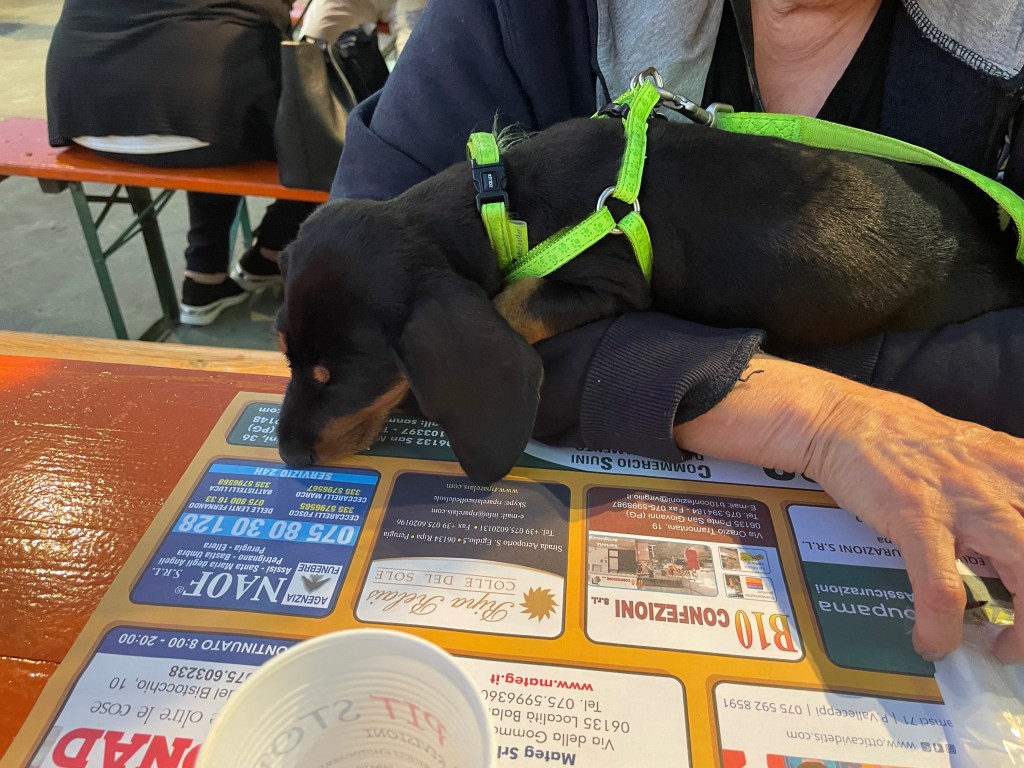
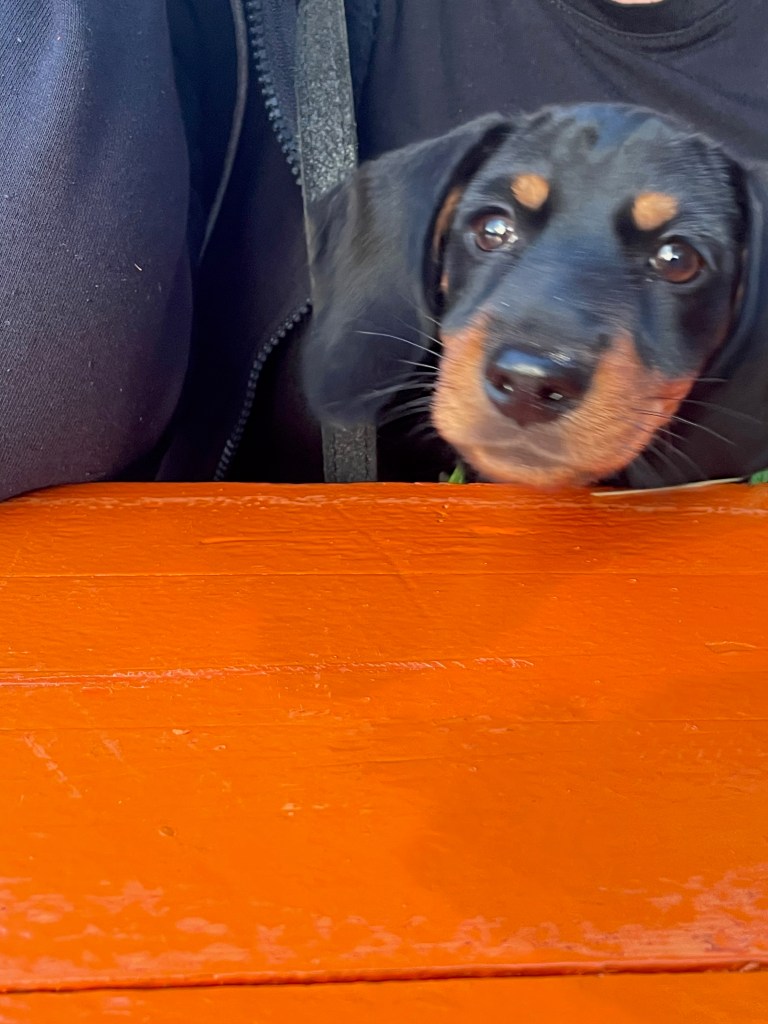
Niko gets a seat at the table.

We had a big life event in between reserving our places and the dinner itself: the addition to our family of a scrappy dachshund puppy we named Niko. Dogs go everywhere with their people here in Italy. We’ve eaten at Michelin-mentioned places and seen big dogs sitting placidly under the table. Should we take Niko? In just a few short days he’d grown attached to us, so we gave it a try.

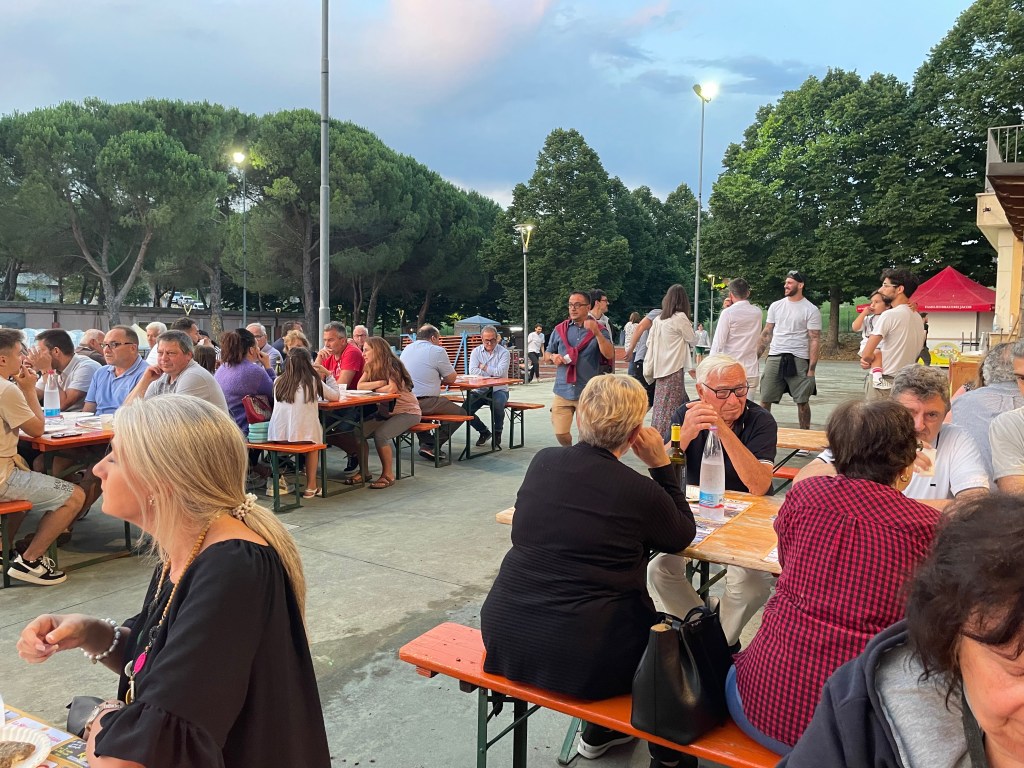
We shouldn’t have even debated it. Niko turned out to be our passport to conversation. While waiting on line to pay at the start of the evening, he obligingly looked cute for the people around us. And he was pretty mellow as the crowd around our table got louder and more boisterous as food was served by Ripa’s kids and teenagers.

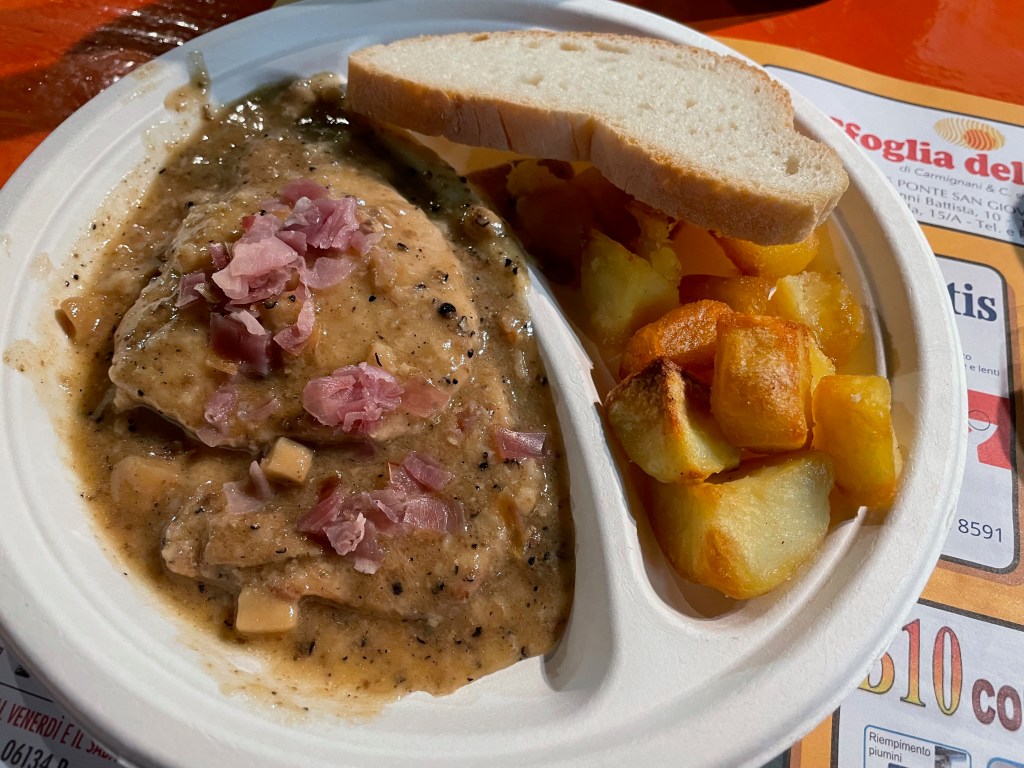
Foodies, here’s what we got for our €49 (2 x 20 + €9 for a bottle of local white Grechetto wine): Truffle bruschetta, gnocchetti (little gnocchi) with truffle sauce, tagliatelle with truffles (a bit too salty we told someone who asked on behalf of the town), pork scallops with truffles nd roast potatoes, and chocolate gelato with truffles [see photo gallery below].

Dinners like this are pretty rustic, even if the star is the local black truffle. Plates are biodegradable plastic, as are drinking cups for both water and wine. You sit at picnic tables and if you don’t fill the table, you’re going to get to know others who find seats at the table.

The good people of Ripa served about 300 dinners that night.

Or not. At least at first. We sat alone for awhile, one of the few couples not part of a jolly family or friends group. It was okay, because the people watching is always good. But then a couple came up to ask if there were empty seats at our table. There were.

The two couples, us and them, sat for awhile mostly ignorning each other. They apparently know everyone because most people passing the table stopped to greet them. We were happy just to sit and enjoy the warm summer night, and eavesdrop every now and then on people’s conversations.

Enter Niko once again. He wanted to see who dared to sit near us, so we held him up and predictably, our tablemates asked us about him in a way that would be familiar to parents of cute babies. They picked up on our New York-inflected Italian. Where are we from? We gave our town here, which usually elicits a chuckle. Then we came clean. Why here? We like it. We’re Italian, too, we add. We tell them about NYC’s high prices, which always comes as a shock to those who haven’t been. Within a few moments, they knew our life story.

I had to turn the tables and get them to tell us who they are. As it turns out, he’s a local dentist. Being nosy and needy, I asked him how much implants cost. (It’s less than a third what a NY dentist would charge.) The wife gave us his business card. We talked about different towns, schools, etc. Then dessert came—a Dixie cup of chocolate gelato with truffle shavings. It was getting chilly, so we all decided to leave, another communal event under our belt.

Who knows, if I have a toothache….

Act like you fit in

On my friend Mick’s first day of kindergarten, his father gave him some good advice: “Act like you fit in.” I guess even back then, his dad knew that Mick was an artist and a gentle sweet soul who’d have a rough time navigating a sometimes hostile world. Funny how his advice seems really valid now to us. I’m looking at boxes and stacks of books and a guitar case, thinking about how we’re finally close to reversing the moves made by my father and my mother’s parents decades ago to the United States.

The Spartan Woman and I were driving around the other day doing some errands, and we talking about people we know who’ve become expatriates in Italy. And in a way we felt a little, I don’t know, pleased with ourselves that we were raised in New York in immigrant families and communities. “If I had to pin down my nationality,” said TSW, “I’d say New Yorker.”

But that’s almost too easy. After being in Italy almost six months, and after two years of pandemic-driven isolation, we’re realizing that our New York doesn’t exist any more, except in pockets where recent immigrants live and work. Still, whether New York has morphed into something different, we’re still a different breed from Those People Out There and we’re proud of it. Growing up in New York makes you—us—citizens of the world. And that has prepared us for our little adventure in reverse immigration.

Here’s how. I’ve told you about Holly Street before, where I grew up. The street was populated by a mix of recent European immigrants (Italian, German, Irish, Scottish) and old-time Staten Islanders. The Spartan Woman has an immigrant past, too—all four grandparents were born elsewhere, her paternal grandparents from in and around Palermo, Sicily, and her maternal grandparents from Sparta in Greece. Combine that with the local dialect, where Yiddish syntax influences how we speak English, and you get a native New Yorker of a certain age. Our certain age.

And while the immigrants’ native lands change, it’s heartening to know that our kids had similar experiences. Their friends from childhood into adulthood either came from or are the first generation of people who came from Argentina, Slovakia, Chile, and the Caribbean. Oh, Italy too—it’s Italy’s lasting shame that each generation seemed to send some of their best people away.

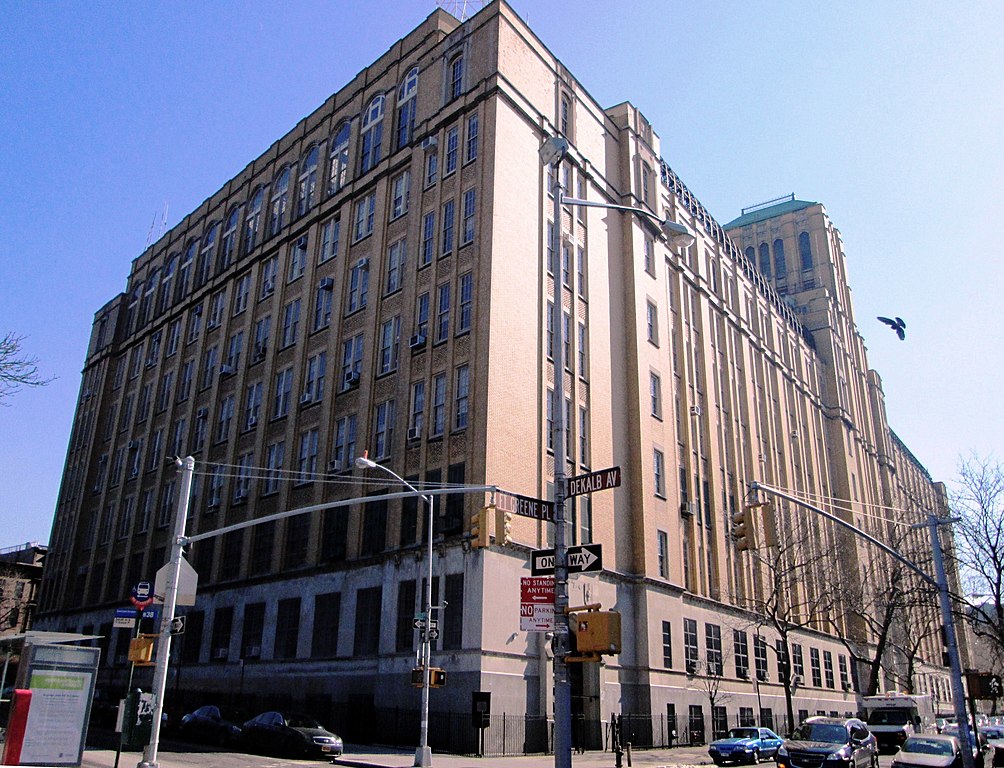
I could bore you with an autobiography here—my high school, Brooklyn Tech (left), for example, was a hotbed of recent immigrant kids from around the world. But it’s enough to say that growing up around here meant we literally had the world at our feet. (Please let me be snarky here—these trustafarians that we saw colonizing Brooklyn pre-pandemic. Can they please go home now? Gentrification is bad enough, but do they have to turn this city into the suburbs they crawled out of?) I knew Polish, Dominican, Greek, Russian, Chinese, and Jamaican kids, among others.

But I won’t. Back to fitting in and if we do or not. When I think of a permanent or long-term move to Italy, I’m grateful for the good training I had for the jump across the pond. One side of my family was made up of recent immigrants who hadn’t yet been assimilated into America. And TSW grew up hearing Greek and eating the Greek-inflected food her mom cooked. We both were used to a tight family structure and traditions that carried over.

The result? We’ve had it easier than the classic expat with no Italian background or citizenship. But even for us, it’s not always smooth sailing to become integrated into a country where you didn’t grow up though. I may be fluent in the language and get most of the social norms, but I didn’t go to Italian schools. I didn’t serve in the Italian military, for which there was a draft when I was of draftable age. So I’m missing the backstory, as journalists like to put it. (The guy on the right—my dad—had the opposite experience. He went to Italian schools and served in the army, and moved to the U.S.)

Whatever. We made our choice, now we have to live with—through?—it. I don’t know if I’m trying to convince myself or not, but being here temporarily in my native city feels strange these days, as though those five months here and there made me miss some development and it’s impossible to catch up. I can’t wrap my head around $30 cocktails, bad espresso in expensive restaurants, and the crazy drivers in unstable trucks.

Plus, the pleasures of living in Italy are undeniable, especially if you’re semi-retired and don’t have to deal with actually going to a workplace. Cheap, delicious food, the aperitivo hour (happy hour on steroids), easy access to kilometers of breathtaking hiking trails, good friends. Okay the bureaucracy sucks, but tell me where it doesn’t.

Cheap drinks may not be enough to convince someone to move to Italy. But they make dealing with the bureaucracy less painful.

I just wish I could take with me my fast Internet connection, Flushing’s Asian food courts, and my daughter’s dachshund, which we raised from puppyhood while Liv was in school. Hope she’s not reading this in case I plan a dognapping…

Our pre-Thanksgiving country life in the big, big city

I could whine, but I won’t. I was driving to a Trader Joe’s one recent morning. It’s on the other side of Staten Island—just another boring day in New York’s outer boroughs, right? As I approached a traffic light, the light turned yellow, then red. A law abiding guy, I came to a stop. But in my rear view mirror, I saw that a Honda Accord was tailgating. Thankfully, the driver didn’t smash into my car, but he or she plainly objected to my stopping, so the car whipped around my car and charged through the light. Luckily, no one was coming through the intersection.

But I avoid most of that by not going out much, or at least not to that side of the island much. Instead, we’ve stuck to our neighborhood. Unlike whole swathes of this island and New York City in general, it’s just beautiful. We’re surrounded by parks and woods and, a little further away, the harbor and a historic fort. So we can take walks that resemble those sun-dappled pharmaceutical commercials.

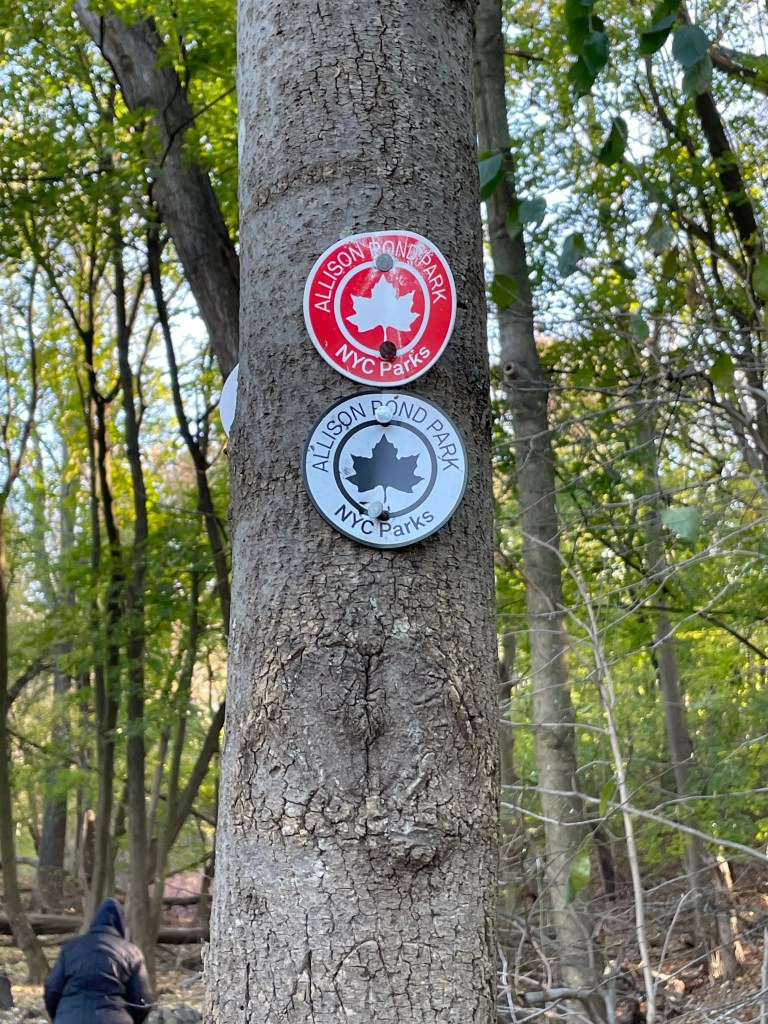
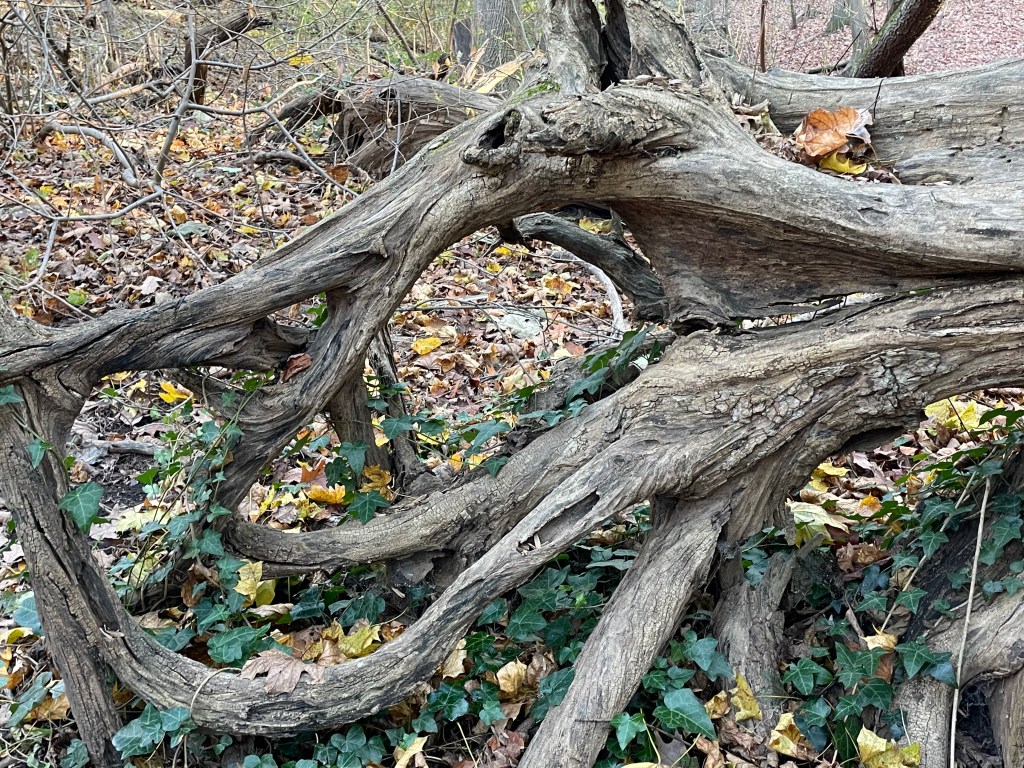
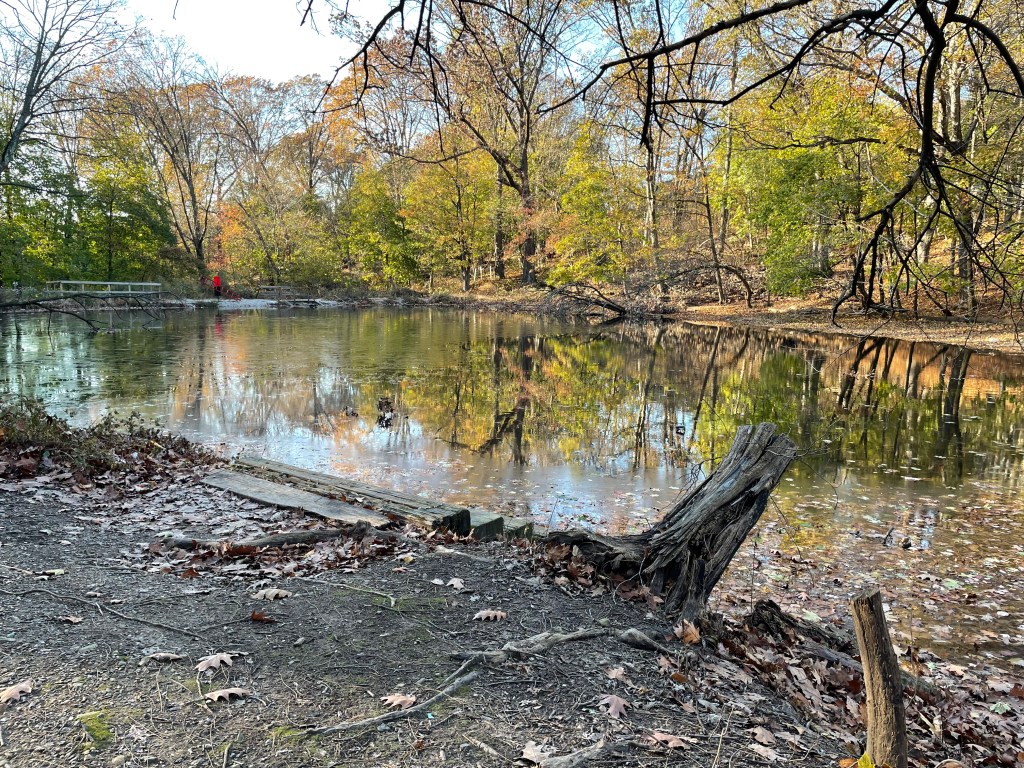
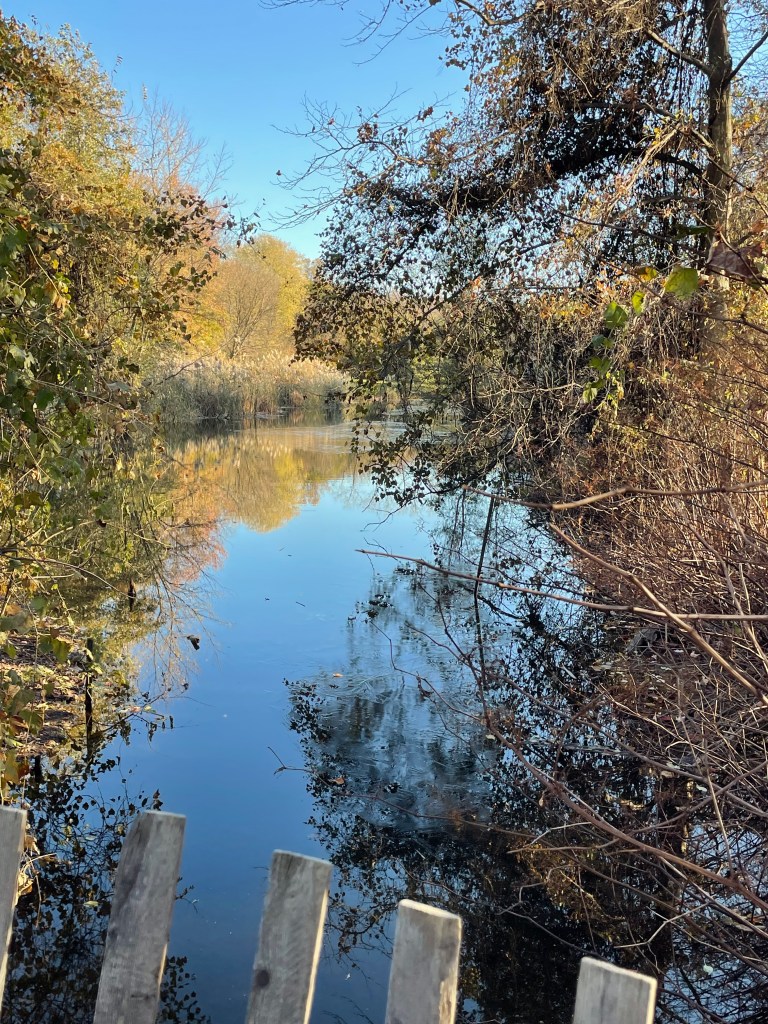
Today we went for a hike. Being a little lazy and wanting to maximize the pup’s off leash (shhh!) time, we drove to Allison Pond down the hill. There’s a pond, no surprise. But behind it are acres of woods. The pond was named after the daughter of George A. Outerbridge, an engineer who owned the property and designed the Outerbridge Crossing that connects Staten Island with Perth Amboy, New Jersey. One of the many Staten Island oddities is the bridge’s name. Looking at a map you might think that the bridge is so named because it’s out there, near the southern tip of Staten Island and, really, New York State. But no. It was named after its designer, Outerbridge, and instead of calling it the Outerbridge Bridge they had to use the word “Crossing,” a word that about 10-15 years ago came into vogue in the names of shopping malls.

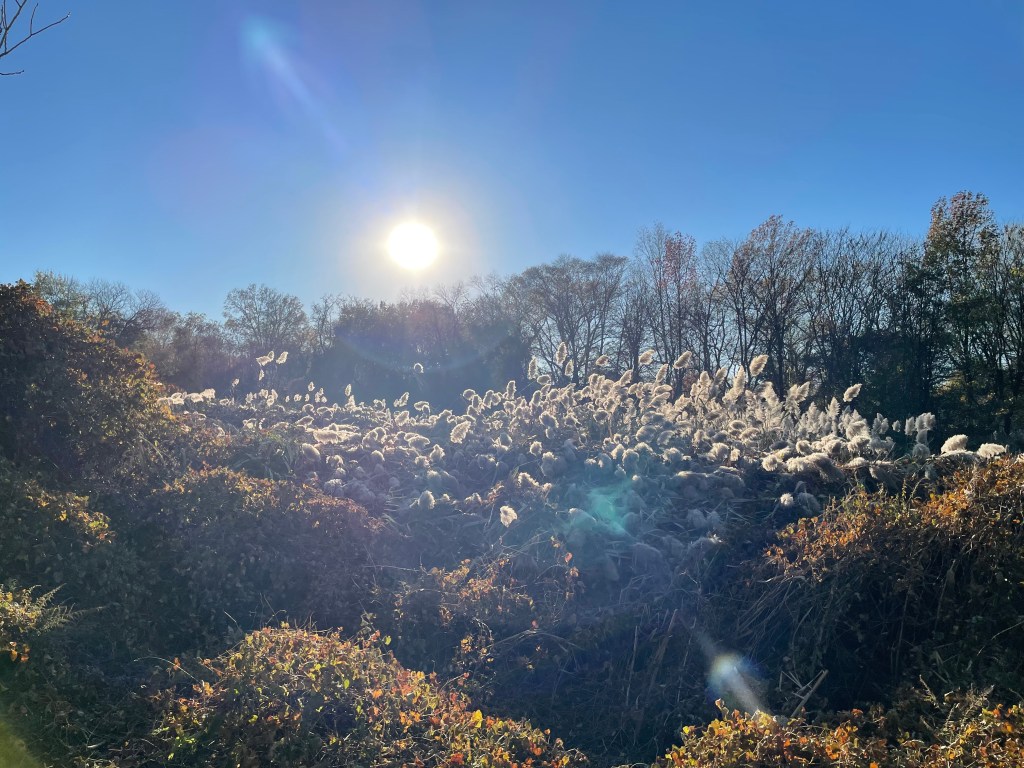
But I digress. Take a look at the gallery below. This is November, and the light on sunny days is beautiful and golden. It’s such a contrast to what I usually think of November, gross windy rainy days and the only outdoor colors seem to be black, brown, and gray.

Here and below, click on photos to enlarge.

YESTERDAY’S AFTERNOON WALK WAS slightly more urban. We took Lola to her usual morning place, the Snug Harbor Cultural Center. I’ve probably posted dozens of photos of the place to Instagram/Facebook and bored everyone I know. But the place is really special. And it’s where our neighborhood here began. Trader Robert Randall traded what became the area around Washington Square for acres of land on Staten Island’s north shore. He established a home for retired seamen on the land fronting the Kill Van Kull, the strait that separates Staten Island from Bayonne, New Jersey. He built a beautiful campus full of Greek Revival buildings, and the establishment was self-sufficient, with its own farm, livestock, chapel and cathedral, dormitories, and sadly, a cemetery. The land uphill of the home became Randall Manor in the 1920s—where we live in New York.

The old guys were shipped to South Carolina some decades ago, and hungry developers wanted the land for condos and the usual horrors visited on this island. But Jackie Kennedy Onassis, among others, campaigned to save the historic buildings and beautiful grounds.

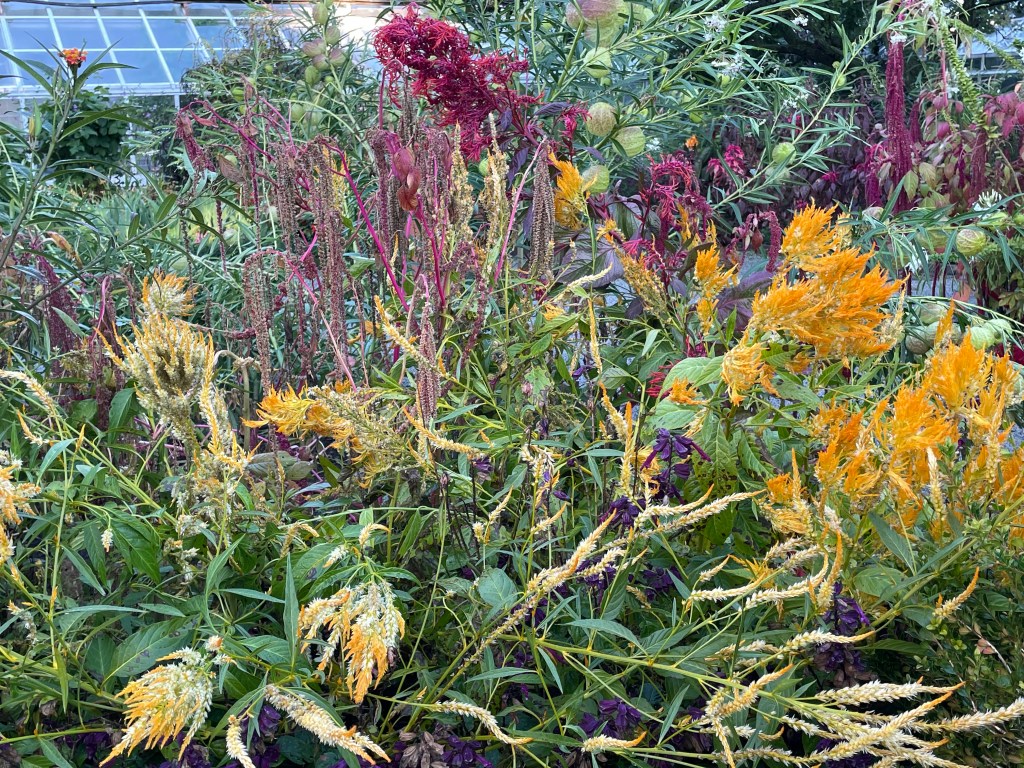
Today, it’s a art center that boasts studios for artists, museum spaces, and a gorgeous botanical garden that includes one of the few Chinese scholar’s gardens in North America.The administration does what it can with a severely limited budget. A few years ago a visiting cousin from Switzerland was shocked at what she saw as neglect of a beautiful place. It’s better now, if not up to Swiss standards, and Greg, the botanical garden’s chief, does an incredible job of rotating plants through the year.

So most mornings we walk Lola through the grounds. We have dog friends, and so does Lola. The Harbor in general has a low-key hippie vibe that fits in perfectly with that part of the island, which boasts a historic district and scores of gracious 18th and 19th century homes. It’s been cold the past few mornings, so we’ve waited until the sun warms things up a bit. The reward has been this golden light that makes me look like a better photographer than I am.