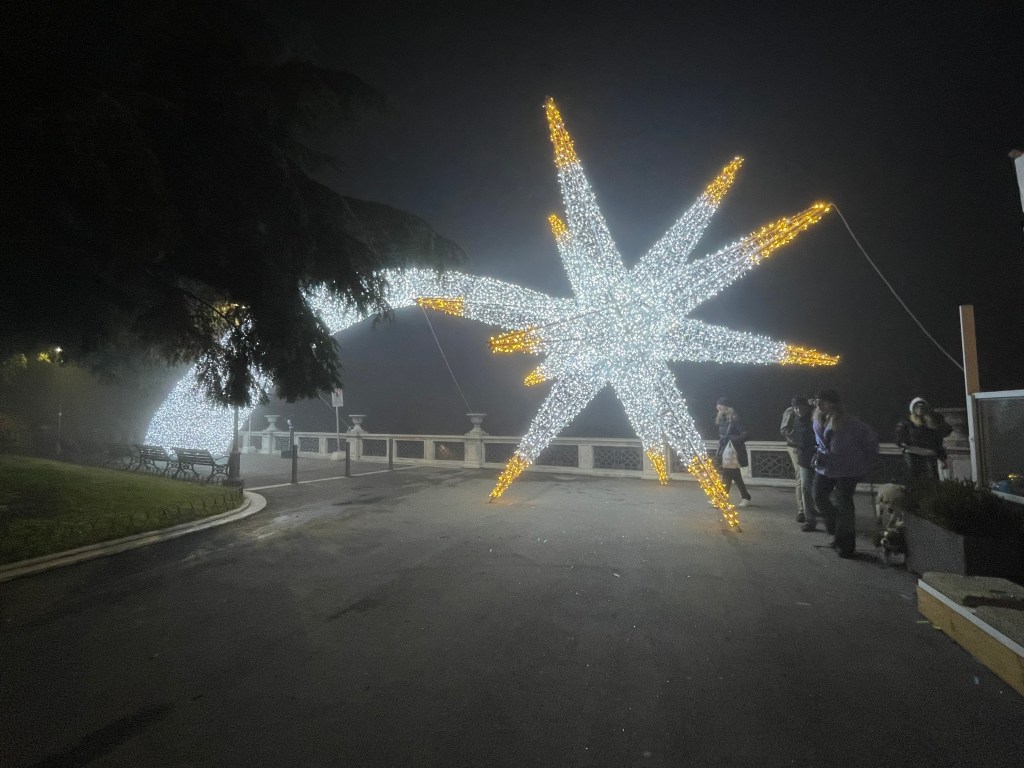
Happy end of the year, back soon
We’re almost up to where we left off. In our daily life, that is. Hurricane Olivia was our terrific excuse. We may have abandoned (mostly) our birth country for now, but certain things, like checking accounts, language between us at home, and, oh, our adult kids and a grandkid keep us tethered. Naturally, we’d prefer that our favorite humans somehow are able to make the same leap. But stuff like regular employment and deep friendships get in the way. I wasn’t ready to turn my life upside down when I was 30, either.
So it’s great when a kid or two comes by for a visit. This time it was Liv a/k/a Olivia, our younger daughter, and her partner Al. We got their room ready and stocked some of the foods we knew they’d like or need. So, big bunch of small hot peppers? Check. Oat milk, ditto. Restock coffee supply? Done. We took mercy on them and picked them up at Rome’s Fiumicino Airport instead of making them take the train. It’s a haul from “Alta Umbria,” but for a Monday morning just after rush hour, we just breezed in.
A lot of any visitor’s stay naturally involves food. I don’t really have to say it, but it’s pretty incredible ’round these parts. A visit to a regular supermarket is like going to an Eataly in the U.S., except that everything is half price, if that much. Back in ‘Merica, our offspring have developed some food intollerances, or so they thought. In Liv’s case, U.S. market pasta and wheat products give her a stomach ache, so she thought she’s got that fashionable gluten problem. But no. She can eat pasta and bread and pizza here, no problem. And she’s not alone—an anecdotal survey of people who live here but go to the U.S. regularly brought out a lot of the same reactions. Anyone have an idea why?
Liv and Al took two weeks of their valuable time off, so instead of sitting at home admiring the view we had to put on our tour guide hats and see stuff around this splendid little region. Not that it’s their first time around this block. Al said to me “Being here is, like, what I do now. It’s my alternate reality life.” First they had to return to Perugia, Liv’s first love and where Al has developed certain rituals. I dropped them off so they could wander around without us old people slowing them down. Despite the nasty weather, they dropped into their favorite places, Al at the porchetta stand on Piazza Matteotti, and the two of them for artisanal gelato (with flavors like gorgonzola and honey) at Lick (closed for vacation until 7 December).
ONCE THEY GOT PERUGIA OUT OF THEIR SYSTEMS, we tried to get away from the too familiar. Last year we spent a rain-drenched day in Foligno. Until then that small city was just a railroad station where we had to change for the Perugia branch line. But we discovered it’s a lively place and unlike most towns in Umbria, flat and really walkable. The window shopping is terrific, and there are tons of cafés and restaurants, many of the latter looking as though they dropped in from Williamsburg.
Knowing that we were going to be in Foligno long enough to have lunch, I started to surf the Web for suggestions, and ran into the service The Fork. It’s like Open Table and Resy in the U.S., but it points to places off the main tourist squares and, if you reserve a table through the site, you often get a discount. I looked through the service and got us a table at Fish Easy (that’s really its name). You can leave a note for the restaurant when you reserve, and I asked if it was okay to bring our dog. Most restaurants here are dog-friendly, but it never hurts to ask. I got a quick reply—sure, we’ll be happy to have him around. (Below, lunch at Fish Easy, with Niko hoping something falls off the table.)
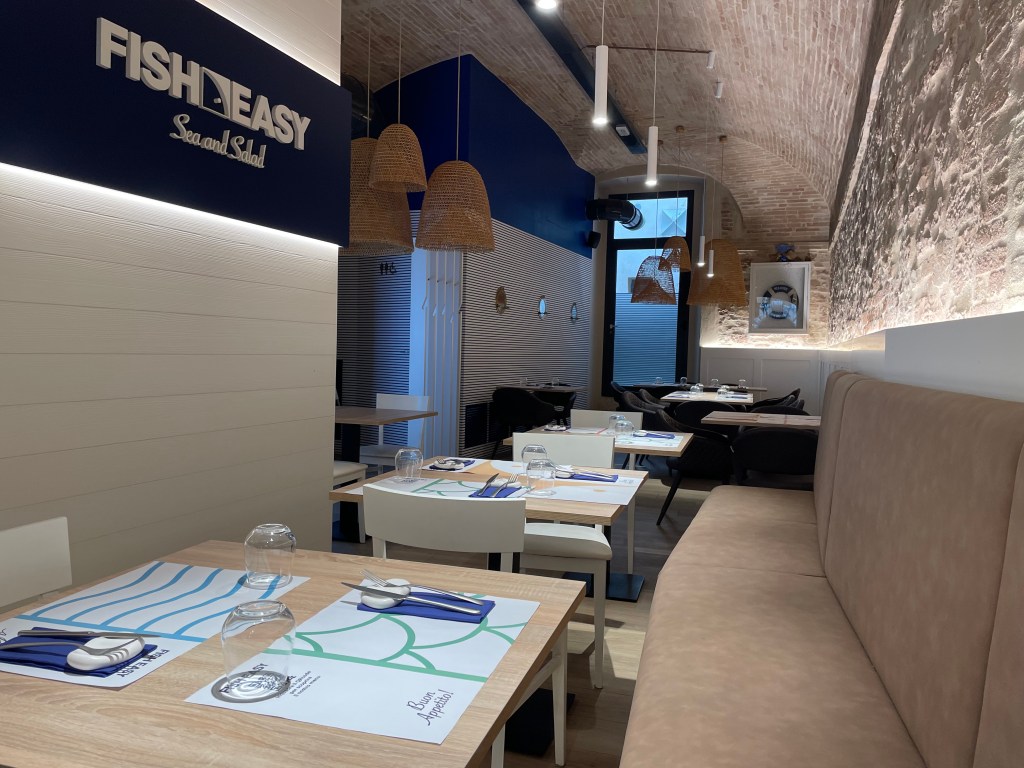


The proprietor made good on his promise. Niko was our calling card, and as soon as he saw Niko leading the way, he knew it was our party of four. The place, like a lot of Foligno eateries, didn’t trade on the Olde Worlde thing, the decor and the menu was sleek and up to date.
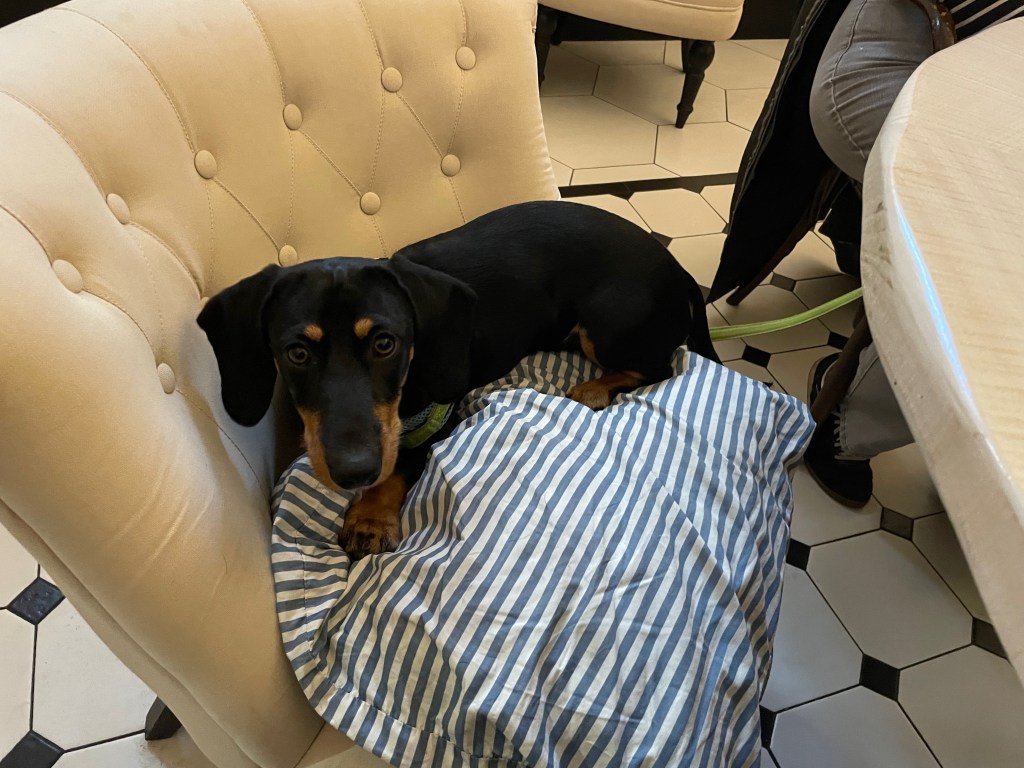
Another day, we took advantage of the fine weather and drove across the region to the city of Orvieto, famed for its delicious white wine and its incredible Italian Gothic cathedral. I used The Fork again to find a place to eat, and it led us to Caffè Ristorante Capitano del Popolo, on, logically enough, the piazza of that name. After a funicular ride up from the train station (with plenty of free parking), we admired the Duomo, including the stunning frescoes by Luca Signorelli, before walking a few minutes away from the tourist crowds to the piazza. The market there was shutting down as we walked between stalls to the restaurant. I’d warned them, too, that we had a dog and they not only let Niko in, but gave him a plush chair, pillow, and water bowl. (Below, the Signorelli panels and a modern capolavoro.)


Like more and more restaurants here, the menu was creative but rooted in Umbrian tradition. So some familiar dishes has interesting twists, like the addition of ginger. I usually don’t eat meat, but I was pasta-ed out and went with a vegetable-forward version of chicken alla cacciatore, while my stronger-willed wife and kid had trucioli (a short pasta) with artichoke cream and mint.
THE SPARTAN WOMAN AND I have this compulsion to show off “the real Umbria” to our guests. That usually means one of the sagras around the region. They’re usually held in the summer, when warm weather means long sultry nights, local food specialties, and kitschy line dancing to live music. Liv and Al were too late for those. But they weren’t too late for Montone’s fall festival. Plus, going there gave us an excuse to check out a different part of our area—after a few months of living here, it’s easy to get stuck in a rut of shopping, home maintenance and occasional hanging out with friends.
So, Montone. It’s said to be one of the most beautiful towns in Italy by the kinds of groups that keep track of that stuff. I can vouch that it’s awfully pretty, though I gotta say that it’s got lots of competition. The festival was fun because it got us out of the house and, with its emphasis on local foods and the chattiness of the vendors, we got an education in local foods. Really, really local foods. The hyperlocal food culture means that local towns have wineries, honey producers, and other local producers just beyond the town walls. For us that day, the nasty November weather broke and we strolled around and talked to people about cheese, pasta, and medicinal herbs and tinctures (the maker of the latter grabbed us for a good long chat).


So much for all that. The Spartan Woman, Niko the pup, and I have returned to everyday life, evading the wild boar hunters, looking at the view, and trying to decide every day what to have for lunch. And one of these days we’ll hang more pictures on the walls and make this place look more lived in—in a good way.
Gotta say, this reverse immigration is a kick. As if I didn’t have enough to do—you’d be amazed at how complicated it can be to register a dog with Italian health authorities—I look at this thing we’re doing as if it were a multi-faceted model, turning it upside down and spinning it around to get a better look. Even my dreams get complicated, with people speaking different languages, and different shards of my life crashing into one another.
Most of the time I’m pretty comfortable being here. I almost lost sight of that over the summer’s hot spells, which kept us literally in the dark for hours during the middle of the day, after which we’d try to cool off with a swim, or go somewhere for a drink in the shade. It felt isolated and more than once I started to think I didn’t have to move thousands of miles/kilometers to live this life. But when it cooled down some, we started taking walks again and our neighbors would stop and chat. It felt good to be babbling in Italian, setting up coffee or dinner dates with the sweet people who live along this road.
I can only imagine how my father felt when he moved to New York back in 1955. He had the support of my mother’s family, but he didn’t have decades of rehearsing for the move, like I did. For my dad the move was a sudden plunge into the unknown, and that showed. He never quite understood how his new country worked, and why Americans didn’t take to the streets for economic reasons.
He clung to his culture. My sister and I would buy him Italian pop music albums for Father’s Day—one was a bunch of songs from Italy’s San Remo Festival, sort of a precursor to today’s Eurovision song contest. That album supplied my sister and me with a good sense of camp. Cynically teenagers brought up on The Beatles and Rolling Stones, we laughed at songs like this, by a character who called himself Little Tony. That bass line’s pretty catchy, though.
When my parents bought a decent stereo, my dad did what every respectable Italian in New York would do and bought some opera albums. Naturally, they were Italan operas: Cavalleria Rusticana, by Mascagni, about a Sicilian Easter Sunday that goes very badly, La Traviata by Verdi, a prostitute who dies alone without her client-lover; Aida,also by Verdi, two ancient Egyptians who meet a tragic end in a temple vault, and so on. (Hey, there seems to be a common thread here.)
The one exception to all of this was Dad’s unexpected love of the Supremes. When they came on The Ed Sullivan Show, he was under Diana Ross’s spell, uttering every so often, “She’s beauty.”
WHAT DOES THIS HAVE TO DO WITH me? Music. I’ve gone pretty native in most ways; it wasn’t that hard to do. I’m down on “Italian” food—hey it’s just food that people eat here. My accent’s gotten better; no one offers to switch to English or complement me on speaking the language, a sure sign that you’re not doing too well.
But the one time I feel almost totally American is when I listen to music. In particular, R&B and anything that’s got that on-the-1 thing going on. Think James Brown, Funkadelic, Prince. Sure, we listen to Italian pop music up on the hill here. But that’s in addition to our usual stuff. I started thinking about this the other day when I first heard the new song, Angry, by those old guys The Rolling Stones. They may be Brits, but they swing like Americans and have done so since they were kids. Take a listen:
It’s not that I dislike Italian stuff; still, it’s more “in addition to” rather than a substitute. American music is what I grew up with. Certain rhythms and chord progressions resonate with me. We grow up with the three-chord blues progression, and that Chuck Berry chunka chunka riff is almost embedded somewhere in our brain. Even younger artists who don’t know from blues progressions or the Beach Boys have the music as a cultural background. There’s a certain way Americans and their British followers sing and play and it’s definitely a part of anyone for whom music is a big part of his or her life.
Fandom enters into it, too. Even hipster fandom. The other day I was reading the coverage of the rerelease of the Talking Heads concert movie Stop Making Sense and noted the relieved tone that a lot of the articles were written in: Look! They’re talking to each other! Hey, I felt relieved, too. They were a big part of my youf.
We’re trying to catch up on cultural references and the like, but it is a learning curve. I also think there’s a difference in how Americans and Italians play their instruments. If you listen to the bands behind Italian singers like Eros Ramazzotti (shown here in a cool live performance with Tina Turner) or Laura Pausini, they’re terrific. Every note’s in place and their sense of drama and dynamics is spot on, But in some ways they’re almost too good. Americans, at least when machines aren’t taking over, have a wilder edge.
Of course, I’m talking in generalities. Italian rappers get it, and performers like Mamood definitely use rhythm more than melody to power their songs. And Matteo Paolillo has become a breakout rap/pop star because of the TV series Mare Fuori, and his moody, rap-singing in Neapolitan deserves to go international. And one older guy, Zucchero, might as well be a big star in the U.S.—he’s got a great band that’s really beat-friendly. (By the way, take a look at the show Mare Fuori, soon to appear on the U.S. streaming service Mhz Choice as The Sea Beyond.
But I’m talking about me and The Spartan Woman. We’re lucky in a way to be living here now. With streaming services at our voice command, we can listen to anything we want. And while we’re listening to more Italian stuff, sometimes you can’t beat Marvin Gaye, you know? We didn’t have to ship boxes of CDs over; in fact as of now we’d have nothing to play them with. We have smart speakers, and when the ‘net goes down as it does every so often,, we can stream cellular data from our phones to a couple of Bluetooth speakers.
The music thing may sound pretty minor, but I have a soundtrack going on much of the time. If I’m not listening to something, I’m playing or arranging songs in my mind. I wake up most days with a tune in mind and often, even before making coffee (Italian coffee culture may be one of the biggest reasons for being here), I’ll have to tell the speakers to play the song lest I go insane. I associate places with a certain kind of music. Montréal, for example, for moody French pop or that Franco-Mali music that you hear on the radio there; Palermo, Sicily, for a North African-Sicilian hybrid, and so on.
And what do I think of when I think of Perugia? Right now, it’s mainly one of the hits of the summer, bellississima by Alfa (see below). Radio here is pretty eclectic, our car’s screen describes most stations as “vari” or hit radio. Last year it was all about Dua Lipa. It’s harder to say what was big this year; probably a mixture of Paolillo and this song, which comes on the car radio pretty often.
I’m still working all this out. There’s a long history of people from English-speaking countries being expats in Latin-speaking ones. My experience and perspective is a little weird because I grew up somewhere over the Atlantic to begin with. Right now a big part of me just says enjoy and tell Siri to “play music that I like.” Maybe that’s the best approach.
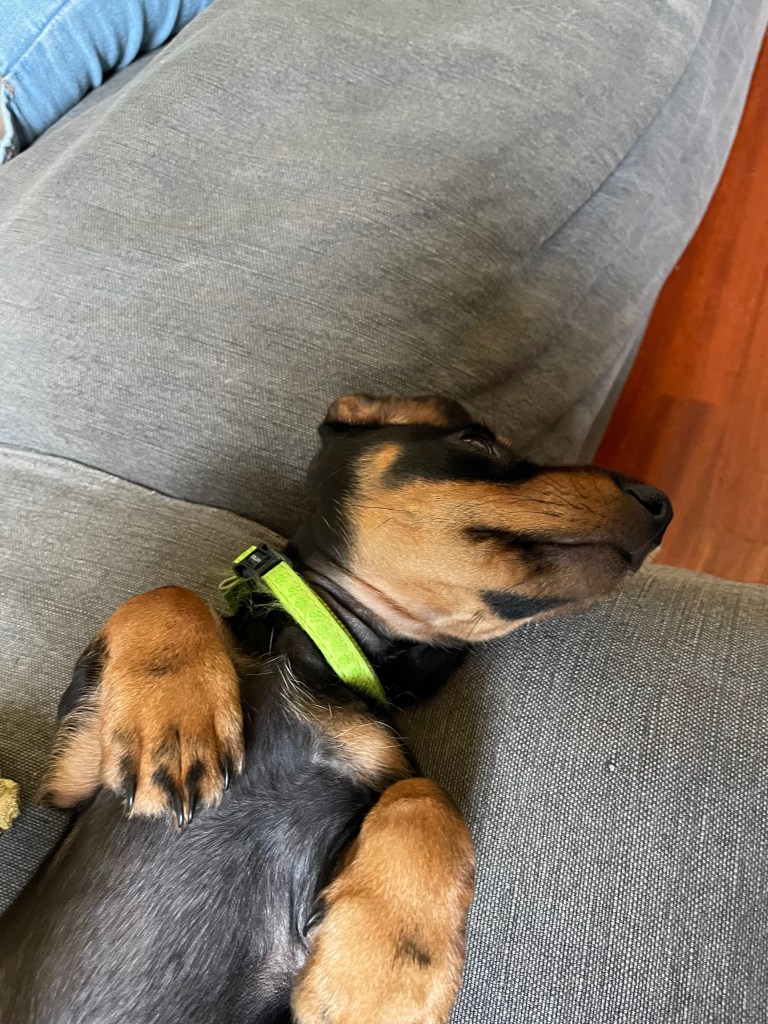
Meet Niko. He’s a three-month old dachshund and the latest addition to our family. He likes to chew, and he likes to chew. But most of all, he loves Georgia, our friend Doug’s dog. When Georgia is around, Niko becomes a good little student, following her around as well as doing dachshund-like things like charging her in attempt to make her play with him. It usually works. There’s another benefit when Georgia is around; Niko doesn’t wander off our yard, which is at the crest of a hill and beyond that it’s straight down into a gulley.

While we like to think that we, the people who brought him home, feed him, and indulge most of his whims, have a place in Niko’s heart, he is also very women-friendly. While he has his puppy holy-terror spells at home, when we take him on errands, he becomes the perfect little gentlepup. With his good looks and puppy size, he’s a natural (sorry about this–>) babe magnet. It’s true; I could safely say that most if not all of the people who react to his cuteness are women. And he likes them back, licking their hands and acting like the sleepy little puppy that he isn’t most of the time.
Okay, I exaggerate. A little. As I write this sentence, he’s tugging at my shoelace.

We haven’t had a puppy around in more than a decade. But this house needed a dog. We’d seen a listing for him online from a family in the neighboring region of Lazio (near Rome). It was an almost two-hour drive but worth it. We met a young woman in her small town, and she was actually holding sleepy little Niko. After talking about what he eats and looking at his libretto—his medical record of vaccinations, etc.—we were off, back to Umbria. The Spartan Woman hung out with him in the back seat and he slept most of the way.

Getting a dog was a good repeat lesson in Italian bureaucracy, as though we needed a refresher course. Italy, and Europe in general, have a thing for knowing how many we are and where we live. And it’s not only for humans. Dogs, too, are registered with their local comune, or municipality. Little Niko has a microchip imbedded in his shoulder that contains his info–birthdate, how many born in his litter, place of birth, and owner’s vital data. Right now he’s registered as C’s dog. We had to fill out a change in ownership form, and that form is being sent from his birthplace to our town’s healthcare center so that his chip can be updated to reflect his being part of our family. Then he can get, yes, a passport, which will permit him to travel with us.
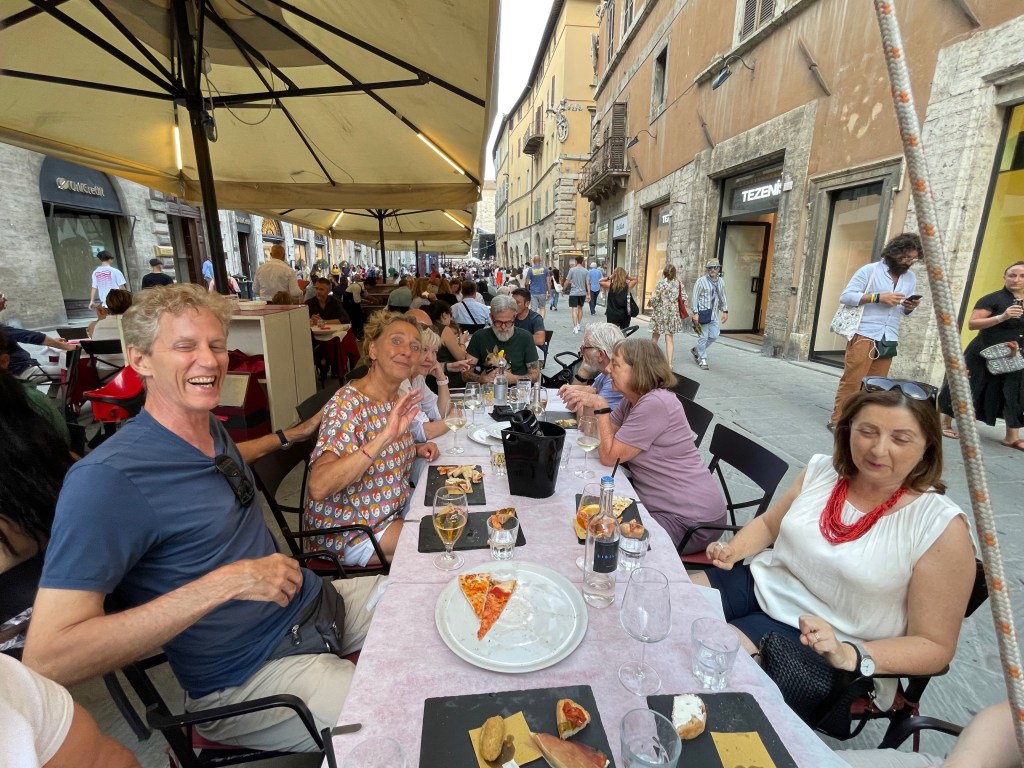
And that’s one of the good things about having a dog here. Niko has a lot more freedom here than most of his America cousins. He can come with us almost everywhere. Naturally, we take him to the pet store. He likes to choose his chew toys. But he’s also gone to the supermarket and to bars. He’s spent aperitivo time people-watching and eating prosciutto. He’s only been with us a few weeks and with the heatwave here, we haven’t gone out much. But otherwise, we’ve seen dogs on trains, in bookstores and museums, and even in pretty ritzy restaurants on a chilly winter day, happily resting under the table. We plan to take him on road trips, and the continent’s pet-friendly practices will make it pretty easy to do so.
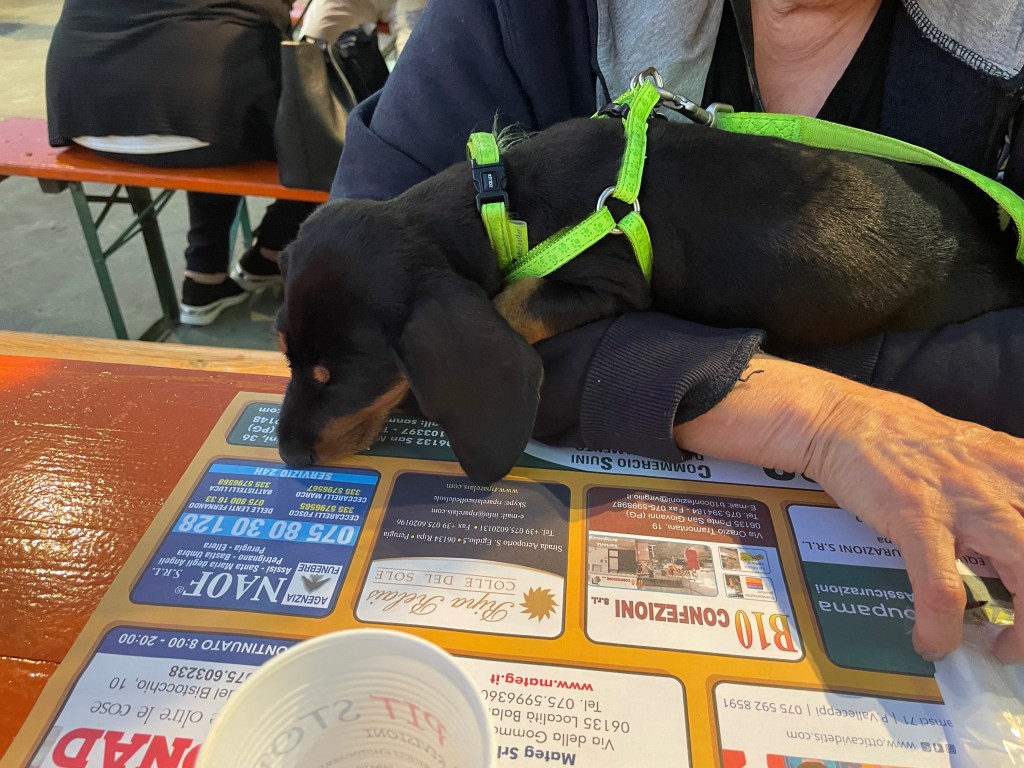
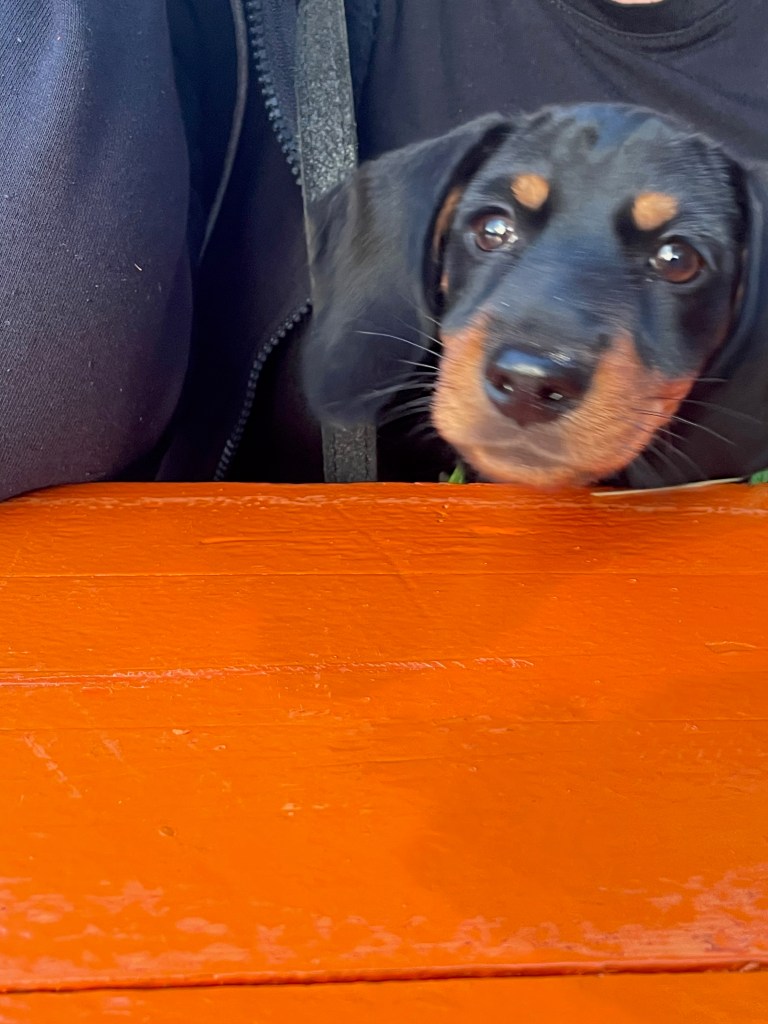
Niko gets around. When he’s not examining menus or being admired, he likes to hide under the table.
We live in a small town, so maybe our experience is different from others. Niko needs a series of vaccines, so we looked up the town’s vet. We always passed a sign pointing to an “ambulatorio veterinario,” so it was easy to find him. The vet, a man with a mellow, kind demeanor, just smiled at Niko and murmured flattering things while giving him a deworming pill. I’m so used to going to a vet’s office, checking in, giving billing info, etc., that the informality of our visit was almost a shock. When I asked the doc what I owed him, he said no charge, first visits are free.
IN A LOT OF WAYS, dog ownership pretty much sums up life here in our little town and region. Official encounters can be stiff and encumbered by rules and procedures. Yet everyday life is punctuated by small kindnesses and a gentleness that’s hard to explain if you haven’t experienced it. Some years ago I subscribed to Quora, and my feed lately is dominated by Americans (real or bots, I can’t say) comparing their great freedoms to the horrors experienced by us in Europe. Like universal healthcare.

A lot of the questions are silly. But they make me think about how people in my country of birth live and perceive the rest of the world, if they do at all. When I go back to New York for a visit, it seems very stiff and cold, and I start paying attention to people’s status—not to mention that it’s ridiculously expensive. Driving around the U.S. is weird, you have to be on guard for cops monitoring your speed and crazed pickup drivers treating their trucks as though they were Porsches. Being pulled over can be a life-threatening situation. When it comes to driving here in Italy, the onus of staying under the speed limit is on the driver; speed cameras are everywhere. Go too fast and a ticket arrives in the mail.
Here in heavily rural Umbria, there’s more of a we’re in this together feeling that I find appealing. In general, too, there’s a looser vibe. And that’s pretty recent. Italians used to be more rules-bound and have more hangups about, for example, what to wear, and when. One of our recent guests from across the pond wore jeans on a hot day because he read that Italians never wear shorts outside of beach towns. Wrong! We’re adapting to climate change here and shorts are everywhere.
Oops. I have to run after the dog. He’s got my shoe.
I might go for a drive today. Not because I want to go anywhere, but I can turn up the air conditioning and be almost sweat-free for a half hour or so. Until my conscience gets the best of me: Fuel for our economic little Renault costs €1.70 a litre, or $7 and change a gallon. Not bad, and probably a decent price to pay so that my brain doesn’t fry.
In case you’ve been offline or not paying attention, Southern Europe is in the midst of a heat wave. I forgot the heatwave’s name this week—yeah, they started naming them in Europe. Maybe Cerberus? Anyway, it’s hot. Really hot. Go out the door and flinch hot. Here’s a screen shot from my weather app:
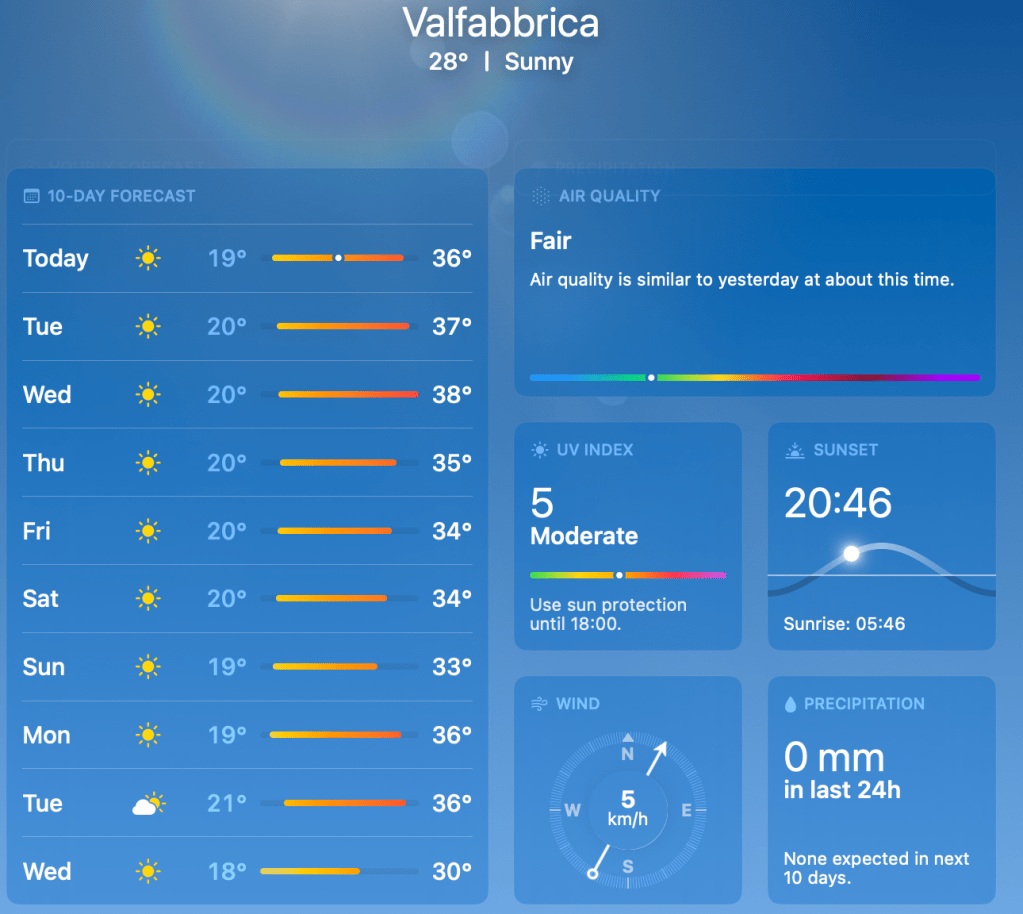
For the Celsius-challenged of you, 37 is body temperature; each degree C is almost 2 degrees Fahrenheit, so 38 is 100.4F. Ugh. Serves me right. A couple of years ago I boasted that we could live without air conditioning up here on our hill. My bad. Even our hyperactive puppy (and new addition to the fam) Niko has taken to sleeping in the dark during the day. Actually, all three of us do. We try to bottle the cool morning air by opening up overnight. Then in the morning, we close the shutters and lock the windows shut. Then while inside we live in the dark like vampires, trying to avoid too much movement. We make it outside to swim as the sun starts to descend late in the afternoon.
Problem is, people gotta eat. The Spartan Woman did make a supermarket run yesterday morning—lucky her, she got to turn on the A/C. Old Perugian friends were coming over and we had to feed them and us. But instead of the typical mid-day meal, we had cold stuff: cheese, a Caprese salad (tomatoes, mozzarella, and basil), and salumi (Italian charcuterie, or cold cuts). We drank cold liquids and ate in our cool (literally) downstairs kitchen.

Luckily, we were able to go swimming. We built a pool when we bought this house and it’s the best investment ever. Silly me, after last month’s endless rain, dark cool cloudy days and general low temperatures, I thought we’d hardly get any use of the “cee-ment pond,” as they called the pool in that stupid TV series The Beverly Hillbillies. Wrong! I’d live in it if I could, except that I have to swim underwater to keep the sun from overheating my head. Yeah, I know, first world problem.
So, splashing around. That’s what we did all weekend. Friends and ex-colleagues of TSW were due to arrive in Perugia on Thursday, and we were going to show them the town. But a train strike put an end to that. They rebooked for Saturday, but instead of trekking around the hilly city and dying of heat stroke, we brought them to our lair and we spent a good part of their few hours here in the pool. It was a nice change for them from touring; the videos and photos from tourist favorites like the Trevi Fountain are horrifying for this crowd-averse blogger. Take a look:

After years of slowly, glacially, indecisively moving over, we’re finally doing it. The old house in New York is mostly empty and being renovated by its soon-to-be occupants (we’re keeping it in the family), while a few dozen boxes of personal effects are somewhere in a warehouse awaiting shipment to us here. This house has been ready for years, even if there are features here and there that we’d like to put in. My ex-editor used to tease me about my commitment issues, so take that, boss.

Call it procrastination, call it circumstance, call it Covid-19, whatever. Up to now our stays here on the Umbrian hilltop have felt like really long vacations, even if we had to do everyday stuff like renewing the car registration. Not to mention taking the garbage and recyclables to the “tip,” as Brits would say. (We’re talking about a few plastic bins down the road. More on this last bit later.)
All that’s left is some bureaucratic stuff It also means that we’ll be back in the U.S. less, and in some ways that’s a relief.
Let me explain. I don’t usually like to do the we have this, they have that game, but to understand something, or a place, you often have to stand outside of it. Such is the case with the country of my birth. Our four- or five-month stays away have given me some perspective. And I gotta say I don’t like what I’ve been seeing. After one absence a few years ago, for example, we suddenly saw monster gas-guzzling pickup trucks everywhere. In New York City. Driven to the supermarket and on the school run. Really?

More recently, and especially after Covid, there’s a palpable feeling of anger on the streets. Maybe we’ve gotten too used to the easy sociability here in Italy, where every encounter is a potential long conversation, but our fellow Americans seem sullen and angry. You feel it even when driving, when every SUV and pickup surrounding us seems to be driven by a lunatic. People do stuff that Americans used to accuse Italians of doing, ignoring stop signs, passing on the right only to make a left turn, driving at ridiculous speeds on local streets. No wonder there are speed cameras everywhere. It’s not just driving; shop clerks are nasty and ‘net bulletin boards are full of snarky comments.
What makes me really sad, though, is how the U.S. seems stuck in the past. Sure, this Mac I’m writing this on is up to date, and companies are always updating products and services. But every single change, even trivial ones like cooktops, has become a political and cultural minefield. Meanwhile, the Old Continent moves on. Not everyone likes it, I’m sure. But the feeling that this is 2020-something and we have to deal with climate change is palpable, even here where a right-wing government was elected last fall. (Never mind that the prime minister is a relatively young woman, who isn’t married to her partner, the father of her child.)
LET’S GO FOOD SHOPPING, just to make a few points. Here we are at the garbage bins. We drove here with our pint-sized Renault, which is due to be replaced by an electric model in a couple of years. You can argue about the ultimate merits of recycling, but for now we have to sort our garbage. One bin gets plastic, and almost everything plastic counts. Another is for paper, another for regular garbage. And the final, smelly one is for organic food waste. There’s a glass bin down the hill; we love the sound, as Nick Lowe once wrote, of breaking glass.

I’ll cop to the fact that we shouldn’t have driven so long to get to a supermarket. But in landlocked Umbria, just the occasional store has fresh fish, and these former seaside people gotta get our fix. Notice that there’s something different about the parking lot. Those panels shading the cars aren’t just pieces of plastic and steel; they’re solar panels. And these panels supply a big part of the shopping center’s electricity.

A lot of people, and especially Italians, criticize this country for being fossilized. And I can see that when it comes to some bureaucrats (let me tell you about the woman at the water board…). At the same time, we have a decent infrastructure, fiber Internet is being rolled out across this region, and, especially since Covid, most people just tap their phones or cards to pay everything from a coffee at the bar to induction cooktops at the Italian version of Best Buy.
And our prime minister and the opposition leader are both women.
Way back, late in August between my freshman and sophomore college years, I felt devastated. I’d come home after spending most of the summer in Sicily with my extended family. And there were no bars where I lived in New York. Okay sure, there were lots of places where you could get drunk and maybe, get lucky. But no bars in the Italian sense, and that made me feel lonely. I could joke about how most of my life since then has been a way to get back to the local bar.
But maybe it’s not a joke. So allow me to offer a tribute to the Italian bar. For those who haven’t been here, or haven’t paid much attention, a bar here isn’t like the American kind. Maybe in spirit like a British pub? Whatever. It’s sort of like a café, except that that word doesn’t quite capture the bar’s essence. Maybe, in the American context, it’s like the old small-town diners or cafés, where locals would gather, hang out, get anything from coffee to a meal, and share local gossip.
Bars are everywhere in Italy, from the big cities to small hamlets like Casacastalda, a 20-minute drive from Casa Sconita up a twisty country road. That bar has an amazing location overlooking northern Umbria’s hill-mountains. But they can be on a residential street, on a piazza, or even in the parking lot of a gas station. The toll roads through Italy, the autostrade, have amazing bars, some of them inside buildings that look like retro ’60s spaceships straddling the highway. The thing is, if it’s Italy, there’s a bar nearby.

Basically, the bar serves most of your needs throughout the day. In the morning it’s the place for a cappuccino and a cornetto, or mid-morning, for office workers to have a booster shot of coffee (espresso mostly) before tackling some more emails. One of our friends here never makes coffee at home—he gets dressed and heads out to his favorite bar for breakfast, which here is usually coffee and a pastry. (His is the place in the gas station parking lot.) If you aren’t into sweet, there are little panini—my favorite is tuna and artichoke. Later in the day people stop for another pick me up, and around 6, an aperitif or cocktail, always served with a little snack, because here in the land of La Bella Figura, being obviously drunk in public is a faux pas.


It doesn’t take much to be a local. If you’re renting an apartment in Italy, even for a few days on vacation, one of the first things you should do is visit the local bar. Go two or three days in a row and you’re a regular. One barista in Perugia remembered us from getting coffee with our daughters in the morning. When we returned a few months later, he asked us why the girls weren’t with us.
We live in a small town here, yet I can think of at least five bars within a 20 minute drive. Three of them are down the hill from us. They all have their own style. The bar on our local piazza looks like it’s from the 1980s, but the real deal is to sit outside in the morning or late afternoon and soak up the sun and the murmur of the fountain combining with the sound of the local accent. And they serve addictive fried sage leaves with your Aperol spritz in the afternoon. Another, housed in a local shopping strip along with the main pharmacy and town supermarket, is Italian sleek modern. Even the spoons look like no spoons you’ve ever seen, and it takes a few seconds to figure out how to use them. Still, if I’ve been away, on my first visit we have to catch up with the barista and show pictures of the grandchild.

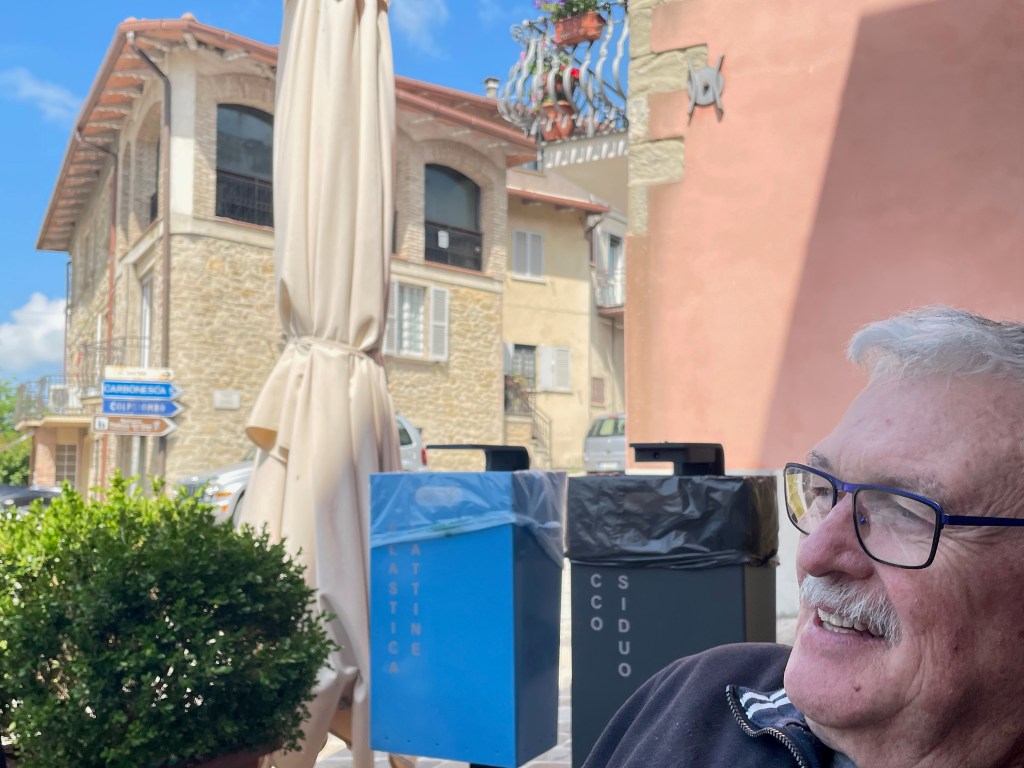
Come to think of it, we assign these watering holes to different occasions and frequent them with different sets of friends. Yesterday, for example, I met my friend Vian, a transplanted Canadian who moved to Umbria with his wife so that they could be near their daughter and grandchildren. He lives outside a town called Gualdo Tadino, a place with eccentric architecture that snuggles up against the Apennine Mountains. Vian and I like to meet for a mid-morning coffee and pastry, and we do it midway between our houses—that bar in the hamlet of Casacastalda. The place has a great view, and Vian, a sociable guy whose Italian improves every time I see him, is besties with the owner and always has conversations going with some old guy who hangs out there.
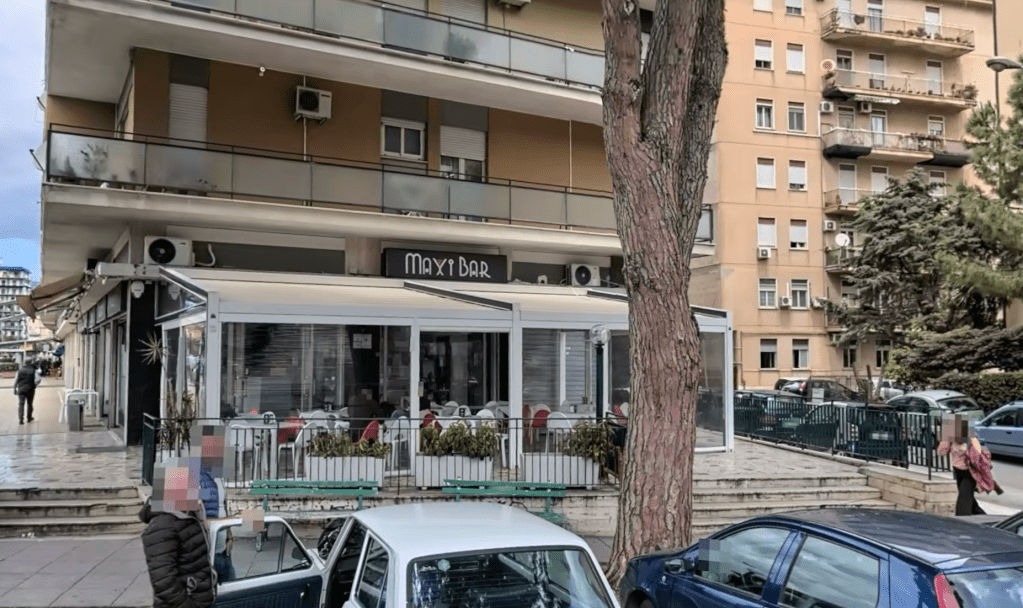
My Uncle Ignazio probably frequented his local bar every morning until he was taken to the hospital for the final call (he was in his nineties). A few blocks from his apartment, the bar was the focus for the pensioners, people on their way to work, parents taking their kids to school, and even groups of motorcyclists headed to western Sicily—his place was on the ring road around Palermo. A visit with him almost invariably involved a stop at the bar. He smoked (if outside) argued politics with his cronies, argued politics with his cronies, and did I mention that he argued politics?
I could go into coffee etiquette, what to order, when to pay and when to wait (Ok, big cities and the road stops are pay first, go to counter and get your stuff; here in the sticks, it’s whenever you feel like it.). But that’s for another morning. Right now, it’s about 23:00—11 p.m. in US-speak—and I’m thinking about this little bar in Perugia that whips its own cream and fills pastries with it for breakfast. Sweet dreams….
[Update: I went to that little bar.]

Credit for Autogrill photo: qwesy qwesy, CC BY 3.0 https://creativecommons.org/licenses/by/3.0, via Wikimedia Commons
Life here on our hill ain’t all sunsets and spritzes. Maybe it would be if we had servants. But we don’t; we’re just two retirees trying to have a little fun and adventure. Gotta say though, in the week since our arrival, life hasn’t been much of an adventure. It’s been pretty dull in a nice way, in fact, after a way too busy holiday run-up. Call us happy stay-at-homes, at least until tomorrow, because we’re planning a run into the big city of Perugia (pop. 170,000). And we’ve had to catch up on our lives here before we can descend from our lofty patch of land.
First things first: After a day or so of traveling packed like sardines into two Lufthansa flights—a wide bodied A 340 and a narrow body A320, then a ride in our man Angelo’s van, we got here with just a touch of jet lag. More importantly, and unlike our return to New York in the fall, we didn’t bring Covid with us, or catch it in an airport or while aloft.
Did I mention it’s winter here too? That means no lolling around at the café in the piazza, definitely no beach day trips and no dinners on the patio. It’s not as cold as it is in a Northeast U.S. winter, but the days are short, the nights long and chilly, and we’re greeted every morning with a sea of fog in the valley which, I have to say, is pretty stunning. People jokingly call it the Umbrian sea and these shots give a good idea why.


We still have to heat the house. As we were leaving back in October, the price for propane was going through the roof as fears of a long, cold, natural gas-less winter took hold. We have huge buried tanks to hold said gas, but even when Vlad the Ukraine Invader isn’t doing his genocidal mischief, prices are high—about 80 cents a litre—and it costs hundreds of euros to fill the tanks.

Luckily, the previous occupants of our house put in these clever Klover fireplaces. They’re hooked into the house’s heating system, so all we have to do is start a fire. A big fire—the pump that drives the fireplace’s heat into the radiators starts pumping at 50 degrees Celsius—that’s 122 degrees F. for the metric-challenged—and that takes awhile, and quite a few pieces of wood. The Spartan Woman, living up to her nickname, managed to stack most of our remaining wood next to the living room fireplace. Thanks to her our nights have been toasty and only a little smoky.
But that wood. Before we left, we’d pass our supplier on our way to the supermarket. He had great mountains of wood in anticipation of a gasless cold winter. I called a couple of times and he assured me about the supply. But then he added that he was so busy that he wouldn’t couldn’t guarantee delivery before we left. And so we looked at our dwindling supply warily, treading a line between staying warm and making sure we wouldn’t be left to freeze on later nights.
Last week, the wood dude and I made contact before we left. We texted each other, he said just call or write when we arrive, happy holidays, etc. I did, and he promised a delivery yesterday morning. It didn’t happen. We waited and worried. Should I call? After years of editing other people’s writing, I’m tired of being a nag, so I waited without nagging until after night fell. “I’ll be there tomorrow morning.” “Can you tell me when?” “Around 10.” Phew.
He was good at his word. This morning a little dump truck arrived and tipped almost 19 quintali—that’s 1800+ kilograms or nearly 4,000 pounds of the stuff near our garage door. It was not a little pile, nor was it all stacked in a pretty box. If it were packaged nicely, it would have cost a lot more than €340, which is a fraction of what propane would’ve cost us to heat the house for the same period. TSW, with her superior logistical skills, designated areas for big pieces, kindling, and in-between annoying pieces, and we went to work. I must confess that she did more; a bad back, the result of my Summer of Coughing, made me take breaks after every dozen of chunks of wood stacked.
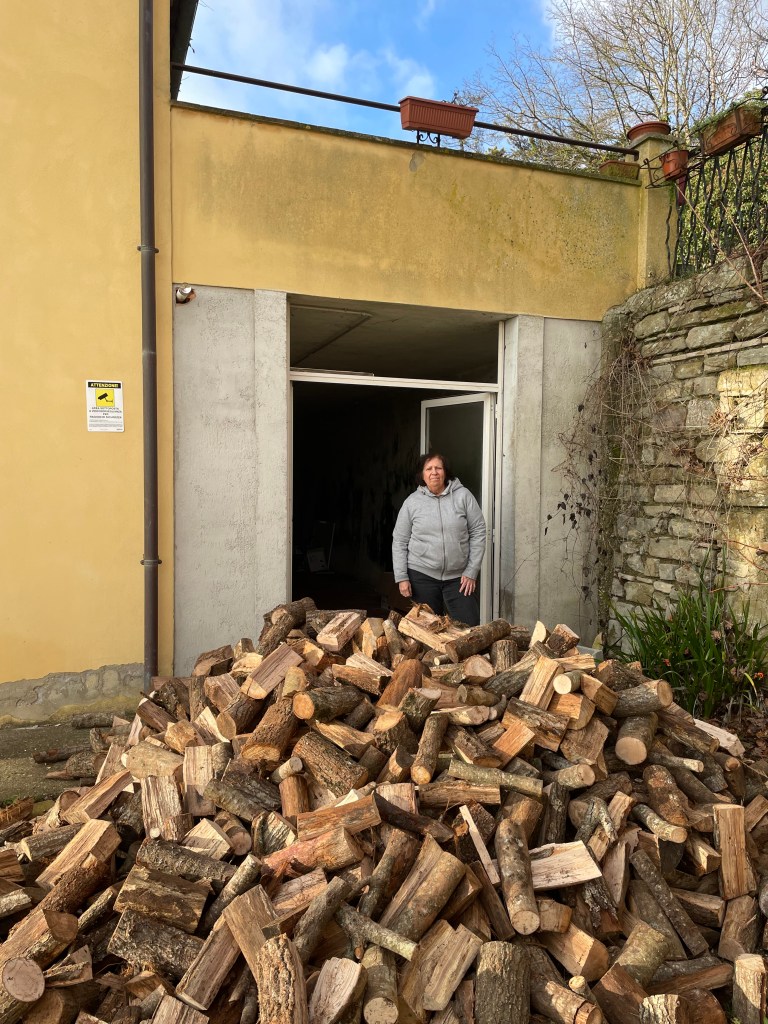


It wasn’t a bad way to spend a couple of hours. At least we weren’t shut-ins staring at computer/phone/TV screens. Fresh air! Clouds! And that Umbria sea just below us, shifting its shape as the breeze and sun played games with one another. What we didn’t especially like, but can’t do anything about, were the shouts of men in the land surrounding ours. They were hunting for wild boar, and every now and then shouts, the barks of hunting dogs, and rifle shots rent the air. That’s the kind of stuff they don’t put in the tourist websites. But that’s winter in the Umbrian countryside, and I wouldn’t trade it in for anywhere else right now.
But there’s more.
TODAY IS JANUARY 6, SO IT WAS TIME, we decided, to descend from our aerie. The sun was bright, the sky blue, the “ocean” floating around in the valley, and our Covid tests negative. So we get in the car and drive the 20-something kilometers (about 12 miles) into Perugia. Not a big distance physically, but psychologically, it’s a big gulf.
Especially today—this is the last weekend of the holiday season in Italy. We say “buone feste” here—happy holidays—not necessarily to be caring and sharing with our non-Christian sisters and brothers across the world. The season literally consists of three big holidays, and a fourth, December 8’s immaculate conception (or something like that), which kicks off la stagione Nataliza (the Christmas season). We wanted to how Perugia looks before they take away all the lights and trees and decorations.
The roads were nearly empty as we headed into town, but the Minimetrò system was packed. A 10-minute ride from the outskirts of town to the historic center and we were in the middle of a cast of thousands. Even better was a parade of antique cars. I’m not sure what a prewar Lancia or Fiat has to do with Epiphany—gifts to the Magi (us)? perhaps? Who knows. It was fun to watch these old beauties parade slowly by as people reminisced about their father’s or grandmother’s car that took them on beach holidays or to school.


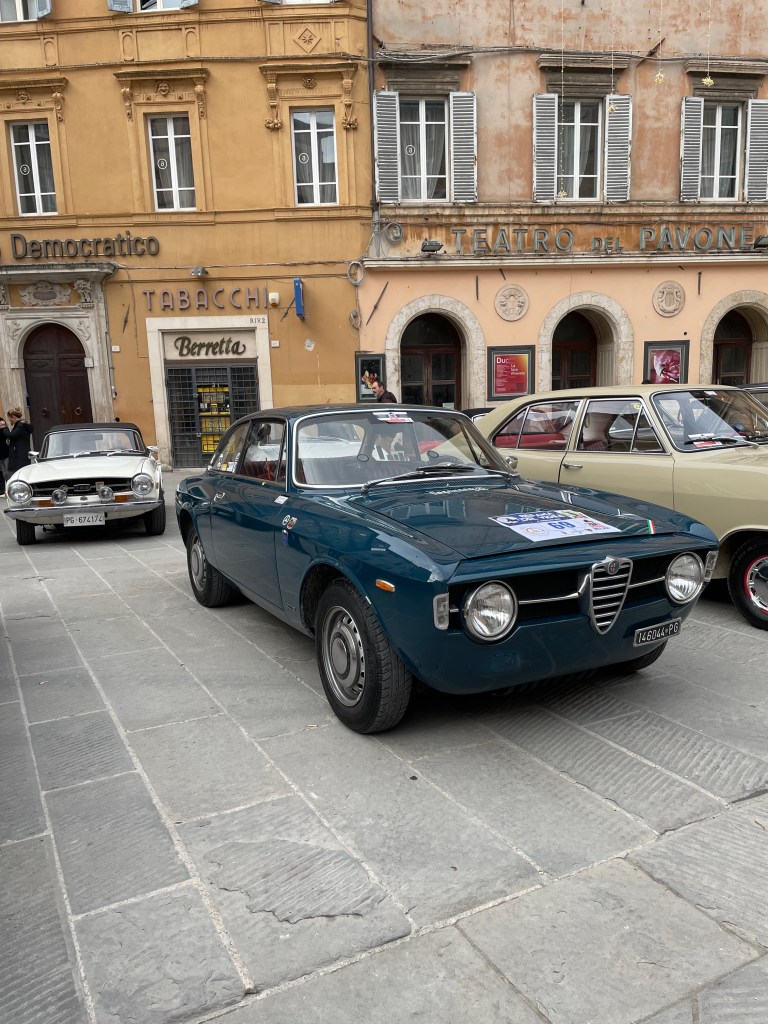
One thing I wanted to do but forget on the way out was to get a hot chocolate. Italian cioccolato caldo is nothing like the thin, insipid stuff sold in the U.S. Think warm, intense, slightly less thick chocolate pudding. Next time…

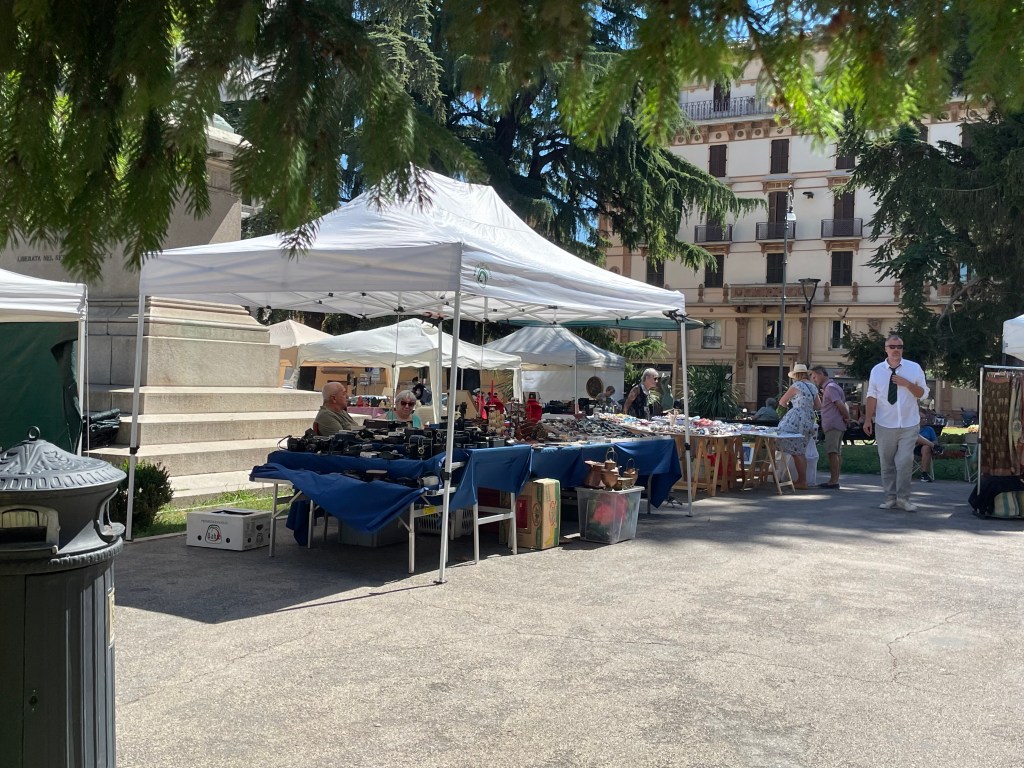
We went antiquing the other day. You might say, “meh, so what?” But this was an unusual event for us. Well, okay, not the venue: Our nearest big city, Perugia, hosts an antiques market in one of the big piazzas on the last weekend of every month and we’ve been there before. Still, this was kind of a big deal. The heat, and still-widespread Covid cases, kept us on our mountain most of the time. But we got antsy and needed to go out. And in the process, with the heat abating somewhat, we’ve rediscovered our old love: Perugia.
There’s an amazing amount of both good stuff and kitsch. In particular, I have a thing for old magazines from the 1950s and ’60s, artifacts of “La Dolce Vita” Italy, the Italy that my sister and I reveled in as kids, when our relatives from abroad came to visit, or when we listened to the pop songs of the time. The Spartan Woman and I have even bought little stuff at the market, like an antique corkscrew or some prints.
This time was different. We actually bought a large piece of furniture. The seller called it a libreria—a bookshelf. But it looked like the perfect breakfront for our kitchen in the country. The top part had glass doors, while the bottom doors were wooden. It looked like it came from nonna’s (grandma’s) house. The seller probably sanded it down and painted, then distressed the wood to give it that old country house feeling. Whatever. We liked it. The price tag was €490, which comes to about the same amount in dollars. We were just looking and the seller blurted out €300. Sold!
What happened afterward is what made the deal special. We told him we lived in the country, about 20 kilometers away. Does he ship? He said he did. It would take a few days, which was fine by us. We gave him our address, with some directions, and my mobile phone number. Did we want to leave a deposit? he asked. He quickly added, it’s not necessary. Would this happen anywhere else I wondered? At the time, it seemed to me that at this point he had no incentive to get the piece to us, but hey, it’s not as though we were going to lose out if he didn’t deliver.
After breakfast at a nearby café (coffee and pastries), we headed to our car. My phone rings. “Antonio, this is the antiques guy,” the voice on the other end said in Italian. “Are you going to be home soon? We can deliver the piece today if you want.” Sure, I said, we’re on our way. Give us an hour or so—the actual trip is 25 minutes, but we had to clear out a space for the piece. A couple of hours later, a delivery van arrives, I help the guy carry the heavy load into the kitchen. Delivery guy drinks three glasses of cold water after he complained that the ghost town next to ours didn’t even have an open bar. We give him the cash and now the piece sits nicely in the kitchen.
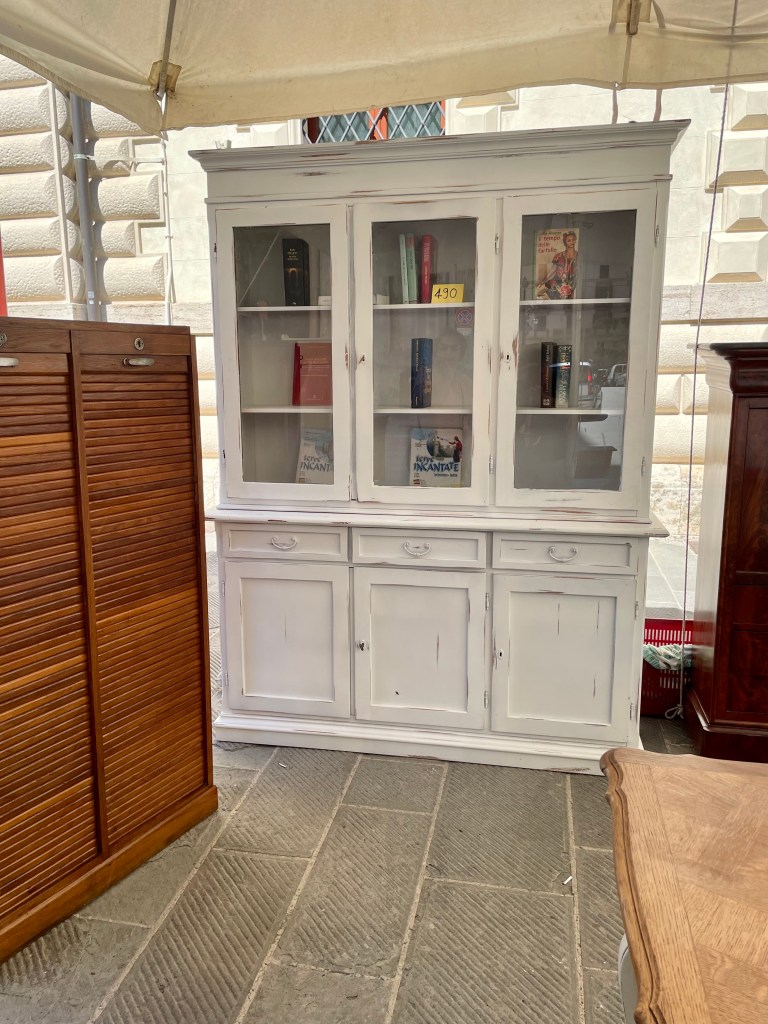

I know, this is not extraordinary. People buy stuff like this all the time. But what got to me, and what I love about living here, is the element of trust. The seller didn’t take a deposit, and yet he delivered the piece based on our word. Maybe I’m wrong, but I can’t imagine that happening in New York. Or much of the U.S.
ON THAT SAME WEEKEND AS THE ANTIQUES MARKET, we had another terrific reason to go into town. Blame, or credit Laura. She’s part of the Santucci clan, which adopted The Spartan Woman back in the day, and which has become our chosen family here. In fact, the connection with Laura is where our Kid No. 2 was baptized. It’s a Romanesque church that dates to the 6th century, give or take, and was built using the columns of a Roman temple that previously stood on the site. Laura co-authored a book on the church, grandly called, at least officially, the Tempio di San Michele Arcangelo. But most perugini just called it the Tempietto di Sant’Angelo.
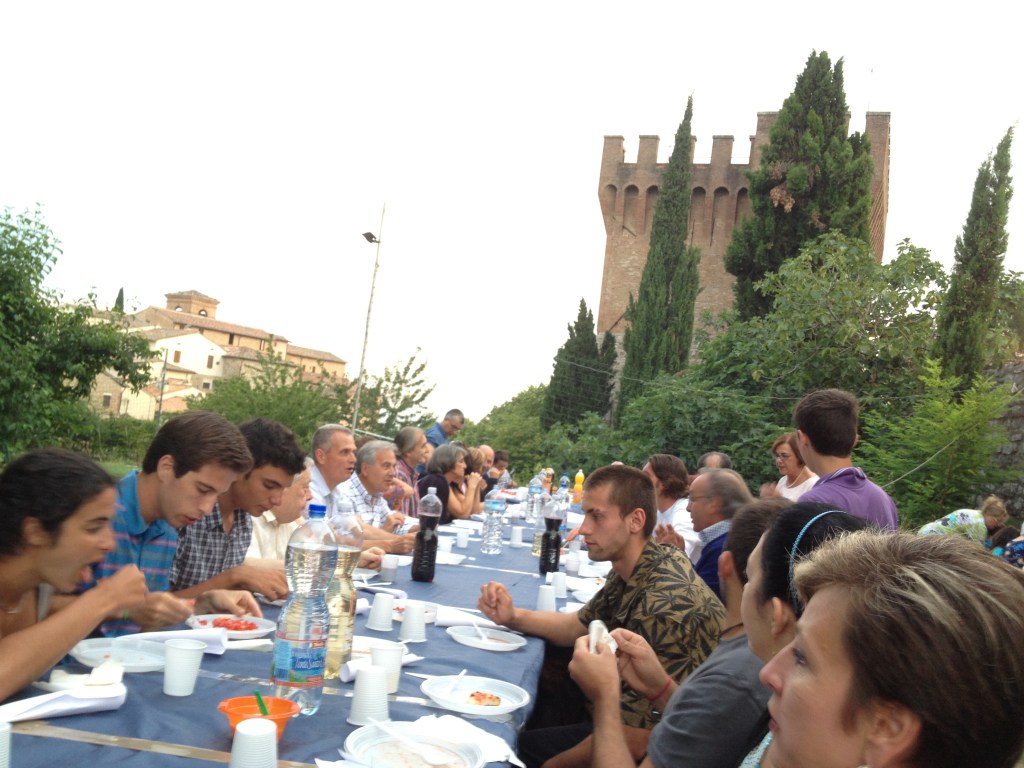


Perugia’s archeological museum hosted a presentation on the book and a general lecture about this extraordinary structure. It’s round, and set on a hill surrounded by lawns, with the neighborhood’s guard tower nearby. It’s such a tranquil and beautiful place that it’s got a waiting list of couples throughout Italy who want to be married there.

Besides its fame, it’s the local parish church, and hosts such activities as after-school recreation for latchkey kids in the neighborhood. And before Covid, its yard was the venue for an evening that Laura, her family, and friends organized called “Mangiamo Insieme,” or “Let’s Eat Together.” For a nominal sum, I think €10 or €15 a head (about the same in dollars), people in the neighborhood got together in long long tables for a full dinner. Some 200 people attended the one we were at; it was a beautiful night, bringing together just about everything that makes living in Umbria a pleasure.
After Laura’s presentation, we had a real need for some adult beverages and people watching. Perugia’s main drag, the Corso Vannucci, is a pedestrian island full of bars, cafes, restaurants, and shops. It’s also way too touristy for us, at least in Perugian terms—this city is decidedly not like the Holy Trinity of Italian tourist sites, RomeFlorenceVenice. You can spot the tourists easily: They’re the ones having dinner at 18:30 on the Corso.
So, avoiding the early dinner crowd, we went to a hipster bar, Mercato Vianova, on a side street. You can get sushi at this bar, if that’s your thing. But we were just into a drink and snacks.
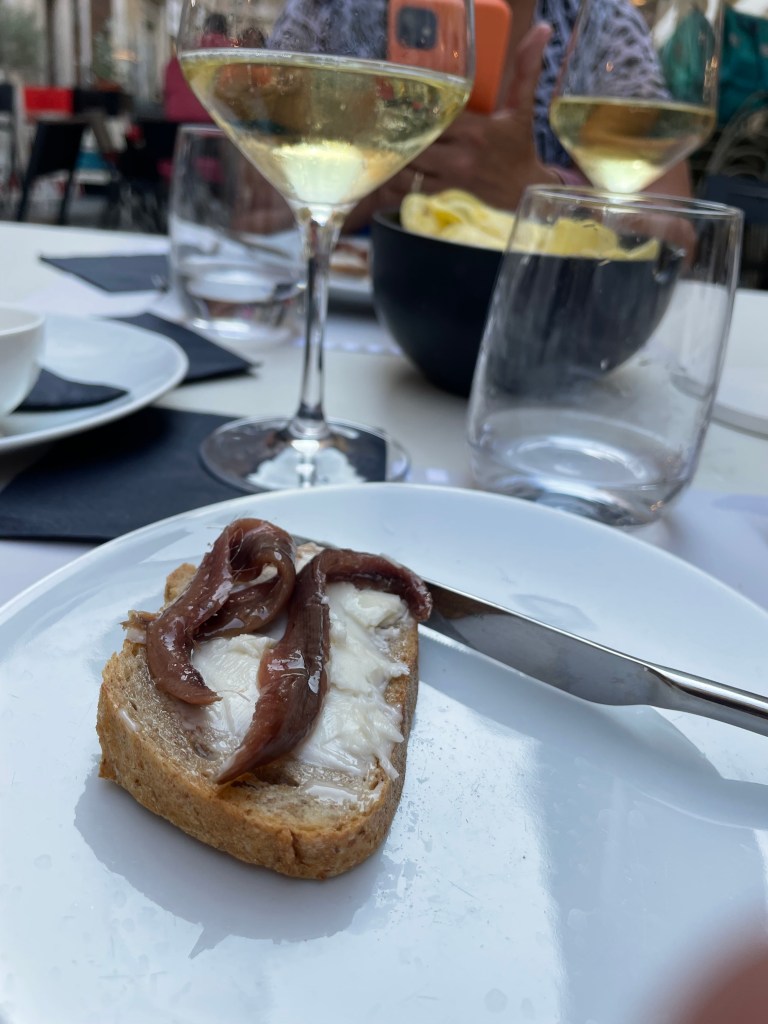
I usually go for a spritz of some kind, but after seeing a glass of Franciacorta on the drinks list (like a lot of restaurants post-Covid here, you scan a QR code for the menu), we decided to have our bubbly unadulterated. (If you’re wondering, Franciacorta is Prosecco’s more grownup cousin. It’s aged and develops bubbles in the bottle, just like Champagne, and is usually drier than Prosecco.) Some house-made potato chips and toast with butter and anchovies, add some great people watching, and we fell in love again with the city that took TSW’s heart decades ago.
So, it’s 2022 and Covid’s behind us and everything is just like the old days. Except that Italy reports more than 100,000 new cases on an average day. The United States records around 130,000 new infections daily. But hey, it’s just a bad cold, right? Let’s fly maskless, let’s go out to eat indoors, forget all those nasty restrictions.
At least that’s what it’s feeling like around here. Italians, who braved lockdowns and some of the most restrictive rules regarding vaccinations and gathering in public spaces, are partying like it’s 2019. It’s weirdly disconcerting, because while mass masking is clearly out, you still see bottles of sanitizer and plexiglass barriers everywhere. And don’t try getting on public transport without a mask. The local mall, er, centro commerciale is another thing…
We’ve been living with this strange situation the past couple of months. So basically we keep to ourselves and vaccinated/tested negative friends for the most part. But even given how fascinating we are to ourselves, sometimes you gotta get off the mountain, you know? And our region tempts us every day with festivals, places to hike (and people to do it with) and, bigly, as what’s-his-name once said, sagras.
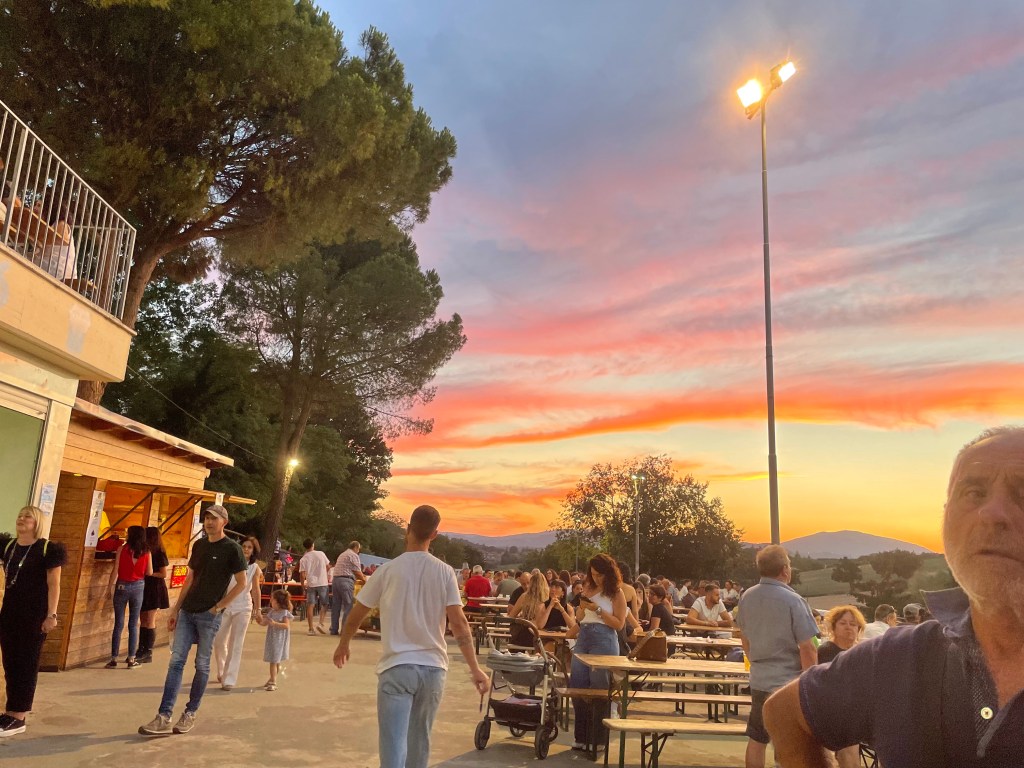
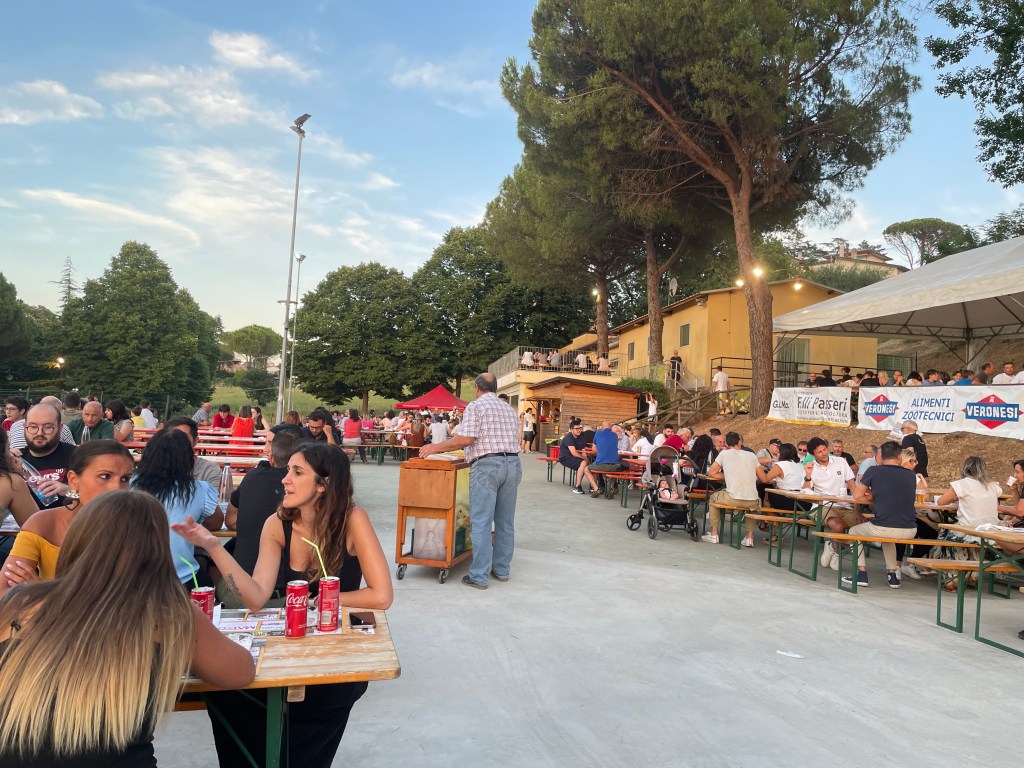
What? You don’t know what a sagra is? Think of it as a big church supper, but without the church. (I’ve written about them before, but without Covid looming over them.) Substitute a town sponsor instead and add a single ingredient or dish as the star attraction. Add some cheesy merchandising, a band playing covers of everything from the Eagles (ugh) to Dua Lipa (!), not to mention gentle line-dancing for the elders. Enlist a platoon of locals to run the thing—the kids busing and waiting tables are especially adorable. And place said event (which usually lasts a few days to a week) in the local soccer pitch and you’ve got a sagra. The closest U.S. event I’ve been to is Staten Island’s Greek Festival, hosted by St. Nicholas orthodox church there.
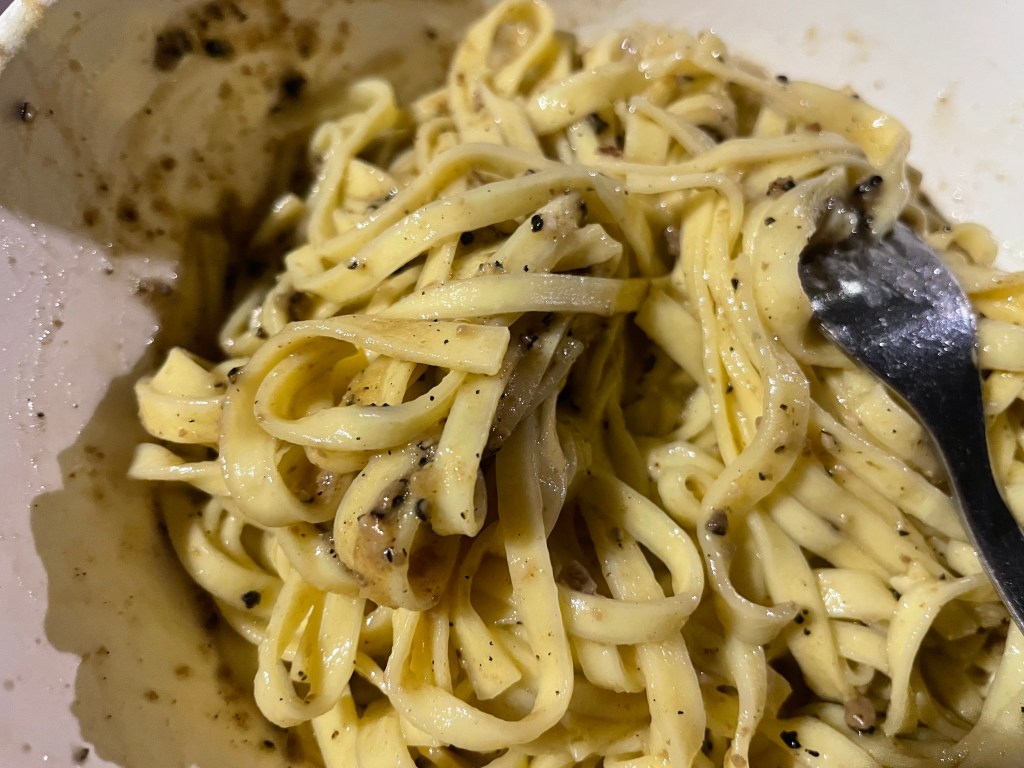
There’s one nearby that we can’t resist. It’s in Ripa, a hamlet two towns away from us. And it features truffles. Not the chocolate kind your mom got for Valentine’s Day, but the black, luscious, pungent, mysterious fungus that grows near oak trees. And the black tuber is on everything from toasts to pasta. It’s good, decadent fun on a budget. Similar food at a New York Temple of Gastronomy ™ would cost ya plenty, but a few dishes, a bottle of decent local wine and fizzy water set three of us back a whole €56, or $57.
Brits, especially, like to rank on Italians for being chaotic. (They should talk.) Go to a sagra, and you’ll see that the stereotype is just wrong. It’s all a matter of priorities. So while Roman traffic may be a free for all, food preparation and service at these sagre (*plural of sagra) is efficient and friendly. You wait in line while dispatching a friend or relative to find a table. That person texts the person on line which table number. Line person gives the order to the person in the booth and pays for it, and finds the table. Then table finder/sitter ventures out for drinks. You start on the wine and water and soon enough, an adorable 10-year-old kid delivers the food.
It’s more than the food. The people watching (and listening) can’t be beat. It’s great to see groups of family and friends out on a sultry night simply enjoying themselves and their place in the world. I like to see how the tribe organizes itself, and which combination of people are hanging out. Basically, the groups come in four models: the mixed generation family, usually three generations; the friends with or without kids and dogs; the elderly couples, either alone or in pairs. And us, a couple and an old friend who’s just moved here and we were showing him one of the glories of rural Umbria in the summer.
ANOTHER SUMMER HIGHLIGHT AROUND HERE is the Umbria Jazz festival. Only Covid stopped and then sharply curtailed it the past couple of years. But this year, for better or worse, the festival was back in its full glory, with free concerts in the streets and parks, an outdoor restaurant, paid big concerts in a soccer stadium—and lots of crowds jamming the small historic center of Perugia. The video below shows what the good old days (2017 here) were like.
We were leery and determined to stay up on the mountain and avoid the crowd. But I’d casually mentioned to a friend that The Spartan Woman would like to see the Canadian singer/pianist Diana Krall. I’d completely forgotten that I mentioned it until I got a text from my friend, saying “here’s a little gift.” Enclosed with the text were two free tickets, given to friends and family of the festival organizers.
Krall fits the “jazz” billing of the festival. But let’s say that the festival transcends labels. In the past we’ve seen artists as diverse as Caetano Veloso, REM on its last tour, Beach Boy genius Brian Wilson, and George Clinton and the P-Funk Allstars. We saw that we had reserved seats, so, unlike at the REM show it would be unlikely that a standing crowd would be jammed in right by the stage. We were right—our fellow concertgoers were a decorous bunch and we were able to socially distance from most of them.


All in all, it was a terrific way to spend a balmy summer evening. To avoid the typical Perugian parking, we drove to the end of the city’s MiniMetrò line, where there’s a huge and free parking lot. The metro itself normally shuts down at a ridiculous 21:30 every night, but they extended it to 1:45 for the festival. We zipped in and out, masked as required. You could say that the line is gently used most of the time, but it was crammed; lots of people had the same idea.
We’re keeping our fingers crossed and stay masked in public places. It was great to get out and pretend life was back to normal for a couple of hours. But for the time being, it’ll always be a little fraught to do that, so we’ll be choosy about where to go and how to do it.
 (Not) A Year (Not) in tuscany