Quick! When you think of Italy and its food and drink, what springs to mind? Pasta, sure. Pizza, definitely. Maybe gelato, and of course, a glass of wine to go with the meal. In fact, Italy is the biggest wine producer in the world, flooding shops and supermarkets globally with gallons of Prosecco, mass market Pinot Grigio, and fine reds and minerally whites.
But Italians are also beer drinkers. It’s not to the extent that Germans, Brits or Americans are—you don’t see Italians having keggers, and they tend not to wander around the cities in a beer-drunk haze. But historically, people here drink beer when it’s hot, or if they’re having a pizza night out.
Up until recently, mass market beers ruled Italian supermarket shelves and restaurant menus. But the micro/artisanal brew trend came to Italy too, and people appreciative of good beer have a wide selection of often local, interesting brews to choose from. Restaurateurs have picked up on the trend, too. Not from our house is a place called Umami Beer, whose owner has scanned the world for interesting brews for his patrons. The menu is eclectic too, with a wide selection of snacks, burgers and more traditional local dishes. It’s all part of the general loosening up of the culture, as more Italians travel abroad and acquire a taste for a wider palette of flavors.
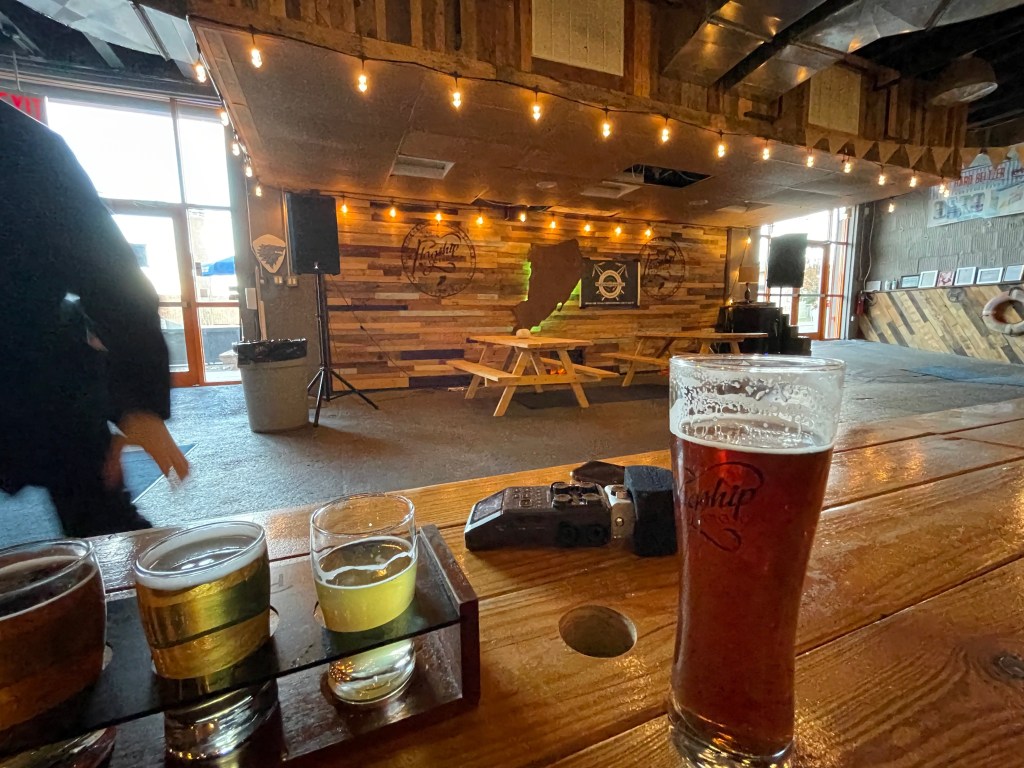
Before leaving New York, I paid a visit to one of Staten Island’s two local small breweries, Flagship. The good people there like to name their brews after local places and people. The island’s population is about 37 percent Italian-American, so in recognition of that, they named a Pilsener-style beer (popular here) Birra Locale. (You should be able to figure it out, but if not, it means “local beer.”) My slightly perverse mind thought it would be fun to bring that Birra Locale to an Italian artisanal brewery.
My target: the brewers of Birra Flea. In this case, “flea” is not the pesky little bug infesting the cat and your carpets. The name derives from a local river. I thought it might refer to a family, but no. I took minutes—minutes, I tell you!—of intense online research to learn this. The beer is definitely one of the shining lights of artisanal brews. The big Coop supermarket here places it in its cantina of good wines and small-producer beer, and Roman celebrity chef Max Mariola drinks it regularly as he shows his YouTube following another recipe. Flea comes from Gualdo Tadino, a town about a half-hour from our house that nestles in the foothills of the Apennine Mountain chain.
OFF I WENT THIS MORNING. Flea’s headquarters and brewery is located outside Gualdo on an isolated road. I had serious doubts that anything except a farm might can exist there. But I asked a couple on the road if I was on the right track and they assured me that the brewery was, in fact, down the road. Of course, it ended up being hard to miss, a modern charcoal gray-to-black edifice dominating the area. To emphasize its importance, the outside sign reads “Universo Flea.” I thought, well, this is more than a folksy little brewery.
However imposing the building is, the reception was the typical friendly greeting that’s pretty universal in this part of Italy. As soon as I stepped through the doors, they knew who I was and why I was there. (It wasn’t a mystery; you reserve a tour and sampling on Flea’s website.) The decor is modern yet warm. And for some reason, they have a historic red (what else?) Ferrari parked near the reception desk.

My handler Sara soon greeted me. I won’t bore you with the details of brewing, but I can say that I was impressed by the tranquil atmosphere, not to mention the huge fermentation tanks. Trashing a stereotype a lot of people have about Italy and artisans, Flea’s operation is decidedly high tech and as sustainable as it can be. They grow a lot of their own malt at a farm not far from where I live. The farm animals that came with the land supply them with milk, which they’ve turned into a cheesemaking operation. I’ve been fascinated by production lines ever since I was a little kid, and the bottling, tapping and packing machinery gave me tons to stare at and admire.
I’ll confess that I love conscientious food and drink producers. And breweries have a special scent, the sweet malt that perfumes the place. It kind of humanizes the assembly lines and the high-tech fermentation tanks. Beer, like wine, has a long history. Sara told me stuff I had no idea about, like how hops isn’t there just for flavor, but also acts as a natural preservative. And centuries ago, nuns figured out how it preserves but also balances the flavor. Before then, most beer was sweet, a natural result of the yeast reacting with the malt or other grain used to brew the beer.


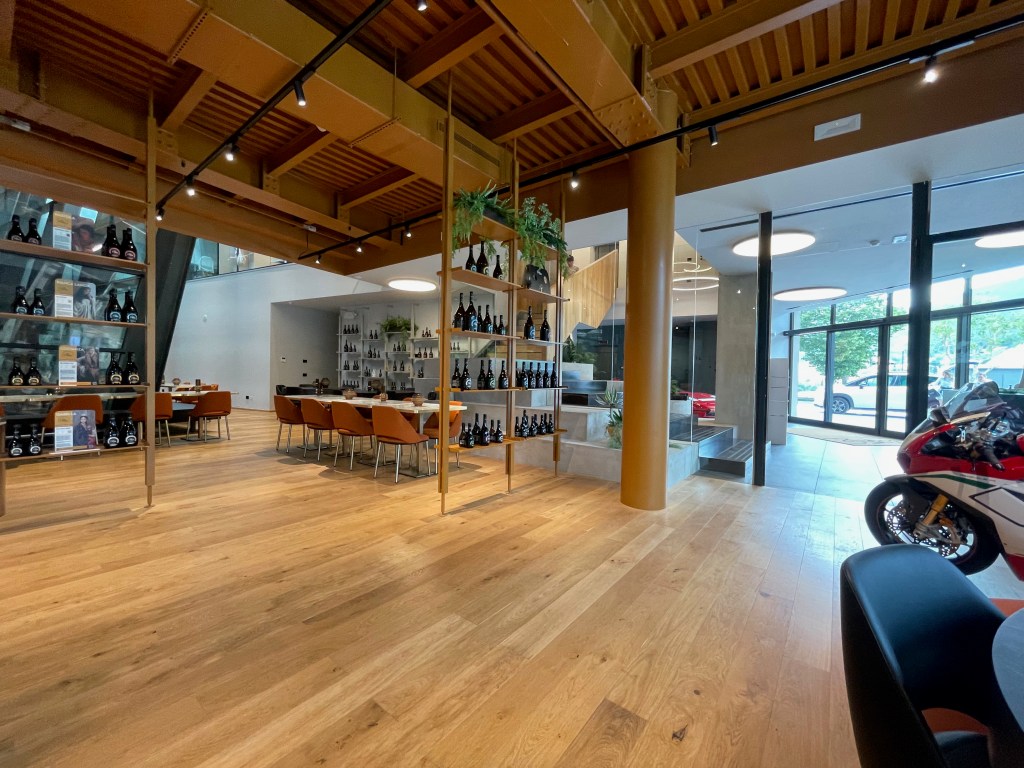
By now, you probably realize that Flea may make artisanal beer, but it’s not a hole in the wall operation. They’re looking toward the future. Much of their electricity comes from solar panels. (In fact Italy leads Europe in solar-derived energy.) And now they’re going to try to brew beer from the air; they’re experimenting with a technology that pulls humidity from the air. They’ll pilot test that water for brewing.

At the end, I had a taste test. I chose three beers from their list; I tried to pick different colors and strengths. “Margherita,” a wheat beer, was crisp, not too hoppy, and just right for a hot summer day, or a nightcap. Their golden ale, dubbed Federico II, was fruity and just assertive enough. And a Belgian style ale named Violante was, just as the label said, powerful and just right for a cold night and stew. Because we’re in Italy, food soon appeared in front of me, so I didn’t have to think about lunch—the cheeses on the tray come from their cheesemaking operation.
Flea turns a decade old this weekend. If the next decade resembles the past ten years, they may have to reassess that artisanal tag. In any event, this afternoon was a great way to see a bunch of mostly young people making a terrific product in a beautiful space.





 (Not) A Year (Not) in tuscany