This winter I went swimming

(with apologies to Loudon Wainwright III)

This winter I went swimming 
This winter I wouldn’t have drowned 
I held my breath and I kicked my feet 
And I moved my arms around
I moved my arms around

We’ve been back in New York for a few months, which has been bad for the waistline. And so it was time to get back into some kind of shape. The holiday season was blissfully over. No more béchamel, truffles, cocktails, cookies, pies, wine, more cocktails, more wine. No more avoiding the pool because, you know, I had things to do—like visiting a friend on the Upper West Side for cocktails and seeing friends who were holed up in a Times Square hotel for, you guessed it, cocktails.

I’ve had a YMCA membership before Kid no. 1 was born, some 35 years ago. I used to hit the pool at 9:30 pm every weeknight. I was in my twenties and super fast. The pool, in fact, was filled with people who were super duper extra fast, all young like me. We’d goad each other to go faster. I learned how to do flip turns. “You should make it snap more,” one of my partners counseled. I did. I kept it up for years, which was relatively easy to do when you’re young and didn’t have to get to the office until 10 or so. And as the kids grew up, I started going less and less, in spurts more than a steady routine.

I love the water. Unlike the experience of some friends of mine, for whom swimming was a structured, oppressive series of lessons in an indoor pool, swimming for me always meant freedom and escape. I learned to swim at the beach. My father was a really strong swimmer, and when I was only four or five, he’d sit me on the beach and tell me not to move. Then he’d swim way out, waving to me and calling me. Then it was my turn. I learned by riding the waves, and soon being buoyant was as natural as breathing.

Later, we had a backyard pool and my siblings and our friends spent most of our summers in it. We played elaborate hide and seek games that involved swimming stealthily underwater to evade who was “it.” In high school, I took swimming instead of gym a couple of times. Mostly it was to avoid the Marine drill-sergeant gym teachers and the stupid militaristic calisthenics. But it soon turned into a soothing respite from Brooklyn Tech classes. Most of the class (gym classes were single-gender) would play pool volleyball unless the swimming coach decided to actually teach a lesson. But I was nearsighted and hated games like that. And I realized that I could just be a loner, and float around the deep end. I’d make sure to get high before class and spend a very pleasant hour mostly underwater pretending to fly.

As a college kid, I’d go upstate with friends to explore swimming holes. We’d jump from cliffs into ice-cold pools of water. One drop was about 35 feet and, well, you can’t slow down once you step off the ledge. Didn’t stop us though. Those beautiful swimming holes—I barely remember where they were—were a great foil to a series of boring summer jobs.

So it was back to the Y pool this month. Only now, not having a regular office job means I can go to the 11 am lap swimming session, where I’m actually one of the younger people in the pool.

I’m sometimes alone in the lane, which is great. But more often than not, I split the lane with Chris, a retired fire captain about my age. Chris is tall and lanky, and he gets to the deep end with what seems like five strokes. He’s just so quick and quiet about it. He told me he was a high school swimmer and has been swimming in the Y pool since he was three years old.

I was inclined to hate Chris. Early on, I heard him talking with someone about how Trump was driving liberals crazy. They were giggling like little boys who snuck a frog into a girl’s lunchbox. I avoided talking to him or even really acknowledging his presence. Eventually, though, we got to talking, starting with the usual “want to split the lane?” question. And I found out that he’s a curious and smart guy and somewhat of an amateur historian. We still avoid politics, and that’s okay. Can you say “cognitive dissonance”?

Going back and forth in an indoor water tank does get tired, but I do things to make it interesting. The Spartan Woman gave me an Apple Watch a couple of years ago and I can wear it in the pool. It’s got a workout tracker for swimming in a pool, so I’m always tracking how much I swim in how many minutes. My baseline distance is 1,000 meters; I figure that that’s pretty good for an old guy. If I can do it in a half hour, so much the better. Besides, with the watch, I don’t have to count laps, which always tripped me up. I always lost count before.

It’s pretty amazing what swimming a few times a week will do. I have muscles again; they seemed to go into hiding once the summer swimming season ended. I’m incredibly relaxed post-swim, especially if I spend some time in the sauna afterward. And it gives me an excuse to get out of this little prison of a home office.

I can’t wait for the summer.

Somehow I forgot to write a single word

Okay, I lied. I’ve just been too busy to write here. Besides, life wasn’t all that interesting. Wake up. Walk the dog. Have breakfast. Work. Watch MSNBC because The Spartan Woman is an addict (I’m trying to cure her of this habit, or at least limit it to an hour a day, since they just keep repeating the same thing all day, just with different people).

Walking the dog ain’t bad—the Snug Harbor women and their dogs (all female, too).

We’re up on the mountaintop in Umbria for awhile now, and we had to open the house and get things going again in general. Plus, cobwebs. So I’m going to just update with some random stuff.

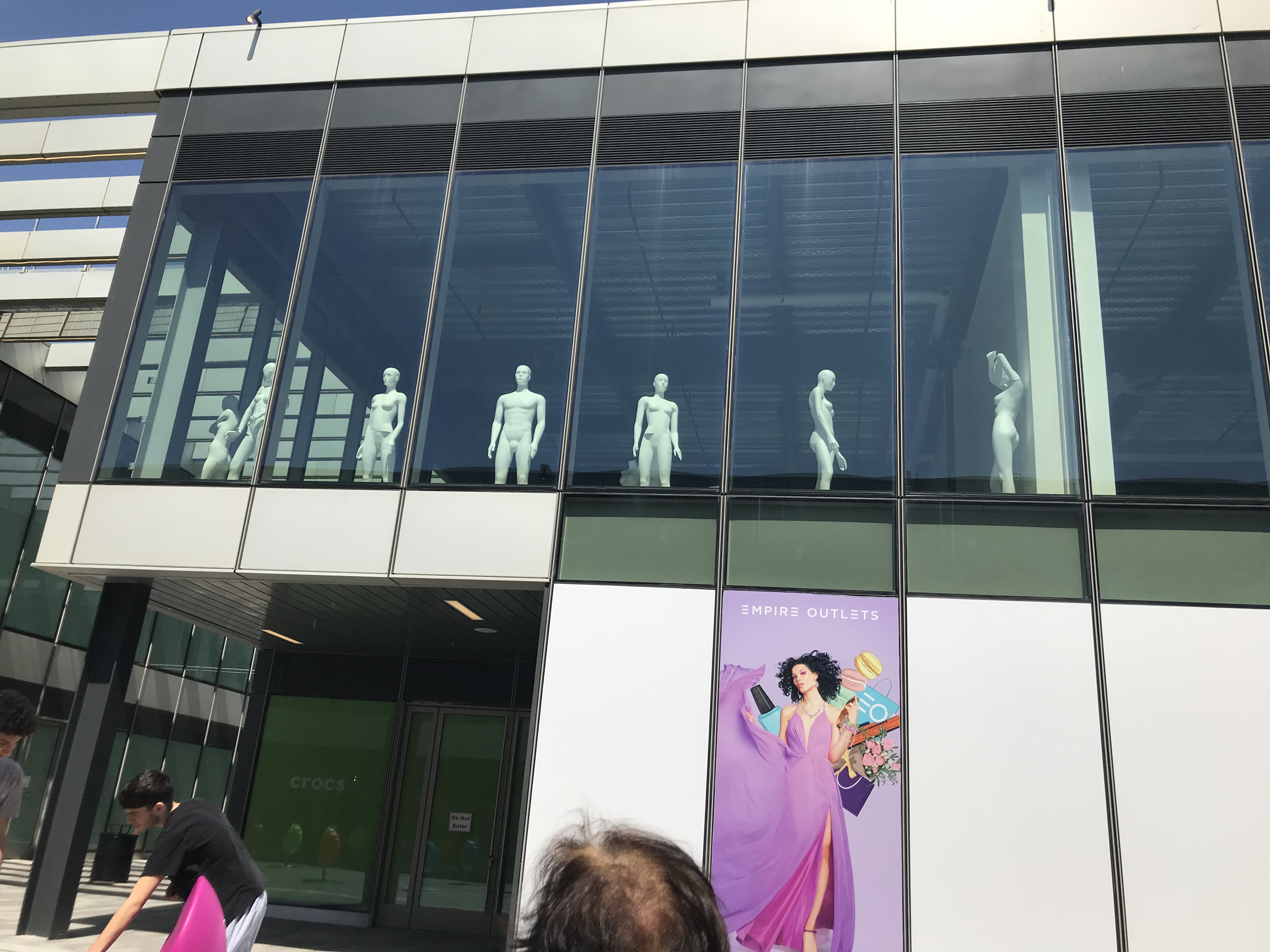
First, the Empire Outlets on Staten Island. You may remember my rant about the Wheel of Misfortune, er, The New York Wheel. Well, what a surprise, the Wheel is dead, its part gone to auction, a detritus of lawsuits in its wake, and the Empire Outlets. The thinking was that tourists would finally have a reason to get off the Staten Island Ferry, head for a $30 ride on the wheel, and then go shopping. European tourists, in particular, see clothing and tech stores here as an insane bargain, since the Euro is trading at about $1.12 and Euro sales tax can be 20 percent or more.

If you build it, will they come?

Italians, in particular, go nuts for stores like Abercrombie and Old Navy, hence, the outlet mall. Of course, being on Staten Island, you gotta wonder, since the mall lost its main draw, the Wheel. We’ve watched the construction of the mall with a combination of amusement and horror. The part that faces the street looks like some weird robotic contraption, while the public spaces—outdoor—aren’t too bad. There’s a big underground parking lot for Staten Islanders to drive in and, this is important, NOT HAVE TO STEP FOOT ONTO THE STREETS OF THE DREADED NORTH SHORE. That’s where diversity lives, not to mention that’s where the Wu Tang Clan burst out of Shaolin (aka Staten Island).

Not quite ready for prime time.

Next up: Memorial Day. We spent it with the kids and our friend Marsha. And we grilled Beyond Meat burgers, which are scarily like chop meat. Not having eaten much meat for most of a decade, it definitely felt a little strange. Not that it stopped us.

So real. Surreal.

Then off to Umbria. We shop around for airfares, not having any particular loyalty to one airline. The Spartan Woman is long limbed and so insists on flying premium economy, and we’ve had decent experiences. The roster so far: Alitalia, Norwegian, Iberia, and Lufthansa. Do not take Norwegian. Premium on the 787 “Dreamliner” is fine, if you manage to fly on one. But Norwegian’s flights are invariably late and they love to cancel flights. Plus, the engines on those planes had problems, so they’ve pulled some out of service and have used chartered, old, disgusting, do not do this, aircraft. The other three are fine. Alitalia’s Premium is pretty cosseting, Iberia cheerful and fun, Lufthansa kind and generous when it comes to drinks and food.

The friendly skies of Lufthansa

So here we are. The two of us speak a weird mix of Italian and English to each other, and have done fun stuff like taking the car for an oil change and getting the brush cleared. We take walks, watch Turkish shows on Netflix, and take walks. Did I mention that we take walks? I work, too, in a cool office with a view of the mountains. Non c’è male…(not too shabby)

Polish dulce de leche and a serendipitous wedding

I haven’t written much since we’ve been back in New York—and I haven’t posted what I wrote. Too busy with the usual stuff, work and (ugh) taxes. Truth is, it’s been kind of dull, except for good things like seeing the kids and having the dog around.

But this past week was different. Nope, not talking about the Mueller report. This is about me, remember?

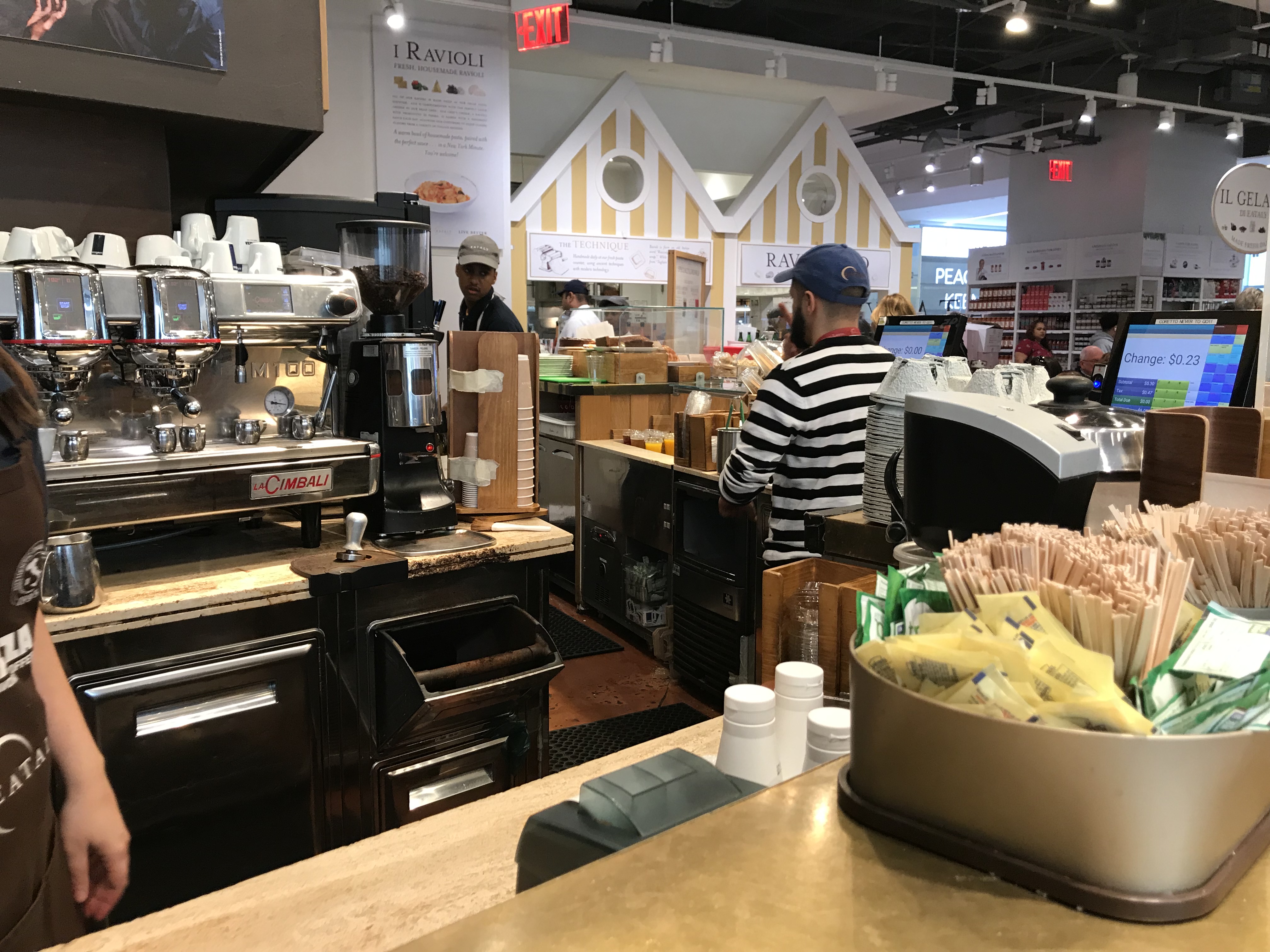
First up: The Spartan Woman had to go to a teacher’s union meeting near Wall Street. She’s retired, but they keep the alums in the fold. I tagged along, having nothing better to do and wanting to get out of the house. I used to work in the neighborhood, so I have my favorite walks. One of them took me to Eataly, where I used to enjoy a mid-afternoon espresso with one of my deputies most days. It may be a semi-pretentious temple of Italian gastronomy, but they actually make good coffee there and it’s not ridiculously priced. Then I walked through the Oculus, which I love in spite of the $4 billion price tag. The passageway under West Street took me nearly out to the river, where I started to head downtown along the Battery Park Promenade. The harbor’s my thing. After living on a mountaintop, the crush of people on the street is a bit much.

One of the few places to get a decent espresso in the city.

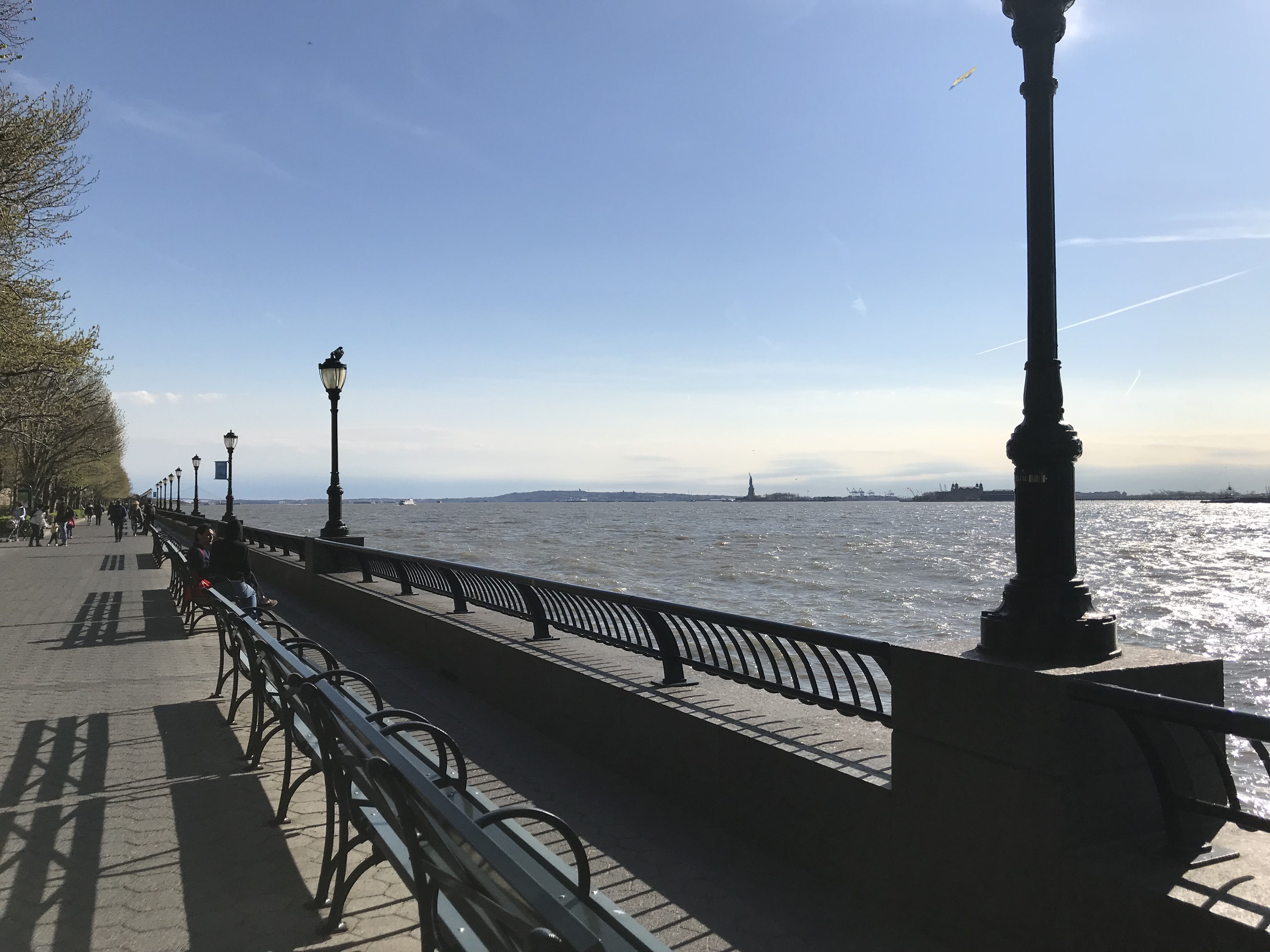
So I walk, and I see a tent. There’s a party going on, apparently thrown by the I Love Poland Yacht. People have gathered, but it’s not a huge crowd. “Help yourself to the buffet,” someone told me. I was tempted, but I wasn’t into sausages, sausages and huge balls of stuffed cabbage. But the drinks stand called me. “Some vodka or beer?” Yes, please, the vodka being herb flavored and delicious over ice. A young woman was walking around with a tray, while kids were getting helium-filled balloons. “This is a traditional Polish pastry,” the woman said. “It’s filled with something like dulce de leche.” Thus fortified, I continued my walk and saw views like this:

New Yorkers sometimes forget that they live on a beautiful harbor.

The next day, we walked the Avenue. We live a few houses up from Forest Avenue, the neighborhood’s commercial strip. A few months ago, I walked up and down it with one of the kids, who, looking around, said something like “When did this go all Brooklyn on you?” It’s true–we always had bars, but now we’ve got cafés, cool restaurants, including my favorite local Syrian place, hipster barbers, a bakery that has a gelato stand when it gets warm…you get the idea. We stopped in for breakfast at the On Your Mark Café, a breakfast and lunch place that employs people with special needs. The servers are super-attentive and food’s decent. I’m not a breakfast person but I couldn’t resist the chocolate chip pancakes, made with chocolates the organization makes next door in its chocolatier.

Chocolate, the breakfast of champions

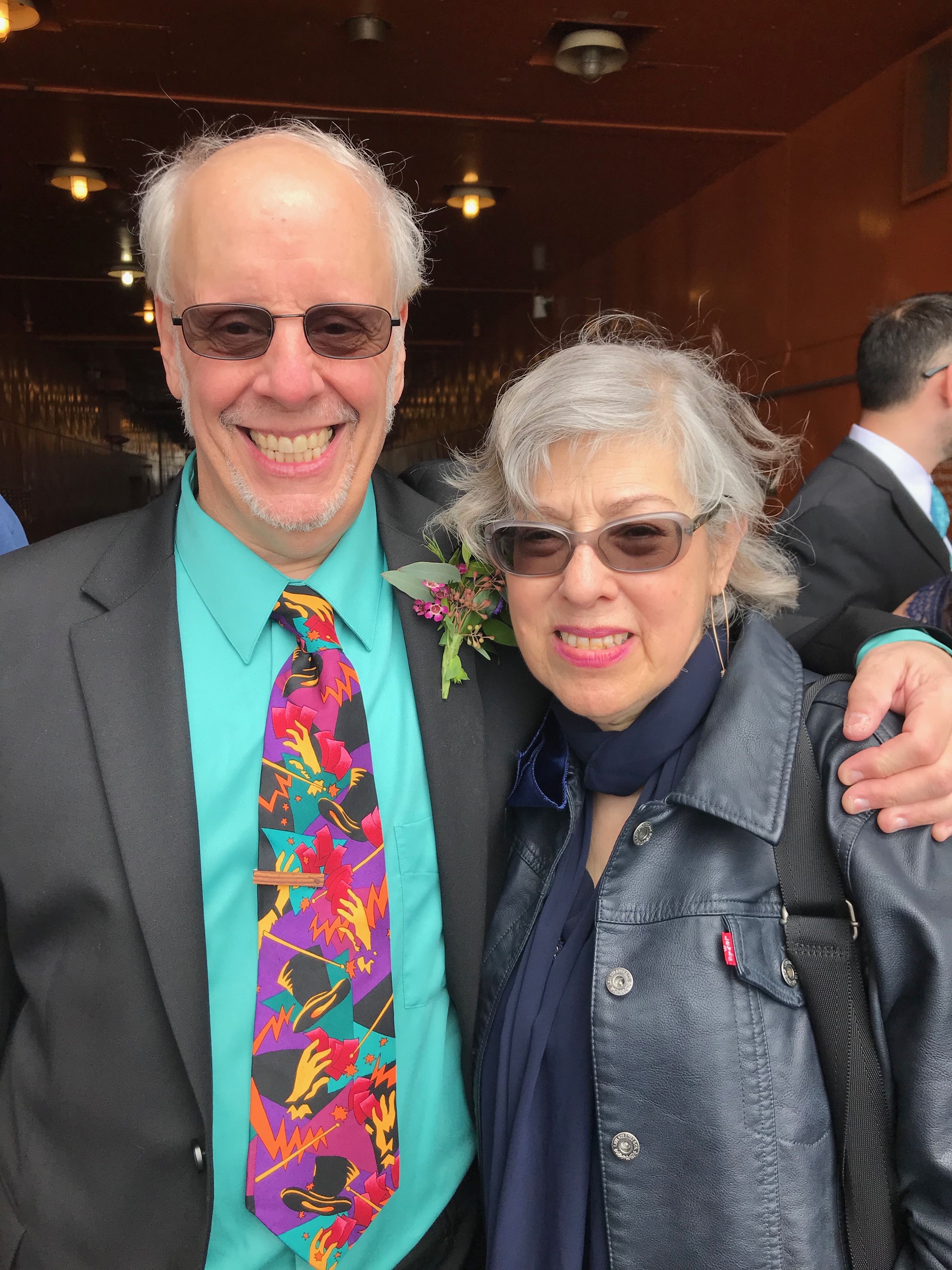
The best adventure, though, was on Friday. I was heading into Manhattan to have lunch with an old friend who was in town the same time I was. We’d been missing each other for the past couple of years when it came to being in New York at the same time. The bus to the ferry was slow and I started to hustle to get the 11:30, just to have a little walking around time in Union Square. But another friend, Joan, intercepted me. “Want to see a wedding on the boat?” she asked. What? Her son was going to tie the knot on the next boat. I guessed that that explained the young woman running around the terminal in a wedding gown. We went over where the other guests were hanging out; I saw another old friend and a former co-worker from 20 years ago.

Making a vow or two.
Meet Gary and Joan, parents of the groom

We boarded, went downstairs and, yeah, this was an official wedding, with a bridal party decked out (and sporting similar retro sneakers). The officiant gave a little speech, saying he didn’t have many profound things to say, but that we were all gathered there because of love. “And that’s a good thing, right?” Right.


My hometown

I caught up with Bruce Springsteen’s Broadway show on Netflix the other day. It must have been a great experience to be in the theater with him. But it wasn’t too bad on the flatscreen. I was pretty amazed with the whole thing, especially his stamina and the details he remembers about his childhood.

That brings me around to the headline of this post, and it’s the title of one of Springsteen’s songs. He manages to imbue Freehold, New Jersey, with a mythical status. The Catholic Church and school, the Ford factory, the bars, his father, working men in general. I started to wonder why so much of my childhood is a blur. “He’s a poet,” said The Spartan Woman. He can mythologize his memories. Of course, in my mind, it came back to me, me, me. Am I just insensitive by not thinking too much about where I came from? Brain damaged by some of my old habits? Was it all just too long ago? Wait, Bruce is older than I…

I think part of the difference, apart from the obvious disparity in artistic ability, is that Springsteen came from a small town that was pretty well self-contained. I may have grown up on a hill on Staten Island, but our neighborhood was always part of a bigger whole: the island in particular, and New York City in general. So we, or at least I, didn’t have that sense of local-ness. Sure, we had our candy store and deli and bars, and there were places we kids went in the woods, at first for innocent play, and later for not-so-innocent partying, but we always knew that we were part of a really big place and that it didn’t just belong to us. Or at least it seemed when I first compared my memory to Springsteen’s.

Then again, Springsteen early on in his show says he made it all up. It’s his magic trick. And while he exaggerates, there’s some truth to his perceptions.

In any event, it got me thinking about the peculiar place I grew up in. It’s gotten a bad rap, often unfairly. Sure, there are jerks like the cast in MTV’s Jersey Shore and a lot of it is a badly developed wasteland of high ranches and strip shopping centers and bad Italian-American restaurants. But it’s also where the first tennis games were played in the U.S., where prohibitionists established a colony where they could be uplifted by concerts and lectures. It’s where the Catholic Worker Dorothy Day chose to live out her last days, and where Hair composer Galt McDermott lived and brought up his family–right in my neighborhood, in fact.

So I’m trying to remember details, if and why it’s a special place. I’m not going to get into a sweeping mythology like Springsteen does, but my Staten Island friends and relatives will probably agree that it’s quirky and molds its inhabitants—at least those with half a brain and some ambition—in certain ways.

Now, some geography, which shapes a place’s destiny: Compared to the rest of the city, Staten Island’s got a certain natural beauty that’s lacking in much of the city, from the Lower East Side to the high-rise sprawl of Queens. We’ve got hills, a whole chain of them from the northeast tip throughout the central spine. The master builder (and destroyer) Robert Moses met his end on Staten Island. The man who rammed destructive highways through outer borough neighborhoods didn’t do his due diligence: He drew a highway straight through miles of woodland and, coincidentally, one of the city’s most affluent neighborhoods. That neighborhood, Todt Hill, rose up, enlisted celebrity aid, and put an end to his fevered highway dreams.

The hills are one thing; the other big feature is, for want of a better term, its island-ness. There’s a certain sense of isolation, of self-containment. (Like Freehold? Hmm…) Island dwellers around the world feel it. You know in a way that you can’t get lost. Go long enough in one direction and you’ll hit a natural barrier—the water. It’s what makes Manhattan Manhattan, too. Look across a crosstown street and you see where the land ends and the Hudson or East Rivers flow. You know you’ve got limits. When I first started to drive around in Umbria, I was disoriented because I could go for hours in one direction and not hit the water. I had to learn how to tell where I was by looking at the mountains and hills.

Staten Island is defined by its island-ness.

On the micro level, I grew up on one of those hills. Staten Island, like everywhere around it, was originally made up of small towns. Our was Dongan Hills, now grandly called Dongan Hills Colony, to distinguish the hilly part of town from the plebeian lowlands. Back in my childhood, though, it wasn’t full of McMansions, it was a place with some old colonial-type houses, the odd farmhouse, and a bunch of new houses that gradually took over from the thick woods. And those woods were where we kids spent most of our time outside. We knew every footpath, probably dating from the Native Americans who lived there hundreds of years ago. We’d just go hiking, or play hide and seek, or imagine we were partisans in the hills resisting invaders.

Meet Joe. He’d love to have a beer with you.

Back on the street, it was a hill full of recent European immigrants, from Italy, Ireland, Germany, and Scotland. We got used to hearing people with accents—my own father spoke, and still speaks with an Italian accent and often wonderfully fractured syntax. They brought their habits across the ocean with them. The guy across the street, a big man named Josef, was a devoted practitioner of the European aperitif hour. At about 6 every evening, he made the rounds, checking into his friends’ and neighbors’ houses, accepting a drink, or a bite. We saw it as totally normal that Joe would drop by. Later on when I was a teenager coming home from some revelry, he returned the favor. He’d be sitting on his screened in front porch late in the evening, with a cooler full of beer. “Anthony,” I’d hear, “come over for a nightcap.” He’d offer me a weiss bier, something light he’d say, and we’d sit around and talk about…I don’t know, honestly. It didn’t matter; it was always a grace note to a night of fun.

And then, my parents’ house. It’s funny to hear how my cousins remember it. To us, it was just where we lived. But my parents were the young ones in my mother’s extended family, and we were, relatively speaking, the hipsters. While my aunts and uncles strictly oversaw their kids’ interests and habits, we were like wild animals, free to do what we wanted to do. My poor cousin Noel had to play the accordion; I got a guitar and Beatles sheet music. My parents had a New Year’s Eve open house and invited everyone they knew. It was a big raucous party spread throughout the house, with people dancing downstairs to Motown on my sister’s dance floor (my father built it for her, complete with barres along two sides). After midnight, my father would channel his father and fry up sfingi, or what Neapolitans call zeppole–fried dough to soak up the night’s alcoholic overindulgence. When I turned 16, my parents gave me what would probably get them arrested now, a pizza and beer blast, complete with a keg. They invited all my friends and our extended family. (They also gave me a gold watch, which I soon lost. Nice things are mostly a lost cause for me.)

So, was how we lived a product of the geography that surrounded us? I think so. We liked to think of ourselves as special, or at least different. And the hills and self-containment of the island back that supported that feeling. Maybe it was just that back then, a few decades back, people were just more interesting, and not mere manipulators of what’s on the screen in front of them. We had to move around in the space we were in, or we’d die of boredom. Or, I like to think, we had more of an opportunity to wander and to dream, and to imagine the kind of person we’d like to be and the life we wanted to live. And the surroundings, as well as the tolerance shown by parents and other figures of authority, let us do just that without much interference.

Hey, maybe we’ve all got an interesting life story to tell, if only we stopped to think about it. Whatdya think, Bruce?