Where everybody knows your name

Way back, late in August between my freshman and sophomore college years, I felt devastated. I’d come home after spending most of the summer in Sicily with my extended family. And there were no bars where I lived in New York. Okay sure, there were lots of places where you could get drunk and maybe, get lucky. But no bars in the Italian sense, and that made me feel lonely. I could joke about how most of my life since then has been a way to get back to the local bar.

But maybe it’s not a joke. So allow me to offer a tribute to the Italian bar. For those who haven’t been here, or haven’t paid much attention, a bar here isn’t like the American kind. Maybe in spirit like a British pub? Whatever. It’s sort of like a café, except that that word doesn’t quite capture the bar’s essence. Maybe, in the American context, it’s like the old small-town diners or cafés, where locals would gather, hang out, get anything from coffee to a meal, and share local gossip.

Bars are everywhere in Italy, from the big cities to small hamlets like Casacastalda, a 20-minute drive from Casa Sconita up a twisty country road. That bar has an amazing location overlooking northern Umbria’s hill-mountains. But they can be on a residential street, on a piazza, or even in the parking lot of a gas station. The toll roads through Italy, the autostrade, have amazing bars, some of them inside buildings that look like retro ’60s spaceships straddling the highway. The thing is, if it’s Italy, there’s a bar nearby.

You can get everything you want at the Autogrill—including an espresso or drink at the bar.

Basically, the bar serves most of your needs throughout the day. In the morning it’s the place for a cappuccino and a cornetto, or mid-morning, for office workers to have a booster shot of coffee (espresso mostly) before tackling some more emails. One of our friends here never makes coffee at home—he gets dressed and heads out to his favorite bar for breakfast, which here is usually coffee and a pastry. (His is the place in the gas station parking lot.) If you aren’t into sweet, there are little panini—my favorite is tuna and artichoke. Later in the day people stop for another pick me up, and around 6, an aperitif or cocktail, always served with a little snack, because here in the land of La Bella Figura, being obviously drunk in public is a faux pas.

It doesn’t take much to be a local. If you’re renting an apartment in Italy, even for a few days on vacation, one of the first things you should do is visit the local bar. Go two or three days in a row and you’re a regular. One barista in Perugia remembered us from getting coffee with our daughters in the morning. When we returned a few months later, he asked us why the girls weren’t with us.

We live in a small town here, yet I can think of at least five bars within a 20 minute drive. Three of them are down the hill from us. They all have their own style. The bar on our local piazza looks like it’s from the 1980s, but the real deal is to sit outside in the morning or late afternoon and soak up the sun and the murmur of the fountain combining with the sound of the local accent. And they serve addictive fried sage leaves with your Aperol spritz in the afternoon. Another, housed in a local shopping strip along with the main pharmacy and town supermarket, is Italian sleek modern. Even the spoons look like no spoons you’ve ever seen, and it takes a few seconds to figure out how to use them. Still, if I’ve been away, on my first visit we have to catch up with the barista and show pictures of the grandchild.

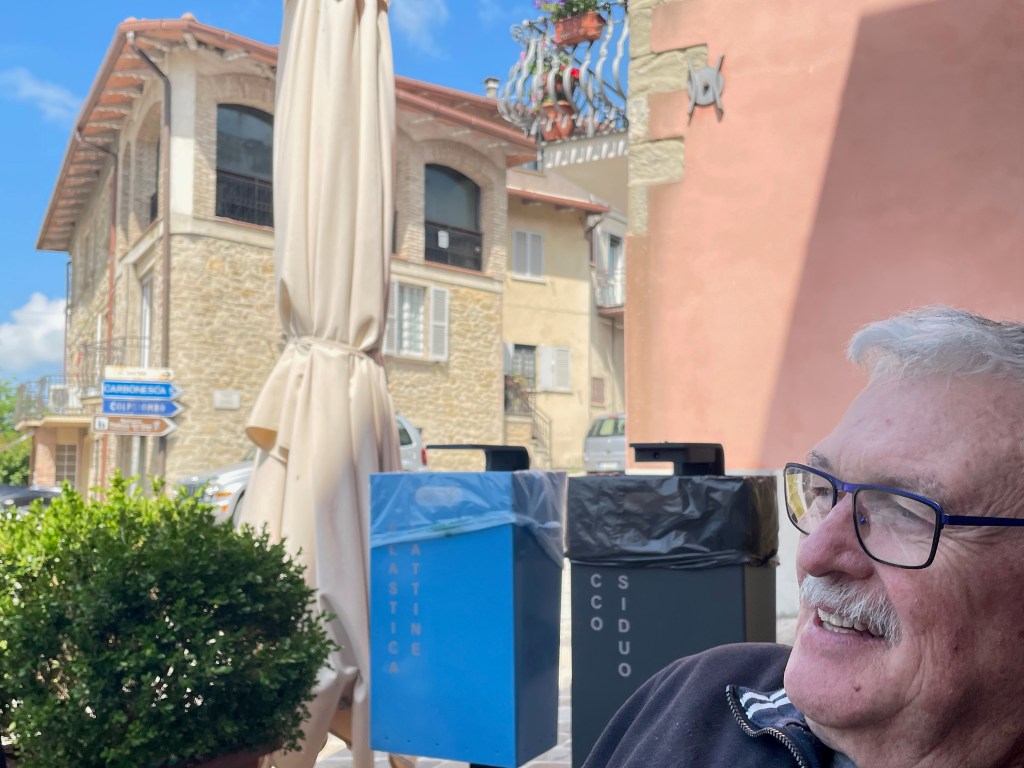
Breakfast in the piazza post-hike
Vian contemplates the view.

Come to think of it, we assign these watering holes to different occasions and frequent them with different sets of friends. Yesterday, for example, I met my friend Vian, a transplanted Canadian who moved to Umbria with his wife so that they could be near their daughter and grandchildren. He lives outside a town called Gualdo Tadino, a place with eccentric architecture that snuggles up against the Apennine Mountains. Vian and I like to meet for a mid-morning coffee and pastry, and we do it midway between our houses—that bar in the hamlet of Casacastalda. The place has a great view, and Vian, a sociable guy whose Italian improves every time I see him, is besties with the owner and always has conversations going with some old guy who hangs out there.
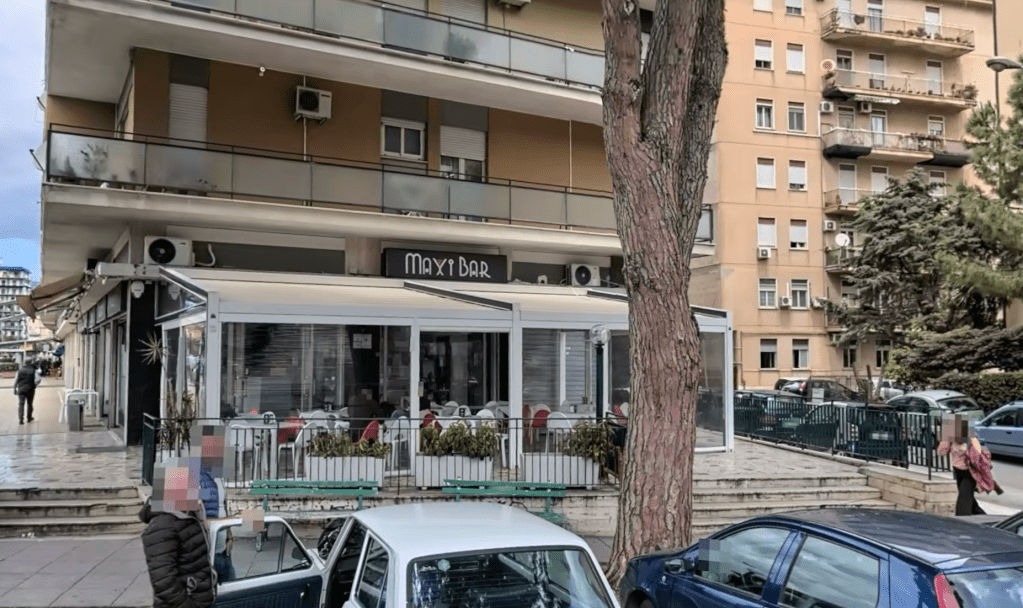
Uncle Ignazio’s hangout in Palermo

My Uncle Ignazio probably frequented his local bar every morning until he was taken to the hospital for the final call (he was in his nineties). A few blocks from his apartment, the bar was the focus for the pensioners, people on their way to work, parents taking their kids to school, and even groups of motorcyclists headed to western Sicily—his place was on the ring road around Palermo. A visit with him almost invariably involved a stop at the bar. He smoked (if outside) argued politics with his cronies, argued politics with his cronies, and did I mention that he argued politics?

I could go into coffee etiquette, what to order, when to pay and when to wait (Ok, big cities and the road stops are pay first, go to counter and get your stuff; here in the sticks, it’s whenever you feel like it.). But that’s for another morning. Right now, it’s about 23:00—11 p.m. in US-speak—and I’m thinking about this little bar in Perugia that whips its own cream and fills pastries with it for breakfast. Sweet dreams….

[Update: I went to that little bar.]

Finally, a great maritozzo at the Antica Latteria in Perugia

Credit for Autogrill photo: qwesy qwesy, CC BY 3.0 https://creativecommons.org/licenses/by/3.0, via Wikimedia Commons
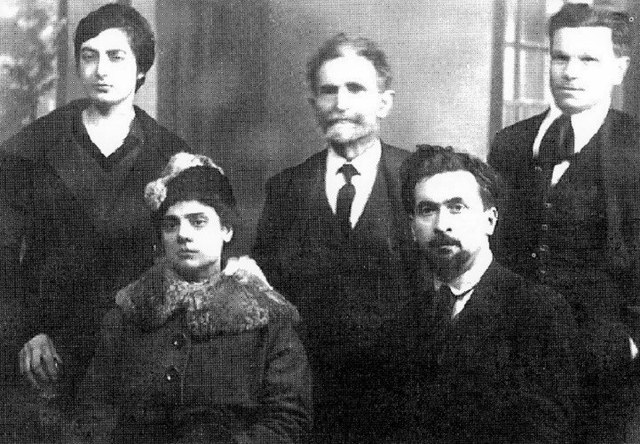
The housewives like fresh vegetables!

Let us go back in time. Way back. It’s around 1980 and we’re in a once-grand, now shabby student apartment on Manhattan’s Upper West Side. Right near Columbia University, in fact. We’re at a party with a bunch of grad students from the neighborhood; I forgot whether it was for any special occasion. Did anyone need one back then?

We’d been invited by a good friend of ours who back then went by the name of Drew. One of his roommates brandished some newspaper put out by Albania’s Communist Party (remember, this is the Upper Left Side, ground zero for left wing intelligentsia back then). “Pig iron production is up by 10 percent! All praise to our leader Enver Hoxha!” the roommates exclaimed before collapsing in laughter.

Meanwhile, there’s a cluster of women surrounding a guy looking, if I squinted, somewhat like the young Trotsky. They’re hanging onto every word of his. “I decided that I’d write my dissertation on the Italian anarchists,” Trotsky-alike said in a thick, somewhat plummy British accent. “That’s Carl,” I’m told. “He just got back from the London School of Economics.” The crowd surrounding him nodded in unison. I can be bad and say they looked like groupies surrounding Eddie Van Halen, but maybe they’re as fascinated by the Italian anarchists as Carl is.

Carl’s kind of people

I catch bits and pieces of Carl’s monologue. To my admittedly uneducated, bachelor degree at the time-only ears, the Italians that he’s describing—we’re talking post World War I and pre-Mussolini—sound like noble savages, selfless, instinctual in their generosity and class consciousness. Carl avers that Italians even now (well, in 1980) aren’t all that different. Then he utters the sentence that to him says everything: “The housewives like fresh vegetables.”

Did I mention that Carl grew up in Massapequa? As in Massapequa, Long Island? New York? Somehow I doubt that he spoke with that accent before he attended the hallowed LSE.

I’m writing about Carl, wherever he is now, because he was one of many people I met, and writers I’ve read, who look at Italians in this sort of folklore-y condescending way. Italians are passionate, they’re disorganized, they love their families, they’re Catholic, they drive fast, they have great food, they do funny things that we just can’t understand, but it’s so much fun to go there on vacation. This simplistic portrayal of a complex, modern society goes back to the days of the Grand Tour, when Brits of a certain class traveled south to learn about Art and gaze wistfully at the Tuscan landscape. Think of the E.M. Forster novel and film adaption of A Room With a View, and you’ll know what I mean.

I remember as a high school kid stopping in at a friend’s house, a friend whose family can trace itself back to the American Revolution. White Anglo-Saxon Protestants, in other words. Father (he was called that by his wife, who naturally was “Mother”) would greet me and then, knowing that I’m an American with Italian relatives, ask me about recipes for various Italian-American dishes. I’m sure he was just trying to make conversation, but I remember thinking, JH Christ, get real, as if every Italian-American kid has in his genes the ability to cook veal scaloppini.

The British press is prone to this sort of thing, too. A Modern Languages Open paper examines British attitudes, arguing that most British narratives toward countries like Italy start from the viewpoint that British culture is superior. And a lot of Brits fully believe in the usual stereotypes: sunny Italy, sunset with a glass of Chianti, anarchic drivers, etc.

ABOVE: Image, meet reality

And as in Britain, so its anglophile cousins across the pond. And fairly recently. The New York Times, long a bastion of proper WASP snobbism, pointedly ignored last year’s bankruptcy and shutdown of the Italian airline Alitalia, which by most measures, was a huge business news story on the continent. At some point, someone must have noticed that Alitalia—once the official Vatican airline—had ceased operations and finally, the Grey Lady ran a silly oped, er, sorry, guest essay, by Christopher Buckley.

I’M NOT A NAIVE CHAMPION OF MY other country. The bureaucracy can drive you nuts, the voting pool is divided about 50-50, which makes it easy for weak coalition governments to be patched together and then fall after only a few months. (Just last week, Italian politicians, led by the feckless Cinque Stelle leader Giuseppe Conte, jettisoned a national unity coalition, handing Putin and the right wing a gift.) But if you look past the stereotypes, you’ll see that Italian society is actually a rules-based, established culture. The rules, however, take a while to learn, and are mostly unspoken and certainly, unwritten. They’re woven into everyday conduct. And once you’re used to them, going back to the Wild West of the U.S. can be a jarring experience in reverse culture shock.

To give a concrete example, walk into a shop of any size. Even a huge hypermarket. You make eye contact with the cashier or salesperson and you had better exchange greetings. There’s none of the sullen get right down to it business exchange that you’ll see in any American mall. If you walk into a clothing shop and start with “do you have a white shirt in a 42 size?” the clerk will immediately peg you as a rude lout and will often ignore you until you approach him or her correctly.

Another example: Days are structured here in ways that may not seem immediately obvious, except for the general lull in the middle of the day. For us retired people, it’s a structure that helps us avoid the feeling that we’re drifting through time aimlessly, like people in an old age home watching TV all day and seeing friends carted off periodically. And it’s a general structure that everyone pretty much follows.

You get up pretty early. Have coffee or whatever you need to wake up. Eat a little something. If you’re employed. you go off to the office/construction site/shop/whatever. If not, this is a perfect time to run errands. Then lunch, a pause of an hour or three. Then things pick up until either the aperitivo hour—time to meet friends for a drink. Then a light dinner and off to the finish line. I once made a lunch date with a source, a prominent lawyer for a large company here. Silly me, I asked him what time should we meet at the restaurant. He laughed, saying, “do I really need to tell you?”

I could go into the zillions of food rules, but others have it covered, especially on YouTube, where scores of videos tell you what not to do. Over and over again. So much so that you could be faulted for thinking you’re watching the same video on an endless loop. Here and here are examples. And best of all, for a video review of the rules we live by here, is Marco in a Box:

But the main rule? Enjoy yourself, try to greet people in Italian and get with the flow. And eat fresh vegetables whenever you can.