Central heating is a good thing. I love that you can walk over to the thermostat and, miracle of miracles, set it for a temperature you like and like magic, the furnace rumbles into life and warms the air to that temperature. Set it and forget it: Modern life, ain’t it great?
This heating thing triggers my after-all-this-time-I’m-a-semi-newbie reaction. Getting basics down, like food, shelter, transportation, and language is at the heart of the immigrant—or reverse immigrant—experience. It’s what makes living here different from taking a vacation here. Travelers only have to figure out how to feed themselves, and it’s pretty easy in Italy. And they’ll figure out how to get around, unless they’ve taken a tour that comes with a big bus and lots of company. Living in another country forces you to relearn basic life skills; it’s like learning to walk again. I’m pretty good with most basics, but I’m only learning the central heating basics because we haven’t been here much before in the dead of winter.
I think about central heating a lot during the winters on our mountain because we have a high-maintenance kind of central heating, and tending to it and using it takes up more mind space than where to set the thermostat. Sure, we have the essentials: thermostats, pipes going around the house that end up in radiators. We even have a couple of dee-luxe radiators, the kind bathrooms houses have here that look like laundry racks and warm up the bath towels. There’s a furnace, too, a pretty new one from Germany that my friend Ruurd told me was the best brand. I’ll take his word for it.
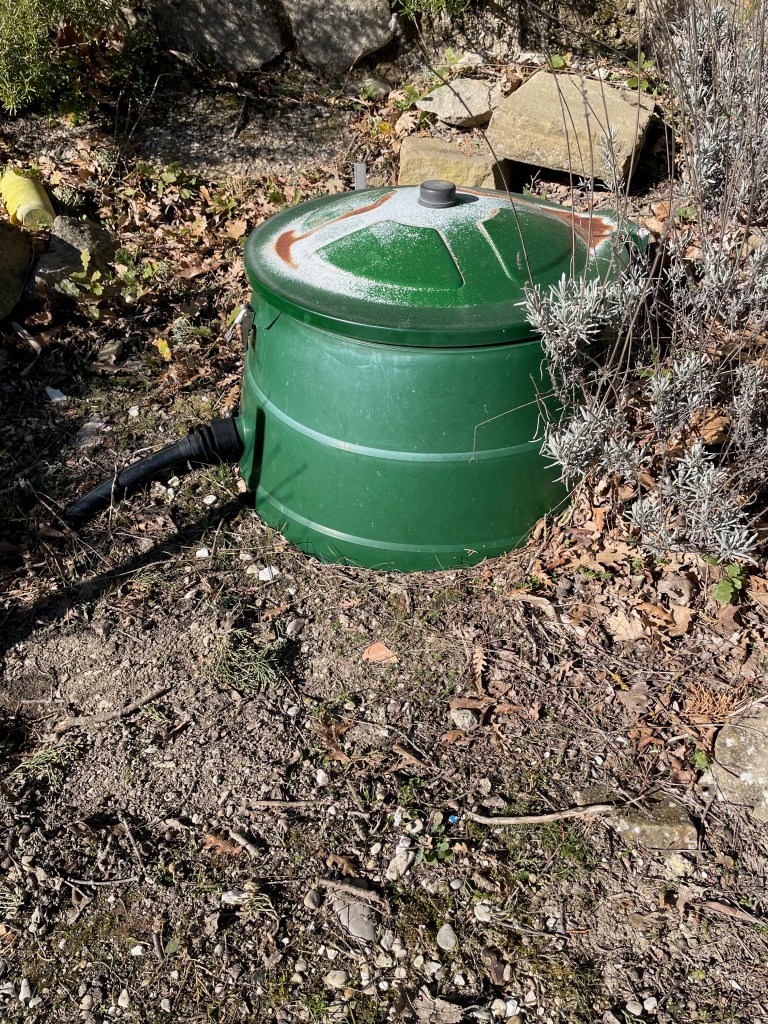
What our central heating setup lacks is a steady source of natural gas. Instead, we have a tank. it’s a big tank for sure, though I’m not exactly sure how big because it’s buried in the yard right next to the lavender bush. It looks like the entrance to one of those bunkers in Albania that the paranoid ruler Enver Hoxha installed thoughout that once-repressed country. Only our lid conceals a receptacle and a gauge telling us, usually, that we need to buy more gas.
That should be easy enough, right? Not so fast. (And trust me, this was almost a shock to me, a confirmed urbanite, who never had to worry about how to supply life’s basics.) Luckily, it hasn’t been the coldest of winters. But these stone houses don’t hold the heat easily, a boon in the summer but not so much right now.

I have a contract with a large Umbrian provider of propane, or GPL as it’s called here. Theoretically I call and they deliver. Only their operators seem to think that their job is to protect the delivery drivers from actually making deliveries, and at the very least to keep delivery dates a secret. Right before leaving Italy to spend the holidays in New York I called the company. When I dared to ask when I should expect the delivery because it’s Christmastime and we need to buy gifts for the fam, I got “next week.” When? Next week. What day? Next week. You get the idea.
No one came that week. So the following week, I called again and ask that same nosy question. I should mention at this point that we were down below 10 percent, a percentage that according to my agreement with the company should trigger an immediate delivery. What I got on the other end was the Italian equivalent of “la la la la” to avoid hearing the question. But then shortly afterward, my mobile phone rings and a delivery driver asked for directions to the house.
At this point life was looking really good. The guy found us, hooked up his hose and delivered the gas for a princely sum of about €800, or $870, give or take. I paid with a card tapped on his portable card reader, and for awhile it looked as though my perfectly good Visa card was rejected. Happily, I learned later via a call from the gas company that the charge went through.
GAS ISN’T THE ONLY FUEL we burn. Like a lot of people here who have to deal with high gas and electricity rates, we have a fireplace that’s hooked into the heating system. In theory it’s an elegant thing. We build a fire and once the chamber heats to 50 degrees Celsius (122 degrees F) a pump switches on a takes over from the gas furnace. If we get a good enough fire going, the house gets toasty and we aren’t burning expensive natural gas, just expensive wood. And we can bake potatoes in the ashes, which is something you can’t do with a gas furnace.
But that requires us to start a fire. And fire requires wood. There are lots of wood vendors around these parts, because utilities cost so much here. You can buy wood stacked in neat boxes, and you can buy lots of wood from guys who drive up with a dump truck and leave a huge pile for you to deal with. We chose the latter, trying to be 1-frugal and 2-forward thinking enough when it came to quantity. We were running low on wood, so I made a call and to our usual supplier a town away, unlike the gas company, the wood dude said he could deliver in about 10 minutes. Sold. The guy came as promised, and since he’s a local and has delivered to us before, we gossiped about the neighborhood characters.

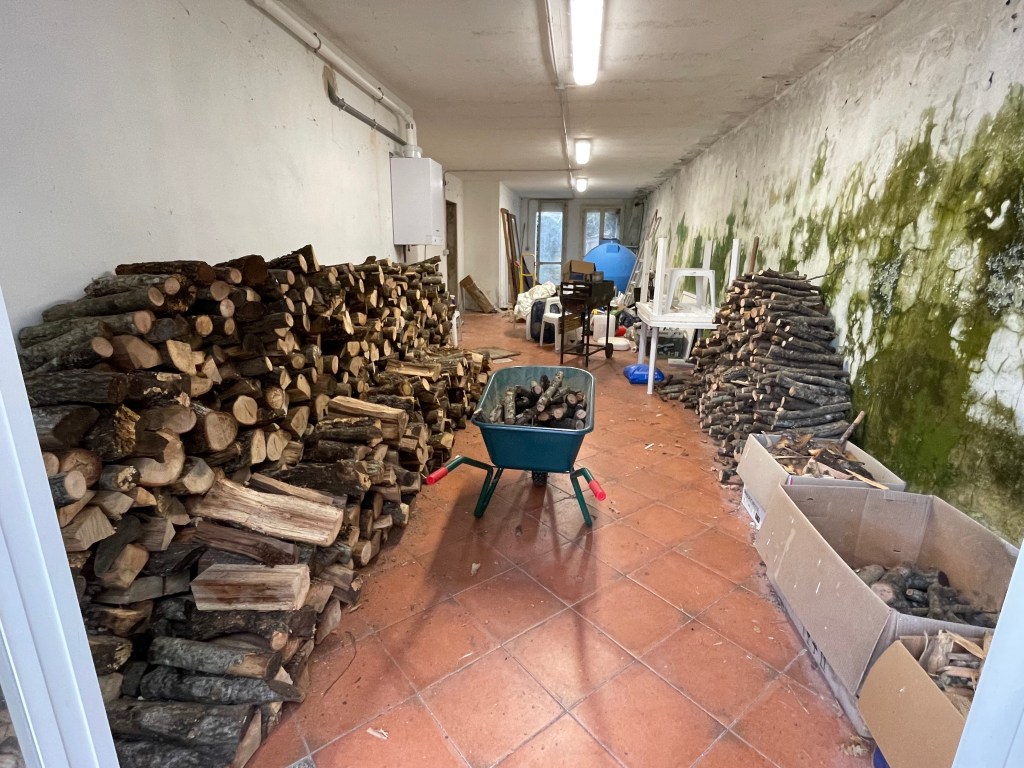
Take a look though—we received a huge pile and had to move all that into the house in organized bundles. The te Spartan Woman lived up to her nickname, organized how we were going to tackle the pile and hauled tons of wood. Literally. In all, the two of us carried and stacked 25 quintales, or 2500 kg. That’s over 5,500 pounds.
Not bad for old people.
 (Not) A Year (Not) in tuscany