Eat like a peasant—and enjoy it

Staten Island, where we spent three weeks and some, has this image of being a sort of Sopranoland, its residents a larger version of the cast of Jersey Shore. That’s only partly true, and applies only to some neighborhoods. Our daughter lives on the North Shore, which is a multiethnic paradise. And after a few months of mostly “Italian food”—I dislike the term because there really is no unified cuisine here—we were craving the offerings of our former Japanese, Chinese, Mexican, Vietnamese, Sri Lankan, and Turkish haunts.

Maybe we overindulged. But our kid has a baby, and trying to be good guests, we thought we’d make it easier by ordering out. It was a nice change from Umbria, even if this area is increasingly cosmopolitan, with sushi and Chinese food fairly commonplace. But one thing we didn’t miss: American (or is it New York) price tags. For one Saturday lunch, we order four banh mi, three bubble teas, and a Vietnamese coffee. Total bill, $115. That would have bought a fancy meal here.

SO BACK IN OUR HILLTOP RETREAT, we prepare a lot of wintertime comfort food. That pretty much means soups and pasta. We don’t eat meat, but with such a huge variety of vegetables, legumes and grain products, that doesn’t cramp our style.

Note: The dishes described here are vegetarian, not vegan. If meat is a must, you can serve these dishes as first courses, or read another post and come back next week. I don’t give recipes per se, so you won’t see exact quantities or cooking times. Anyone who cooks regularly can probably come up with something good. I don’t usually follow recipes; I use techniques my mother taught me as a teenager when she broke her arm, and I had to step in to cook family dinners.

After years of propaganda about the superiority of “Northern Italian” food, the South here is rising again, at least when it comes to culture. Maybe it’s down to TV shows here like Mare Fuori (The Sea Beyond) which portrays the lives of a bunch of photogenic kids in juvenile detention in Naples. One of our favorite Neapolitan dishes is pasta e patate. Yes, you can mix starches.

You can look up recipes here and here. While there are various versions, you basically make a soffrito—onions, celery, carrots—and sauté it. Add diced potatoes. When they’re halfway soft, add water or vegetable broth and a squirt of tomato paste (a couple of canned tomatoes or some purée will work too). Let that cook awhile, and then, making sure there’s enough liquid to boil pasta, toss in a couple of good handfuls of mismatched pasta, all those odds and ends that you’ve accumulated when you haven’t cooked the whole package. Improvise if not. Then, at the end, add cubes of provola cheese. This last bit may be hard to come by in the U.S., so I’d suggest diced hard (not fresh) mozzarella.

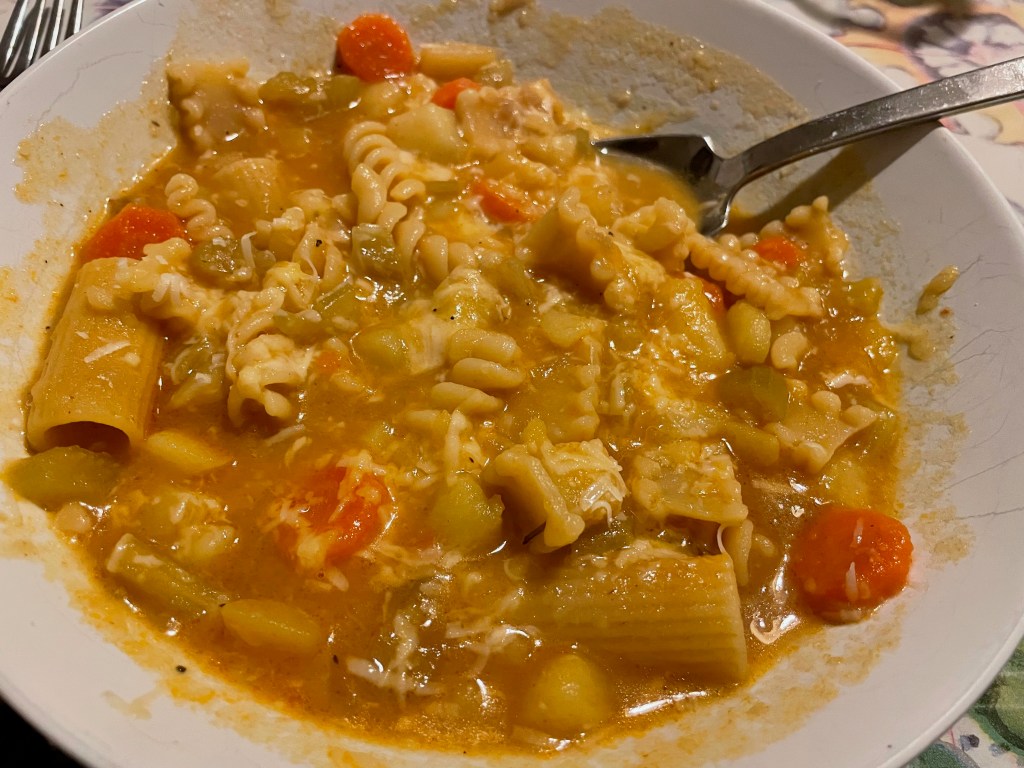
Beans and greens might be an easier combo to get behind. We make lots of variants of this basic comfort dish. It’s easy. Take good beans, whether they’re borlotti (cranberry), cannelini, or ceci/chickpeas. Cooking them from scratch is best, but canned beans are fine, too. Sauté a clove of garlic and a little hot pepper flakes in olive oil. Add the beans, stir. Add cleaned and chopped greens, like escarole, kale, chard, or even spinach. Make what’s in the pot as dry or soupy as you wish. If there’s a fair amount of water or broth, cook some soup pasta (orzo, ditalini, small elbows, etc.) directly in that pot or cook the pasta separately and add for a drier dish.

It’s best to keep to the basics with this, but you can optionally add a Parmigiano rind to the cooking liquid, or mix the beans or add another grain like farro. Add grated cheese if you want, but the soup/pasta dish should be able to stand on its own.

A post like this wouldn’t be complete without lentils. They’re an Umbrian staple. For example, it’s traditional to cook lentils for New Year’s, the pot of lentils symbolizing the riches that you hope the new year brings. Umbrian lentils are really small and don’t break down into brown mush. When in New York, I found that Trader Joe’s vacuum-packed French lentils are a pretty good substitute.

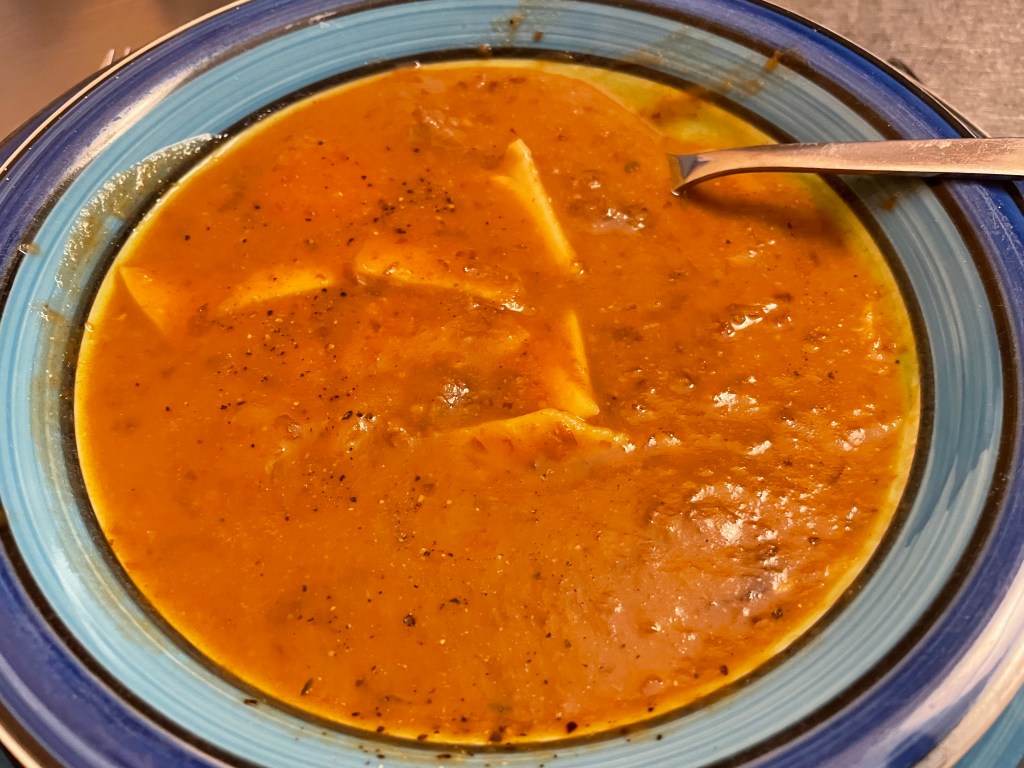
This dish won’t break the bank and is really easy to prepare. Do that soffrito thing again. It’s onion, celery, carrots. Add about half a pound of raw and rinsed lentils after the vegetables are soft. Stir around then add about 500 ml/a pint of water. Add a squeeze from a tube of tomato paste, or a dollop from a can of paste. Let the lentils cook until they almost done. At this point check how much liquid is in the pot. You’ll be adding a cup of ditalini or similar pasta so, if necessary add some water, keeping things on the boil. Add the pasta and cook until al dente. Serve with grated Parmigiano, Grana Padana, or even Pecorino cheese. And this is the result:

A stranger at home for the holidays

I’m still finding it a little astonishing that I took my first vacation in my native New York. We’ve been buying round trip flights from here for awhile, ever since the airline Alitalia folded its wings. But then we stayed back in NY for a few months. This time it was for a scant few weeks and we definitely were visitors this time, staying at a relative’s home and borrowing a car we’d given up. 

One of the things that happens during the holiday season (and pre-trip) is that you have to eliminate items from your to-do list. We started out with an ambitious to-do-before departure list and had to cull as we went along. I’ll get into that later, but the process led to our spending more time getting stuff done in New York. Unpleasant but necessary tasks, that is. 

With all that in mind, I’ve been trying to figure out how to organize this so it’s not just a rant about reverse cultural shock. There’s too much of that floating around online. (Hey, I’ve had feet planted in two places for so long I’m immune.) The Spartan Woman suggested the following approach:

THE GOOD

REMEMBER WHEN PASSPORT agents were surly and acted as though you were a criminal for daring to leave the country? That’s changed, at least in our experience. Maybe it’s down to our being old? I don’t know, but suddenly ICE is hiring friendly people. Or, just maybe, we’re of a certain age now and don’t look like the kind of people US immigration wants to keep out.

In any event, it was a good way to ease into the U.S. Better still was seeing our grownup kids again. Daughter no. 1 gave us a new addition to the family, a bouncing (literally) baby boy. No pictures, sorry. We’re keeping the child out of social media, at least for now. I may be a proud nonno (grandpa), but The Boy is objectively really good looking, and appears to have inherited some of his mom’s impishness. You’ll have to take my biased word for it. And though we moved, it was good to see some neighbors, and comical to see others, like the wild turkeys that have taken over the island.

One thing we miss when we’re in our Umbrian mountain retreat is multiethnic food delivery. Even on Staten Island, which is often depicted as a bigoted white people hellscape. The truth is more subtle than that, and the island’s North Shore is a paradise of ethnic restaurants. In our short time there, we ordered from Chinese, Vietnamese, Turkish, Thai, and Mexican places. We didn’t have time to have the Sri Lankan food we love.

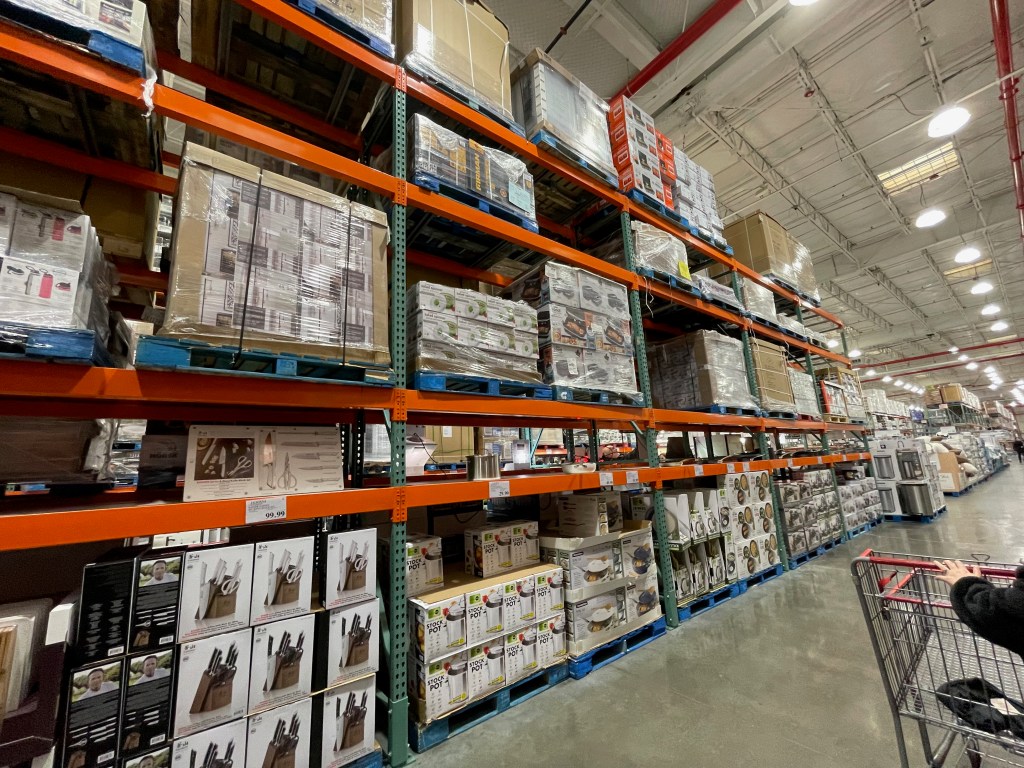
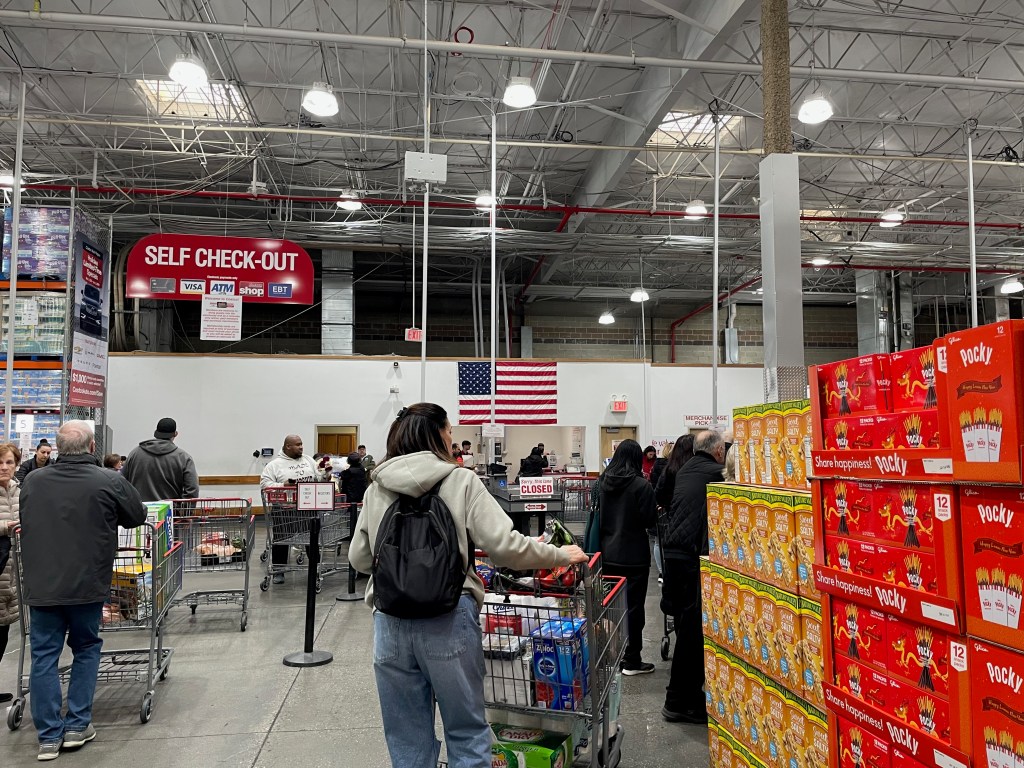
While we’re on the subject of crazy choice, Costco? I know, I know, where have I been? I finally was initiated into the cult by Daughter No. 1, just for one visit. I was overwhelmed. Not that we bought that much—we had specific goals. It wasn’t so much the crazy amount of merch for sale, even though I saw everything from espresso machines to solar panels to yoga pants to flats of every household item imaginable. But wow, in the space of less than hour I heard at least half a dozen non-English languages. That the company is fairly humane in its personnel practices compared to other giants of commerce added to my not hating it. Buon lavoro, Costco. 

I did notice one other thing immediately. As soon as we cleared customs and were in a taxi headed to our kid’s home, I pulled out my phone and wow, this 5G thing. I’d forgotten how fast it is, at least the T-Mobile version of it, and later tested it to be, in some places, a 600 mb/s download. That’s fast. And our kid has, like we did, 1 gigabyte/second fiber. Fast fiber internet has made it to Italy in general, and our town of Valfabbrica specifically. But not in the rural areas. We use a local provider here, which gives us download speeds of around 30 mb/s, which isn’t bad considering it’s wireless. But a guy can get spoiled. Still, I wouldn’t trade my life for fast downloads. Yet.

THE BAD

OH BOY, THIS. Before we left for New York, we’d wanted to get a Covid booster shot, since the latest one covers the latest known variants. Here in Umbria, you go onto the public health website and look for a location and convenient time and hit the send button and show up for the shot. But we ran out of time and figured we’d get the shot at our former local pharmacy in New York.Unfortunately, Nick up the street wasn’t handling the vaccine. So we had to look at the local megaeverythingwithpharmacy places like CVS and Walgreen.

The closest CVS told us they were out of the stuff and maybe were getting some in the future. But Walgreen’s website said make that appointment. I went through the online scheduler and completed the online medical history/consent forms for the two of us.

The day arrives, we drive a couple of miles. There’s a woman ahead of us in the vaccine line. She’s filling out the history form. “We did ours online,” I said. “I did too but they want me to fill it out here again.” The staff behind the counter is obviously overwhelmed, answering phone calls, taking in prescriptions and giving out meds to other customers. We wait and wait and wait. The nice woman in front of us was finally frustrated and disappears. They call her name, finally, to get her shot, and no one answers.

Finally, the harried clerk asks us to fill out the damn history/consent form. “I did it online,” I respond. “We’re asking people to do it here,” she says without giving me a reason. I refuse. “Sorry, I did it online and I’m not going to fill it out again. Look in your system.” There’s a standoff. Finally the overworked pharmacist tells her to dig it out of the computer. More waiting–at this point we’d been there an hour past our appointment time. We weren’t giving up. At last, the pharmacist come out and administers the shot: 75 minutes after our appointment time. We note that they have lots of people restocking the shelves with stuff like Doritos and deodorant, while the pharmacy workers look like hunted animals. American free enterprise at work.

As for this little pharmacy item (left), really?

 Finally we drive back. The main drag through that part of the island is a two lane road that was built in the 1920s and ’30s, with small shops and converted houses hosting insurance agencies and the like lining the street. But something’s out of whack. Big hulking SUVs and pickup trucks like Ford F150s dominate. It’s like the hippo dance in the Disney movie Fantasia. If the giants aren’t being driven like drunken Romans are behind the wheel, they’re creeping along because I’m sure their drivers can’t see out of them. Why do Americans need a tank to go to the drug store?

Another time I stop at a traffic light to make a left turn. One of the misplace macho drivers doesn’t think I’m moving fast enough (I am not a slow driver) and charges over on the right and without caring makes the left, causing oncoming drivers to hit their brakes. This happens over and over. All of a sudden driving in Italy seems sane.

THE MEH

LET’S TALK ABOUT prices, okay people? The U.S., once you’re been away, just seems like a giant machine designed to drain its people of their money. For instance, we buy Royal Canin dog food for our little prince Niko. It’s produced in plants around the world, but it’s a French subsidiary of the giant Mars Inc. In the U.S., a little over one kilo costs $21. The same food, but almost double the quantity, costs €21 in Italy, or about $23. The common excuse, er, rationalization is that wages are higher in the U.S. and so are fixed costs. But double? If you know, tell me why.

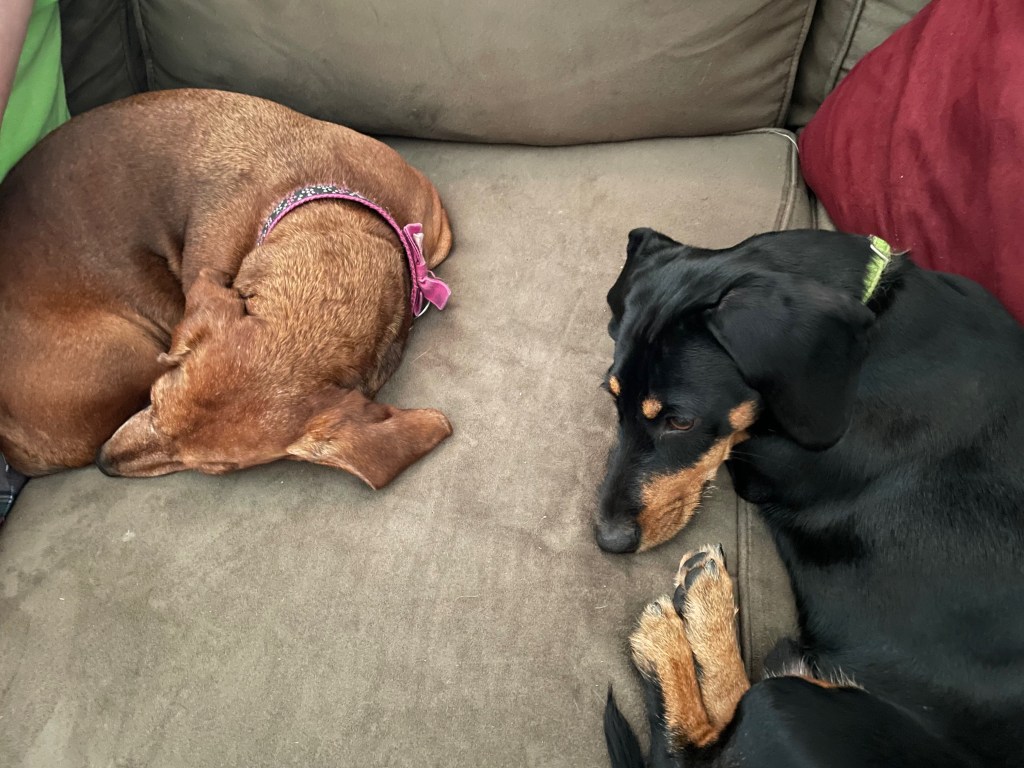
Gratuitous puppy picture: It costs twice as much to keep Lola from the U.S. (left) in Royal Canin than it does our little Niko from the suburbs of Rome.

While I’m on the subject of allocating funds….I get it. New York is constantly being rebuilt. But sorry, what’s there can be so crappy. I traipsed about the Financial District for the best part of a day to take care of a bureaucratic matter. An Italian matter. (Don’t ask.) I used to work in the neighborhood and didn’t really notice before, but the streets are in crappy condition. Sidewalks are broken up, there are shoddy barricades everywhere and in general the place doesn’t look like one of the financial and media capitals of the world. I guess I’d taken the crappiness for granted before.

/rantover. Back to Italy after this.

Liv breezed in for a bit, and everything moved faster

So it’s great when a kid or two comes by for a visit. This time it was Liv a/k/a Olivia, our younger daughter, and her partner Al. We got their room ready and stocked some of the foods we knew they’d like or need. So, big bunch of small hot peppers? Check. Oat milk, ditto. Restock coffee supply? Done. We took mercy on them and picked them up at Rome’s Fiumicino Airport instead of making them take the train. It’s a haul from “Alta Umbria,” but for a Monday morning just after rush hour, we just breezed in.

A lot of any visitor’s stay naturally involves food. I don’t really have to say it, but it’s pretty incredible ’round these parts. A visit to a regular supermarket is like going to an Eataly in the U.S., except that everything is half price, if that much. Back in ‘Merica, our offspring have developed some food intollerances, or so they thought. In Liv’s case, U.S. market pasta and wheat products give her a stomach ache, so she thought she’s got that fashionable gluten problem. But no. She can eat pasta and bread and pizza here, no problem. And she’s not alone—an anecdotal survey of people who live here but go to the U.S. regularly brought out a lot of the same reactions. Anyone have an idea why?

Liv and Al took two weeks of their valuable time off, so instead of sitting at home admiring the view we had to put on our tour guide hats and see stuff around this splendid little region. Not that it’s their first time around this block. Al said to me “Being here is, like, what I do now. It’s my alternate reality life.” First they had to return to Perugia, Liv’s first love and where Al has developed certain rituals. I dropped them off so they could wander around without us old people slowing them down. Despite the nasty weather, they dropped into their favorite places, Al at the porchetta stand on Piazza Matteotti, and the two of them for artisanal gelato (with flavors like gorgonzola and honey) at Lick (closed for vacation until 7 December).

ONCE THEY GOT PERUGIA OUT OF THEIR SYSTEMS, we tried to get away from the too familiar. Last year we spent a rain-drenched day in Foligno. Until then that small city was just a railroad station where we had to change for the Perugia branch line. But we discovered it’s a lively place and unlike most towns in Umbria, flat and really walkable. The window shopping is terrific, and there are tons of cafés and restaurants, many of the latter looking as though they dropped in from Williamsburg.

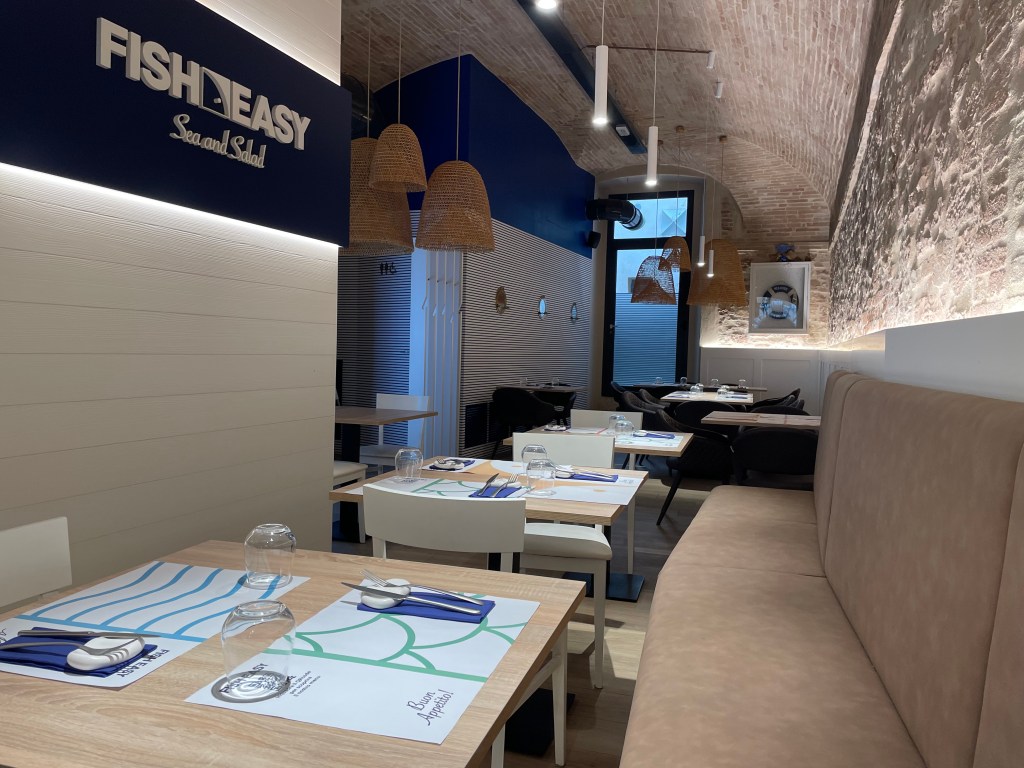
Knowing that we were going to be in Foligno long enough to have lunch, I started to surf the Web for suggestions, and ran into the service The Fork. It’s like Open Table and Resy in the U.S., but it points to places off the main tourist squares and, if you reserve a table through the site, you often get a discount. I looked through the service and got us a table at Fish Easy (that’s really its name). You can leave a note for the restaurant when you reserve, and I asked if it was okay to bring our dog. Most restaurants here are dog-friendly, but it never hurts to ask. I got a quick reply—sure, we’ll be happy to have him around. (Below, lunch at Fish Easy, with Niko hoping something falls off the table.)

The proprietor made good on his promise. Niko was our calling card, and as soon as he saw Niko leading the way, he knew it was our party of four. The place, like a lot of Foligno eateries, didn’t trade on the Olde Worlde thing, the decor and the menu was sleek and up to date.

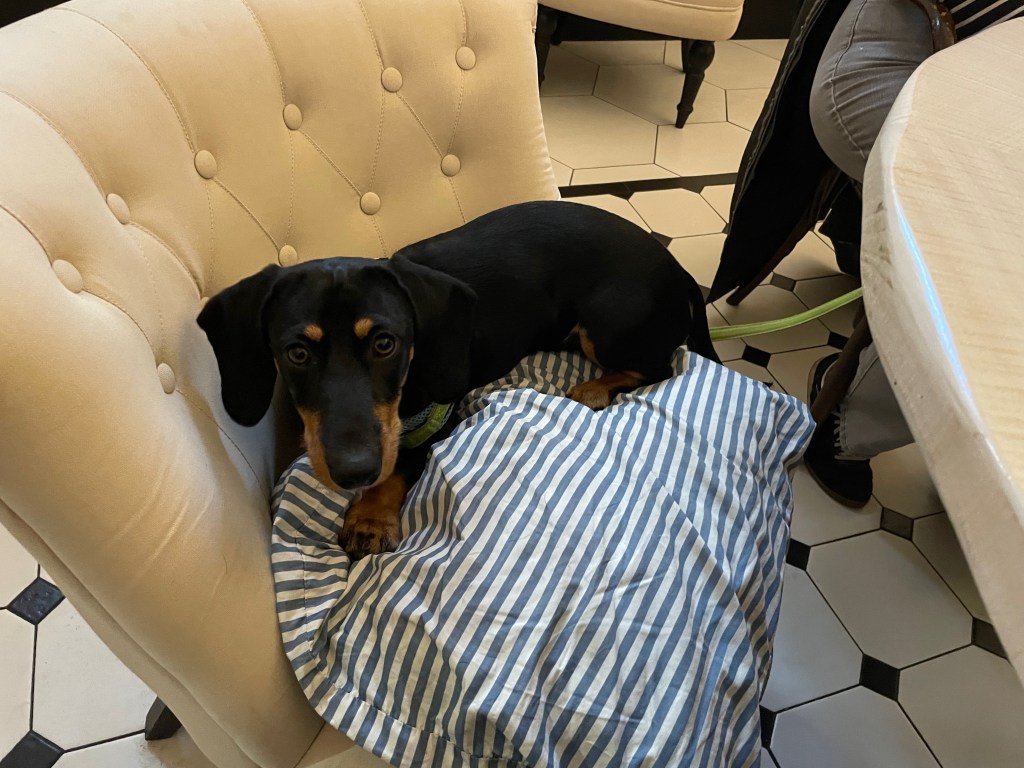
Another day, we took advantage of the fine weather and drove across the region to the city of Orvieto, famed for its delicious white wine and its incredible Italian Gothic cathedral. I used The Fork again to find a place to eat, and it led us to Caffè Ristorante Capitano del Popolo, on, logically enough, the piazza of that name. After a funicular ride up from the train station (with plenty of free parking), we admired the Duomo, including the stunning frescoes by Luca Signorelli, before walking a few minutes away from the tourist crowds to the piazza. The market there was shutting down as we walked between stalls to the restaurant. I’d warned them, too, that we had a dog and they not only let Niko in, but gave him a plush chair, pillow, and water bowl. (Below, the Signorelli panels and a modern capolavoro.)

Like more and more restaurants here, the menu was creative but rooted in Umbrian tradition. So some familiar dishes has interesting twists, like the addition of ginger. I usually don’t eat meat, but I was pasta-ed out and went with a vegetable-forward version of chicken alla cacciatore, while my stronger-willed wife and kid had trucioli (a short pasta) with artichoke cream and mint.

Niko got his own place at the table.

THE SPARTAN WOMAN AND I have this compulsion to show off “the real Umbria” to our guests. That usually means one of the sagras around the region. They’re usually held in the summer, when warm weather means long sultry nights, local food specialties, and kitschy line dancing to live music. Liv and Al were too late for those. But they weren’t too late for Montone’s fall festival. Plus, going there gave us an excuse to check out a different part of our area—after a few months of living here, it’s easy to get stuck in a rut of shopping, home maintenance and occasional hanging out with friends.

So, Montone. It’s said to be one of the most beautiful towns in Italy by the kinds of groups that keep track of that stuff. I can vouch that it’s awfully pretty, though I gotta say that it’s got lots of competition. The festival was fun because it got us out of the house and, with its emphasis on local foods and the chattiness of the vendors, we got an education in local foods. Really, really local foods. The hyperlocal food culture means that local towns have wineries, honey producers, and other local producers just beyond the town walls. For us that day, the nasty November weather broke and we strolled around and talked to people about cheese, pasta, and medicinal herbs and tinctures (the maker of the latter grabbed us for a good long chat).

So much for all that. The Spartan Woman, Niko the pup, and I have returned to everyday life, evading the wild boar hunters, looking at the view, and trying to decide every day what to have for lunch. And one of these days we’ll hang more pictures on the walls and make this place look more lived in—in a good way.

Bitter. Sweet. And something in between

Never mind.

Soldier Carlo

That’s the phrase that came into my mind as I boarded Iberia flight 6252 for Madrid last week. It was the start of a journey to Umbria in Central Italy, where I’ll register as a full-time resident. In doing so, I’m moving in the opposite direction of Carlo Ancona, my maternal grandfather, who tried to escape a second stint as a conscript in the Italian army during the incredibly stupid European conflict that we call World War I. (He failed and was drafted to fight in the trenches in the U.S. Army.) I’m also reversing the direction his wife, my grandmother Rosa traveled a few years after Carlo, sailing to New York in steerage with two young children. And finally, I’m canceling out what my father did in 1955, the year before my birth, sailing from Palermo, Sicily, to New York to join his bride, my mom Angelina Ancona.

All of them fled economic bad times. My mother’s parents were tenant farmers leaving the crushing poverty of the seacoast and agrarian town of Castellammare del Golfo, in northwest Sicily. “They ate pane e cipudda, bread and onions,” my mom would tell me. My father, from a middle class family in the big city, wasn’t starving. But when he left the Italian army, there was precious little opportunity for a restless young man in mid-’50s Palermo, the island’s largest city and capital.

What am I fleeing? Eh, nothing that affects me personally except, perhaps, boredom and endless HGTV programs like Love It or List It. I was involuntarily retired by Covid, when a lot of work I did dried up. A few years ago I did have a day job as a working journalist. I loved the job until it was turned into a soul-crushing exercise in scaring up website clicks by a bunch of Catalan consultants and dull-witted corporate executives.

I’m not alone in doing this reverse migration. Some 20 to 30 percent of the millions who left Italy during the great migration of the late 19th and early 20th centuries returned permanently to their homeland. In my own family, my grandparents and one of my aunts lived in the U.S. for a few years and then decided to return.

My Aunt Pia’s wedding on July 4, 1964. She and her new husband eventually moved back to Italy. (I’m the ring bearer up front.)

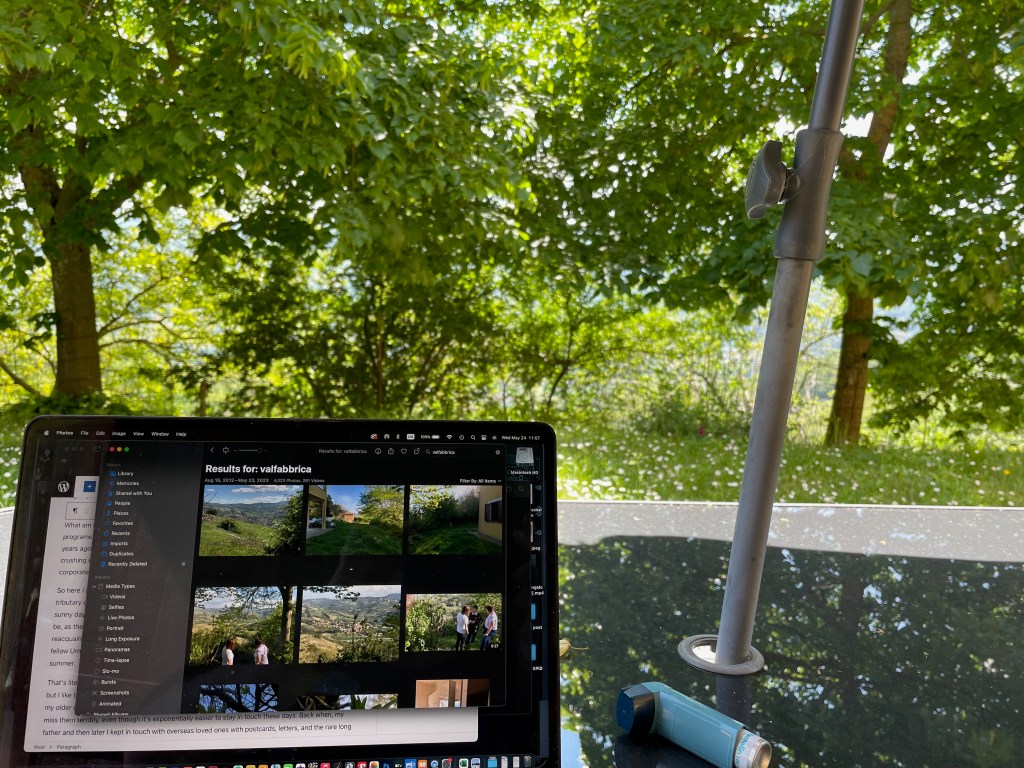
So here I am. I’m sitting on the patio of our house looking down into the valley of the Chiascio River, a tributary of the Tiber that runs to and through Rome 192 kilometers (about 120 miles) away. It’s a breezy sunny day, coming after a few days of leaden clouds and periodic cloudbursts. To call it pleasant would be, as the cliché goes, damning it with faint praise. We walked up and down our road earlier, getting reacquainted with the human and canine neighbors. Last night, we along with what felt like dozens of fellow Umbrians, ate gelato at a popular place a few towns away, signaling the start of a lazy Italian summer.

That’s literally and figuratively the sweet part. The bitter? Leaving my babies. Okay, they’re adults now, but I like to think that even though they’ve grown into terrific young women, they’re still my babies. And my older daughter gave birth to (this is grandpa saying this) The Most Beautiful Baby in the World. I’ll miss them terribly, even though it’s exponentially easier to stay in touch these days. Back when, my father and then later I kept in touch with overseas loved ones with postcards, letters, and the rare long distance (!) phone call. Even the baby responds to the screen when I use FaceTime to videochat with the fam.

And the in-between? Leaving the city where I was born, raised, educated, had a career, and raised a family. Either purposely or by accident, The Spartan Woman and I avoided what a lot of educated class Americans do. We didn’t let internships and college take us away from our hometown of New York. A big reason came down to economics: Coming as we did from families just getting their feet on the American ground, we couldn’t really afford to go away to school. Later on it was a conscious choice, that New Yorker snobbishness that considers every other American place to be, simply, not good enough for us. Hey, we had free university, great museums to wander around in, incredible hangouts and backdrops for romance. Did I ever tell you about the rehearsal show for Kid Creole and the Coconuts we were at? When my sister danced on stage with August Darnell? Or when as young adults we’d catch a Ramones show at 3 a..m. in a seedy bar and then head to work with impaired hearing?

Can you hear the ships’ horns?

For better or worse, I have the foghorns of New York Harbor embedded in my brain. And the clickety clack of an elevated train making its way to Coney Island. Hell, it took me years to orient myself here, a place on a landmass with lots of what looked like identical towns at first. A New York kid, I knew that if lost, I’d end up at a shoreline eventually. I walk fast, even as an old guy. It’s what we’re trained practically from birth to do. Skyscrapers don’t faze me, and I’m frankly bored of upscale restaurants where the chef is so hell-bent on innovation that he or she forgets to actually feed people.

I don’t think I’ll miss the rest of the United States. Still, there’s nothing like a lobster shack in Maine, or the honky tonk Jersey Shore. I do miss our summers on Cape Cod, where we’d rent little cottages with the kids when they were little and eat way too much seafood.

Living here in Central Italy feels natural. It’s not as intense as Sicily yet not as proper as the north of the country; it’s somewhat of a halfway house between the Latin and Anglo-Saxon worlds. I didn’t have to go through any cultural acclimation, since I grew up in an immigrant family full of relatives who moved back and forth between Italy and the U.S. for vacations or to live. I spent my first times in Italy at relatives’ homes, the first time a lazy beautiful summer in a beach town just outside Palermo and got first-hand lessons in how to shop and get an espresso or beer at a bar.

I’m going to go back and restate the original point of this blog, besides my having the urge to write every so often. I aim to show what living here is like in a realistic way, without the romanticism of silly stuff like Under the Tuscan Sun or A Room With a View. Italy is a modern, vibrant, sometimes infuriating place to live. If I’m successful, I’ll smash some stereotypes, yet leave you with an occasional smile.


Digital photography saved my life. Or at least it helped me remember a lot of it

I miss the telephone. I really do. I don’t mean my iPhone, or I guess any smartphone. Those aren’t phones, they’re pocket computers that allow you to make telephone calls. No, I mean the old-fashioned, bakelite telephone. I spent hours on it as a teenager talking to friends. And then later, as an editor and writer, I spent a lot of time every day talking to writers, sources, friends who worked elsewhere.

Apart from the conversation, something that’s turning into a lost art, I loved the spontaneity of phone calls. You didn’t have to arrange a time to chat unless you wanted to. You just called, or picked up the “receiver” and talked. If it was a bad time—the universal excuse during my day job days was “sorry, I’m on deadline”—you just said so and talked another time. Easy as pie. I kinda laugh now when I’m working on a freelance piece and my clients won’t make normal phone calls. They email invitations with complicated instructions. Then you click on something and the allotted time pops up on your computer’s calendar, and it involves using an app on your computer or phone. Kludgy, no?

But I’m not a Luddite. I keep our home network reasonably up to date and recently made sure that The Spartan Woman replaced her 9-year-old MacBook Air with a new model. We’re about to jump ship and live most of the year as Italian residents, and computers and similar devices are a lot more expensive there.

I save my reverence, though, for digital photography in general—and my iPhone specifically. I have at last count some 37,000+ photos and videos on my little MacBook, and they’re easily accessible and fun to look at on a bright colorful screen. And to do that I don’t have to set up a slide viewer and sit in the dark, boring friends with my narratives. And having an iPhone—that non-phone phone—with a decent camera doubled the pleasure because I rarely forget important events or good times, or places I’ve visited.

Yeah, I take a lot of pictures.

The point was made clear by my weeks of scanning family snapshots. Most of them were stored in boxes in the basement gathering dust and who knows what else. Thousands of precious photos in envelopes were casually piled up in boxes, with no organization, and I’m racing to scan in decades worth of snapshots. I had to guess when certain events took place. It was relatively easy with my kids, because I mostly remember what they looked at during different stages of their lives. But the specifics were fuzzy–great t-shirts, where we had drinks in Montreal, my younger one running around on a Cape Cod beach. Our hairstyles. You get the idea.

Welcome to my laboratory.

The best part of the mass scanning was getting to reconquer my memory and my life. It was mainly a blur for almost two decades, as we went to grad school, partied, had our kids while working long hours (me) or dealing with disadvantaged kids as work (The Spartan Woman) and taking care of our charming young women while I coped with late night deadlines and headline inspiration that came on late night walks with the dog. Before scanning some 6 GB of snapshots, those two decades were in soft focus in my mind, a blur of newsrooms punctuated by vacations and big life events.

By contrast, everything from 2001 is crystal clear. That’s when I bought a decent digital camera, and I imported nearly every shot. (Importing photos even sounds archaic now. When I take a shot with my phone, it magically pops up on my Mac.) It’s fun to see the differences from the fairly drab digital shots 20 years ago taken by a Nikon or Canon point and shoot, and the near-pro quality of photos from my last two iPhones.

The quality, too. Here we have a tale of two families. TSW’s childhood and early adulthood was pretty well documented in film-based photo prints. Her father was a photographer, and a good one especially when his subjects were people. So there are good portraits and spontaneous action shots that are well-lit and framed. My family, on the other hand, used a bunch of nasty little Instamatics with their tiny film. So there’s hardly any detail in the shots to begin with. That flaw was compounded by the fact that my parents, sweet souls that they were, happened to be lousy photographers. My mother was better at it, but she was usually too busy cooking or looking after us to be bothered with pictures. My father was just indifferent and not that good at it.

Luckily, there’s Photoshop. Every now and then I’ll come across a photo that’s worth fixing. My mom’s teenage photo album in particular has a lot of gems, from rollerskating with her sisters on the streets of East New York, to my Uncle Tommy’s homecoming from fighting in Europe in World War II.

Soldier boy Tommy comes home to East New York Brooklyn in 1945.

Come to think about it, going through these shots and fixing them using modern photo editing software is the perfect marriage of old and new tech. I’ll share some more shots as I do that.


EDIT: My gear: A Plustek ePhoto scanner with ePhoto software—easy to use, you just feed the snaps through the front plate and they appear on your screen. Then you can edit, save or send the scans.

MacBook Air M2: I updated my computer gear. I do some video editing on it, too, nothing really intense but the new M chip MacBooks are really fast and the battery life is unbelievable. I’ve never plugged mine in because I had to, in 4 months

LaCie portable external hard drives. One is the primary location for the scans; I don’t want to fill up my computer’s hard drive with them. I back this up to another external drive, just because I’m superstitious about backups and lack of.

Adobe Photoshop: Apple’s system Photo software is pretty good with edits, but for real fun and games, Photoshop and its companion Lightroom are peerless for quick and accurate color correction and for teasing pixels out of faded photographic prints.

In with the old, in with the new

I’ve been lazy. Uninspired? Bored? Had writer’s block? Nah. It’s just that living in an outer borough of New York and not going out much can be, well, not the stuff I want to write about. So I didn’t. I was struggling to do something profound, either about differences between Europeople and Americans. Or maybe about technology, or taking a quick road trip. I could show you the unfinished drafts in my queue. But that way you’d see my tortured thought process.

At one point, I even got a bot—the now famous ChatGPT—to write about driving from New York to the Boston suburbs. Then I thought maybe I’d critique what the bot did. Okay, I’ll give you a peek:

On a chilly weekend, we took a 400 km ride to the Boston suburbs in our Volkswagen Golf. Four of us traveled comfortably in the spacious car, but we had to make a couple of stops along the way for our pregnant daughter, who is in her last trimester. Despite the stops, the ride was generally smooth and we were able to make good time. One thing that struck us on the American highways was the lack of lane discipline. People would frequently pass us on the right and zig zag dangerously through traffic.

Kind of workmanlike, no? I gave the bot no instructions as to style or my attitude. I wonder how it decided that the car is spacious—in Europe it’s a midsize thing, in the U.S., the land of SUVs, like a matchbox. I’ve read worse copy in my way too long editing career, but at this point I’m not exactly scared that it’s going to take my place.

The Matalas coven takes over the living room.

Anyhow, then Christmas came, and three days later, we transferred to our Umbrian hill, so, yes! I have something to write about. First of all, the holiday. We’re not really subscribers to religion, but we’re culturally a tiny bit Catholic, and for years we’ve had The Spartan Woman’s Jewish cousins over for the day, as well as her parents and sister, etc. This year’s get-together was bittersweet for a couple of reasons. It was the first one post-Covid onset. And it could be the last one we do, because we may not be living in the U.S. this time next year.

All the same, it was terrific to see our kids and their second cousins hanging out together. We jokingly call them the coven; for years, hardly anyone in TSW’s extended family gave birth to males. I’m not the only one calling them a bunch of witches, they themselves encourage it and, well, it’s just funny. But in the next couple of months, that should end. Our number 1 kid, who got married this past March, is expected to actually bring a male infant into this world. “I don’t know what to do with a little boy,” TSW said at one point. I think she’ll manage somehow, she seems to have no trouble with grownup boys.

AFTER THE HOLIDAY, we had to scurry and clean up and get ready to spend a few weeks in Italy. Obviously, this isn’t our first time around the block for this. Still, we have to make sure stuff is taken care of there and that we remember to take what we need in terms of tech stuff and meds, weird food substances we use in the U.S. but impossible to find in Italy. [Tip: Cheddar cheese powder is really, really good on popcorn.]

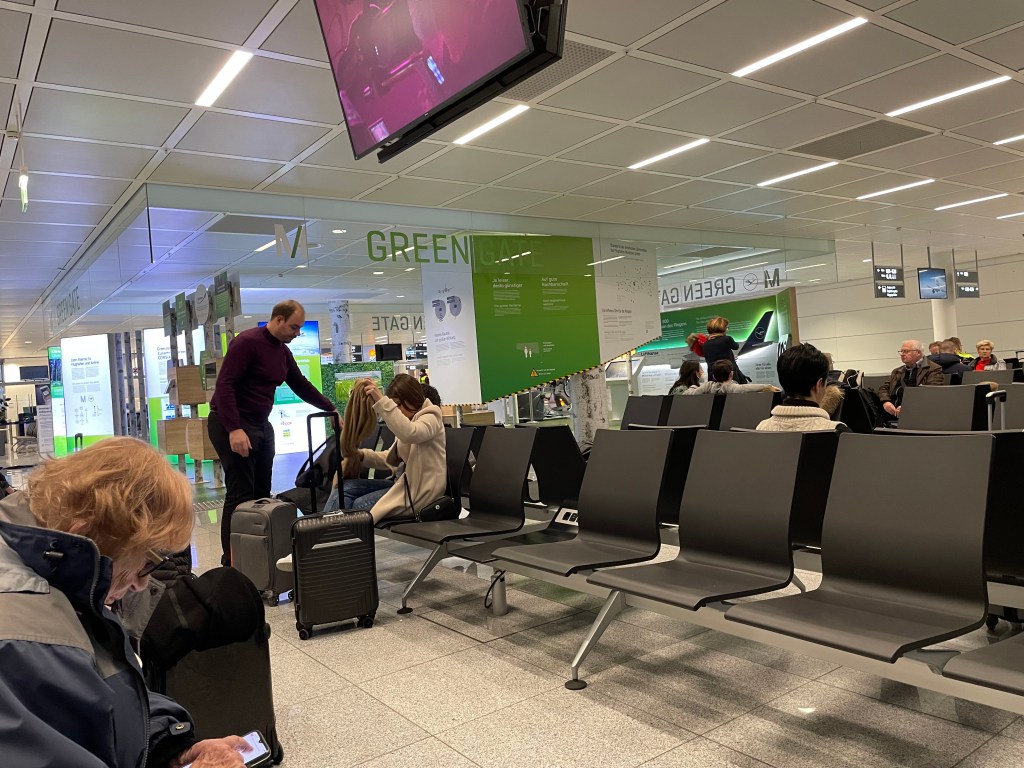
The trip over was something else. Not that we were delayed or anything, like thousands of holiday travelers in the U.S. But for the first time since early 2020 airports and flights were jammed. I never saw so many people crowding JFK Airport’s bars/restaurants/shops. It was hard to find a place to sit at the gate. When I went to the least-crowded bar to get my by-now traditional preflight Martini, the bartender apologized for having to use a plastic glass because all the Martini glasses were being used.

The flights, first to Munich, then to Rome, were similarly jammed. Lufthansa kept texting us begging us to check our carryon bags (for free even!). We had huge bags anyway, and only knapsacks as carryons. Lufthansa in general is one of my favorite airlines. Its staff treat people like humans, the food and entertainment are halfway decent, as are drinks, and the Airbuses are pretty comfortable, at least in premium economy (and upward, though I can’t shell out for that).

I’d nervously been looking at flight stats; we had 1.5 hours between flights and with the chaos in the United States, our first flight was late on the days leading up to our departure. That had me looking at how often Lufthansa and affiliates flew between Munich and Rome. Happily, it didn’t come to pass. We left on time and arrived early. Since we’re EU citizens, we breezed through passport control. And somehow we landed at a different terminal, the same one as our second flight, so we even had time for a cappuccino and snack.

I’ve crossed the Atlantic countless times and I usually sleep through most flights. But I was so happy to be traveling that I pretended to be a tourist from my window seat. Long Island looked colorful and even a little glamorous as night had fallen. Germany looked tiny and modern, at least from the buildings I could see. And the Alps? Mozzafiati! (Breathtaking in Italian)

I never get tired of flying over the Alps.

So here we are. And yeah, it’s a nice place. But it’s more than liking the place and having nice scenery and food. Our friend Angelo picked us up at the airport and knowing that we didn’t have much fresh food at the house, gave us a big bag of fantastic oranges (there is nothing like Italian citrus). This morning, I walked next door to our neighbors Marjatta and Pasquale at the agriturismo Ca’ Mazzetto to pick up our car; they’d been car-sitting while we were away. They used it every now and then and returned it with a full tank and cleaned inside and our. Later, Pasquale dropped by to say hi and give us a tin of their fantastic organic olive oil. It’s great to be home.

We’re getting ready for a quiet and decadent New Year’s Eve dinner here with our old friend Doug and his trusty sidekick Georgia the dog. Shopping for it was like being at JFK, way too crowded but instead of making me crabby, the IperCoop near Perugia had a party vibe, with sales of good Champagne and Franciacorta (Prosecco’s upscale cousin, fermented in the bottle like Champagne). Since this is Italy, we’ll take Franciacorta—to go with some scallops in the shell from France.

Thanks for reading this year, and happy New Year! See you here after the holidays.

Bean there, done that

My mother was endlessly inventive in the kitchen. Married to a guy from Palermo, Sicily, she had to come up with a “primo” for dinner most nights. We didn’t have the traditional meat and two sides on one plate. My dad insisted on our following the typical Italian meal progression: a “primo,” either pasta asciutta (with sauce), soup, or rarely, rice. The meat or fish or frittata (omelette, Italian-style) followed. At the end of dinner, my father peeled and cut up pieces of fruit, which he doled out to us on the tip of his paring knife.

Those primi stick in my mind the most. I always preferred pasta to the second course. Twice a week we had spaghetti or some other pasta with tomato sauce—what most people back then thought was the only way to eat “macaroni.” But in between were pastas with broccoli or cauliflower, either in dry form or as a soup, escarole soup, spaghetti with clams…the list goes on. Having this first course made us less ravenous when the secondo came around, and I’m sure that it helped stretch the food budget, too. And at least once every couple of weeks, pasta e fagioli, which on the U.S. is often rendered in some obsolete dialect as “pasta fazool.”

Pasta e fagioli is the star of this post. It’s cheap, nutritious and can be fun to cook, and is delicious too. The variations can make your head explode. I’m going to tell you how to make my favorite version, which is an adaptation of what I first had one long afternoon, way too long ago.

Some culinary history: Mom usually used kidney beans, specifically canned kidney beans, for pasta e fagioli, because back in the dark ages of American grocery stores, kidney beans were everywhere, mostly to the exclusion of every other bean. Sure there might be navy beans, which are almost tasteless and resemble the canellini bean’s little brother. And you could buy lentils and split peas. But back then, there wasn’t much choice. Angie/Mom made it palatable by injecting a fair amount of garlic and some tomato broth to the mix. If she had some lying around, she’d chop parsley.

You can all them cranberry beans or borlotti. Either way they’re creamy and sfiziosi.

Years later, Perugian friends took us to an agriturismo (working farm with restaurant and/or rooms) over the border in foreign Toscana—Tuscany in English. The folks at the Castello di Sorci supplied a multicourse meal with two primi, one of which was an amazing puréed bean soup with homemade tagliolini, or thin homemade egg noodles. This was new to me; I’d never thought to purée the beans for the soup. Back home in New York, I made my own versions, one of which stuck. I love fennel and will sneak it in wherever I can. I did it with the bean soup and found that the addition of the fennel mellowed the soup out. At the same time, you wouldn’t know it was there if you didn’t look for it—just like chefs now use anchovies to increase the umami in a dish.

The supporting star

We’re starting to make soups like this as the weather turns cooler. So far this November it hasn’t cooled that much, but with the long nights this soup feels right somehow. You can put it together in 40 minutes or so using canned beans, or plan ahead, soak some good beans overnight and cook them before making soup out of them.

HERE’S THE NON-RECIPE RECIPE. I don’t measure anything, and this soup has endless variations in quantity and what you put into it. The orthodox version is pretty straightforward, though I have no idea whether anyone in Umbria ever purees fennel along with the beans.

You’ll need a package of canellini or borlotti beans. If you can’t find them, navy or kidney beans of whatever color will work. If you’re using dry beans, you’ll need to soak them overnight and cook them ahead of time. Otherwise, a couple of cans of white or borlotti (cranberry) beans will work.

A bulb of fennel—if you can’t find or don’t like fennel, you can use celery

One onion

2-4 cloves of garlic

One carrot

Tomato paste or a couple of peeled canned whole tomatoes (mainly for color adjustment; otherwise the soup can be way too beige)

Wine to deglaze. Or white vermouth.

Short soup pasta, or broken up spaghetti, or sheets of egg pasta cut into strips or irregular shapes. Quantity is up to you. About a cup works but it really depends on how soupy or solid you want the final version to be.

How to start:

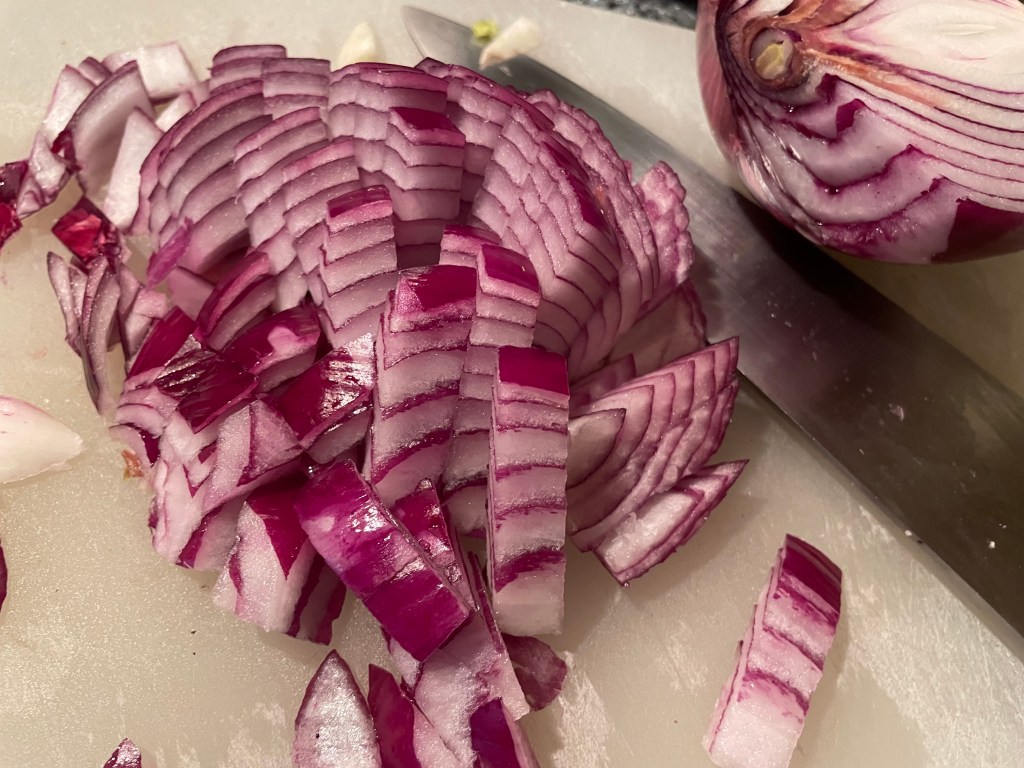
Dice a small head of fennel, saute in good olive oil. Add a diced onion (red, yellow, or white, it doesn’t really matter). Dice a carrot. All of this doesn’t have to be perfect; you’re going to purée this toward the end. Add 2-4 smashed garlic cloves, and, optional, a pinch of hot pepper flakes or a little hot pepper—what we call “peperoncino” in Italian. Get the vegetables past soft and translucent; you’ll want a bit of golden color because it will taste better.

Add a splash of white wine or dry vermouth and get all the toasty bits off the pot. Add a squeeze of tomato paste or a peeled tomato or two. Add two liters/quarts of low salt vegetable stock or water. Add the cooked/canned beans. Bring to a boil and then let it settle into a simmer. At this point you’ll want the flavors to come together, so let it simmer for about 30 minutes.

Take the soup off the heat. Using an immersion blender, purée until smooth. You can keep some beans out and leave them whole if you want. It’s your soup. If you don’t have an immersion blender, a normal standalone blender or even a food processor will work.

Turn the heat back on. Add pasta. There are two schools of thought here. I’ll usually cook the pasta in the soup, but a lot of people will cook it separately and then bring the pasta and soup together just before serving. Cook the pasta until just before being al dente–it will continue cooking as you serve it.

The finished product

Serve the soup in bowls, drizzle good olive oil on top.

Variations

Possible additions: Greens. You can even just tear some rucola (arugula) up and it will wilt in the bowl and give the soup a peppery note. Finely chopped Tuscan (black) kale, escarole, or chicory are good additions.A pinch of red pepper flakes or chili oil will satisfy those who like things spicy.

You can also choose not to purée the soup. In that case, make sure you dice the supporting cast of vegetables finely and uniformly; it’s all got to fit on a spoon. Or you can ease up on the water or broth and make the dish semi-solid.

Photo at top of page: Jeremy Keith from Brighton & Hove, United Kingdom

A tale of two siblings

I’VE BEEN WATCHING A social science experiment unfold over the past few decades. Yeah, I’m old. But the subjects of this experiment were older and have recently passed away. I’m writing about my father, Nuccio (formal name Antonino) and his slightly older brother Ignazio. It’s heartbreaking that we lost these two wonderful souls in the space of just a couple of months, but it’s given me a chance to don my political scientist hat and reflect on the lives they led. [Post continues below the photo.]

Versione italiana, clicca qui.

Two bros, on the street where they grew up, Corso Calatafimi Palermo, 2003

FIRST, THE CVs. Ignazio, born October 1928 in Palermo, Sicily, and a resident until his recent death. He was a widower, married to a great woman named Elena Beghin, who came from Treviso in the Veneto, within bike riding distance of Venice. The other was my father, Nuccio, born March 1930, also in Palermo. He emigrated to the United States in 1955 and was also widowed, married to my mom, Angelina Ancona, born on the Lower East Side of New York City. Nuccio lived in Brooklyn, then Staten Island, and finally moved to Eastern Pennsylvania when he retired. Ignazio lived in the same neighborhood all his life, bar a stint in the Italian army.

The two brothers might as well have been twins. Looking at photos of them from the mid-’50s, Elena told me she couldn’t tell them apart. (I can; Ignazio had angled eyebrows while Nuccio were rounded.) Ignazio was studious and high-strung. Nuccio was a party animal, not so studious. As a boy, he was tasked with guiding his brother back to bed when he sleep-walied around their apartment . As a result, my father was always a light sleeper. Their voices were almost identical—Ignazio, who was an army radio operator, spoke passable English, making the voice resemblance even stronger.

The two brothers each had three children. You can almost say that we kids came in pairs. So, my cousin Giorgio and I are only a little more than a year apart. My sister and Giorgio’s sister Assunta were born the same year, as were my brother Chuck and our cousin Loredana. Both brothers worked in electronic factories, too, serving in various foreman/supervisory capacities. They made enough to support their families, and weren’t rich but never were hungry. Both families lived a middle-class existence.

I’ve established that these dudes were remarkably alike. So how were they different? Simple: Ignazio stayed in Italy, and Nuccio left. And it’s fascinating to see how that affected just about everything in their lives. I’ve been tracking these two over the decades, as first unconsciously, but in the past couple of decades I thought more methodically of their parallel lives as a sort of horse race. Who led a more comfortable, spiritually richer life? Was there a winner? Can you even call the race?

I’ll get to the verdict straight away. Ignazio started out in a more precarious place materially, but all things equal, he ended up ahead. And it’s entirely due to how the United States and Europe treated their populations over the year. In fact, I’ll go further and say that Nuccio was far ahead early on, but the lack of worker protections and a comprehensive healthcare scheme in the U.S. eroded his lead decades ago.

LET’S START AT THE BEGINNING of the race. Both brothers served in the Italian army in the 1950s, but my father was discharged in 1955. That will serve as our opening shot.

Nuccio married my American mother and moved to New York. I was born shortly after, and we lived at first in the same neighborhood my mother called home, Brooklyn’s East New York. My father first worked in a shoe factory, and then, happily for me, found a job at a small, family owned toymaker. After obtaining U.S. citizenship in 1960, we moved to a little Cape Cod house on Staten Island. My sister had come along by then. The house was what was called a starter home, with an unfinished basement and attic. My parents were constant home improvers. The attic became terrific big bedrooms for my sister and me Patios were built and expanded. A huge garden supplied a lot of our vegetables.

Nuccio in sunglasses, with his brothers-in-law and my maternal grandfather on the right, sometime in the 1950s

Materially, we weren’t deprived of anything. My mother was really good at controlling the budget and my father got a better job after the toy company. (I was proud of him, but at the same time hated that I wouldn’t be a test subject for the toymaker’s new products.) The used cars eventually gave way to new, bigger models. And our backyard kiddie pool turned into a bigger one that we could actually swim in, so our childhood summers were basically spent in water and outdoors in general. It was a good life, and my father, while working hard, was living a version of the American Dream throughout the 1960s, into the early and 1970s.

Meanwhile in Italy, Ignazio was still in the army and he and Elena were a number, They had a kid but kept it on the down low because he wanted to stay in the army; Palermo at that time wasn’t a good place for a young guy to find a good job, In fact, the early 1960s, once he hung up the uniform, was a time of writing letters to employers and friends of friends who might help him get a job. The young family lived with my grandparents, which was not an easy situation for my aunt, who was used to the personal freedoms enjoyed by young women up north. Finally, at some point Ignazio got a job at a factory run by the Italian state telephone monopoly, and the family moved to apartments of their own, not far from where the two brothers grew up,

The two brothers during the last time they saw each other in person, November 2003

At this point, for my American friends, I should describe apartment living in Italy, Most Italians don’t live in freestanding houses; they live in apartments in cities and towns. But the dwellings aren’t transient places where young adults live while they save up for a house in the ‘burbs. They tend to be bigger than most New York apartments, which multiple bedrooms, baths, and terraces. A lot of them have doormen and gardens. Italians tend to be more social in their daily lives in general, with outdoor bars and spaces frequented as an integral part of daily life. You can almost say it’s the Italian Dream, except Italians are too realistic to think of everyday life as a dream; they believe that they’re fully entitled to what they have.

So at this point, the brothers are evenly matched. But not for long. Ignazio’s wife worked for some years too as the kids got older. They had family living in the same apartment complex who could keep an eye on them. They bought their apartment when it went up for sale; they accrued a nest egg. Regular raises and a new national healthcare system solidified these gains. One of Ignazio’s kids went to the local university, which was free to attend, except for fees and living expenses. He got a degree. In Italy, homeowners don’t pay real estate taxes on their primary dwelling. In general, Ignazio and his family were part of the general rise in the standard of living for most Europeans. He retired with most of his pre-retirement income, and was able to help his kids out.

My uncle Ignazio and his wife Elena, Palermo, 2003

Meanwhile, Nuccio saw his wages stagnate, like a lot of American workers did. The new cars became nearly unaffordable. My sister and I did go to college, but we went to the city university because our parents couldn’t afford to send us away Nuccio actually was subjected to a salary cut while the family-owned company he worked for sold its Soho headquarters for millions; he was eventually forced out and retired on Social Security with a small nest egg. It was a humiliating end to a lifetime of work. My parents sold their house in Staten Island and moved to a much cheaper one in the Poconos. Still, they had to pay hefty real estate taxes, largely because of the decentralized way schools are funded in the U.S. Life for my parents was much more of a struggle than it was for his brother, in general.

My father and me during a FaceTime session last year

Ignazio was part of Italy’s highly rated national healthcare system. Nuccio and his wife got Medicare, which they had to supplement with Part B insurance. My father, dutiful as always, was left paying a huge hospital bill for my mother’s terminal stay,

Every now and then my father would express regrets that he left his homeland. His English was never great, and I think that, along with a general fear of new environments, held him back. He did tell me once, “Maybe I would’ve lived better over there. But I made my choice with you and your mother, and I did my best to make sure we had a good life.”

You can make your own judgment about this tale of two siblings. There are lots of variables, and the big one is how being an immigrant in the U.S. shapes the life you lead. But I also believe that it says a lot, and nothing great, about how a guy who worked hard all his life and did all the right things, found himself in much worse shape as he got older. He had to leave the home he raised his family in, and ended up living in a much harsher environment just to make ends meet.

Addio, Alitalia. It’s been sometimes good to know you. Still, we hate to see you go (because you owe us).

I flew for the first time on July 4, 1971, when I was 14 years old. My family took an Alitalia flight from New York City to Rome, and I was on vacation with my parents and my younger sister and brother. The trip was a big deal for us; it was my father’s first time back to his native Italy in 16 years, and it was our first trip abroad. I remember a lot of the details. The plane was a new Boeing 747, and even in economy class they gave us slippers to wear. The dinner’s centerpiece was a filet mignon in a red wine and mushroom sauce. Excited to be on a real vacation, my 11-year-old sister and I explored the plane. “Maria, come here!” I called to her as I peered beyond the curtain toward the first-class cabin and its spiral staircase. “No, go there,” the mustachioed flight attendant told me, pointing us back toward steerage.

Ever since that first flight, I’ve taken Alitalia a couple of dozen times. The Italian flag carrier was historically generous with its mileage loyalty programs, and its direct flights to either Rome or Milan were a godsend to people who dislike changing flights and going through security more than once. It served as the unofficial carrier of the postwar Italian diaspora, and was the pope’s official airline. 

But Alitalia is about to taxi back to the big hangar in the sky, joining other defunct airlines like Sabena, TWA and Pan Am. Years of bad management, wildcat strikes, patronage staffing levels, and indifferent service took their toll. Alitalia has been in receivership since 2017, and the Italian government of Mario Draghi and the European Union finally pulled the plug. Sure, successive Italian governments tried to keep Alitalia aloft, but after billions in bailouts and repeated, unsuccessful efforts to find it a suitor, everyone called it quits. 

Sorry, your flight’s been canceled and there isn’t much that you can do.

There’s a psychological element to the carrier’s end. Although a lot of Italians had become tired of its hijinks, Alitalia remained one of the last cornerstones of Italy’s postwar boom, which saw the mostly rural, war-torn country become a modern economic and social power. Indeed, Alitalia’s fate echoes the fate of other big Italian companies, like the auto giant Fiat, which once stood for that postwar economic miracle and is now just a part of a French-led conglomerate, Stellantis. This hollowing out of Italy’s big companies has taken a big toll on Italian pride, no matter how many soccer championships the national team wins. This psychological toll is one of the reasons for the ascendancy of populists like the Lega’s Matteo Salvini, and the right wing party Brothers of Italy. The latter is led by the photogenic Giorgia Meloni, who can be thought of as the Italian equivalent of the French politician Marie Le Pen.

Taking Alitalia’s place will be ITA, or at least a company called ITA at this moment, which may or may not use the Alitalia brand and aircraft livery when it takes to the skies this month. A public sale of the old company’s assets will be held soon. Think of the change as something akin to the bailout of General Motors back in 2009, when the U.S. government severed the automaker’s assets from its debts and let the “new,” debt-free GM continue to operate. Only this time, the EU specified that there’s to be less continuity between the old and new companies. Ticketholders for flight’s after Alitalia’s October 14 demise have been told, basically, tough luck, file for a refund. 

Despite all the bad times, some of us will be sad to see Alitalia land for good. Sure, thousands of people complained about bad service. Booking agents could be impolite or even hostile; delays were, for a time, legend. But the airline served as a cultural bridge and a symbol of the stylish, dolce vita Italy. When you boarded an Alitalia flight at JFK—an often-chaotic ritual, to be sure—you felt as though you were already in Italy, for better or worse, between the Italian announcements and the proper, rather snobbish attitude of the designer-attired cabin crew.

You could feel almost human in premium economy.

For one thing, Italy’s humanity in all its glory seemed to be embodied by the flight attendants. I once watched a female attendant watch with concern as a very young couple tried to soothe their screaming infant. “Give to me,” she told them in accented English. Putting a napkin on her shoulder, she walked up and down the aisle with the infant, rocking it softly and cooing to it. The baby fell asleep within minutes and she gave it back to the parents. “See?” she asked them. “It’s not so hard. Be calm.” 

Alitalia’s premium economy service was a terrific medium between the lay-flat luxury of “Magnifica” class and the awful, cramped economy cabin. Flight attendants brought us glasses of prosecco and swag bags by designers like Dolce & Gabbana and Diesel. The cabin was intimate, with only 17 seats. For a small premium, budget-minded travelers could feel cosseted and a little special. 

Often, though, those good moments were punctuated by less-happy times. The cabin crew wasn’t always interested in keeping flyers happy, retreating to the back of the plane and telling people they could serve themselves from the cart if they were thirsty mid-flight. The meals declined in quality—a recent Covid-19 compliant meal consisted of a few overcooked, stuck-together ravioli and two bottles of mineral water. Italian speakers often got much better treatment than non-Italians. Forget about it if a celebrity boarded and headed to first class; most of the crew would migrate to the front, leaving the other passengers to fend for themselves.

The final indignity, at least for my wife and me, came recently with an email canceling our flight back to New York. We’ve been here in Umbria a few months now, and have to get back to New York for the holidays. And I’ve filed for a refund from the €100 million the government has set aside for people like us,  and rebooked on another airline. It seems that under the agreement with the European Union creating ITA, the new entity doesn’t have to honor our tickets nor does Alitalia have to find us flights on other carriers—which is the usual procedure here in Eurolandia  

So farewell, Alitalia, it’s been a tempestuous affair between you and me. But I’ll still miss you. Now where’s my refund?

Photo up top: Andrea Tavoni, CC BY-SA 4.0 https://creativecommons.org/licenses/by-sa/4.0, via Wikimedia Commons

Other photos are by author.