Job no. 1: Stay warm

This heating thing triggers my after-all-this-time-I’m-a-semi-newbie reaction. Getting basics down, like food, shelter, transportation, and language is at the heart of the immigrant—or reverse immigrant—experience. It’s what makes living here different from taking a vacation here. Travelers only have to figure out how to feed themselves, and it’s pretty easy in Italy. And they’ll figure out how to get around, unless they’ve taken a tour that comes with a big bus and lots of company. Living in another country forces you to relearn basic life skills; it’s like learning to walk again. I’m pretty good with most basics, but I’m only learning the central heating basics because we haven’t been here much before in the dead of winter.

I think about central heating a lot during the winters on our mountain because we have a high-maintenance kind of central heating, and tending to it and using it takes up more mind space than where to set the thermostat. Sure, we have the essentials: thermostats, pipes going around the house that end up in radiators. We even have a couple of dee-luxe radiators, the kind bathrooms houses have here that look like laundry racks and warm up the bath towels. There’s a furnace, too, a pretty new one from Germany that my friend Ruurd told me was the best brand. I’ll take his word for it.

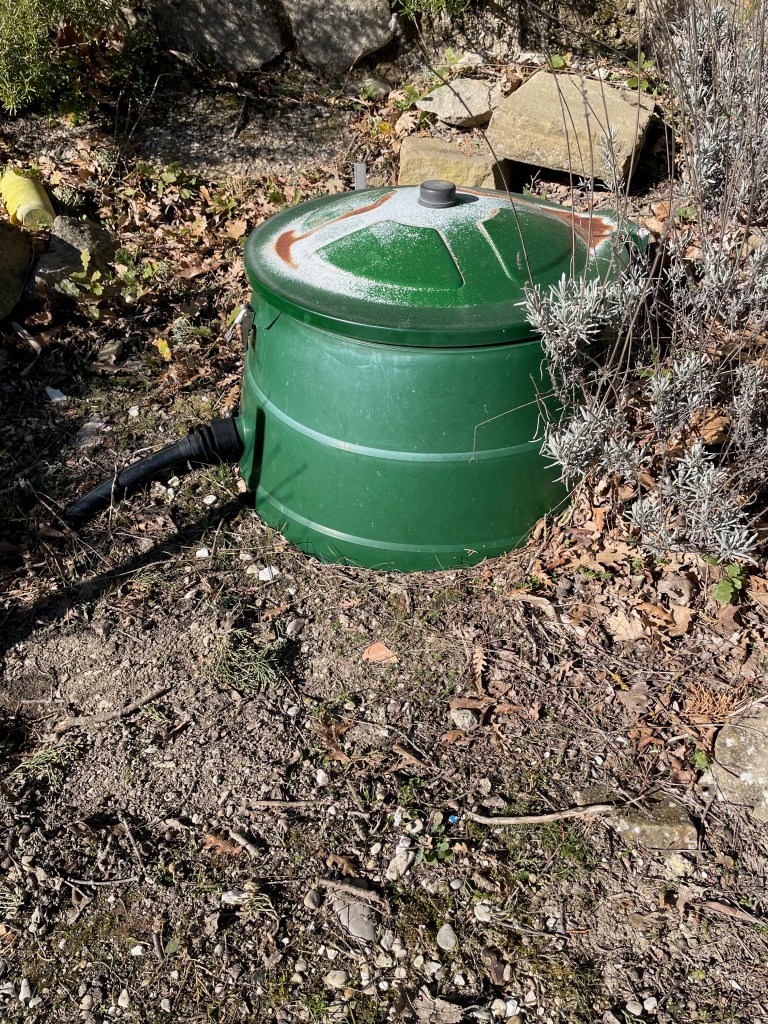
What our central heating setup lacks is a steady source of natural gas. Instead, we have a tank. it’s a big tank for sure, though I’m not exactly sure how big because it’s buried in the yard right next to the lavender bush. It looks like the entrance to one of those bunkers in Albania that the paranoid ruler Enver Hoxha installed thoughout that once-repressed country. Only our lid conceals a receptacle and a gauge telling us, usually, that we need to buy more gas.

That should be easy enough, right? Not so fast. (And trust me, this was almost a shock to me, a confirmed urbanite, who never had to worry about how to supply life’s basics.) Luckily, it hasn’t been the coldest of winters. But these stone houses don’t hold the heat easily, a boon in the summer but not so much right now.
I have a contract with a large Umbrian provider of propane, or GPL as it’s called here. Theoretically I call and they deliver. Only their operators seem to think that their job is to protect the delivery drivers from actually making deliveries, and at the very least to keep delivery dates a secret. Right before leaving Italy to spend the holidays in New York I called the company. When I dared to ask when I should expect the delivery because it’s Christmastime and we need to buy gifts for the fam, I got “next week.” When? Next week. What day? Next week. You get the idea.

No one came that week. So the following week, I called again and ask that same nosy question. I should mention at this point that we were down below 10 percent, a percentage that according to my agreement with the company should trigger an immediate delivery. What I got on the other end was the Italian equivalent of “la la la la” to avoid hearing the question. But then shortly afterward, my mobile phone rings and a delivery driver asked for directions to the house.

At this point life was looking really good. The guy found us, hooked up his hose and delivered the gas for a princely sum of about €800, or $870, give or take. I paid with a card tapped on his portable card reader, and for awhile it looked as though my perfectly good Visa card was rejected. Happily, I learned later via a call from the gas company that the charge went through.

GAS ISN’T THE ONLY FUEL we burn. Like a lot of people here who have to deal with high gas and electricity rates, we have a fireplace that’s hooked into the heating system. In theory it’s an elegant thing. We build a fire and once the chamber heats to 50 degrees Celsius (122 degrees F) a pump switches on a takes over from the gas furnace. If we get a good enough fire going, the house gets toasty and we aren’t burning expensive natural gas, just expensive wood. And we can bake potatoes in the ashes, which is something you can’t do with a gas furnace.

But that requires us to start a fire. And fire requires wood. There are lots of wood vendors around these parts, because utilities cost so much here. You can buy wood stacked in neat boxes, and you can buy lots of wood from guys who drive up with a dump truck and leave a huge pile for you to deal with. We chose the latter, trying to be 1-frugal and 2-forward thinking enough when it came to quantity. We were running low on wood, so I made a call and to our usual supplier a town away, unlike the gas company, the wood dude said he could deliver in about 10 minutes. Sold. The guy came as promised, and since he’s a local and has delivered to us before, we gossiped about the neighborhood characters.

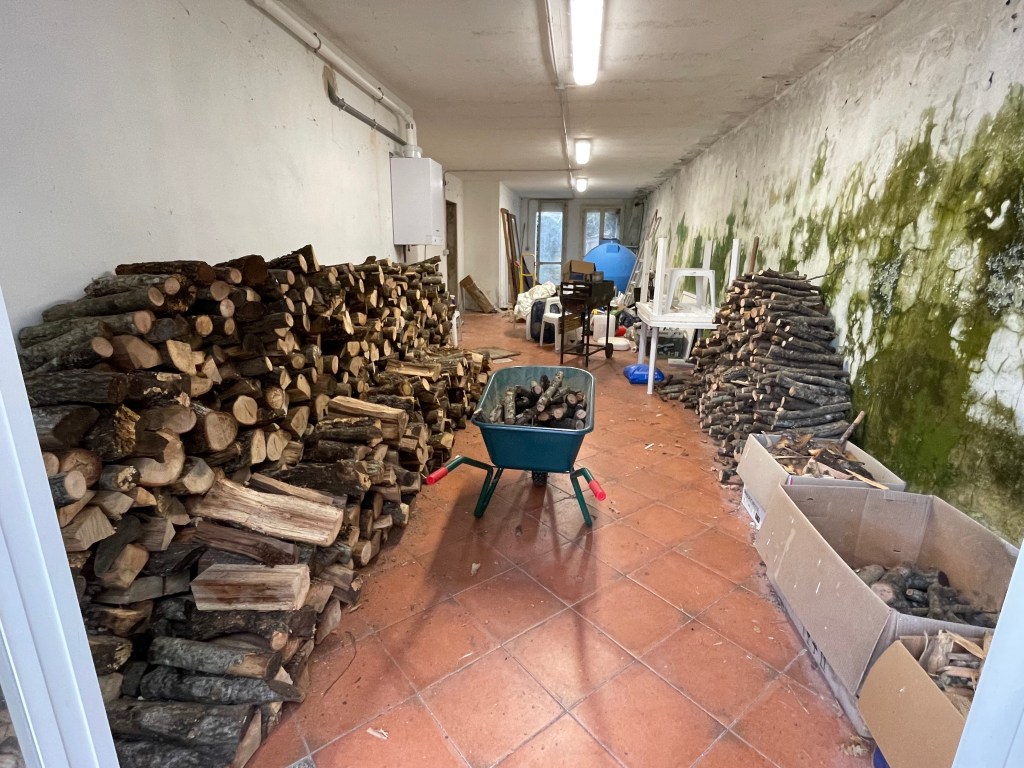
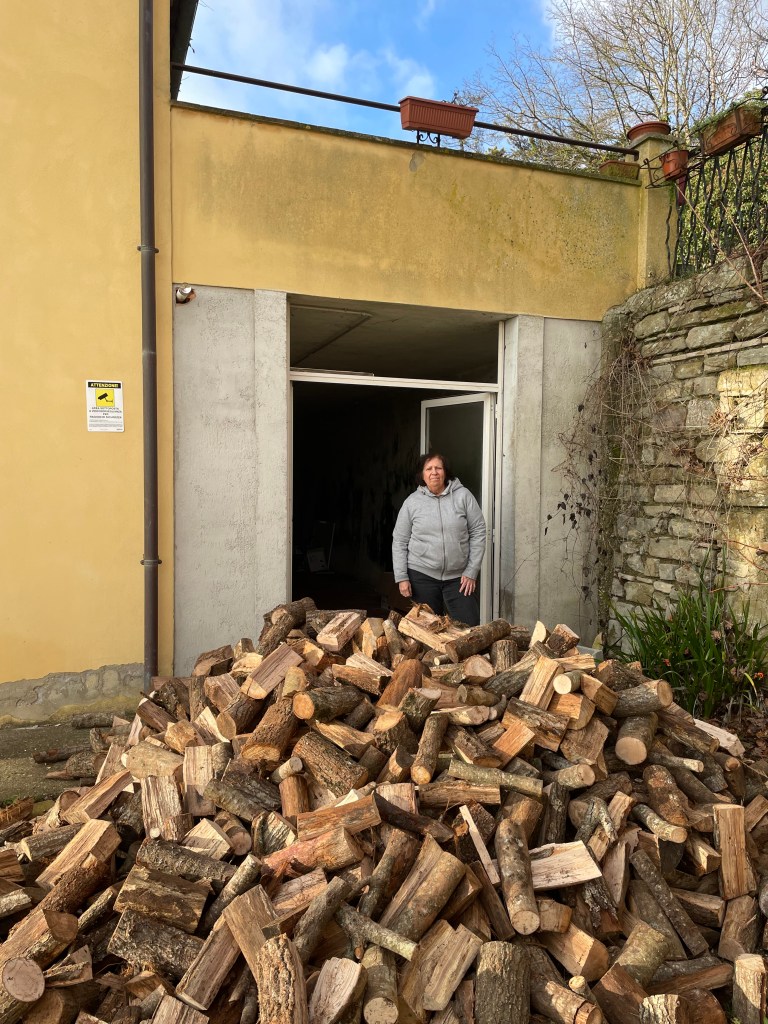
Take a look though—we received a huge pile and had to move all that into the house in organized bundles. The te Spartan Woman lived up to her nickname, organized how we were going to tackle the pile and hauled tons of wood. Literally. In all, the two of us carried and stacked 25 quintales, or 2500 kg. That’s over 5,500 pounds.

Not bad for old people.

A stranger at home for the holidays

I’m still finding it a little astonishing that I took my first vacation in my native New York. We’ve been buying round trip flights from here for awhile, ever since the airline Alitalia folded its wings. But then we stayed back in NY for a few months. This time it was for a scant few weeks and we definitely were visitors this time, staying at a relative’s home and borrowing a car we’d given up. 

One of the things that happens during the holiday season (and pre-trip) is that you have to eliminate items from your to-do list. We started out with an ambitious to-do-before departure list and had to cull as we went along. I’ll get into that later, but the process led to our spending more time getting stuff done in New York. Unpleasant but necessary tasks, that is. 

With all that in mind, I’ve been trying to figure out how to organize this so it’s not just a rant about reverse cultural shock. There’s too much of that floating around online. (Hey, I’ve had feet planted in two places for so long I’m immune.) The Spartan Woman suggested the following approach:

THE GOOD

REMEMBER WHEN PASSPORT agents were surly and acted as though you were a criminal for daring to leave the country? That’s changed, at least in our experience. Maybe it’s down to our being old? I don’t know, but suddenly ICE is hiring friendly people. Or, just maybe, we’re of a certain age now and don’t look like the kind of people US immigration wants to keep out.

In any event, it was a good way to ease into the U.S. Better still was seeing our grownup kids again. Daughter no. 1 gave us a new addition to the family, a bouncing (literally) baby boy. No pictures, sorry. We’re keeping the child out of social media, at least for now. I may be a proud nonno (grandpa), but The Boy is objectively really good looking, and appears to have inherited some of his mom’s impishness. You’ll have to take my biased word for it. And though we moved, it was good to see some neighbors, and comical to see others, like the wild turkeys that have taken over the island.

One thing we miss when we’re in our Umbrian mountain retreat is multiethnic food delivery. Even on Staten Island, which is often depicted as a bigoted white people hellscape. The truth is more subtle than that, and the island’s North Shore is a paradise of ethnic restaurants. In our short time there, we ordered from Chinese, Vietnamese, Turkish, Thai, and Mexican places. We didn’t have time to have the Sri Lankan food we love.

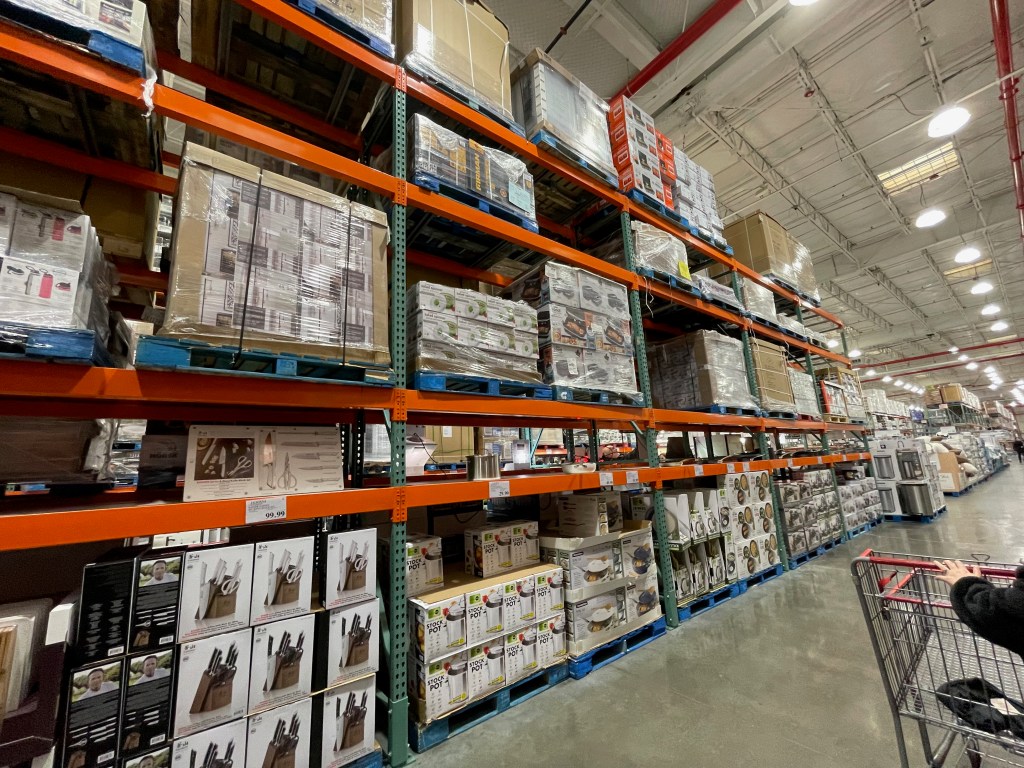
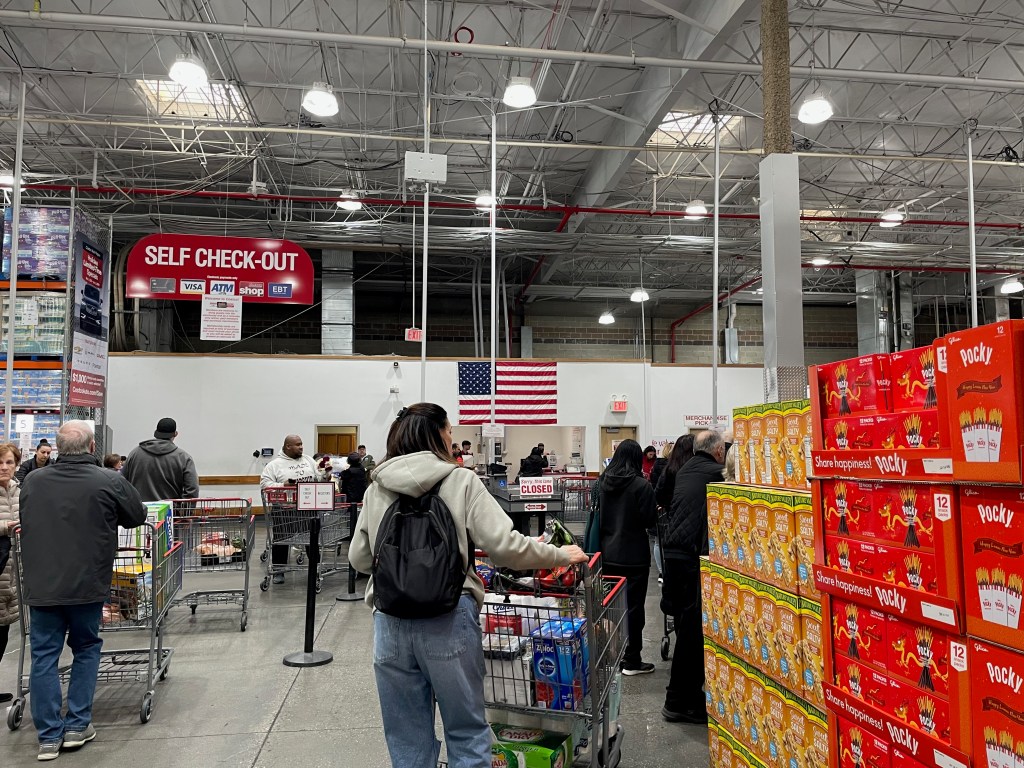
While we’re on the subject of crazy choice, Costco? I know, I know, where have I been? I finally was initiated into the cult by Daughter No. 1, just for one visit. I was overwhelmed. Not that we bought that much—we had specific goals. It wasn’t so much the crazy amount of merch for sale, even though I saw everything from espresso machines to solar panels to yoga pants to flats of every household item imaginable. But wow, in the space of less than hour I heard at least half a dozen non-English languages. That the company is fairly humane in its personnel practices compared to other giants of commerce added to my not hating it. Buon lavoro, Costco. 

I did notice one other thing immediately. As soon as we cleared customs and were in a taxi headed to our kid’s home, I pulled out my phone and wow, this 5G thing. I’d forgotten how fast it is, at least the T-Mobile version of it, and later tested it to be, in some places, a 600 mb/s download. That’s fast. And our kid has, like we did, 1 gigabyte/second fiber. Fast fiber internet has made it to Italy in general, and our town of Valfabbrica specifically. But not in the rural areas. We use a local provider here, which gives us download speeds of around 30 mb/s, which isn’t bad considering it’s wireless. But a guy can get spoiled. Still, I wouldn’t trade my life for fast downloads. Yet.

THE BAD

OH BOY, THIS. Before we left for New York, we’d wanted to get a Covid booster shot, since the latest one covers the latest known variants. Here in Umbria, you go onto the public health website and look for a location and convenient time and hit the send button and show up for the shot. But we ran out of time and figured we’d get the shot at our former local pharmacy in New York.Unfortunately, Nick up the street wasn’t handling the vaccine. So we had to look at the local megaeverythingwithpharmacy places like CVS and Walgreen.

The closest CVS told us they were out of the stuff and maybe were getting some in the future. But Walgreen’s website said make that appointment. I went through the online scheduler and completed the online medical history/consent forms for the two of us.

The day arrives, we drive a couple of miles. There’s a woman ahead of us in the vaccine line. She’s filling out the history form. “We did ours online,” I said. “I did too but they want me to fill it out here again.” The staff behind the counter is obviously overwhelmed, answering phone calls, taking in prescriptions and giving out meds to other customers. We wait and wait and wait. The nice woman in front of us was finally frustrated and disappears. They call her name, finally, to get her shot, and no one answers.

Finally, the harried clerk asks us to fill out the damn history/consent form. “I did it online,” I respond. “We’re asking people to do it here,” she says without giving me a reason. I refuse. “Sorry, I did it online and I’m not going to fill it out again. Look in your system.” There’s a standoff. Finally the overworked pharmacist tells her to dig it out of the computer. More waiting–at this point we’d been there an hour past our appointment time. We weren’t giving up. At last, the pharmacist come out and administers the shot: 75 minutes after our appointment time. We note that they have lots of people restocking the shelves with stuff like Doritos and deodorant, while the pharmacy workers look like hunted animals. American free enterprise at work.

As for this little pharmacy item (left), really?

 Finally we drive back. The main drag through that part of the island is a two lane road that was built in the 1920s and ’30s, with small shops and converted houses hosting insurance agencies and the like lining the street. But something’s out of whack. Big hulking SUVs and pickup trucks like Ford F150s dominate. It’s like the hippo dance in the Disney movie Fantasia. If the giants aren’t being driven like drunken Romans are behind the wheel, they’re creeping along because I’m sure their drivers can’t see out of them. Why do Americans need a tank to go to the drug store?

Another time I stop at a traffic light to make a left turn. One of the misplace macho drivers doesn’t think I’m moving fast enough (I am not a slow driver) and charges over on the right and without caring makes the left, causing oncoming drivers to hit their brakes. This happens over and over. All of a sudden driving in Italy seems sane.

THE MEH

LET’S TALK ABOUT prices, okay people? The U.S., once you’re been away, just seems like a giant machine designed to drain its people of their money. For instance, we buy Royal Canin dog food for our little prince Niko. It’s produced in plants around the world, but it’s a French subsidiary of the giant Mars Inc. In the U.S., a little over one kilo costs $21. The same food, but almost double the quantity, costs €21 in Italy, or about $23. The common excuse, er, rationalization is that wages are higher in the U.S. and so are fixed costs. But double? If you know, tell me why.

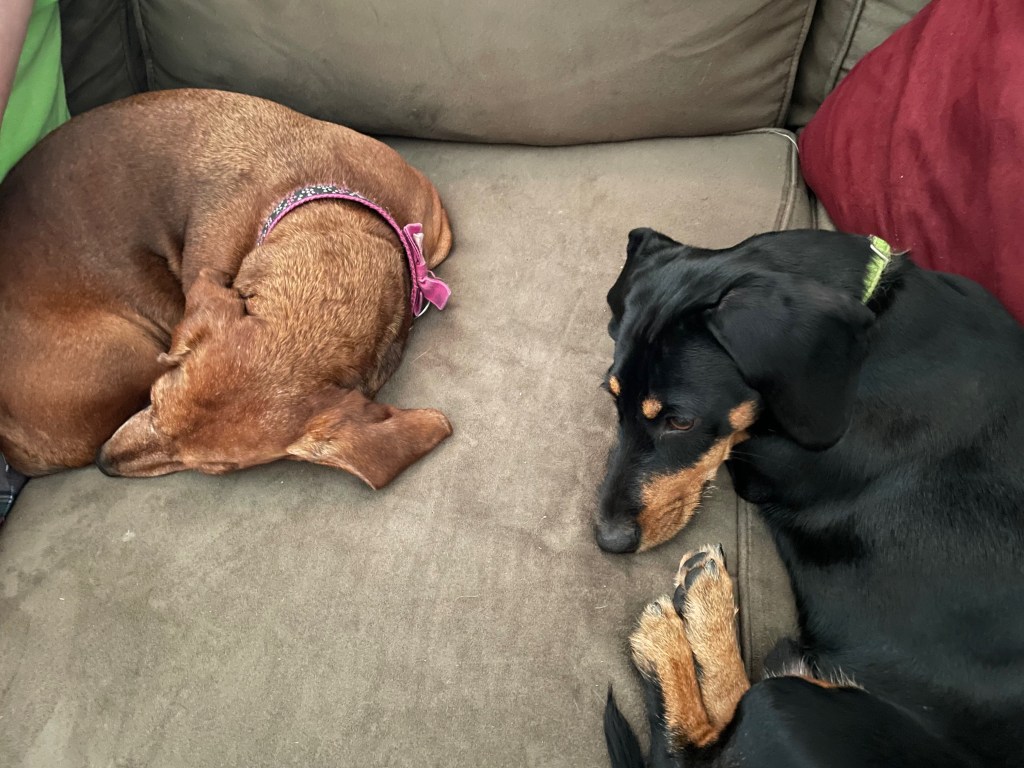
Gratuitous puppy picture: It costs twice as much to keep Lola from the U.S. (left) in Royal Canin than it does our little Niko from the suburbs of Rome.

While I’m on the subject of allocating funds….I get it. New York is constantly being rebuilt. But sorry, what’s there can be so crappy. I traipsed about the Financial District for the best part of a day to take care of a bureaucratic matter. An Italian matter. (Don’t ask.) I used to work in the neighborhood and didn’t really notice before, but the streets are in crappy condition. Sidewalks are broken up, there are shoddy barricades everywhere and in general the place doesn’t look like one of the financial and media capitals of the world. I guess I’d taken the crappiness for granted before.

/rantover. Back to Italy after this.

A modern way to get around an old town (and walk like an Egyptian)

One of my problems with the concept of “innovation” is that Americans tend to think of computers as the only area where it takes place. And, maybe, biotech. I’m oversimplifying, but you get the drift. And a lot of them devalue how other societies come up with solutions to everyday challenges. One of the ways the rest of the world is innovating is how people move around. Not just the big voyages, like airports and railroads, but in their towns and cities.

We live in a mountainous area, and a lot, if not most, of our cities and towns are on hills. And that posits a couple of problems that lead to interesting solutions. Hilltowns tend to have narrow streets—some are just alleyways and staircases. And they are not car-friendly. They’ve tried to adapt, but for example our regional capital, Perugia, after letting cars go everywhere, severely curtailed their use in the historic center. And that’s led to problems with commerce and convenience, but it also means that you can walk past nicely scrubbed buildings without be afraid of being run over. It’s a paradox and hopefully planners and urban officials will come to a good balance.

All of this brings me to Spoleto, where we spent a recent Saturday wandering with one of our kids and her boyfriend. Outwardly, it’s a typical Umbrian hilltown or small city. It once was a powerful local force, and traces of that power still exist here and there, like in the splendid duomo (main cathedral) and fortress overlooking the city. You can usually tell how powerful a town was during the pre-Papal States era by the size of its piazzas, and Spoleto doesn’t disappoint. Its piazza del Duomo is majestic and Piazza del Market (Market Square) is a nice big comfortable urban living room.

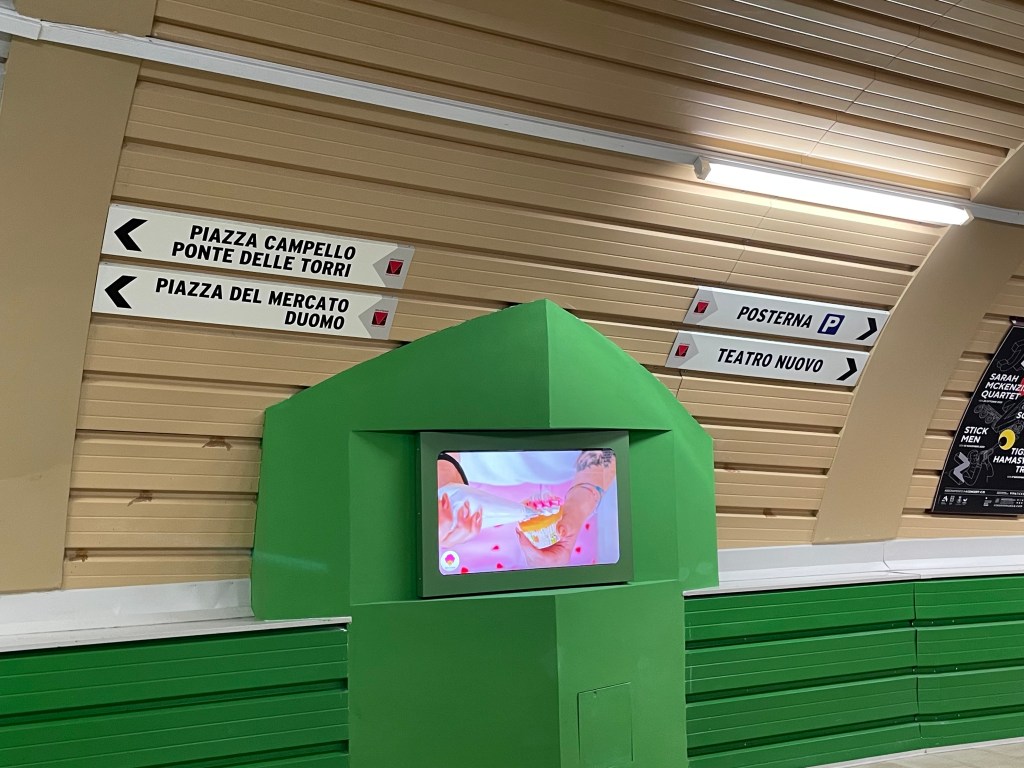
Now this is station art.

These days, Spoleto exercises its power via culture. It’s the site of the Festival dei Due Mondi, more commonly called the Spoleto Festival. Classical music musicians, dancers, and their fans from the around the world gather every summer at venues throughout the city. Because of this preeminence, artists have decorated the city’s public spaces; for example, an Alexander Calder sculpture stands watch over the train station.

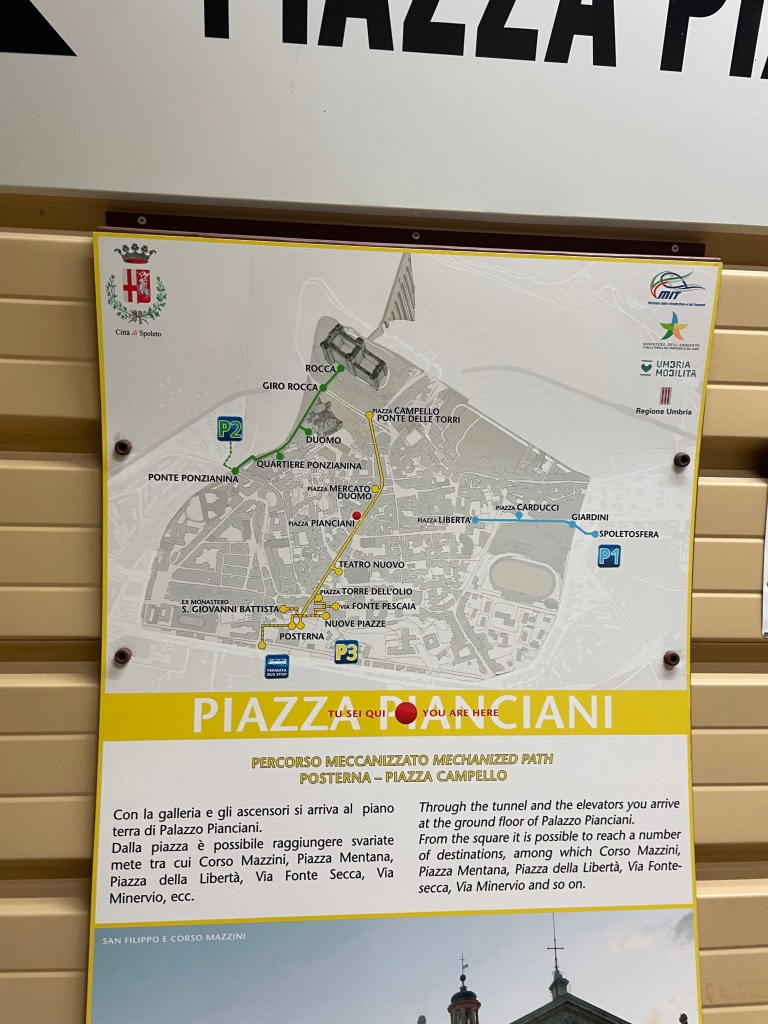
ONE THING YOU CAN’T SEE in Spoleto lies literally below the surface. Spoleto’s government has over the years built a system of tunnels that get you around the historic center and out to parking lots outside the old city walls. It’s pretty amazing. At first I thought the tunnel we used between the parking lot where we stashed our car and the edge of the center city was the only one, and pretty impressive by itself. But a few months ago we walked past what looked like an entrance to another one. With my obsession with urban transport and tunnels I just had to explore. It resembles a subway or metro without trains, but with kilometers of moving sidewalks that actually work (take that, JFK airport). The tunnel leading from the SpoletoSfera lot is decorated with large photos of festival participants and guests, so you know exactly what this former city-state stands for these days. (We can argue over whether festivals are a cure-all for urban woes another time.)

For some reason, every time we go there—and we’ll just go to hang out, feel the vibe and check out the restaurants—something serendipitously terrific happens. This past weekend, we stumbled into a street food happening and we bought enough good stuff to have dinner that night. (BTW street food is all the rage here in Italy, perhaps a reaction to the old days of formal dining in the country’s eateries.)

But a winter Sunday a few years ago topped every trip there. We drove there with two friends from New York, Wendy and Vicky. We walked around the town and when we got to the Duomo, we saw that some kind of mass baptism ceremony was in progress. Outside the church were plaques with the names of the kids. We thought, ok, cool, but there was more. We took the nearby elevator up to the old fort, which has an incredible view over the town and surrounding countryside. All of a sudden, dozens of helium balloons took off from the piazza in front of the cathedral, a riot of pink and blue, one for each baby.

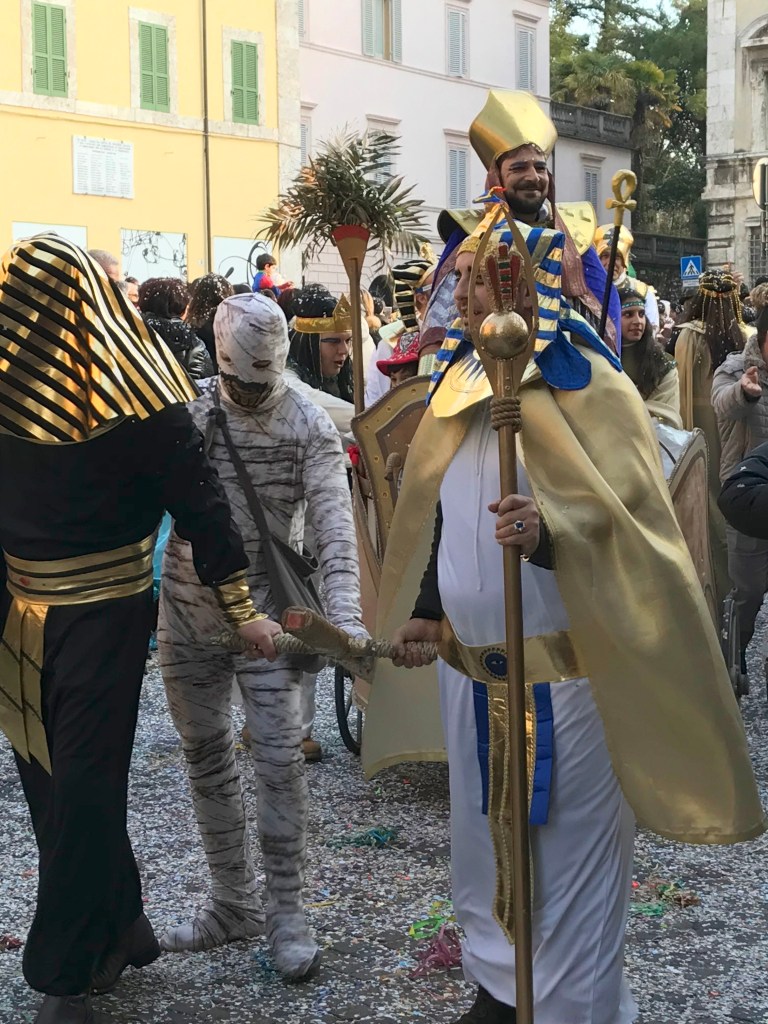
That wasn’t all. We had a really good Sunday lunch at one of our favorite places, Apollinare (right). As we left and turned up the street, we stumbled in the crowd watching an exuberant Carnevale parade. Every participant wore a whimsical costumes, and a lot of them cheerfuly sprayed us all with confetti, sparkles, and silly string. DJs kept the beat going as people dressed as ancient Egyptians shimmied their way down the street.

And one of paraders, in the photo below, posed gracefully as I took my shot.

Niko in love

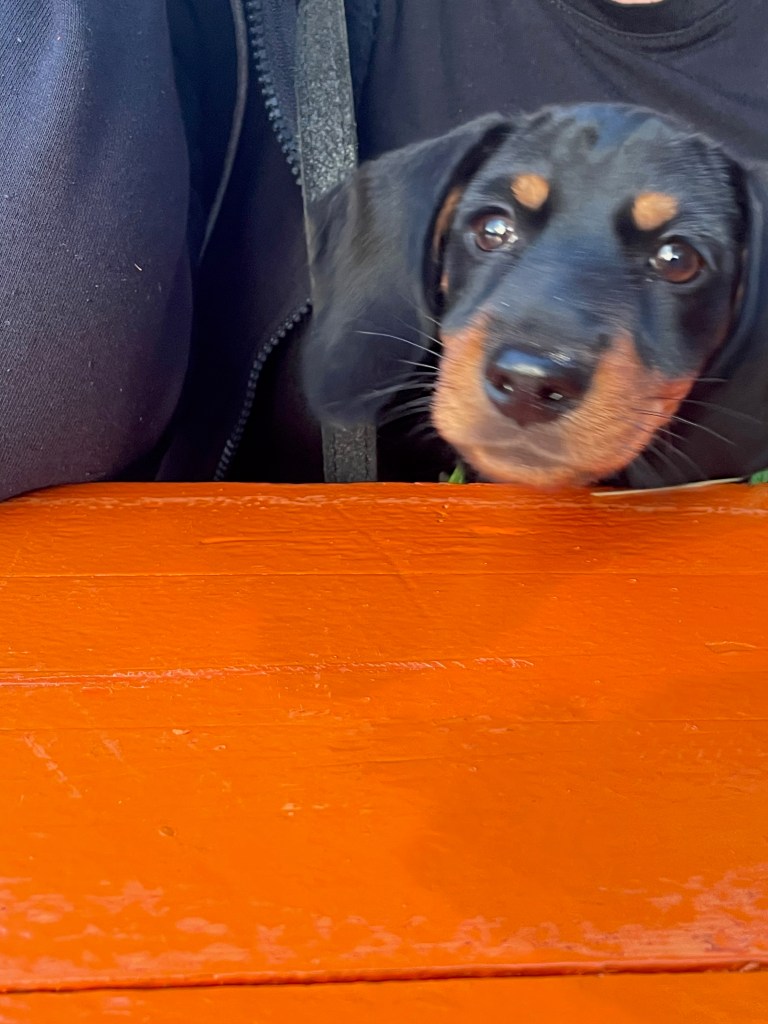
Meet Niko. He’s a three-month old dachshund and the latest addition to our family. He likes to chew, and he likes to chew. But most of all, he loves Georgia, our friend Doug’s dog. When Georgia is around, Niko becomes a good little student, following her around as well as doing dachshund-like things like charging her in attempt to make her play with him. It usually works. There’s another benefit when Georgia is around; Niko doesn’t wander off our yard, which is at the crest of a hill and beyond that it’s straight down into a gulley.

Georgia (left) and Niko commune over some blades of grass and weeds.

While we like to think that we, the people who brought him home, feed him, and indulge most of his whims, have a place in Niko’s heart, he is also very women-friendly. While he has his puppy holy-terror spells at home, when we take him on errands, he becomes the perfect little gentlepup. With his good looks and puppy size, he’s a natural (sorry about this–>) babe magnet. It’s true; I could safely say that most if not all of the people who react to his cuteness are women. And he likes them back, licking their hands and acting like the sleepy little puppy that he isn’t most of the time.

Okay, I exaggerate. A little. As I write this sentence, he’s tugging at my shoelace.

Niko surveys his kingdom from his living room couch perch. He is the boss of us.

We haven’t had a puppy around in more than a decade. But this house needed a dog. We’d seen a listing for him online from a family in the neighboring region of Lazio (near Rome). It was an almost two-hour drive but worth it. We met a young woman in her small town, and she was actually holding sleepy little Niko. After talking about what he eats and looking at his libretto—his medical record of vaccinations, etc.—we were off, back to Umbria. The Spartan Woman hung out with him in the back seat and he slept most of the way.

You gotta fill out the form…..

Getting a dog was a good repeat lesson in Italian bureaucracy, as though we needed a refresher course. Italy, and Europe in general, have a thing for knowing how many we are and where we live. And it’s not only for humans. Dogs, too, are registered with their local comune, or municipality. Little Niko has a microchip imbedded in his shoulder that contains his info–birthdate, how many born in his litter, place of birth, and owner’s vital data. Right now he’s registered as C’s dog. We had to fill out a change in ownership form, and that form is being sent from his birthplace to our town’s healthcare center so that his chip can be updated to reflect his being part of our family. Then he can get, yes, a passport, which will permit him to travel with us.

And that’s one of the good things about having a dog here. Niko has a lot more freedom here than most of his America cousins. He can come with us almost everywhere. Naturally, we take him to the pet store. He likes to choose his chew toys. But he’s also gone to the supermarket and to bars. He’s spent aperitivo time people-watching and eating prosciutto. He’s only been with us a few weeks and with the heatwave here, we haven’t gone out much. But otherwise, we’ve seen dogs on trains, in bookstores and museums, and even in pretty ritzy restaurants on a chilly winter day, happily resting under the table. We plan to take him on road trips, and the continent’s pet-friendly practices will make it pretty easy to do so.

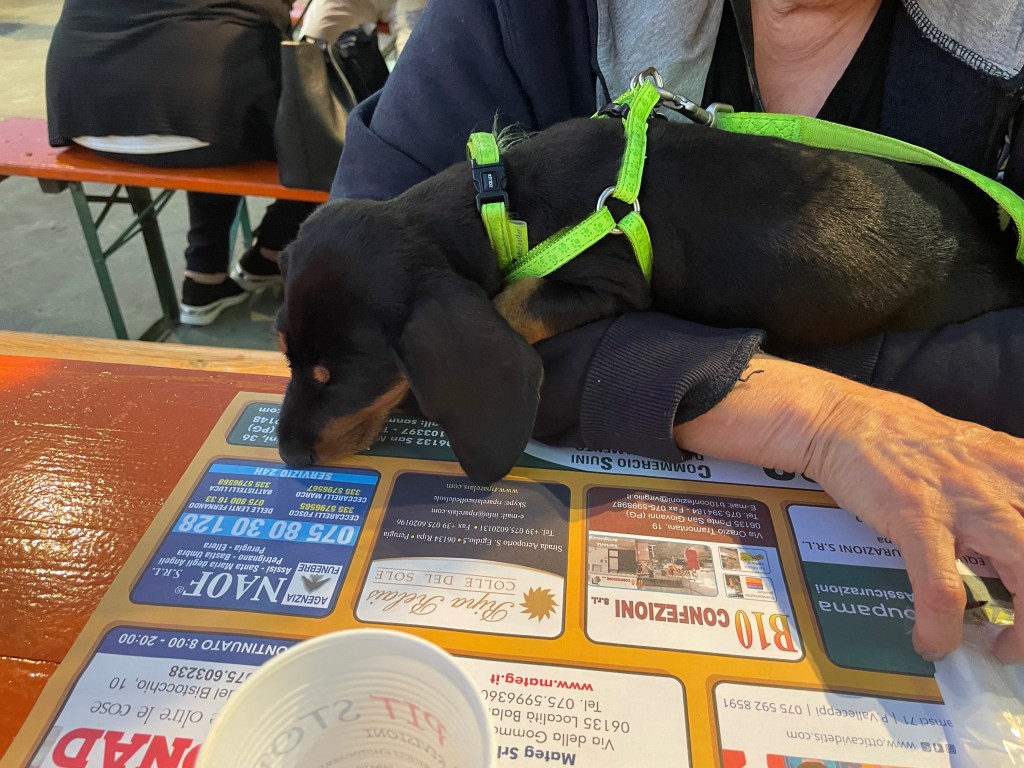
Niko gets around. When he’s not examining menus or being admired, he likes to hide under the table.

We live in a small town, so maybe our experience is different from others. Niko needs a series of vaccines, so we looked up the town’s vet. We always passed a sign pointing to an “ambulatorio veterinario,” so it was easy to find him. The vet, a man with a mellow, kind demeanor, just smiled at Niko and murmured flattering things while giving him a deworming pill. I’m so used to going to a vet’s office, checking in, giving billing info, etc., that the informality of our visit was almost a shock. When I asked the doc what I owed him, he said no charge, first visits are free.

IN A LOT OF WAYS, dog ownership pretty much sums up life here in our little town and region. Official encounters can be stiff and encumbered by rules and procedures. Yet everyday life is punctuated by small kindnesses and a gentleness that’s hard to explain if you haven’t experienced it. Some years ago I subscribed to Quora, and my feed lately is dominated by Americans (real or bots, I can’t say) comparing their great freedoms to the horrors experienced by us in Europe. Like universal healthcare.

A very silly question.

A lot of the questions are silly. But they make me think about how people in my country of birth live and perceive the rest of the world, if they do at all. When I go back to New York for a visit, it seems very stiff and cold, and I start paying attention to people’s status—not to mention that it’s ridiculously expensive. Driving around the U.S. is weird, you have to be on guard for cops monitoring your speed and crazed pickup drivers treating their trucks as though they were Porsches. Being pulled over can be a life-threatening situation. When it comes to driving here in Italy, the onus of staying under the speed limit is on the driver; speed cameras are everywhere. Go too fast and a ticket arrives in the mail.

Here in heavily rural Umbria, there’s more of a we’re in this together feeling that I find appealing. In general, too, there’s a looser vibe. And that’s pretty recent. Italians used to be more rules-bound and have more hangups about, for example, what to wear, and when. One of our recent guests from across the pond wore jeans on a hot day because he read that Italians never wear shorts outside of beach towns. Wrong! We’re adapting to climate change here and shorts are everywhere.

Oops. I have to run after the dog. He’s got my shoe.

Bitter. Sweet. And something in between

Never mind.

Soldier Carlo

That’s the phrase that came into my mind as I boarded Iberia flight 6252 for Madrid last week. It was the start of a journey to Umbria in Central Italy, where I’ll register as a full-time resident. In doing so, I’m moving in the opposite direction of Carlo Ancona, my maternal grandfather, who tried to escape a second stint as a conscript in the Italian army during the incredibly stupid European conflict that we call World War I. (He failed and was drafted to fight in the trenches in the U.S. Army.) I’m also reversing the direction his wife, my grandmother Rosa traveled a few years after Carlo, sailing to New York in steerage with two young children. And finally, I’m canceling out what my father did in 1955, the year before my birth, sailing from Palermo, Sicily, to New York to join his bride, my mom Angelina Ancona.

All of them fled economic bad times. My mother’s parents were tenant farmers leaving the crushing poverty of the seacoast and agrarian town of Castellammare del Golfo, in northwest Sicily. “They ate pane e cipudda, bread and onions,” my mom would tell me. My father, from a middle class family in the big city, wasn’t starving. But when he left the Italian army, there was precious little opportunity for a restless young man in mid-’50s Palermo, the island’s largest city and capital.

What am I fleeing? Eh, nothing that affects me personally except, perhaps, boredom and endless HGTV programs like Love It or List It. I was involuntarily retired by Covid, when a lot of work I did dried up. A few years ago I did have a day job as a working journalist. I loved the job until it was turned into a soul-crushing exercise in scaring up website clicks by a bunch of Catalan consultants and dull-witted corporate executives.

I’m not alone in doing this reverse migration. Some 20 to 30 percent of the millions who left Italy during the great migration of the late 19th and early 20th centuries returned permanently to their homeland. In my own family, my grandparents and one of my aunts lived in the U.S. for a few years and then decided to return.

My Aunt Pia’s wedding on July 4, 1964. She and her new husband eventually moved back to Italy. (I’m the ring bearer up front.)

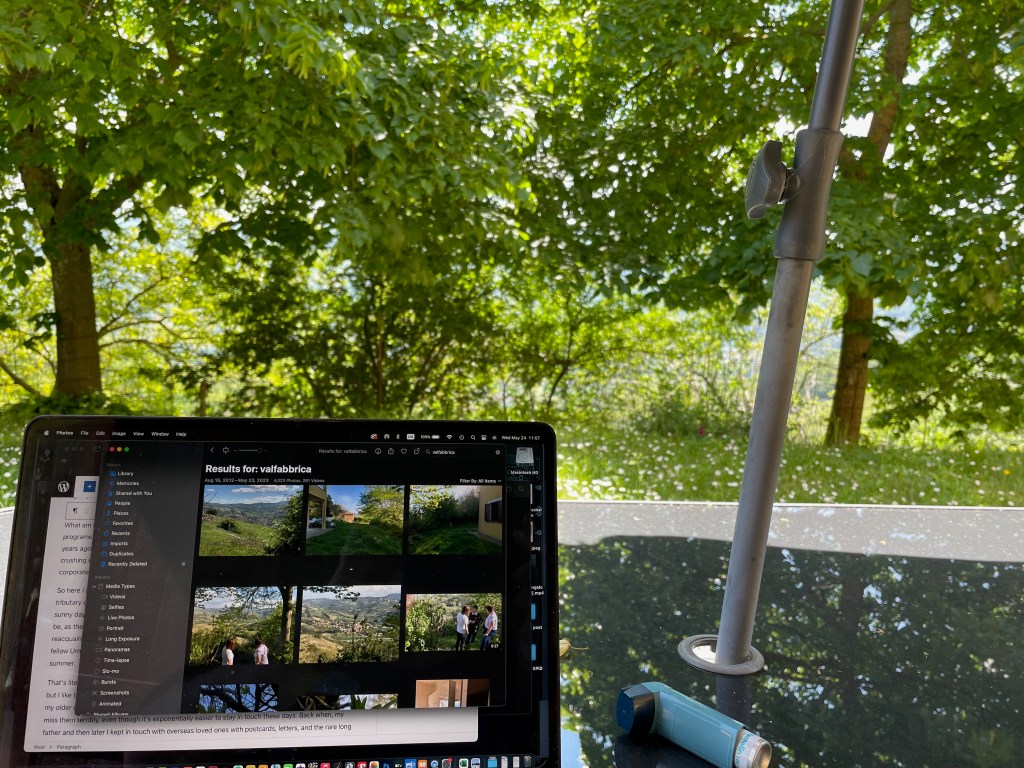
So here I am. I’m sitting on the patio of our house looking down into the valley of the Chiascio River, a tributary of the Tiber that runs to and through Rome 192 kilometers (about 120 miles) away. It’s a breezy sunny day, coming after a few days of leaden clouds and periodic cloudbursts. To call it pleasant would be, as the cliché goes, damning it with faint praise. We walked up and down our road earlier, getting reacquainted with the human and canine neighbors. Last night, we along with what felt like dozens of fellow Umbrians, ate gelato at a popular place a few towns away, signaling the start of a lazy Italian summer.

That’s literally and figuratively the sweet part. The bitter? Leaving my babies. Okay, they’re adults now, but I like to think that even though they’ve grown into terrific young women, they’re still my babies. And my older daughter gave birth to (this is grandpa saying this) The Most Beautiful Baby in the World. I’ll miss them terribly, even though it’s exponentially easier to stay in touch these days. Back when, my father and then later I kept in touch with overseas loved ones with postcards, letters, and the rare long distance (!) phone call. Even the baby responds to the screen when I use FaceTime to videochat with the fam.

And the in-between? Leaving the city where I was born, raised, educated, had a career, and raised a family. Either purposely or by accident, The Spartan Woman and I avoided what a lot of educated class Americans do. We didn’t let internships and college take us away from our hometown of New York. A big reason came down to economics: Coming as we did from families just getting their feet on the American ground, we couldn’t really afford to go away to school. Later on it was a conscious choice, that New Yorker snobbishness that considers every other American place to be, simply, not good enough for us. Hey, we had free university, great museums to wander around in, incredible hangouts and backdrops for romance. Did I ever tell you about the rehearsal show for Kid Creole and the Coconuts we were at? When my sister danced on stage with August Darnell? Or when as young adults we’d catch a Ramones show at 3 a..m. in a seedy bar and then head to work with impaired hearing?

Can you hear the ships’ horns?

For better or worse, I have the foghorns of New York Harbor embedded in my brain. And the clickety clack of an elevated train making its way to Coney Island. Hell, it took me years to orient myself here, a place on a landmass with lots of what looked like identical towns at first. A New York kid, I knew that if lost, I’d end up at a shoreline eventually. I walk fast, even as an old guy. It’s what we’re trained practically from birth to do. Skyscrapers don’t faze me, and I’m frankly bored of upscale restaurants where the chef is so hell-bent on innovation that he or she forgets to actually feed people.
I don’t think I’ll miss the rest of the United States. Still, there’s nothing like a lobster shack in Maine, or the honky tonk Jersey Shore. I do miss our summers on Cape Cod, where we’d rent little cottages with the kids when they were little and eat way too much seafood.

Living here in Central Italy feels natural. It’s not as intense as Sicily yet not as proper as the north of the country; it’s somewhat of a halfway house between the Latin and Anglo-Saxon worlds. I didn’t have to go through any cultural acclimation, since I grew up in an immigrant family full of relatives who moved back and forth between Italy and the U.S. for vacations or to live. I spent my first times in Italy at relatives’ homes, the first time a lazy beautiful summer in a beach town just outside Palermo and got first-hand lessons in how to shop and get an espresso or beer at a bar.

I’m going to go back and restate the original point of this blog, besides my having the urge to write every so often. I aim to show what living here is like in a realistic way, without the romanticism of silly stuff like Under the Tuscan Sun or A Room With a View. Italy is a modern, vibrant, sometimes infuriating place to live. If I’m successful, I’ll smash some stereotypes, yet leave you with an occasional smile.


I will dance on Noma’s grave

This being January with pretty lousy, cloudy, I don’t go out much weather, I’ve had a lot of time to read the early obituaries of Noma, which is closing late next year. In case you don’t follow “fine dining,” Noma is a restaurant in Copenhagen that appears on every best-restaurants-of-the-world list. The place and its owner/genius chef René Redzepi have inspired a whole bunch of creative chefs who go out and pick odd plants in the forest or in tide pools, do something transformative with the stuff, and then charge scenester diners a few hundred bucks for the privilege of ingesting what they foraged and tortured. A night at Noma, for example, costs around $500 a person.

Noma will follow El Bulli and Del Posto to the big food court in the sky. To which I say: no great loss. It’s not jealousy—I was a part-time restaurant critic back in the 1990s, when the big deal restaurant scene hadn’t yet metastasized into the monster it has become. Still, there were previews of what was to come in multi-course tasting menus in a breed of French restaurants that, looking back, served as a bridge between the snooty old French establishments and brave rich-hippie vibe of Noma. Not to put too fine a point on it, you can think of a Noma fan as the foodie equivalent of an investment banker who collects Grateful Dead concert tapes.
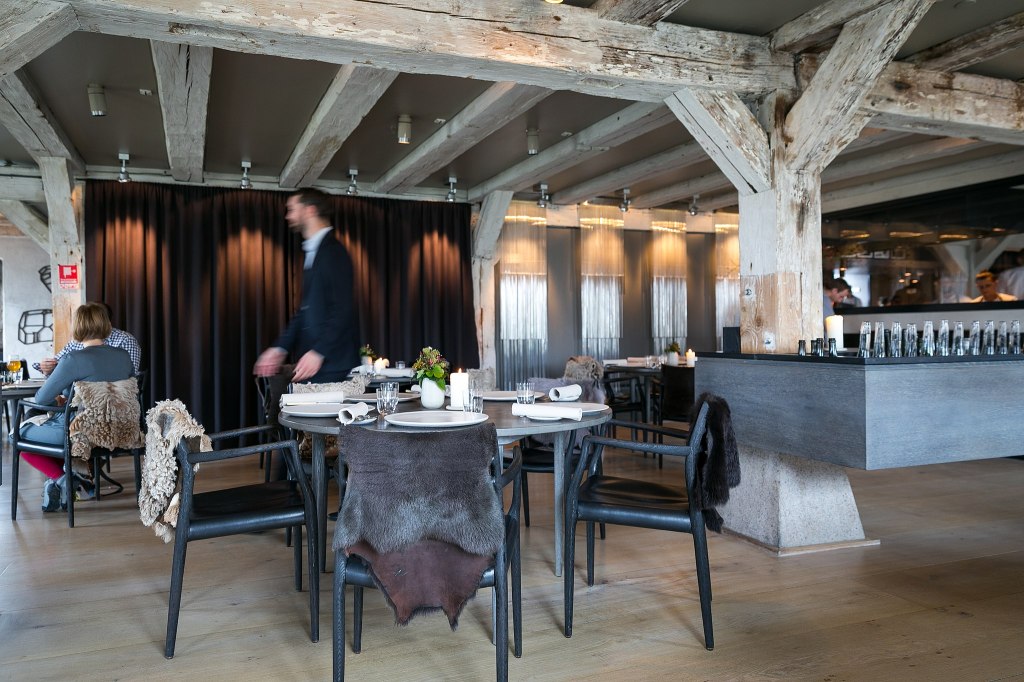
The rustic charm of Noma for an elite few. Courtesy of Wiki Commons

I’m not going to lie. I thoroughly enjoyed my decade of dining at my newspaper’s expense. It made me really popular, because The Spartan Woman and I usually invited a couple of friends to come along so that we could sample enough dishes. We ate at the new wave of Spanish/Catalan restaurants, fancy French eateries, aristocratic Italian establishments, as well as the occasional Hong Kong style of Chinatown palaces that were just beginning to establish a beachhead in New York. The review pace was gentle—I was on the hook every four weeks for a review, so it was just enough to be fun and not enough to be routine and boring. And when our girls were old enough, we often took them along. (They were tougher critics than our friends, who were just thrilled to have a free meal at a hot restaurant.)

After 10 years, though, we’d had enough. By then we just wanted to hang out with friends and family, either at home or in a local ethnic restaurant where we’d like the food but wouldn’t have to pay homage to it. I remember a colleague once went to El Bulli, the restaurant in the Catalan region of Spain, which had pioneered “molecular” cuisine. I asked him how it was. “Tiring,” he said. I’m paraphrase, but he said something like, “It was so exhausting. Open this lid, inhale the fumes three times, then pour the contents onto this plate and stir counterclockwise 4.5 times, then eat using these tweezers.” Sorry, that ain’t food, that’s entertainment for a very small cult audience.

Move over stove, we’re making foam—from a Barcelona exhibit about El Bullì and its owner. Kippelboy, CC BY-SA 3.0 https://creativecommons.org/licenses/by-sa/3.0, via Wikimedia Commons Ferran Adri

And then there was Del Posto in New York. Its owner sought to elevate (so they thought) Italian food to the same rarified altitude of classic French cuisine. Talk about flawed concepts from the get-go—”Italian” food (a term I have trouble with because this country’s eating habits are hyper-regional) isn’t supposed to be the snobby refuge of the wealthy. My neighbors on our hill, who tend sheep and have an organic farm, make ricotta that would make you cry it’s so good. But there are a lot of people like them here and they’ll insist that good food is their birthright, not just a boasting point for the bourgeoisie.

EATING IN ITALY ENCOURAGED my move away from culinary preciousness. For one thing, the dominant characteristic of food here is to find really good ingredients and prepare them in a way that lets them shine. There’s little torturing of plants or animal bits to make them something else. And with the exception of a few Michelin-starred places, there are fewer celebrity chefs lording over everyone. Hey, this is Italy, where everybody is a star, and no one cooks better than Nonna (grandma) or your mother.

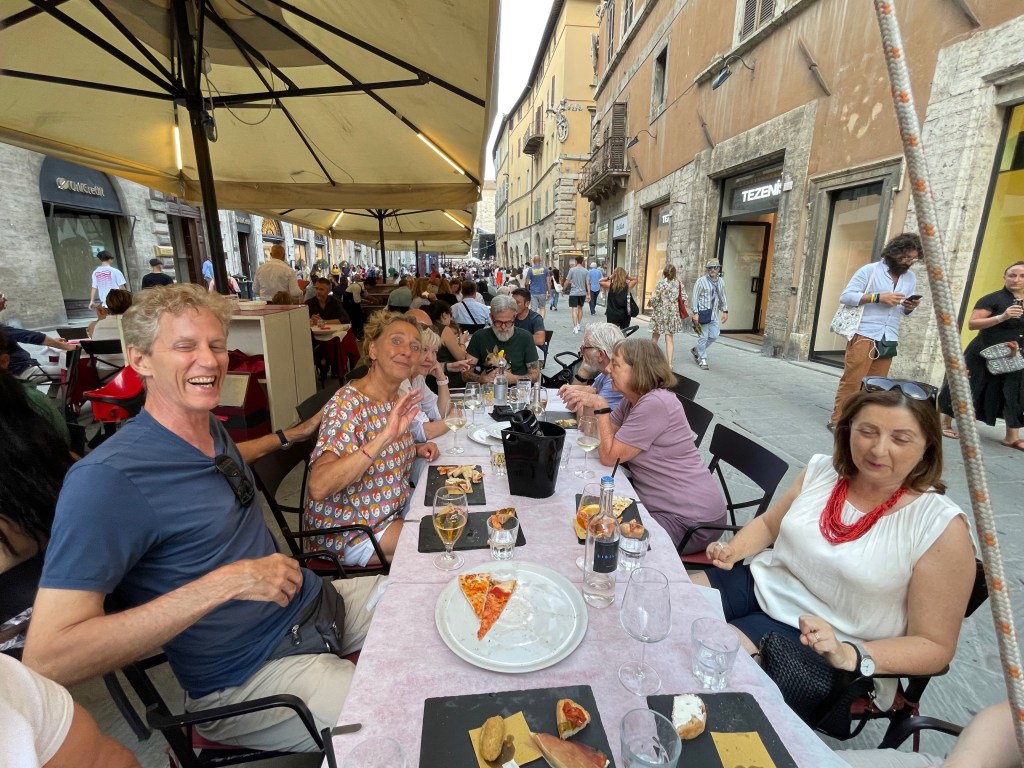
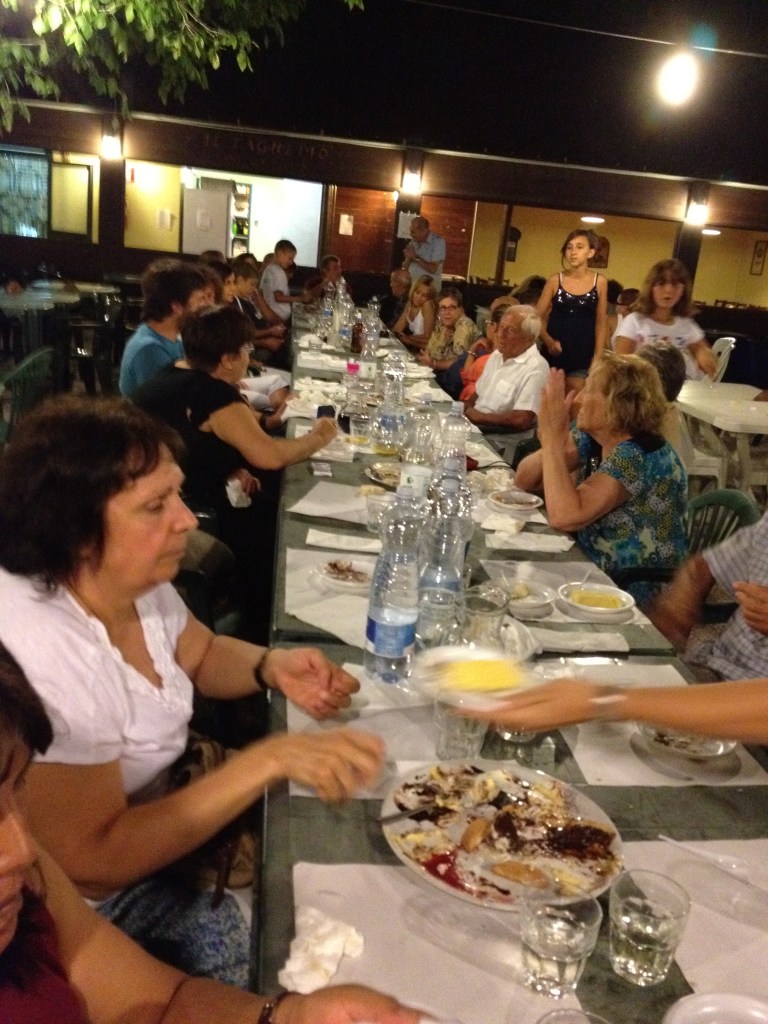
A clan gets together outdoors at a popular restaurant. Twenty-eight wouldn’t fit in the kitchen.

I know I’m lucky; as a teenager I stayed with relatives my first times in this country. I had a front-row seat to the food culture, which basically was just as my mom cooked back in New York, although mom, being a native New Yorker, pretended to be a normal American every so often and would give us steak and potatoes or peanut butter sandwiches in our lunchboxes.

But it’s interesting to see the differences between the cultures of my two countries when it comes to eating out. In cities like New York, Boston, and San Francisco, it’s become a high-stakes scene (and is bouncing back post-pandemic). Rents are high, food and liquor and wine prices are through the roof, so in an attempt to squeeze some profit restaurateurs pay their staff peanuts. Noma’s Redzepi himself said that fine dining has become economically unfeasible, and his complaints mirror what thoughtful American restaurant chefs and owners have been saying. In the U.S., the handful of successful celebrity chefs expand their operations into empires. The Bastianich group, headed by matriarch Lidia Bastianich and run by her son, has 30 eateries spread across the world. Thirty!

This craziness is fueled by a media and PR machine that glorifies celebrity cooks and runs competitions on TV instead of showing people how to cook. And there’s a definite high/low culture thing going on. The well-heeled eat at one of the Bastianich or Jean-Georges Vongerichten restaurants; normal people eat at the Olive Garden, which cuts corners by not salting pasta water in an attempt to cut down on spending for pots. The well-heeled use their experiences as conversations starters, and they love to spend big.

It’s different here. Sure there are TV competitions; in fact Joe Bastianich is one of the stars of MasterChef Italia. But beyond that things tend to be more democratic. One of the biggest complements Italians give to a restaurant is “si mangia bene e si spende poco” (you eat well but spend a little). Restaurants are basically extensions of the small kitchens that many Italians have (most of the country lives in apartments; think of New York but better designed). Often, clans or groups of friends will go out because they can’t fit everyone into the kitchen or day room, but they know that their outing will lead to a great meal that won’t wreck their bank account.

It’ll be interesting to see what Redzepi comes up with next. He says he’s turn Noma into a “food lab” and try to figure out new models for feeding people creatively. El Bullï’s Ferran Adria said the same thing when he closed his legendary restaurant more than a decade ago. Maybe I haven’t been paying attention, but I haven’t heard much of what his lab has done. I’ve subscribed to his newsletter to see what’s up there. In the meantime, buon appetito, enjoy what you eat, and don’t think about it too much.

Illustration at top of page courtesy WikiCommons

Vlad made us do it

Life here on our hill ain’t all sunsets and spritzes. Maybe it would be if we had servants. But we don’t; we’re just two retirees trying to have a little fun and adventure. Gotta say though, in the week since our arrival, life hasn’t been much of an adventure. It’s been pretty dull in a nice way, in fact, after a way too busy holiday run-up. Call us happy stay-at-homes, at least until tomorrow, because we’re planning a run into the big city of Perugia (pop. 170,000). And we’ve had to catch up on our lives here before we can descend from our lofty patch of land.

First things first: After a day or so of traveling packed like sardines into two Lufthansa flights—a wide bodied A 340 and a narrow body A320, then a ride in our man Angelo’s van, we got here with just a touch of jet lag. More importantly, and unlike our return to New York in the fall, we didn’t bring Covid with us, or catch it in an airport or while aloft.

Did I mention it’s winter here too? That means no lolling around at the café in the piazza, definitely no beach day trips and no dinners on the patio. It’s not as cold as it is in a Northeast U.S. winter, but the days are short, the nights long and chilly, and we’re greeted every morning with a sea of fog in the valley which, I have to say, is pretty stunning. People jokingly call it the Umbrian sea and these shots give a good idea why.

We still have to heat the house. As we were leaving back in October, the price for propane was going through the roof as fears of a long, cold, natural gas-less winter took hold. We have huge buried tanks to hold said gas, but even when Vlad the Ukraine Invader isn’t doing his genocidal mischief, prices are high—about 80 cents a litre—and it costs hundreds of euros to fill the tanks.

Please heat up. All we need is 50 deg C. That’s not too much to ask.

Luckily, the previous occupants of our house put in these clever Klover fireplaces. They’re hooked into the house’s heating system, so all we have to do is start a fire. A big fire—the pump that drives the fireplace’s heat into the radiators starts pumping at 50 degrees Celsius—that’s 122 degrees F. for the metric-challenged—and that takes awhile, and quite a few pieces of wood. The Spartan Woman, living up to her nickname, managed to stack most of our remaining wood next to the living room fireplace. Thanks to her our nights have been toasty and only a little smoky.

But that wood. Before we left, we’d pass our supplier on our way to the supermarket. He had great mountains of wood in anticipation of a gasless cold winter. I called a couple of times and he assured me about the supply. But then he added that he was so busy that he wouldn’t couldn’t guarantee delivery before we left. And so we looked at our dwindling supply warily, treading a line between staying warm and making sure we wouldn’t be left to freeze on later nights.

Last week, the wood dude and I made contact before we left. We texted each other, he said just call or write when we arrive, happy holidays, etc. I did, and he promised a delivery yesterday morning. It didn’t happen. We waited and worried. Should I call? After years of editing other people’s writing, I’m tired of being a nag, so I waited without nagging until after night fell. “I’ll be there tomorrow morning.” “Can you tell me when?” “Around 10.” Phew.

He was good at his word. This morning a little dump truck arrived and tipped almost 19 quintali—that’s 1800+ kilograms or nearly 4,000 pounds of the stuff near our garage door. It was not a little pile, nor was it all stacked in a pretty box. If it were packaged nicely, it would have cost a lot more than €340, which is a fraction of what propane would’ve cost us to heat the house for the same period. TSW, with her superior logistical skills, designated areas for big pieces, kindling, and in-between annoying pieces, and we went to work. I must confess that she did more; a bad back, the result of my Summer of Coughing, made me take breaks after every dozen of chunks of wood stacked.

It wasn’t a bad way to spend a couple of hours. At least we weren’t shut-ins staring at computer/phone/TV screens. Fresh air! Clouds! And that Umbria sea just below us, shifting its shape as the breeze and sun played games with one another. What we didn’t especially like, but can’t do anything about, were the shouts of men in the land surrounding ours. They were hunting for wild boar, and every now and then shouts, the barks of hunting dogs, and rifle shots rent the air. That’s the kind of stuff they don’t put in the tourist websites. But that’s winter in the Umbrian countryside, and I wouldn’t trade it in for anywhere else right now.

But there’s more.

TODAY IS JANUARY 6, SO IT WAS TIME, we decided, to descend from our aerie. The sun was bright, the sky blue, the “ocean” floating around in the valley, and our Covid tests negative. So we get in the car and drive the 20-something kilometers (about 12 miles) into Perugia. Not a big distance physically, but psychologically, it’s a big gulf.

Especially today—this is the last weekend of the holiday season in Italy. We say “buone feste” here—happy holidays—not necessarily to be caring and sharing with our non-Christian sisters and brothers across the world. The season literally consists of three big holidays, and a fourth, December 8’s immaculate conception (or something like that), which kicks off la stagione Nataliza (the Christmas season). We wanted to how Perugia looks before they take away all the lights and trees and decorations.

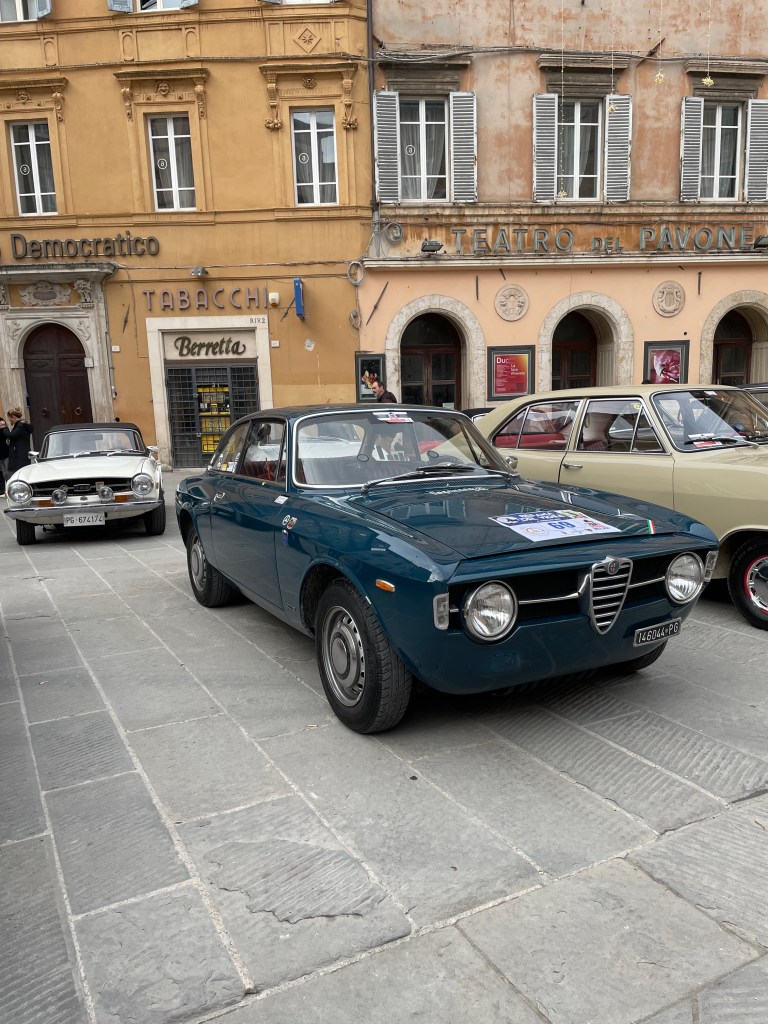
The roads were nearly empty as we headed into town, but the Minimetrò system was packed. A 10-minute ride from the outskirts of town to the historic center and we were in the middle of a cast of thousands. Even better was a parade of antique cars. I’m not sure what a prewar Lancia or Fiat has to do with Epiphany—gifts to the Magi (us)? perhaps? Who knows. It was fun to watch these old beauties parade slowly by as people reminisced about their father’s or grandmother’s car that took them on beach holidays or to school.

One thing I wanted to do but forget on the way out was to get a hot chocolate. Italian cioccolato caldo is nothing like the thin, insipid stuff sold in the U.S. Think warm, intense, slightly less thick chocolate pudding. Next time…

Someone even brought a vintage Mustang.

Act like you fit in

On my friend Mick’s first day of kindergarten, his father gave him some good advice: “Act like you fit in.” I guess even back then, his dad knew that Mick was an artist and a gentle sweet soul who’d have a rough time navigating a sometimes hostile world. Funny how his advice seems really valid now to us. I’m looking at boxes and stacks of books and a guitar case, thinking about how we’re finally close to reversing the moves made by my father and my mother’s parents decades ago to the United States.

The Spartan Woman and I were driving around the other day doing some errands, and we talking about people we know who’ve become expatriates in Italy. And in a way we felt a little, I don’t know, pleased with ourselves that we were raised in New York in immigrant families and communities. “If I had to pin down my nationality,” said TSW, “I’d say New Yorker.”

But that’s almost too easy. After being in Italy almost six months, and after two years of pandemic-driven isolation, we’re realizing that our New York doesn’t exist any more, except in pockets where recent immigrants live and work. Still, whether New York has morphed into something different, we’re still a different breed from Those People Out There and we’re proud of it. Growing up in New York makes you—us—citizens of the world. And that has prepared us for our little adventure in reverse immigration.

Here’s how. I’ve told you about Holly Street before, where I grew up. The street was populated by a mix of recent European immigrants (Italian, German, Irish, Scottish) and old-time Staten Islanders. The Spartan Woman has an immigrant past, too—all four grandparents were born elsewhere, her paternal grandparents from in and around Palermo, Sicily, and her maternal grandparents from Sparta in Greece. Combine that with the local dialect, where Yiddish syntax influences how we speak English, and you get a native New Yorker of a certain age. Our certain age.

And while the immigrants’ native lands change, it’s heartening to know that our kids had similar experiences. Their friends from childhood into adulthood either came from or are the first generation of people who came from Argentina, Slovakia, Chile, and the Caribbean. Oh, Italy too—it’s Italy’s lasting shame that each generation seemed to send some of their best people away.

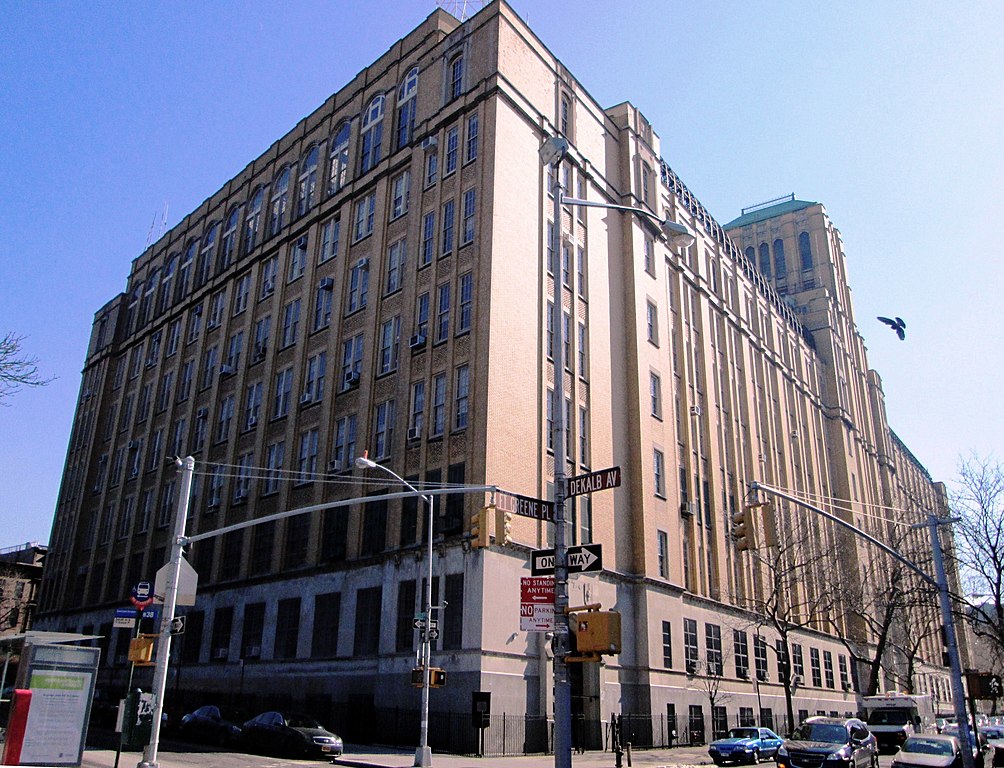
I could bore you with an autobiography here—my high school, Brooklyn Tech (left), for example, was a hotbed of recent immigrant kids from around the world. But it’s enough to say that growing up around here meant we literally had the world at our feet. (Please let me be snarky here—these trustafarians that we saw colonizing Brooklyn pre-pandemic. Can they please go home now? Gentrification is bad enough, but do they have to turn this city into the suburbs they crawled out of?) I knew Polish, Dominican, Greek, Russian, Chinese, and Jamaican kids, among others.

But I won’t. Back to fitting in and if we do or not. When I think of a permanent or long-term move to Italy, I’m grateful for the good training I had for the jump across the pond. One side of my family was made up of recent immigrants who hadn’t yet been assimilated into America. And TSW grew up hearing Greek and eating the Greek-inflected food her mom cooked. We both were used to a tight family structure and traditions that carried over.

The result? We’ve had it easier than the classic expat with no Italian background or citizenship. But even for us, it’s not always smooth sailing to become integrated into a country where you didn’t grow up though. I may be fluent in the language and get most of the social norms, but I didn’t go to Italian schools. I didn’t serve in the Italian military, for which there was a draft when I was of draftable age. So I’m missing the backstory, as journalists like to put it. (The guy on the right—my dad—had the opposite experience. He went to Italian schools and served in the army, and moved to the U.S.)

Whatever. We made our choice, now we have to live with—through?—it. I don’t know if I’m trying to convince myself or not, but being here temporarily in my native city feels strange these days, as though those five months here and there made me miss some development and it’s impossible to catch up. I can’t wrap my head around $30 cocktails, bad espresso in expensive restaurants, and the crazy drivers in unstable trucks.

Plus, the pleasures of living in Italy are undeniable, especially if you’re semi-retired and don’t have to deal with actually going to a workplace. Cheap, delicious food, the aperitivo hour (happy hour on steroids), easy access to kilometers of breathtaking hiking trails, good friends. Okay the bureaucracy sucks, but tell me where it doesn’t.

Cheap drinks may not be enough to convince someone to move to Italy. But they make dealing with the bureaucracy less painful.

I just wish I could take with me my fast Internet connection, Flushing’s Asian food courts, and my daughter’s dachshund, which we raised from puppyhood while Liv was in school. Hope she’s not reading this in case I plan a dognapping…

No, Big Tech isn’t going to save the world. But it’s made our little world a little easier

If you’ve ever worked with me, you’ll know that I have distinct geek tendencies. Back in the late 1990s I took a break from being a full-time editor to play with machines. The project involved bringing a few newsrooms up to modern standards. One newsroom went from an archaic and incredibly strange Windows PC and Mac setup with no way to track files, to what was then the standard for publishing, the Quark Publishing system. But it was pretty no-frills at the time, with the first project not having direct Internet access until a year or two after the system was in use.

I think about technology a lot, although at this point I don’t earn a living by sharing those thoughts. But with our weird one foot in each place life, I have to say that tech has smoothed the way, making it easier to stay in touch with family and friends, and—sometimes I’m not completely convinced this is a good thing—it’s made it easier to live similar lives on both sides of the pond when it comes to music and video. I guess that I’m writing this because I get tired of the constant drone of negativism about where we are in 2022 when it comes to humans and machines. Yeah social media can be a menace. But the emphasis is on “can.” It doesn’t have to be and the fact that it’s easy to misuse makes it more important for us to be vigilant.

I’ll come clean right away: We’re in the Apple ecosystem; we trade a little more expense for fewer complications. The Spartan Woman started it years ago when she brought a Mac home from school one summer. Her school’s principal figured that the computers would be safer living with teachers than stored in the school over the long holiday. Back then I was taken immediately by how easy the Mac made it to do stuff like move files around, rename them, duplicate them, etc. I was a convert, and the following year, we bought our first Mac. I actually used it to gather wire copy and send it into the publishing system at work.

SO WHERE DOES TODAY, AND THIS BLOG come in? Well, when you think about it, we’ve got the digital equivalent of an RV—we carry our media home around, as long as we’ve got an internet connection. Only it weighs a little less and uses a lot less energy.

Our approach: We only buy laptops as computers, and we have iPhones; they like to work with each other. iPads are optional. We have little HomePod mini speakers, so we can have our music in both places without carrying around CDs (remember them?). All of our devices work with both U.S. and European voltages. I bought some Apple plugs that fit right into the AC adapters, so there’s no bulky and problematic adapters. We’ve laid in a supply of European rechargers, too, so that we don’t have to cart everything around. The only time things get complicated is when we aren’t going from one home to another directly. In that case, we need a couple of rechargers with Euro or American plugs to work in hotels and rented apartments.

Casa, dolce casa, discreetly high tech

In Italy, we don’t watch broadcast TV; we have a smart TV with an Apple TV. I know that’s redundant, but the Apple TV interface is much easier to use, and it gives us access to more services. The setup gives us Italian public TV stations via the app RAI Play, plus all the streaming services that we use, like Netflix and Mhz Choice. By the way, the latter is terrific, featuring European programming with subtitles, just in case you’re challenged by, say, Icelandic.

I guess that I wouldn’t be writing this post if we just vacationed for a week or two. Back then, we somehow managed to live without our music collection for a couple of weeks. But we’re older and spend a lot of time at home, especially in the winter, when Umbria is usually dark, cold, and wet. And thinking back further, The Spartan Woman and I wrote each other nearly every day that we were apart. Yeah, it was sweet.

Now, though, I can do remote work when it happens. Our hilltop Italian ‘net connection isn’t the fastest, but it gets the job done. And when it wigs out, we use our phones as hot spots. So what if a video chat is grainy or freezes every so often? It’s better than paying through the nose for a 3-minute phone call, like in the old days.

Some practical tips:

• You’ll need a lot of rechargers, recharging cables, adapters, dongles, etc. Put them all in a big Ziploc bag and carry that bag in hand luggage. Make sure your devices are fully charged; USB ports on planes aren’t the most powerful. Buy a portable battery pack or two just in case. (My bag of tricks on the right.)

• Put your laptop in a padded case. Because of airport security, make sure it isn’t a pain to haul it out and open the case. The faster you can get stuff in and out, the faster you’ll get through security. European airports seem to have more sophisticated scanners and the more polite security folks don’t make you take everything out of a knapsack or computer bag.

• If you have a choice, buy what you can in the U.S. Italian value-added tax (sales tax in Amurrican) is 22 percent, versus 8.something in New York. The weakening Euro means higher prices in Europe in general. There are negligible differences between U.S. and Euro models, but you might be disoriented by the laptop keyboards on European models. They typically have a bigger “return” key, and have keys for letters with accents, such as è and á.

• Don’t expect to find wifi everywhere. In fact, if you’re a frequent traveler, you might notice fewer hotspots than before. Why? European mobile plans cost a lot less than plans in the U.S., and typically have tons of high-speed data included. So Europeans these days have less of a need to hook up to a wifi network when what the speeds they get on cellular networks is perfectly adequate.