Eat like a peasant—and enjoy it

Staten Island, where we spent three weeks and some, has this image of being a sort of Sopranoland, its residents a larger version of the cast of Jersey Shore. That’s only partly true, and applies only to some neighborhoods. Our daughter lives on the North Shore, which is a multiethnic paradise. And after a few months of mostly “Italian food”—I dislike the term because there really is no unified cuisine here—we were craving the offerings of our former Japanese, Chinese, Mexican, Vietnamese, Sri Lankan, and Turkish haunts.

Maybe we overindulged. But our kid has a baby, and trying to be good guests, we thought we’d make it easier by ordering out. It was a nice change from Umbria, even if this area is increasingly cosmopolitan, with sushi and Chinese food fairly commonplace. But one thing we didn’t miss: American (or is it New York) price tags. For one Saturday lunch, we order four banh mi, three bubble teas, and a Vietnamese coffee. Total bill, $115. That would have bought a fancy meal here.

SO BACK IN OUR HILLTOP RETREAT, we prepare a lot of wintertime comfort food. That pretty much means soups and pasta. We don’t eat meat, but with such a huge variety of vegetables, legumes and grain products, that doesn’t cramp our style.

Note: The dishes described here are vegetarian, not vegan. If meat is a must, you can serve these dishes as first courses, or read another post and come back next week. I don’t give recipes per se, so you won’t see exact quantities or cooking times. Anyone who cooks regularly can probably come up with something good. I don’t usually follow recipes; I use techniques my mother taught me as a teenager when she broke her arm, and I had to step in to cook family dinners.

After years of propaganda about the superiority of “Northern Italian” food, the South here is rising again, at least when it comes to culture. Maybe it’s down to TV shows here like Mare Fuori (The Sea Beyond) which portrays the lives of a bunch of photogenic kids in juvenile detention in Naples. One of our favorite Neapolitan dishes is pasta e patate. Yes, you can mix starches.

You can look up recipes here and here. While there are various versions, you basically make a soffrito—onions, celery, carrots—and sauté it. Add diced potatoes. When they’re halfway soft, add water or vegetable broth and a squirt of tomato paste (a couple of canned tomatoes or some purée will work too). Let that cook awhile, and then, making sure there’s enough liquid to boil pasta, toss in a couple of good handfuls of mismatched pasta, all those odds and ends that you’ve accumulated when you haven’t cooked the whole package. Improvise if not. Then, at the end, add cubes of provola cheese. This last bit may be hard to come by in the U.S., so I’d suggest diced hard (not fresh) mozzarella.

Beans and greens might be an easier combo to get behind. We make lots of variants of this basic comfort dish. It’s easy. Take good beans, whether they’re borlotti (cranberry), cannelini, or ceci/chickpeas. Cooking them from scratch is best, but canned beans are fine, too. Sauté a clove of garlic and a little hot pepper flakes in olive oil. Add the beans, stir. Add cleaned and chopped greens, like escarole, kale, chard, or even spinach. Make what’s in the pot as dry or soupy as you wish. If there’s a fair amount of water or broth, cook some soup pasta (orzo, ditalini, small elbows, etc.) directly in that pot or cook the pasta separately and add for a drier dish.

It’s best to keep to the basics with this, but you can optionally add a Parmigiano rind to the cooking liquid, or mix the beans or add another grain like farro. Add grated cheese if you want, but the soup/pasta dish should be able to stand on its own.

A post like this wouldn’t be complete without lentils. They’re an Umbrian staple. For example, it’s traditional to cook lentils for New Year’s, the pot of lentils symbolizing the riches that you hope the new year brings. Umbrian lentils are really small and don’t break down into brown mush. When in New York, I found that Trader Joe’s vacuum-packed French lentils are a pretty good substitute.

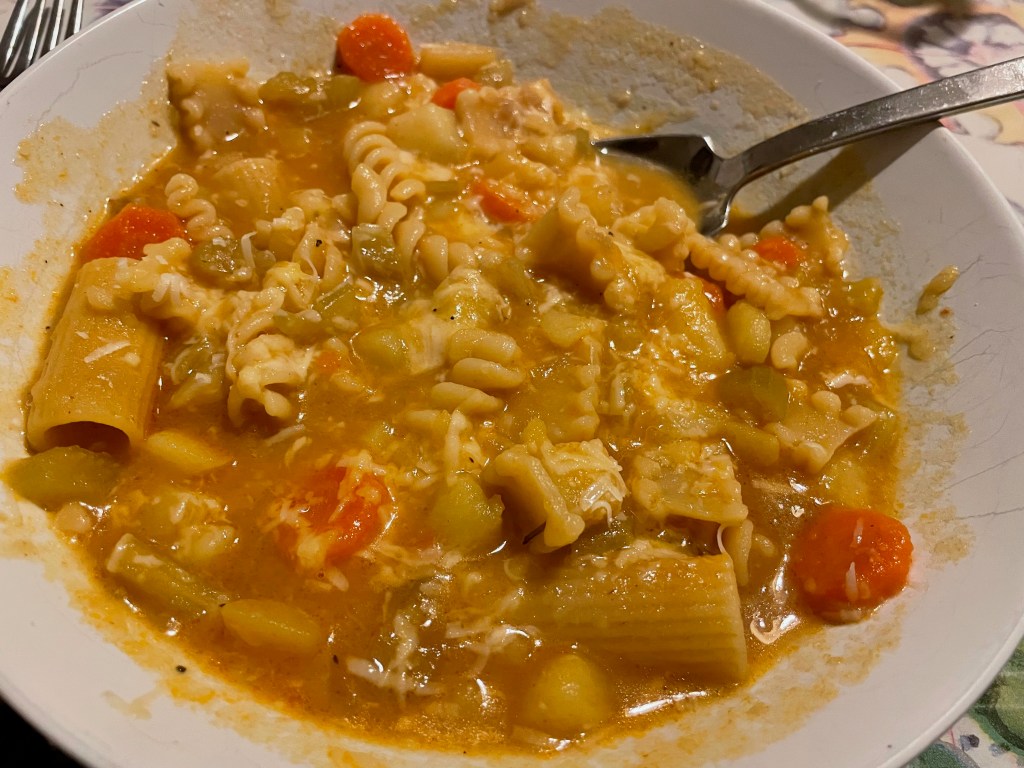
This dish won’t break the bank and is really easy to prepare. Do that soffrito thing again. It’s onion, celery, carrots. Add about half a pound of raw and rinsed lentils after the vegetables are soft. Stir around then add about 500 ml/a pint of water. Add a squeeze from a tube of tomato paste, or a dollop from a can of paste. Let the lentils cook until they almost done. At this point check how much liquid is in the pot. You’ll be adding a cup of ditalini or similar pasta so, if necessary add some water, keeping things on the boil. Add the pasta and cook until al dente. Serve with grated Parmigiano, Grana Padana, or even Pecorino cheese. And this is the result:

A stranger at home for the holidays

I’m still finding it a little astonishing that I took my first vacation in my native New York. We’ve been buying round trip flights from here for awhile, ever since the airline Alitalia folded its wings. But then we stayed back in NY for a few months. This time it was for a scant few weeks and we definitely were visitors this time, staying at a relative’s home and borrowing a car we’d given up. 

One of the things that happens during the holiday season (and pre-trip) is that you have to eliminate items from your to-do list. We started out with an ambitious to-do-before departure list and had to cull as we went along. I’ll get into that later, but the process led to our spending more time getting stuff done in New York. Unpleasant but necessary tasks, that is. 

With all that in mind, I’ve been trying to figure out how to organize this so it’s not just a rant about reverse cultural shock. There’s too much of that floating around online. (Hey, I’ve had feet planted in two places for so long I’m immune.) The Spartan Woman suggested the following approach:

THE GOOD

REMEMBER WHEN PASSPORT agents were surly and acted as though you were a criminal for daring to leave the country? That’s changed, at least in our experience. Maybe it’s down to our being old? I don’t know, but suddenly ICE is hiring friendly people. Or, just maybe, we’re of a certain age now and don’t look like the kind of people US immigration wants to keep out.

In any event, it was a good way to ease into the U.S. Better still was seeing our grownup kids again. Daughter no. 1 gave us a new addition to the family, a bouncing (literally) baby boy. No pictures, sorry. We’re keeping the child out of social media, at least for now. I may be a proud nonno (grandpa), but The Boy is objectively really good looking, and appears to have inherited some of his mom’s impishness. You’ll have to take my biased word for it. And though we moved, it was good to see some neighbors, and comical to see others, like the wild turkeys that have taken over the island.

One thing we miss when we’re in our Umbrian mountain retreat is multiethnic food delivery. Even on Staten Island, which is often depicted as a bigoted white people hellscape. The truth is more subtle than that, and the island’s North Shore is a paradise of ethnic restaurants. In our short time there, we ordered from Chinese, Vietnamese, Turkish, Thai, and Mexican places. We didn’t have time to have the Sri Lankan food we love.

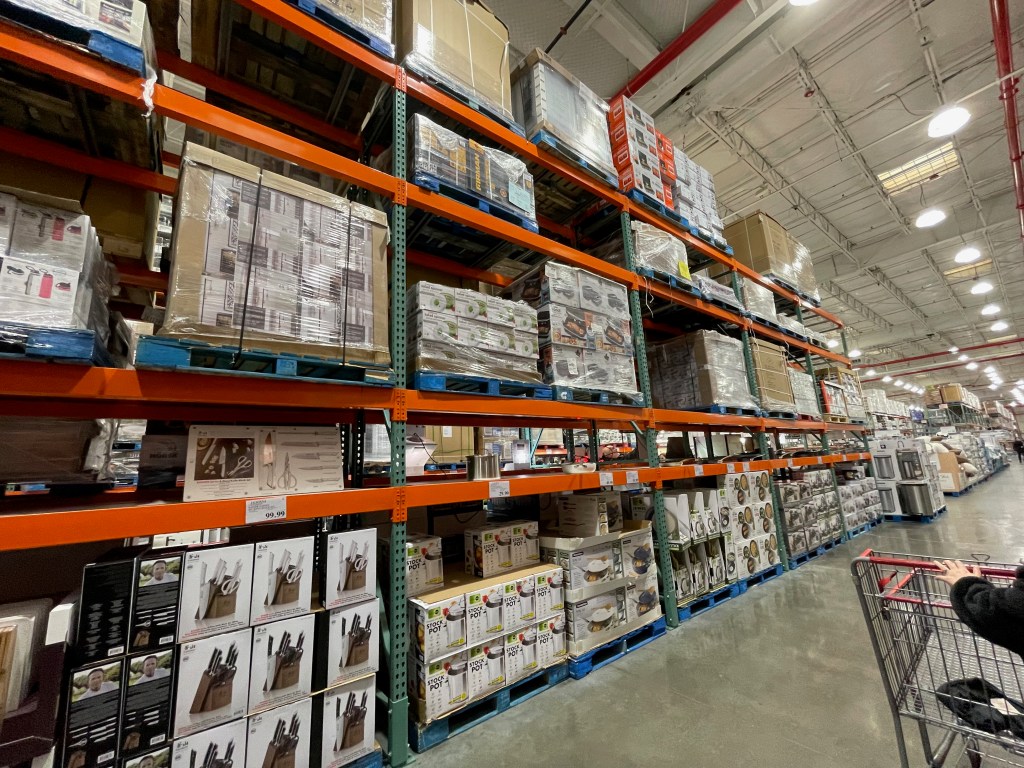
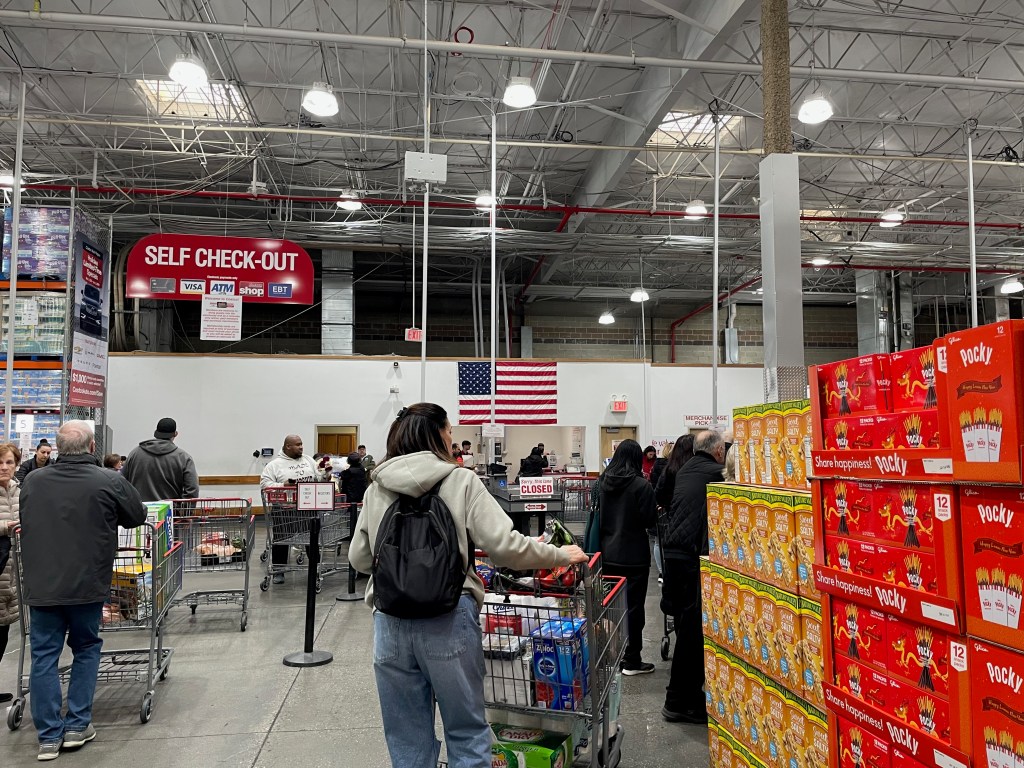
While we’re on the subject of crazy choice, Costco? I know, I know, where have I been? I finally was initiated into the cult by Daughter No. 1, just for one visit. I was overwhelmed. Not that we bought that much—we had specific goals. It wasn’t so much the crazy amount of merch for sale, even though I saw everything from espresso machines to solar panels to yoga pants to flats of every household item imaginable. But wow, in the space of less than hour I heard at least half a dozen non-English languages. That the company is fairly humane in its personnel practices compared to other giants of commerce added to my not hating it. Buon lavoro, Costco. 

I did notice one other thing immediately. As soon as we cleared customs and were in a taxi headed to our kid’s home, I pulled out my phone and wow, this 5G thing. I’d forgotten how fast it is, at least the T-Mobile version of it, and later tested it to be, in some places, a 600 mb/s download. That’s fast. And our kid has, like we did, 1 gigabyte/second fiber. Fast fiber internet has made it to Italy in general, and our town of Valfabbrica specifically. But not in the rural areas. We use a local provider here, which gives us download speeds of around 30 mb/s, which isn’t bad considering it’s wireless. But a guy can get spoiled. Still, I wouldn’t trade my life for fast downloads. Yet.

THE BAD

OH BOY, THIS. Before we left for New York, we’d wanted to get a Covid booster shot, since the latest one covers the latest known variants. Here in Umbria, you go onto the public health website and look for a location and convenient time and hit the send button and show up for the shot. But we ran out of time and figured we’d get the shot at our former local pharmacy in New York.Unfortunately, Nick up the street wasn’t handling the vaccine. So we had to look at the local megaeverythingwithpharmacy places like CVS and Walgreen.

The closest CVS told us they were out of the stuff and maybe were getting some in the future. But Walgreen’s website said make that appointment. I went through the online scheduler and completed the online medical history/consent forms for the two of us.

The day arrives, we drive a couple of miles. There’s a woman ahead of us in the vaccine line. She’s filling out the history form. “We did ours online,” I said. “I did too but they want me to fill it out here again.” The staff behind the counter is obviously overwhelmed, answering phone calls, taking in prescriptions and giving out meds to other customers. We wait and wait and wait. The nice woman in front of us was finally frustrated and disappears. They call her name, finally, to get her shot, and no one answers.

Finally, the harried clerk asks us to fill out the damn history/consent form. “I did it online,” I respond. “We’re asking people to do it here,” she says without giving me a reason. I refuse. “Sorry, I did it online and I’m not going to fill it out again. Look in your system.” There’s a standoff. Finally the overworked pharmacist tells her to dig it out of the computer. More waiting–at this point we’d been there an hour past our appointment time. We weren’t giving up. At last, the pharmacist come out and administers the shot: 75 minutes after our appointment time. We note that they have lots of people restocking the shelves with stuff like Doritos and deodorant, while the pharmacy workers look like hunted animals. American free enterprise at work.

As for this little pharmacy item (left), really?

 Finally we drive back. The main drag through that part of the island is a two lane road that was built in the 1920s and ’30s, with small shops and converted houses hosting insurance agencies and the like lining the street. But something’s out of whack. Big hulking SUVs and pickup trucks like Ford F150s dominate. It’s like the hippo dance in the Disney movie Fantasia. If the giants aren’t being driven like drunken Romans are behind the wheel, they’re creeping along because I’m sure their drivers can’t see out of them. Why do Americans need a tank to go to the drug store?

Another time I stop at a traffic light to make a left turn. One of the misplace macho drivers doesn’t think I’m moving fast enough (I am not a slow driver) and charges over on the right and without caring makes the left, causing oncoming drivers to hit their brakes. This happens over and over. All of a sudden driving in Italy seems sane.

THE MEH

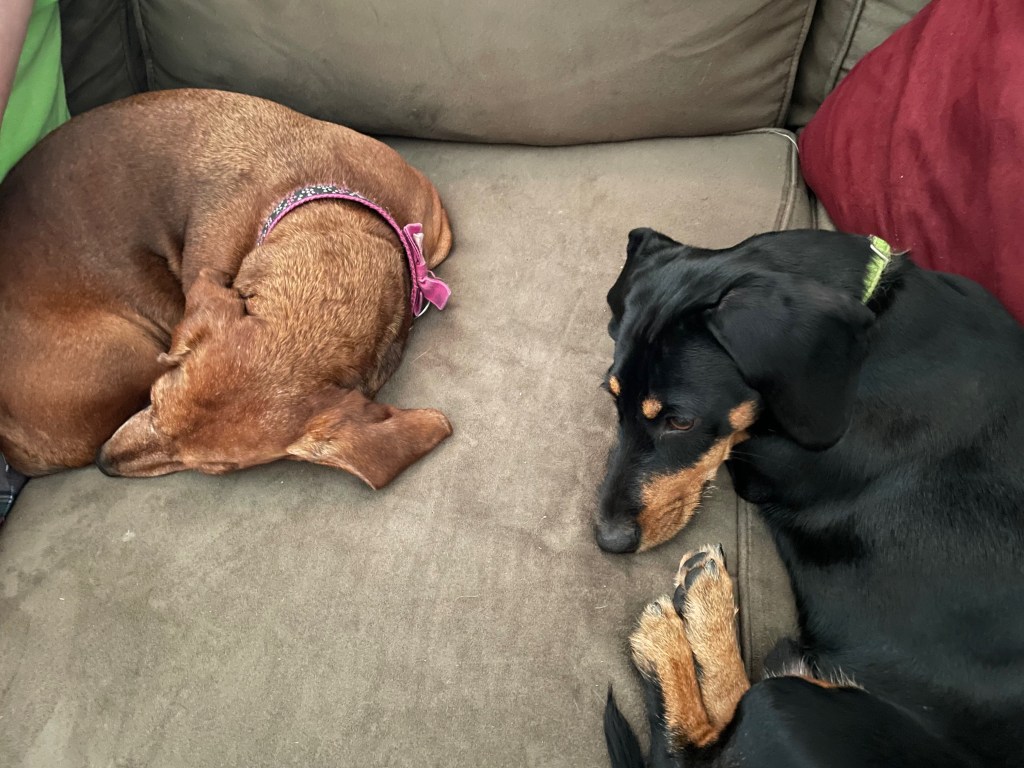
LET’S TALK ABOUT prices, okay people? The U.S., once you’re been away, just seems like a giant machine designed to drain its people of their money. For instance, we buy Royal Canin dog food for our little prince Niko. It’s produced in plants around the world, but it’s a French subsidiary of the giant Mars Inc. In the U.S., a little over one kilo costs $21. The same food, but almost double the quantity, costs €21 in Italy, or about $23. The common excuse, er, rationalization is that wages are higher in the U.S. and so are fixed costs. But double? If you know, tell me why.

Gratuitous puppy picture: It costs twice as much to keep Lola from the U.S. (left) in Royal Canin than it does our little Niko from the suburbs of Rome.

While I’m on the subject of allocating funds….I get it. New York is constantly being rebuilt. But sorry, what’s there can be so crappy. I traipsed about the Financial District for the best part of a day to take care of a bureaucratic matter. An Italian matter. (Don’t ask.) I used to work in the neighborhood and didn’t really notice before, but the streets are in crappy condition. Sidewalks are broken up, there are shoddy barricades everywhere and in general the place doesn’t look like one of the financial and media capitals of the world. I guess I’d taken the crappiness for granted before.

/rantover. Back to Italy after this.

Commitment issues, resolved. Kind of.

Okay, like so what? It was a big deal to me. When I stand waiting for the cashier back in New York, I’m usually horrified at my fellow shoppers’ food choices, like boxes of crappy frozen meals, big bags of Doritos, chop meat, lots of meat in fact, and bottles and bottles of Coke and other soda. Call me elitist, but it’s more of a cultural gap. I was always bad at being a mainstream American because of my upbringing. I guess it’s a first-generation thing, but I always felt like I was straddling two continents, where I was born, and where my father and my maternal grandparents came from. (I love peanut butter and gochujang, though, so I’m not 100 percent Italian when it comes to food.)

Welcome to the neighborhood supermarket, Conad.

We used to come here to Italy as a sort of refuge. At first it was a couple of stolen weeks in a busy summer, then that time away got longer as I managed to do a lot of work remotely. I remember being at a P-Funk All Stars Umbria Jazz concert and looking at my phone to approve a magazine cover photo. Then when we bought a house in the country, and I didn’t have a day job to go to, we’d stay here a few months at a time. But it was always less than six months, and under the limit beyond which we’d be official Italian residents, like it or not.

I’m trying to decide whether that arrangement was either having the best of both worlds, or merely not being in either place. A certain lack of commitment, to be sure. We had lots of good reasons for waffling, like family, friends in the U.S., and there were tax implications, too. By staying in Italy for fewer than 183 days a year, but having our income sources in the U.S., we were full-time American tax residents. There’s not much to choose from in actual taxes when you total up everything you’re charged for in the U.S., but it’s definitely simpler to be a tax resident in just one place. (The United States considers you a tax resident wherever you live, forever, or until renunciation.)

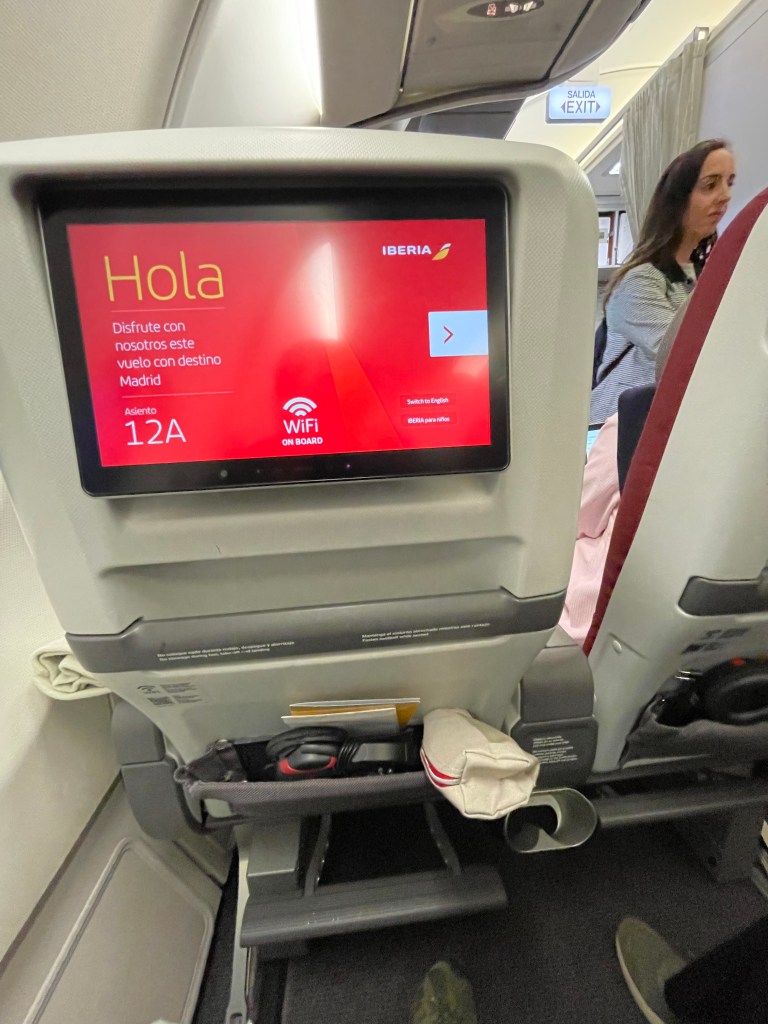
Our normal aircraft seat. Iberia, bless its corporate heart, upgraded us to business class a couple of times, for free, unrequested too.

There are disadvantages, too, to living in a couple of countries. It’s expensive. We flew more often that we really wanted to, and while being experts on which airlines have the lowest premium economy fares may be worth something, the back and forth back and forth was getting to be too much. Plus even though we’re Italian citizens, we couldn’t take full advantage of being Italian/European Union citizens. We have to carry our passports as ID instead of a simple digital ID card. We have to pay doctors privately here, rather than being full-time enrollees in Italy’s public healthcare system. (It’s not as expensive as it is in the U.S., but still….) And full-time residents don’t have to pay real estate taxes on their main dwelling.

So after years of noncommittal, not to mention 2020, The Year of Covid, we marched ourselves to our town hall and declared residency. I was nervous about doing so. The Italian consular officials in New York aren’t always the kindest, most helpful public officials. And the declaration form was detailed—to get the real estate tax exemption, it looked as though they wanted me to enumerate every square meter of our house and yard here. After realizing that it was impossible to get it all on the page, I simply printed out our property sale document and wrote in Italian, “see attached.”

We kept putting our trip into town off for mostly dumb reasons, but finally it was put up or shut up time. So a few days ago, we marched ourselves up the stairs to the demographics office window. The official took our paperwork, skimmed through it, and said, “fine. Go downstairs to the Protocol office, and tell him that I already approved the documents.” We did so, spending a few minutes while the second guy typed our info into the database. The other guy came downstairs to see how things were going, and after a short time spent chatting, they were done and we walked out into our official new town.

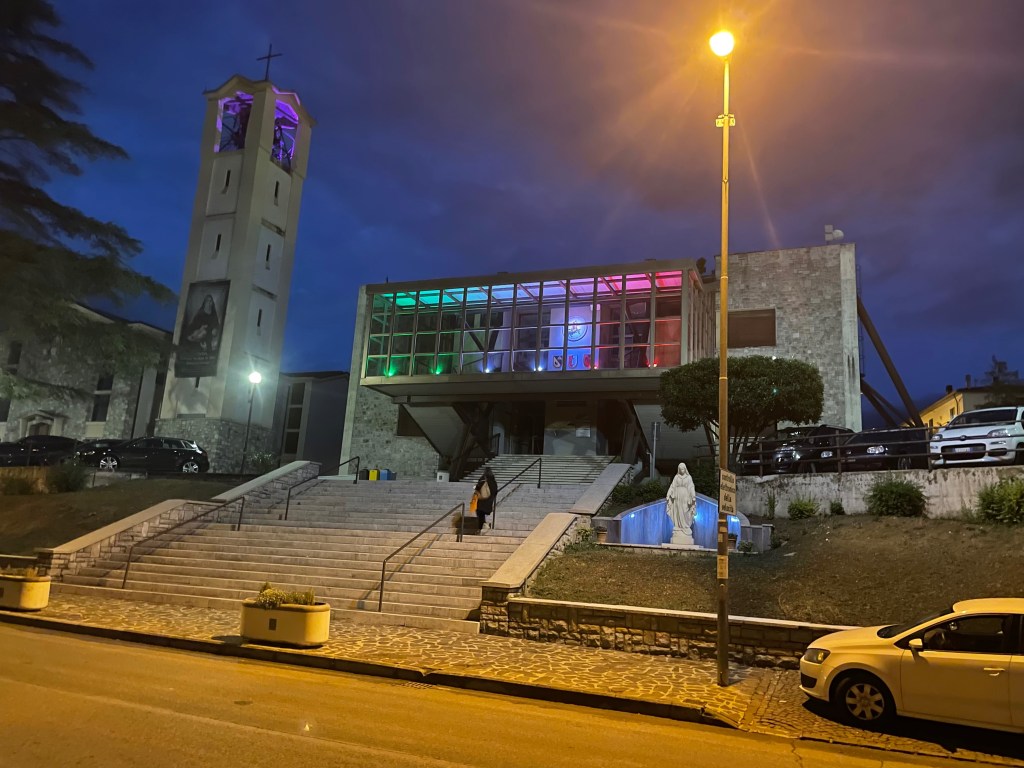
Our town hall, lit up for a fall festival

There’s more. We’ll have to convert our driver’s licenses. We have to enroll in the health system, and the local police will pay us a visit to make sure that we really live here. But things already feel more settled. I’ll tell you in later posts what makes this town so special (random photos below just for the hell of it). For now I’m just happy to be anchored in one place.

Gone fishin’

Hey friends, I’m taking a short break and using the Fourth of July as a convenient excuse. I’ll leave you with this, one of my favorite Paul Simon songs.

I got (minor) beef with the dude, but damn, he’s a good songwriter. I once covered a post- 9/11 benefit where he was the star performer, and he wouldn’t let me interview him. Feh.

Simon wrote and recorded this song as the Vietnam War wound down, the draft was ending, and Nixon’s dirty tricks dominated the news. I can’t think of a song, other than his own “Peace Like a River,” that better expressed the weariness and sadness of the era. It’s ageless, really, and sounds current 50 years later. Plus, the tune itself is beautiful and his acoustic guitar playing is exemplary, as always.

There are better clips of a younger Simon singing this song out there, but YouTube in its strange wisdom makes you go to the site rather than play it here. You can track them down, or just enjoy this before you head out to the barbecue. Stay safe and enjoy the fireworks.

[Image top of page, A. Paonita as we left JFK Airport for Europe, May 2023]

Bitter. Sweet. And something in between

Never mind.

Soldier Carlo

That’s the phrase that came into my mind as I boarded Iberia flight 6252 for Madrid last week. It was the start of a journey to Umbria in Central Italy, where I’ll register as a full-time resident. In doing so, I’m moving in the opposite direction of Carlo Ancona, my maternal grandfather, who tried to escape a second stint as a conscript in the Italian army during the incredibly stupid European conflict that we call World War I. (He failed and was drafted to fight in the trenches in the U.S. Army.) I’m also reversing the direction his wife, my grandmother Rosa traveled a few years after Carlo, sailing to New York in steerage with two young children. And finally, I’m canceling out what my father did in 1955, the year before my birth, sailing from Palermo, Sicily, to New York to join his bride, my mom Angelina Ancona.

All of them fled economic bad times. My mother’s parents were tenant farmers leaving the crushing poverty of the seacoast and agrarian town of Castellammare del Golfo, in northwest Sicily. “They ate pane e cipudda, bread and onions,” my mom would tell me. My father, from a middle class family in the big city, wasn’t starving. But when he left the Italian army, there was precious little opportunity for a restless young man in mid-’50s Palermo, the island’s largest city and capital.

What am I fleeing? Eh, nothing that affects me personally except, perhaps, boredom and endless HGTV programs like Love It or List It. I was involuntarily retired by Covid, when a lot of work I did dried up. A few years ago I did have a day job as a working journalist. I loved the job until it was turned into a soul-crushing exercise in scaring up website clicks by a bunch of Catalan consultants and dull-witted corporate executives.

I’m not alone in doing this reverse migration. Some 20 to 30 percent of the millions who left Italy during the great migration of the late 19th and early 20th centuries returned permanently to their homeland. In my own family, my grandparents and one of my aunts lived in the U.S. for a few years and then decided to return.

My Aunt Pia’s wedding on July 4, 1964. She and her new husband eventually moved back to Italy. (I’m the ring bearer up front.)

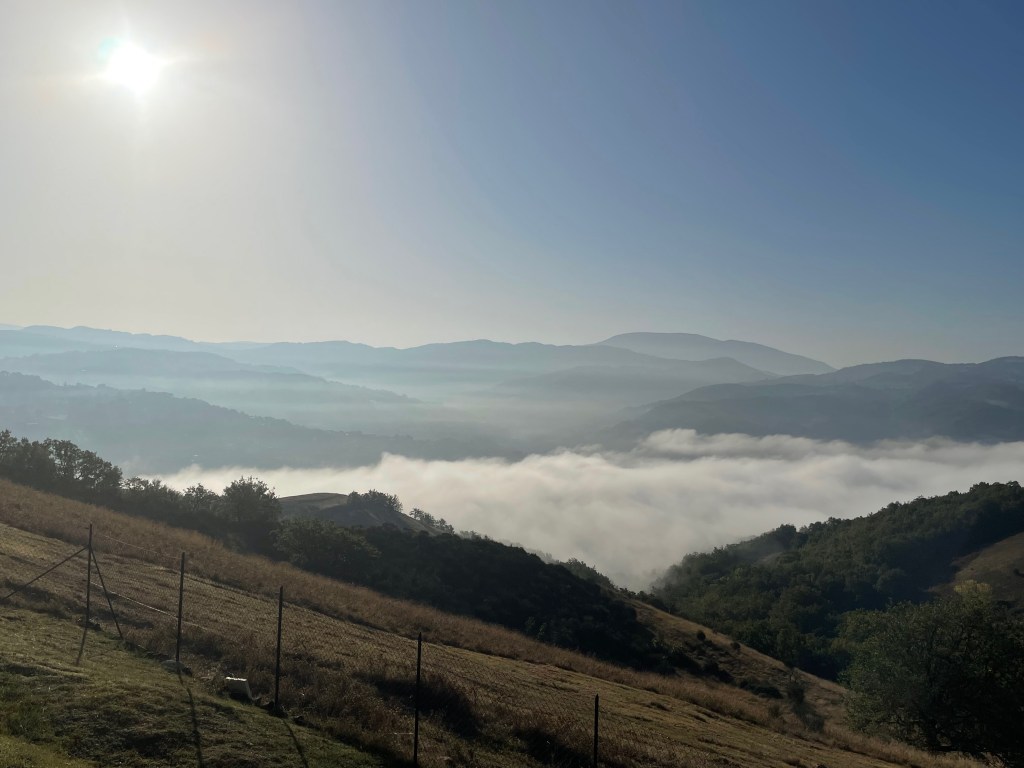
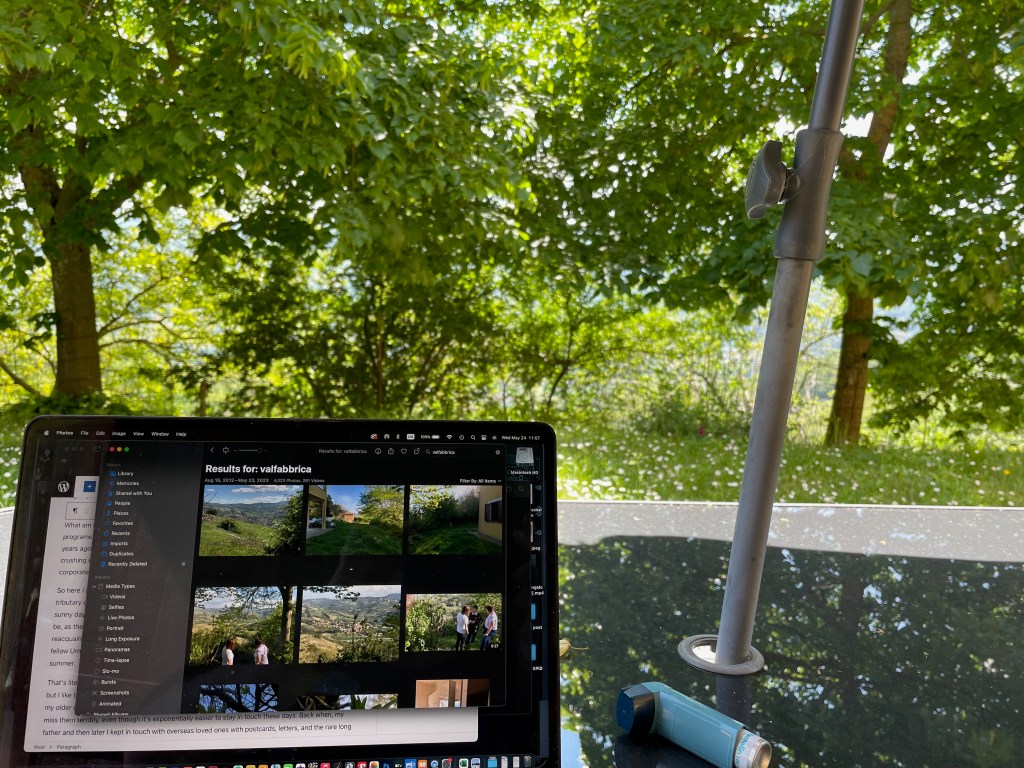
So here I am. I’m sitting on the patio of our house looking down into the valley of the Chiascio River, a tributary of the Tiber that runs to and through Rome 192 kilometers (about 120 miles) away. It’s a breezy sunny day, coming after a few days of leaden clouds and periodic cloudbursts. To call it pleasant would be, as the cliché goes, damning it with faint praise. We walked up and down our road earlier, getting reacquainted with the human and canine neighbors. Last night, we along with what felt like dozens of fellow Umbrians, ate gelato at a popular place a few towns away, signaling the start of a lazy Italian summer.

That’s literally and figuratively the sweet part. The bitter? Leaving my babies. Okay, they’re adults now, but I like to think that even though they’ve grown into terrific young women, they’re still my babies. And my older daughter gave birth to (this is grandpa saying this) The Most Beautiful Baby in the World. I’ll miss them terribly, even though it’s exponentially easier to stay in touch these days. Back when, my father and then later I kept in touch with overseas loved ones with postcards, letters, and the rare long distance (!) phone call. Even the baby responds to the screen when I use FaceTime to videochat with the fam.

And the in-between? Leaving the city where I was born, raised, educated, had a career, and raised a family. Either purposely or by accident, The Spartan Woman and I avoided what a lot of educated class Americans do. We didn’t let internships and college take us away from our hometown of New York. A big reason came down to economics: Coming as we did from families just getting their feet on the American ground, we couldn’t really afford to go away to school. Later on it was a conscious choice, that New Yorker snobbishness that considers every other American place to be, simply, not good enough for us. Hey, we had free university, great museums to wander around in, incredible hangouts and backdrops for romance. Did I ever tell you about the rehearsal show for Kid Creole and the Coconuts we were at? When my sister danced on stage with August Darnell? Or when as young adults we’d catch a Ramones show at 3 a..m. in a seedy bar and then head to work with impaired hearing?

Can you hear the ships’ horns?

For better or worse, I have the foghorns of New York Harbor embedded in my brain. And the clickety clack of an elevated train making its way to Coney Island. Hell, it took me years to orient myself here, a place on a landmass with lots of what looked like identical towns at first. A New York kid, I knew that if lost, I’d end up at a shoreline eventually. I walk fast, even as an old guy. It’s what we’re trained practically from birth to do. Skyscrapers don’t faze me, and I’m frankly bored of upscale restaurants where the chef is so hell-bent on innovation that he or she forgets to actually feed people.

I don’t think I’ll miss the rest of the United States. Still, there’s nothing like a lobster shack in Maine, or the honky tonk Jersey Shore. I do miss our summers on Cape Cod, where we’d rent little cottages with the kids when they were little and eat way too much seafood.

Living here in Central Italy feels natural. It’s not as intense as Sicily yet not as proper as the north of the country; it’s somewhat of a halfway house between the Latin and Anglo-Saxon worlds. I didn’t have to go through any cultural acclimation, since I grew up in an immigrant family full of relatives who moved back and forth between Italy and the U.S. for vacations or to live. I spent my first times in Italy at relatives’ homes, the first time a lazy beautiful summer in a beach town just outside Palermo and got first-hand lessons in how to shop and get an espresso or beer at a bar.

I’m going to go back and restate the original point of this blog, besides my having the urge to write every so often. I aim to show what living here is like in a realistic way, without the romanticism of silly stuff like Under the Tuscan Sun or A Room With a View. Italy is a modern, vibrant, sometimes infuriating place to live. If I’m successful, I’ll smash some stereotypes, yet leave you with an occasional smile.


Welcome to the real New York: Take a walk with me around one of its few nongentrified neighborhoods

This city is insane. It really is. If you aren’t rich, or a trustafarian, good luck finding a place to live. It’s not just regular folks who are having trouble. Even elected government officials are complaining that they can’t find a decent apartment at a decent price.

And it’s not just housing. Food, both in stores and in restaurants, is absurdly expensive. Have a car? Insurance alone becomes a major expense. I know wah-wah-wah. I can’t help it. Maybe I’m just building my case for being on the precipice of leaving New York, except for regular visits because I’ve become the nonno of the Cutest Baby the World Has Ever Seen ™. Yeah, I’m prejudiced.

But really. One of our kids spent the past couple of months visiting prospective apartments. Real estate agents have apparently gotten really good at using their phone’s ultra-wide camera lenses to make closets look somewhat habitable. Or in some cases, they don’t care about presentation and leave an array of roach traps on the kitchen counter. Yeah, that’s where I want to cook dinner every night. Even more than the crappy apartments, long a New York tradition, are the sky-high prices. Thousands a month for what’s basically a tenement, in the kind of building that had its heyday around 1938. And an application process that makes candidate vetting for the CIA seem lackadaisical.

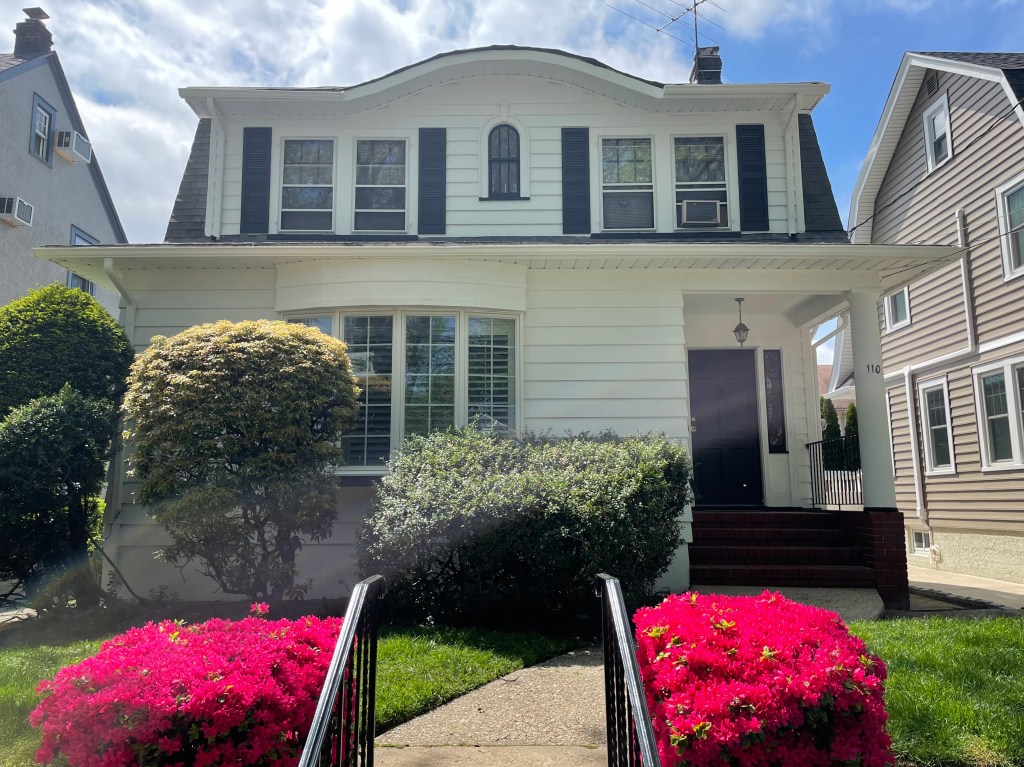
So it’s been a nice break spending a couple of days a week with daughter number 1, who gave birth to a baby boy last month. The kid’s adorable and loves to boogie around his basinet—he’s going to be a handful. And said daughter lives in one of the few neighborhoods in Brooklyn that’s proudly non-gentrified. This is not to say it’s cheap; a typical rowhouse goes for a couple of million. But it hasn’t yet caught the precious disease. You know the symptoms: Curated coffee, whatever that is, little restos owned by recent and hipper than you French or Italian arrivals. Lots of twentysomethings from Ohio subsidized by mom and pop, the kind of people who sit around curated hipster coffee bars with no apparent means of support.

Boy am I sounding like a grouch. I am a grouch. Sue me.

What’s made me less of a grouch, other than the perfect grandson, is that old-timey feeling you get from walking around Bay Ridge. It looks more or less the same as it did when I was growing up; I traveled through the neighborhood on my way to high school eons ago. But that’s not to say it’s stayed the same. Back then it was inhabited mainly by recent immigrants from Italy and Greece, and had large Irish-American and Scandinavian-American presences. The mix has changed now and there are lots of people from Asia and the Middle East.

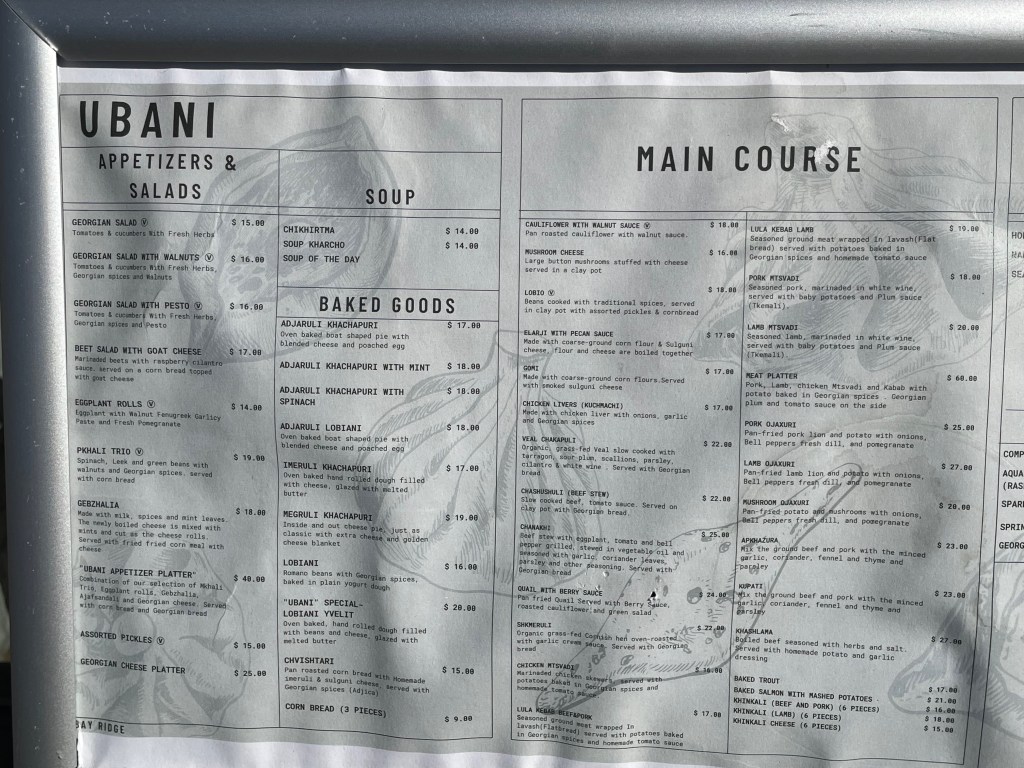
What all that means is that walking up and down Bay Ridge’s avenues (like Manhattan’s, they run north-south), you’ll pass Italian, Greek, Palestinian, Georgian, Japanese, Chinese, Thai, and Mexican restaurants. I’m sure I left something out, but you get the idea. Often the places are cheek by jowl, with interesting juxtapositions. And while some might be a little upscale, most of them exist for their fellow immigrants. They aren’t fashion shows boiled down to eateries, they’re part of the New York tradition of local immigrant-owned businesses serving their communities, rather than competing for a New York Times restaurant review and a Michelin star. This Georgian restaurant’s menu looks really good to me right now:

So let’s take a look. First up, when Italians talk about how similar they are to Greeks, they often use the phrase “stessa razza, stessa faccia.” Get past the imperfect rhyme and it means “same race, same face.” And while Italy and Greece are separated by the Adriatic and Ionian seas, in Bay Ridge their people live cheek by jowl, especially when it comes to restaurants.

Over in the Middle East, the Palestinians and Israelis are mixing it up again, with the Lebanese sometimes getting in the mix, In Bay Ridge? Jewish delis and Middle Eastern restaurants coexist, no problem.

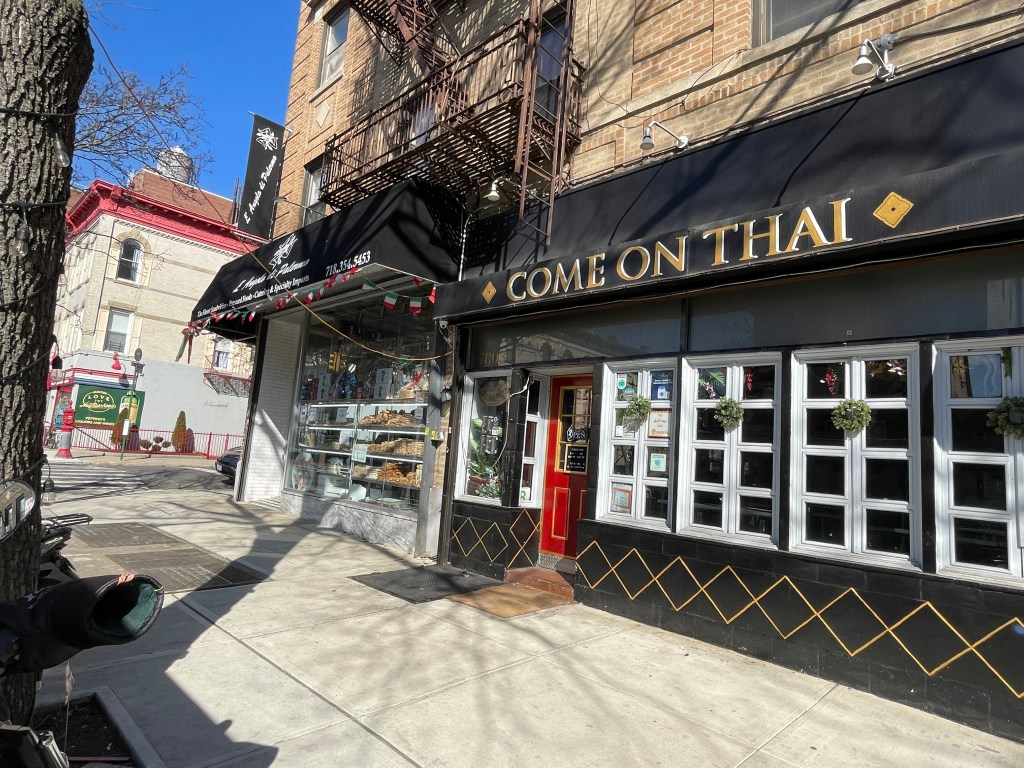
Elsewhere in the neighborhood, you’ll find combinations of ethnic shops and restaurants that you would never see on a map, or maybe anywhere else in the world. Thai and Sicilian, anyone?

Let’s pay tribute to the newer establishments, whose owners are from Central America and the Middle East:

Of course Bay Ridge wouldn’t be Bay Ridge without an Irish pub with an pun name:

Some terrific photos, the “larky life,” and a clown parade

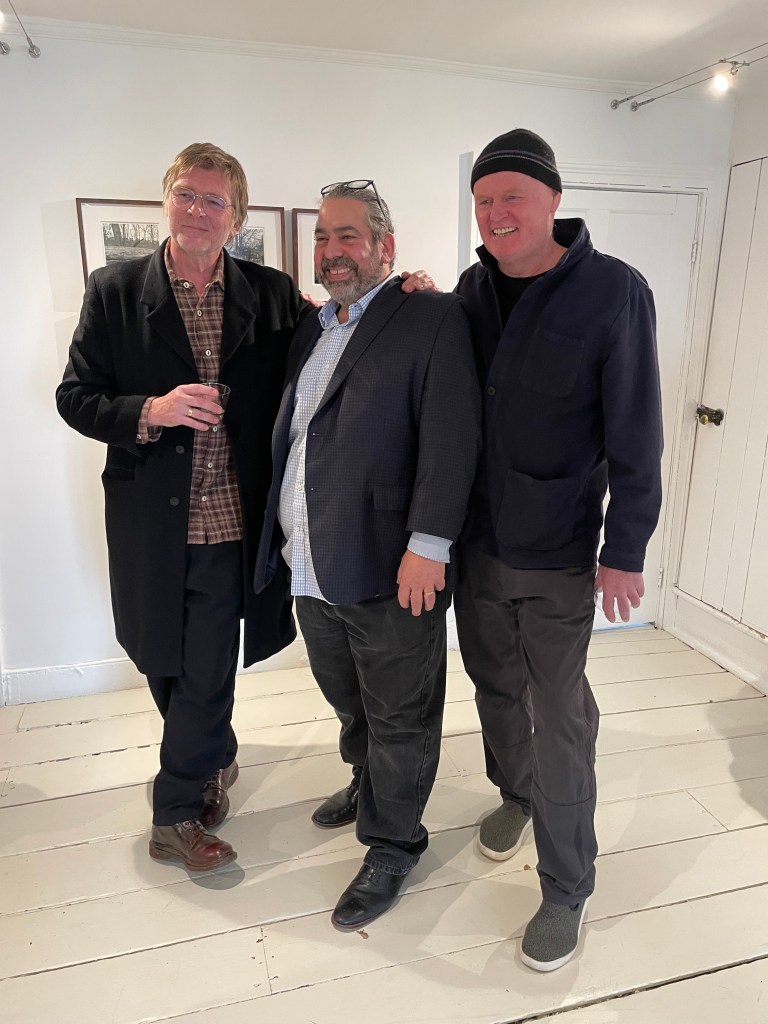
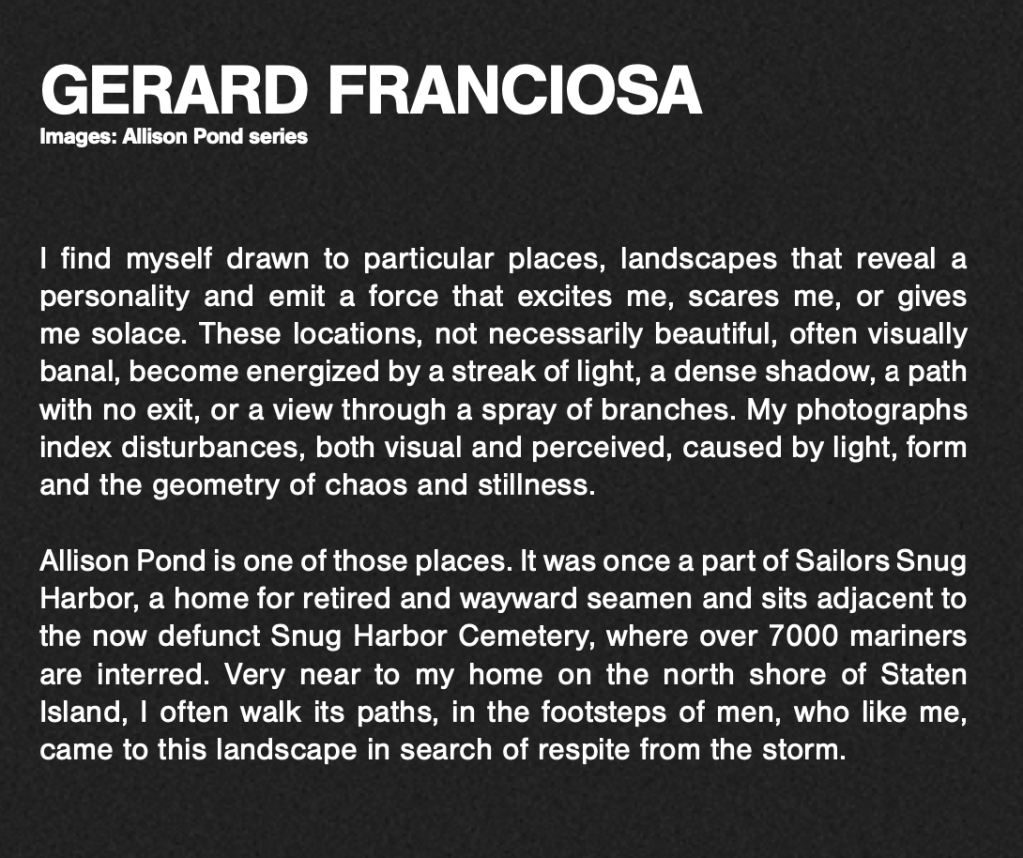
We aren’t the only weirdos in our neighborhood who live abroad for part of the year. I present Gerard, who lives down the hill from The Spartan Woman’s and my Staten Island home. He’s a photographer who has a business making beautiful photographic prints. If you’ve been to any photo exhibit in the recent past, most likely you’ve seen his exhibition prints.

Gerard, a first generation American of Italian parents, also has a family home in the hills south of Rome and north of Naples. He and his father bought the house back; it had been out of the family for some time. So he and his wife and family spend some time there each year. It was fun a couple of years ago to see Gerard in Perugia. He and his wife Toni Ann were driving around Central Italy and for a few hours, Perugia had a contingent of Randall Manor residents wandering around—we’re good tour guides—and having a terrific lunch at Il Cantinone.

Last weekend, Gerard’s photos featured in an opening of an exhibit of local photographers. His photos depict the woods in our neighborhood. I’m still amazed after nearly 30 years of moving here that we have a forest in the middle of what is a fairly dense North Shore Staten Island neighborhood. For an hour or so, you can wander past a pond and into the forest, following trails that scale a couple of hills and wind up at another pond. You’d never know that you’re in New York City.

But back to the exhibit. It was held, appropriately enough, at the Alice Austen House. Now a museum, the gracious estate was once the home of one of Staten Island’s stars, the photographer Alice Austen. When she lived there, the place was called Clear Comfort, and it’s in a beautiful spot right at the edge of New York Harbor. From the rolling lawn that descends to the bay, you can see Brooklyn, the Verrazano-Narrows Bridge, Manhattan, and New Jersey.

Austen, who died in 1952, was an intriguing character. A member of Staten Island’s upper class, she got a camera from her uncle and was immediately hooked. She photographed her friends and family playing tennis, mugging for her on the beach, and attending fashionable parties. She also ventured into Manhattan and photographed people on the streets, many of them poor immigrants scrambling to make a living. Try to imagine a young woman more than 100 years ago hauling cumbersome cameras around and the heavy glass plates that she used as film. (Remember film?)

She and her friends called their doings “the larky life.” And there was something else about Austen that until recently, the prissy Staten Island Advance (the only local daily in New York) never mentioned: Austen was gay. She had a long relationship with another woman and because of her social standing and personal wealth, she broke free of the constraints that women of her time had to live under.

I WAS THINKING OF Alice earlier this week when Staten Island’s St. Patrick’s Day parade took place. It’s earlier than the bigger city parade, presumably so underage alcohol abusers could have an extra day to get wasted. The parade is notorious for another reason: It’s the only St. Pat’s parade that every single damn year bars the local Pride Center and the police gay group from marching as groups. It’s straight out of the Taliban’s playbook. Every year our friend Carol Bullock, the genial and all-around cool head of the Pride Center applies to march in the parade. And every year, parade committee chief Larry Cummings turns her down.

Carol Bullock of the Pride Center of Staten Island

Cummings hides behind what he maintains are Catholic teachings about homosexuality. Yet his boss in religious matters, Pope Francesco, in an interview in January with The Associate Press said: “Being homosexual isn’t a crime.” Noting that some prominent clergy back anti-gay laws, he added, “These bishops have to have a process of conversion,” and they should apply “tenderness, please, as God has for each one of us.”

The situation reached a head this year. When Carol tried to submit her application, there was a physical altercation at a church where Cummings was taking parade applications, with that brave man Cummings shoving a press photographer. The police had to be called to calm things down, and Cummings remained a bigoted little soul who kept those nasty LGBTQ people out of his ever-shrinking parade.

Because of his stance, the island’s public high school marching bands won’t participate, and their youthful exuberance made the parade fun to watch. It seems that most of this year’s participants were motorcycling groups and guys with old cars. We can’t forget three local Republican politicians, including the borough president Vito Fossella, who achieved notoriety when, as a U.S. congressman, he kept another family in the D.C. area and it emerged only when he was arrested for DWI. Cummings is in great company.

I’m sure Austen would have appreciated, if not actually relished, the irony of how she became, as a fairly open gay woman, a Staten Island icon as a few 21st century Staten Islanders tarnish the reputation of her beloved hometown.

Dismantling a life that’s fading in memory

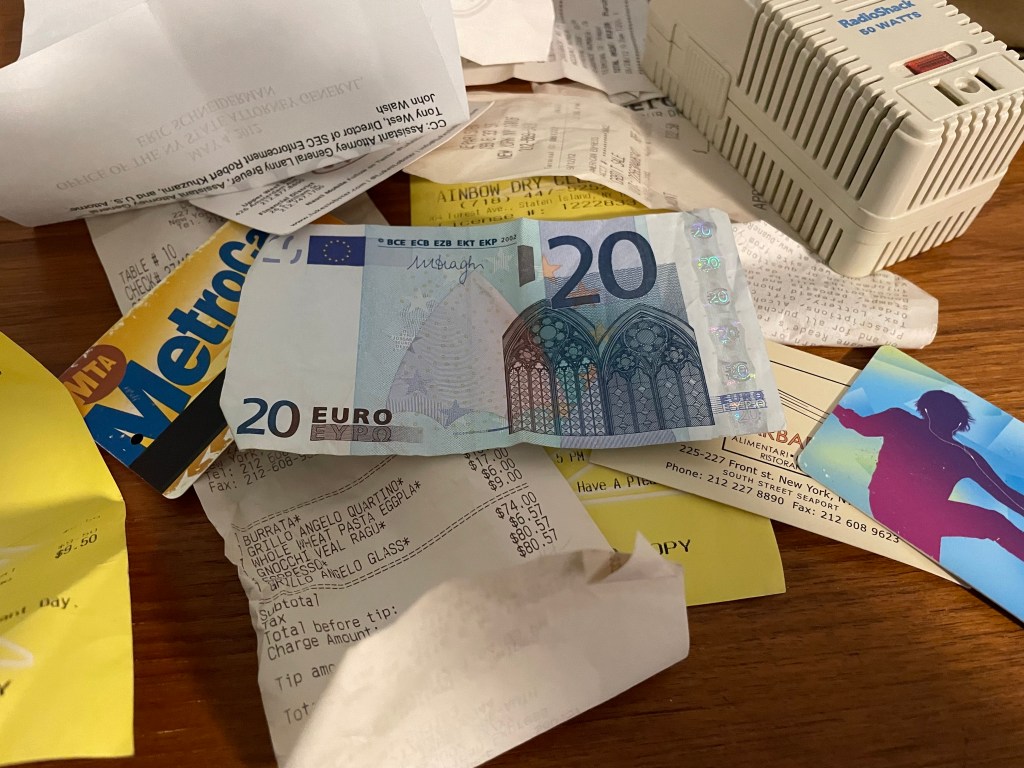
Yesterday I went upstairs to our bedroom to do a task I’d neglected to do for years. Every time I went to get a pair of socks they’d be staring at me: Piles of paper, mostly receipts, with some notes, business cards, and post-its. Finally, as part of our emptying out the house we’ve lived in since 1994, I was tackling the Scary Sock Drawer. And in the process, I filled in some blanks in my memory that lasted for years. (For those of you just catching up, we’re doing a reverse immigration thing and moving to Italy soon,)

I’ll admit that I’ve got a weird memory. I’m good at images, and I remember strange facts, maps, pieces of music. And most of it is pretty recent stuff, unless it’s a childhood memory. I can replay images I saw as a baby—in one vignette, I was in my playpen in the Brooklyn apartment that was my first home. I was looking toward the window and a shaft of sunlight that came in through the blinds, illuminating the dust particles in the air. I can see, even now, how I blew on those particles to watch them dance, and then giggled at how clever I was. (This probably explains a lot about my later habits.)

There are huge gaps, though. I tend to remember the last year or so, maybe because I’ve taken more than 30,000 photos on my phones and various digital cameras But for awhile my recollections had a huge void in the 1990s, probably because I was too busy working, trying to get rid of evil bosses, and playing with the kids while keeping my marriage with The Spartan Woman going. It’s only when I started to digitize our hard-copy photo collection that I was able to fill in some details

But why did I save so many receipts from Rainbow Cleaners? And receipts for non-expense account meals? And boarding passes?

We’re not talking about recent garbage. The meals dated from 2013-14. Oh look, the Oyster Bar from 10 years ago. Now I remember, it was with Josephine, my ex-colleague. She and I had a great lunch—I think I was off that day—and we spent way too much on a plate of raw oysters on the half shell and some ice cold flinty white wine. Josephine was in from living in Barcelona, after she’d been cashiered along with a bunch of my former co-workers, and had lately discovered the joys of day drinking. She probably followed that with a nap when she was in Barcelona, but New York doesn’t encourage such things.

What amazed me was how many times I was taken to the cleaners. Ok, I walked, it’s only two blocks away. I kept coming across yellow receipts from Rainbow Cleaners, and I didn’t realize how much dry cleaning we had. Why so many receipts? Who needed them? The guy who owns Rainbow is young and tech-savvy, typical of his Korean-American cohort, so naturally he had both an up to date client database on his laptop and a keen memory. I’d walk in and he’d already located my suit or jacket, so I learned that I never had to give him a receipt.

Not that I wore suits that often in my former life. It’s now more than six years since I left one of the most boring newsrooms on earth (it wasn’t always boring, but once the company brass took over and hired consultants…), and even then I rarely had to dress up. I confess that every now and then I’d don a suit and take a long lunch break uptown just to make it look like I was leaving. Rummaging through the sock drawer, I found receipts for the black suits that I favored, and even tuxedo rental receipts for the one time a year where I had to get on stage and present an award to some corporate lawyer type. I hated those award nights, had bigly stage fright having to speak to 500 Masters and Mistresses of the Universe, plus the food mostly sucked. (One shining exception: the Parmigiano Reggiano chunks sitting in those big cheese wheels at Cipriani.)

I found at least two things in there that are useful: a €5 note, a €20 note, and two Greenmarket tokens worth $10. I plan to celebrate the last one by pairing them with some others we’ve found to get a couple of dozen oysters from the fisherman guy.

THIS WHOLE PROCESS IS both tedious and fascinating. And a little sobering. For one thing, in cleaning out the media wall in the living room, we’ve had to decide what to do with a couple of decades of technology. We stashed everything away, usually in a panicked last minute cleanup if someone was coming over for dinner. So….let’s see: A white Macbook; two MacBook/PowerBook chargers; various USB cables for iPhones long gone (I got my first one in 2008); albums on tape cassettes; empty cassette boxes; blank CDs; blank DVDs; SCSI cables (why there and not in the office-graveyard?); photographic slide film (!); a huge flash attachment for a camera that used said slide film, probably last used in the mid-1990s. And so on.

We’re almost done with the living room, bar the furniture and the electronics in use or too big to deal with right now. Our son-in-law looks wantingly at the decent Advent speakers I bought years ago when I used something called a “stereo system” to play CDs and vinyl “records.” He can have them. I’m not sure about the garden variety DVD player, last used…? I can’t remember. Or the receiver. Does anyone still use those?

Next up: the dining room. We don’t have much in the way of family china and silver. But we do want to pack up some Italian pottery and take it back home. We also have a buffet-top full of bottles of liquor that we never drink. Maybe we should have a party?

Alienated in New York: a trip through my unpublished archives

It’s snowing today and our region is, as we say in Italian, “in tilt.” It’s more than the gentle flakes or even the short blizzard of flurries, if there can be such a thing. So for awhile we were out of power. I didn’t have an unread book handy, so I got my trusty laptop, which I can use for days without charging, and looked through old files on my hard drive.

Scrolling through my digital detritus, I found this essay that I’d written pre-Covid pandemic. I have no idea why I wrote it, what, if any, audience I was thinking of—whether, for example it was for this blog or not. It looks as though I wrote it quickly, right after the dinner I’d gone to. And boy, it rings even truer today than back in 2019. So I hope you don’t mind if I recycle it here, slightly edited to fit my current writing style:

—————-

I HAD DINNER WITH friends the other night in Lower Manhattan near the South Street Seaport. Dinner was at Barbalu, the successor to a place I’ve been going to for almost ten years; the original version of the chic restaurant/Italian market was flooded during Hurricane Sandy in 2012. It’s a friendly place; I know the owners and this later version features authentic modern Italian food in a rustic yet sleek setting. 

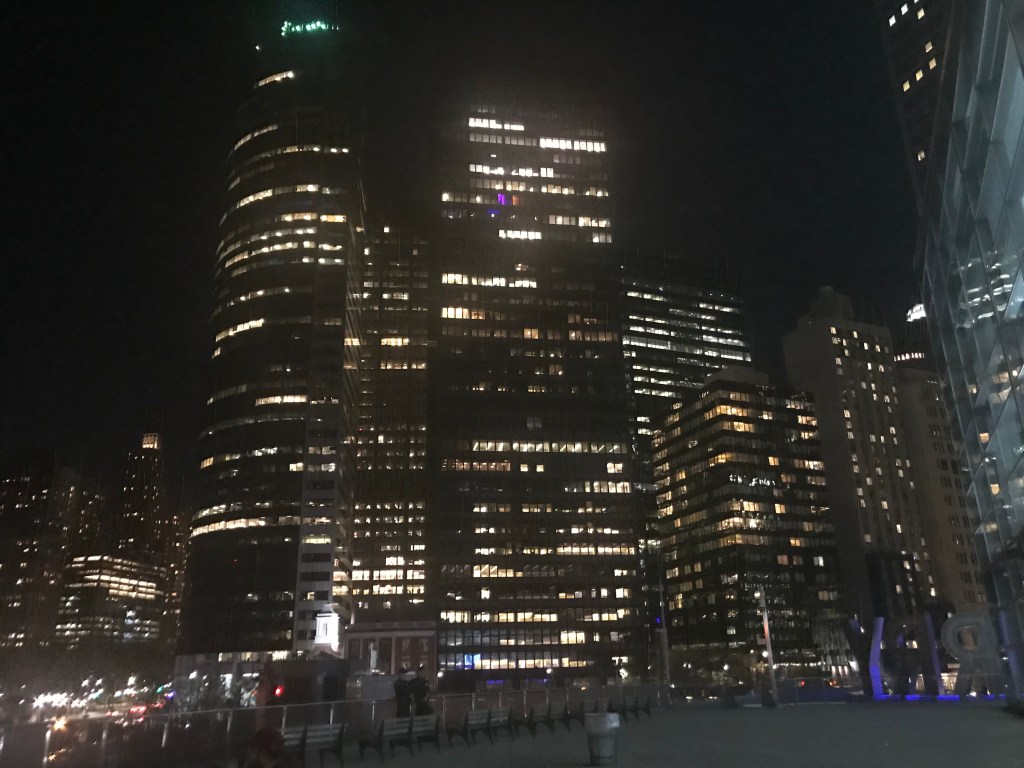
I live on Staten Island, so I took the ferry across the harbor and walked about 20 minutes up to Barbalu. As far as commutes go in New York City, it’s painless and even scenic. When I had a regular day job, I took that ferry nearly every workday for some 30 years. In my last decade of trudging to a newsroom, my daily commute tracked my trip to the restaurant, except that the walk to work from the ferry was a little shorter. I’m a native New Yorker and have lived in the city just about all my life.

But that night, I felt like a tourist.

I can explain. I’m in New York for what seems like a fleeting visit. My wife, now retired, and I bought a country house in the Italian region of Umbria a couple of years ago. We’d planned to stay there sporadically, whenever I could get away. We were thinking of retirement, and retirement at the time seemed like something that would happen in the future. A couple of years away at least, in fact.

But our staying in the house for more than a quick week or two at a time came much sooner. Like many media professionals, I was excessed a couple of years ago along with about 20 of my colleagues. I’m not really supposed to talk about it, but the move supposedly was part of a sweeping redesign of our news operation, and as one corporate officer told me during what was surely a scripted phone call, “Your position has been eliminated.” (It wasn’t; they merely changed the name of it for a few months, then back to the original after we’d signed our severance agreements.)

So I, along with my comrades in words, had to reinvent ourselves. I became a freelance writer, and I don’t need to be anywhere in particular physically to do my work. Hence, Italy for at least a few months a year, in my spare euro-modern office or, better, at a garden table watching the view as I procrastinate.  

Inevitably, our country stays got longer and longer, and now amount to half the year. We can do this because of a precious gift from my immigrant father: an Italian passport. So we’ve been busy integrating ourselves into our little community. It’s a big change for a city boy like me. We live in a mountainous area in the foothills of the Apennines, the mountain chain that forms the spine of the Italian peninsula. Our neighbors are some 125 sheep and the people who own and care for them. When we take a walk, we amble down our road, waving to the hardy old—and retired—people who’ve lived in the town all their lives, and I’m sure their families have been there for centuries. Or, since we’re located in the middle of a network of hiking trails, we go exploring the hills when I’m done with my work, trudging up and down mountain paths and occasionally finding a ruin or wild asparagus in the woods.

But we’re in New York now [OK, I was in April 2019], and I have to say that I’m shocked that I feel so odd walking around my city. I was on the ferry that night, and I watched the tourists and the orthodox Jews and their families enjoying the ride during the week of Passover. And I realized that I’m a tourist too these days, here in town for only a few weeks.

The realization hit me viscerally, and this strange feeling of psychological distance stayed with me as I navigated streets that I’ve walked thousands of times. For one thing, since I stopped working in the neighborhood two years ago, a lot has changed. There’s a Hilton Garden Inn on Water Street, a truly strange name for a bland building that’s nowhere near a garden.

There are lots of new restaurants and lunch takeout spots, something normal in a town where eateries fold and open at a rapid clip. There’s something odd about the new places. They advertise their wares in their simple names, like Greens and Fresh. I’m an addicted menu reader, and their food seems to come from nowhere but some Californian notion of “natural” food: lots of kale, grains, an Asian overlay in the flavorings, bowls. The word “bowl” makes me smile; in four letters it manages to connote a lively lifestyle, clean living—lots of bike riding and yoga classes.

I SUPPOSE THAT I’m an old curmudgeon. But curmudgeons aren’t necessarily alienated from a place—just from a period of time. Walking through the oldest part of New York that’s busy remaking itself, I felt conflicting emotions, happiness that I would escape to my mountaintop soon, but a kind of sadness for feeling somewhat uncomfortable in the city where I was born. The contradiction actually made me feel queasy, as though I weren’t just pulled in a couple of directions emotionally, but physically.

That feeling stayed with me over dinner with my friends. I worked with them some 20 years ago and that alone probably contributed to the weirdness. Seeing them made me think of a time when New York was my city, my hometown. I had a part-time restaurant reviewing gig on the side back then, and it meant hanging out at hot new places, tasting everything. Now I was a part-time interloper, listening to people talk about their current jobs, their current president. I’m an American, but I also have another country’s politics to think about, and to fret over. While I participated in the conversation, I couldn’t help but think that I can just get on a flight and not spend much time thinking about Donald Trump’s latest escapades. 

And the prices…really, people, restaurants, even places I love, are ridiculous. My tablemates, knowing I’m a wino, sorry, make that someone who knows a thing or two about wine, especially those from Italy, had me choose. I looked at Barbalu’s list, and it’s a good, selective one. But the prices sent me into alienation mode again, when the cheapest bottle is around $40, and I know that I can go to a decent restaurant in Umbria and pay a few euros for a nice carafe of whatever’s local. I know that restaurateurs have to price drinks like that in New York; it pays the rent. I suppose that when people are using corporate cards it doesn’t matter much, but how can regular people afford to go out?

The kids were alright.

They don’t. They take the ferry and the subway back and forth every day and night. And that night, the weather was clear and warm. I sat on the back of the boat and watched the tourists take snapshots of the skyline as we sailed across the harbor. Soon they got tired of the view and went over to the side to see the Statue of Liberty. Right about then, an African-American girl with a distinct city kid accent sat next to me. Two boys, somewhere around 14, stared at the harbor view, which is nice enough during the day, but truly stunning at night. They laughed, they joked, they wisecracked like the city kids I’ve known all my life. They danced around, obviously flirting with the girl and competing for her attention and approval.

I’ll miss the place when I finally leave.

I will dance on Noma’s grave

This being January with pretty lousy, cloudy, I don’t go out much weather, I’ve had a lot of time to read the early obituaries of Noma, which is closing late next year. In case you don’t follow “fine dining,” Noma is a restaurant in Copenhagen that appears on every best-restaurants-of-the-world list. The place and its owner/genius chef René Redzepi have inspired a whole bunch of creative chefs who go out and pick odd plants in the forest or in tide pools, do something transformative with the stuff, and then charge scenester diners a few hundred bucks for the privilege of ingesting what they foraged and tortured. A night at Noma, for example, costs around $500 a person.

Noma will follow El Bulli and Del Posto to the big food court in the sky. To which I say: no great loss. It’s not jealousy—I was a part-time restaurant critic back in the 1990s, when the big deal restaurant scene hadn’t yet metastasized into the monster it has become. Still, there were previews of what was to come in multi-course tasting menus in a breed of French restaurants that, looking back, served as a bridge between the snooty old French establishments and brave rich-hippie vibe of Noma. Not to put too fine a point on it, you can think of a Noma fan as the foodie equivalent of an investment banker who collects Grateful Dead concert tapes.

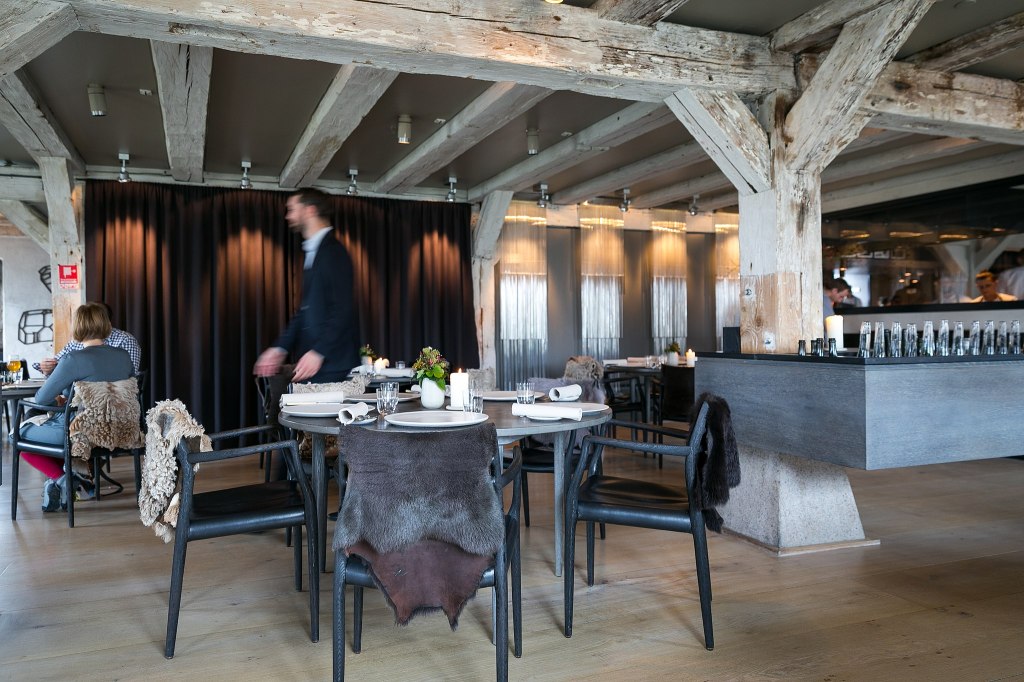
The rustic charm of Noma for an elite few. Courtesy of Wiki Commons

I’m not going to lie. I thoroughly enjoyed my decade of dining at my newspaper’s expense. It made me really popular, because The Spartan Woman and I usually invited a couple of friends to come along so that we could sample enough dishes. We ate at the new wave of Spanish/Catalan restaurants, fancy French eateries, aristocratic Italian establishments, as well as the occasional Hong Kong style of Chinatown palaces that were just beginning to establish a beachhead in New York. The review pace was gentle—I was on the hook every four weeks for a review, so it was just enough to be fun and not enough to be routine and boring. And when our girls were old enough, we often took them along. (They were tougher critics than our friends, who were just thrilled to have a free meal at a hot restaurant.)

After 10 years, though, we’d had enough. By then we just wanted to hang out with friends and family, either at home or in a local ethnic restaurant where we’d like the food but wouldn’t have to pay homage to it. I remember a colleague once went to El Bulli, the restaurant in the Catalan region of Spain, which had pioneered “molecular” cuisine. I asked him how it was. “Tiring,” he said. I’m paraphrase, but he said something like, “It was so exhausting. Open this lid, inhale the fumes three times, then pour the contents onto this plate and stir counterclockwise 4.5 times, then eat using these tweezers.” Sorry, that ain’t food, that’s entertainment for a very small cult audience.

Move over stove, we’re making foam—from a Barcelona exhibit about El Bullì and its owner. Kippelboy, CC BY-SA 3.0 https://creativecommons.org/licenses/by-sa/3.0, via Wikimedia Commons Ferran Adri

And then there was Del Posto in New York. Its owner sought to elevate (so they thought) Italian food to the same rarified altitude of classic French cuisine. Talk about flawed concepts from the get-go—”Italian” food (a term I have trouble with because this country’s eating habits are hyper-regional) isn’t supposed to be the snobby refuge of the wealthy. My neighbors on our hill, who tend sheep and have an organic farm, make ricotta that would make you cry it’s so good. But there are a lot of people like them here and they’ll insist that good food is their birthright, not just a boasting point for the bourgeoisie.

EATING IN ITALY ENCOURAGED my move away from culinary preciousness. For one thing, the dominant characteristic of food here is to find really good ingredients and prepare them in a way that lets them shine. There’s little torturing of plants or animal bits to make them something else. And with the exception of a few Michelin-starred places, there are fewer celebrity chefs lording over everyone. Hey, this is Italy, where everybody is a star, and no one cooks better than Nonna (grandma) or your mother.

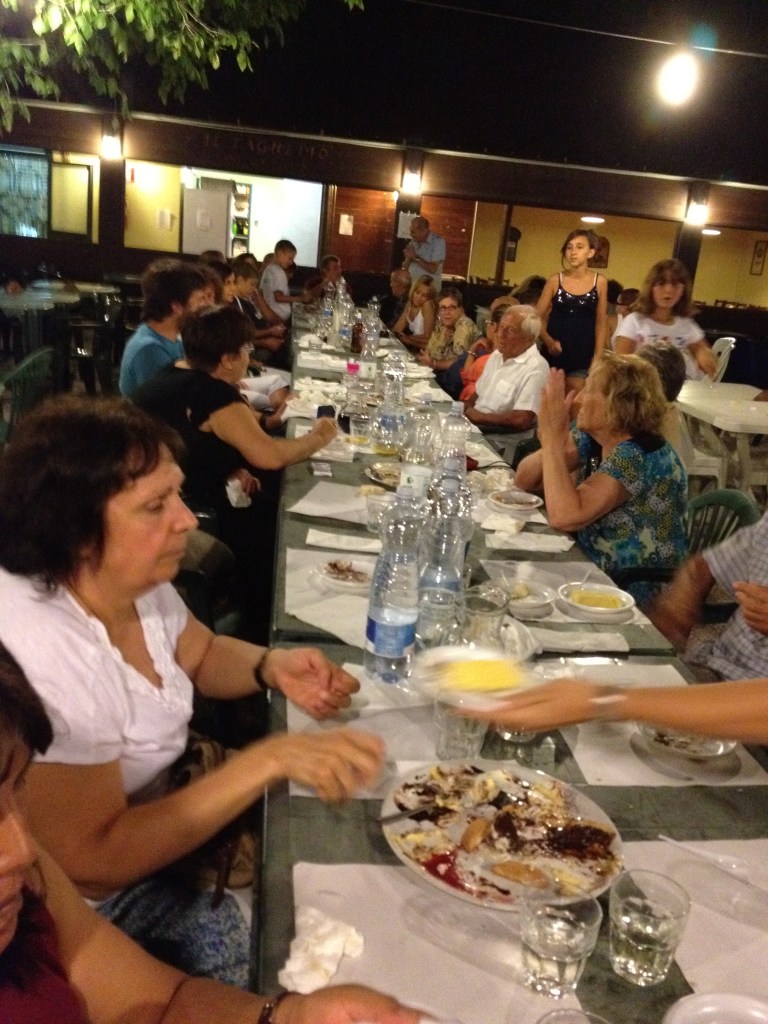
A clan gets together outdoors at a popular restaurant. Twenty-eight wouldn’t fit in the kitchen.

I know I’m lucky; as a teenager I stayed with relatives my first times in this country. I had a front-row seat to the food culture, which basically was just as my mom cooked back in New York, although mom, being a native New Yorker, pretended to be a normal American every so often and would give us steak and potatoes or peanut butter sandwiches in our lunchboxes.

But it’s interesting to see the differences between the cultures of my two countries when it comes to eating out. In cities like New York, Boston, and San Francisco, it’s become a high-stakes scene (and is bouncing back post-pandemic). Rents are high, food and liquor and wine prices are through the roof, so in an attempt to squeeze some profit restaurateurs pay their staff peanuts. Noma’s Redzepi himself said that fine dining has become economically unfeasible, and his complaints mirror what thoughtful American restaurant chefs and owners have been saying. In the U.S., the handful of successful celebrity chefs expand their operations into empires. The Bastianich group, headed by matriarch Lidia Bastianich and run by her son, has 30 eateries spread across the world. Thirty!

This craziness is fueled by a media and PR machine that glorifies celebrity cooks and runs competitions on TV instead of showing people how to cook. And there’s a definite high/low culture thing going on. The well-heeled eat at one of the Bastianich or Jean-Georges Vongerichten restaurants; normal people eat at the Olive Garden, which cuts corners by not salting pasta water in an attempt to cut down on spending for pots. The well-heeled use their experiences as conversations starters, and they love to spend big.

It’s different here. Sure there are TV competitions; in fact Joe Bastianich is one of the stars of MasterChef Italia. But beyond that things tend to be more democratic. One of the biggest complements Italians give to a restaurant is “si mangia bene e si spende poco” (you eat well but spend a little). Restaurants are basically extensions of the small kitchens that many Italians have (most of the country lives in apartments; think of New York but better designed). Often, clans or groups of friends will go out because they can’t fit everyone into the kitchen or day room, but they know that their outing will lead to a great meal that won’t wreck their bank account.

It’ll be interesting to see what Redzepi comes up with next. He says he’s turn Noma into a “food lab” and try to figure out new models for feeding people creatively. El Bullï’s Ferran Adria said the same thing when he closed his legendary restaurant more than a decade ago. Maybe I haven’t been paying attention, but I haven’t heard much of what his lab has done. I’ve subscribed to his newsletter to see what’s up there. In the meantime, buon appetito, enjoy what you eat, and don’t think about it too much.

Illustration at top of page courtesy WikiCommons