$18 for a martini served in a plastic cup?

Which brings me to the $18 plastic cup martini. We were heading back to Italy after three weeks over the holidays visiting family, getting reacquainted with the beautiful angel of a grandson, and hosting a Christmas Day bash of 20+ family and friends. With e-tickets for a business class flight on our phones, we went to Newark Liberty International Airport for a direct flight to Milan.

We flew La Compagnie, a French-based boutique airline that sells business-class only flights on narrow body A320Neo jets. Check-in at Newark was quick and easy, just as it was in Milan a few weeks prior. They even let me carry my trusty old Gretsch electric guitar on board. Our privileged status (hey, I rarely did this so I’m gonna milk it for all it’s worth) meant we didn’t have to wait in the security lines with the hoi polloi. But the Port Authority, which runs New York’s airports, had closed the lounge La Compagnie uses, so we got a $60 voucher for food and drink in the rather grotty Terminal B.
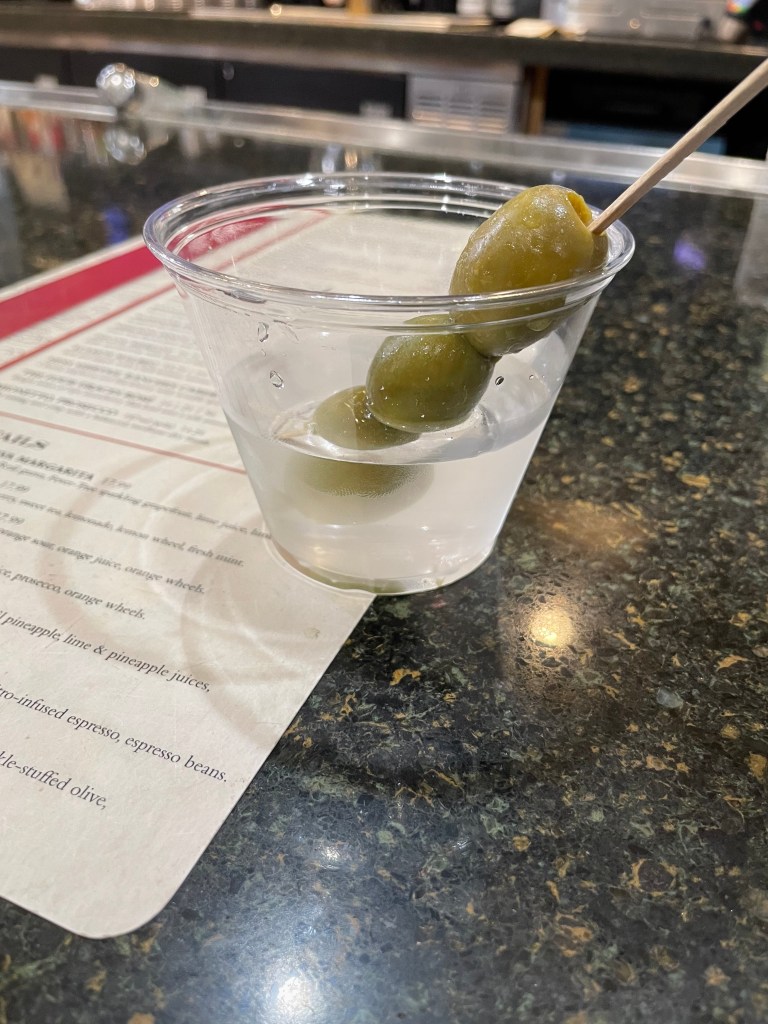
Plastic, paid with plastic

Ok, the martini. I had started drinking them before boarding long-haul flights a long time ago. There’s nothing like a little almost-pure alcohol to ease the anxiety of waiting to board a flight, not to mention softening the reality of some of those flights. So I went up to a bar and ordered my drink. The bartender did his thing and then…and then…poured it into a plastic cup. Really. Beer drinkers got glasses. Wine drinkers got glasses. Why the plastic? “We started doing this with Covid.” Are martini drinkers more prone to viral infections? Oh, and it cost $18 plus tax and tip.

C’mon now, Newark Airport. I’ve had €4 Aperol spritzes served in nice glassware in our little village, with a side of fried sage leaves, or peanuts and chips. And for $18 in one of the world’s capitals I got plastic and a charge slip asking for a tip. I didn’t use the voucher because I thought we might get a snack, since our flight was at 22:00—10 p.m. in the U.S. That Covid excuse doesn’t work. I’m told that dishwashers use very hot water and a hot drying cycle that gets rid of nasty bugs.

I’m happy to report that the $18 plastic martini was the only rough spot in a stress-free Atlantic crossing. If you’re going where La Compagnie goes (Paris, Milan, and Nice in the summer) and can afford it, go for it. (We got a promo fare, which was less than premium economy on other airlines.) The experience is nicely cosseting. Its biz class might be slightly less lavish when it comes to meals and general cushiness than on, say, Emirates. But because there are only 76 seats, you avoid a lot of the admittedly First World pain of air travel. No long lines at the gate. No yelling at passengers who dare to try to board outside of their class. The plane loads in about five minutes; deplaning is just as quick.

It’s good for dog and cat lovers, too. La Compagnie’s weight limit for having a pet in the cabin is 15 kg, or 33 pounds. Our pup Niko is only about 7 kilos, maybe edging 8 with his carrying case. It meant that airline’s staff didn’t bat an eye when we showed up at the check-in counter with him. They did check his paperwork; as a dog citizen of the European Union, Niko’s got a pet passport detailing his vaccinations, plus we had veterinarian letters certifying to his good health. But getting him checked in was a smooth deal, too.

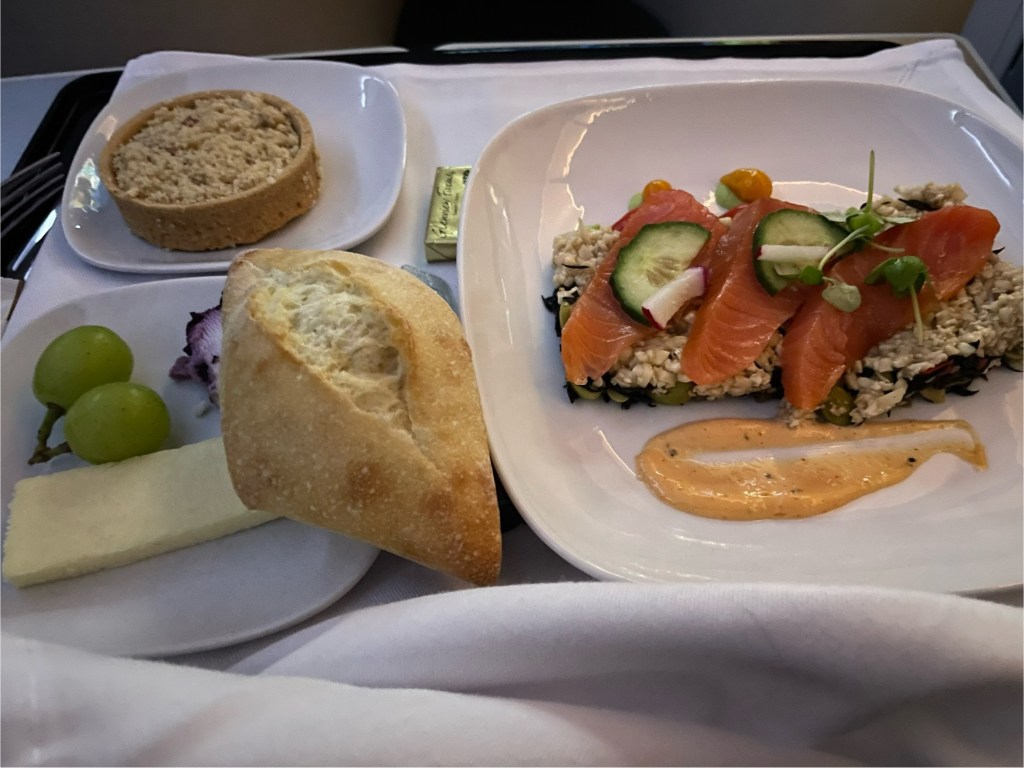
Aboard the Airbus you get the flat seat and the Champagne welcome that you’d expect of business class. We took off at around 10 pm, so the first meal was pretty light as far as biz class meals go. What’s weird in this era of micro-focused rewards and class distinctions is the equality of it all: We were all privileged, instead of being treated like crap. It made for a very low-key relaxing flight and reminded me of those videos of the so-called glory days of flying, when chefs rolled a cart laden with prime rib up the aisle and carved each piece individually (video below; photos are of our light dinner aboard La Compagnie).
The rest of the trip home was long and uneventful. We decided that landing and then driving five hours to get home wouldn’t be wise, so we found our car in Malpensa Airport’s long-term parking lot and drove about five minutes to a nearby hotel. Our intuition was correct: The Spartan Woman, the pup, and I fell asleep for an afternoon long nap after checking in. We woke up in time to find a place for dinner. And the next day we braved the straight line Milan-Bologna truck filled autostrada to get home.

I woke up this morning to dramatic clouds, a lot of sun and our view of the nearby mountains, hamlets, and castles. It’s not perfect; I’m going to miss our little nipotino (grandson) and the rest of our crew. But after getting reacquainted with the U.S., I’ll take this quiet country life. I’ll write more in the next post about how weird it is to go back on vacation to where we lived for decades.

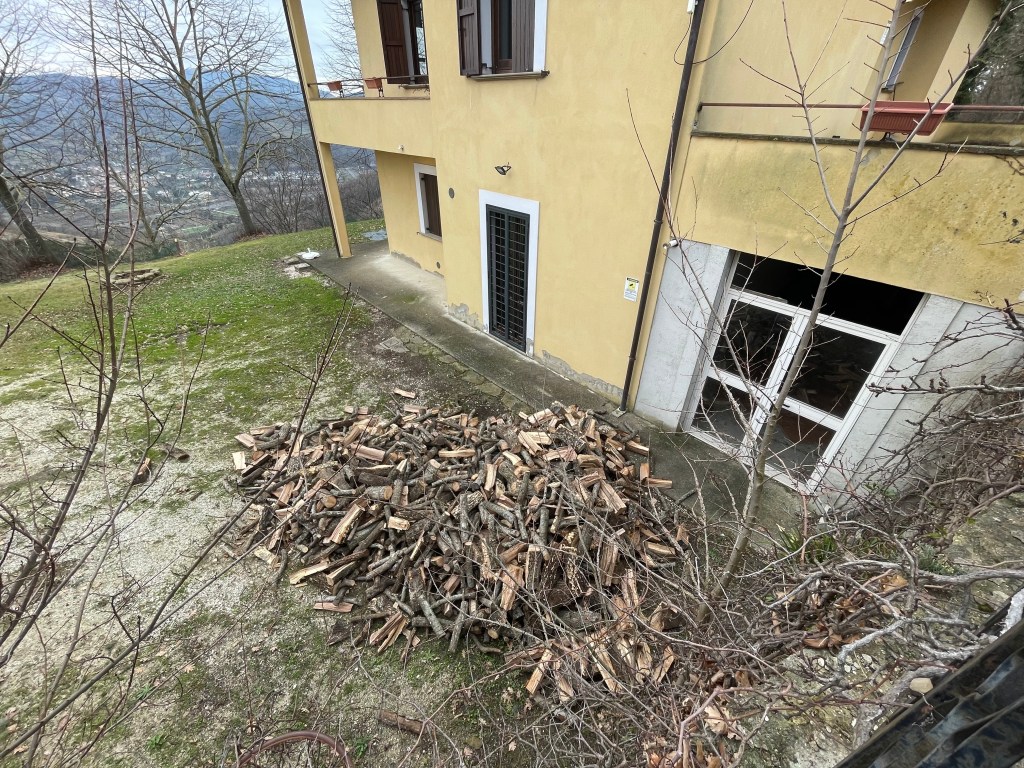
But for now, I have to stack some wood.
Positively negative

This pandemic thing sure put a damper on our plans last year. But at least we’ve made it through so far. We couldn’t spend the warmer months on our mountaintop. The pool for which we raided our savings stayed covered and unused. And we basically hid out all summer in our New York living room, air conditioning on full blast, binge watching Mexican Netflix shows. (Watch “The Club” and “House of Flowers.” You won’t be sorry.)

A big part of our life last year

The Spartan Woman made it extraclaro that she wasn’t going anywhere without a vaccine. And Dr. Fauci told us not to travel. But I did, just to inhabit the house in Umbria a bit and clear out the inevitable cobwebs, run the appliances, and drive the car. Truth is, we really didn’t know when we’d get back here, and the previous U.S. government didn’t seem inclined to make a horrible pandemic any better.

But sometime this winter into spring, the situation in the U.S. looked better. The Biden gang made vaccinations a priority, and TSW was an early subject, getting her first shot in January. I followed by about a month, and soon most of our friends and immediate family were vaccinated.

We still didn’t know what we’d do about coming here until a friend texted me. Alitalia was offering a 20 percent discount, he said, making a premium economy seat with its luxurious two-bag allowance and better legroom fairly reasonable. We jumped at it. Right around that time, the Italian airline and its code-share partner Delta started running what they call Covid-tested flights. If you test negative before the flight and upon landing in Rome, you wouldn’t have to submit to a 10 or 14-day quarantine. Our booked flight wasn’t on the list, but it was the right time for us. I quarantined myself last year, so if it came to that, we figured, it wouldn’t be terrible.

As it turns out, Alitalia added our flight to its “Covid-tested” list. It sent us emails telling us about the change, and then had a woman call from Palermo to tell us what we had to do. (I wondered whether I’d be charged for receiving a call from Italy; thankfully it didn’t happen.) We were to get a PCR (molecular; the more accurate method) test no more than 72 hours before the flight. And upon landing at Rome’s Fiumicino airport, we’d be given a rapid test. If the first test was positive, we could reschedule or cancel; once in Italy, a positive result means quarantine.

We were in prep mode to be away mode all of a sudden. That’s become almost routine. And we and our vaccinated friends started carefully to socialize. In the middle of all this we had to get tested. I’d gotten a rapid test back in November after returning from Europe. But with this one, we had to time it right. New York’s test site is pretty helpful, showing locations throughout the city. We had a 72-hour window both for the test and results. I found a drive-in site near our house; the city’s site just gave a street address and didn’t specify the venue.

Turns out, the site was a CVS pharmacy. There was no signage outside showing what to do, but a sign showed where a drive-in pharmacy was located. It looked like an alleyway, but we drove through, wondering if we were in the right place. Turns out we were. The pharmacist, acting as though our scheduled tests were a complete surprise to her, put together our kits, slid them through the drawer and told us what to do. (Basically, stick a swab 1″ or 2.5 cm. through your nostrils and put the swab in a test tube.

We worried about whether we’d get the result back in time–they said 1 to 2 days, which would be cutting it close. And the CVS website cautioned that due to high volume, there could be delays. So we waited to schedule a time to get to the airport, where if we had to, we could be tested. As it turns out, they emailed us the results less than 24 hours after our tests. Negative!

Armed with that, we headed to the airport a couple of days later. If I could give you advice for one of these flights, I’d say bring a pen. And look for QR codes to scan with your phone. The Italian health ministry had us fill out forms giving the reason for entering the country (“to return home”) and we had to promise to quarantine if necessary. A QR code, once scanned, led to a site where you can alert the Fiumicino health people to your imminent arrival.

Otherwise, the JFK experience was slightly less surreal that it was last August. More bars and restaurants were open and there was a slightly bigger crowd in Terminal 1. The main difference was the paperwork–agents at the gate checked ours and it felt like giving your homework to the teacher. A few corrections and we boarded.

The bar was open, and I was able to have my traditional pre-departure Martini.

I’ve written about the flight. Nothing’s changed. Not the reduced drinks and meal service nor the crew’s reluctance to interact much with us. You’d think a flight filled with people who tested negative would be different, but you’d be wrong.

Landing in Rome, however, was a different story. They herded us onto two lines, with people having connecting flights given priority. A jovial gatekeeper kept us entertained. We then went to someone who checked us in and collected a €20 a head fee. Then around the corner to a line to be tested. They had pretty permanent looking booths up, and the testers were doctors as well as nurses. This rapid test was just as invasive as the PCR test we’d gotten in New York. Afterward, we had to sit and wait for our number to called for the results. We were negative again, and so, no quarantine.

The next few hours are a blur. We found our friend who drove us almost to our home. We had to stop first to get our car. And somehow we managed to get everything in. It was nice to drive a car with a stick shift again, and there are no traffic lights on the country roads we take.

Once home we were famished. Luckily, before I left last fall I bought the components or a fast meal: canned tuna, tomatoes. Pasta. It’s traditional for returning Italians to have a “spaghettata”—basically spaghetti with garlic, oil, and chilies. We had no garlic, so TSW put together a quick tuna sauce, while I used the blood oranges, olives and fennel our driver friend gave us for a Sicilian salad. Home at last.