Wheel of Misfortune

Screen Shot 2017-06-29 at 21.30.36.png

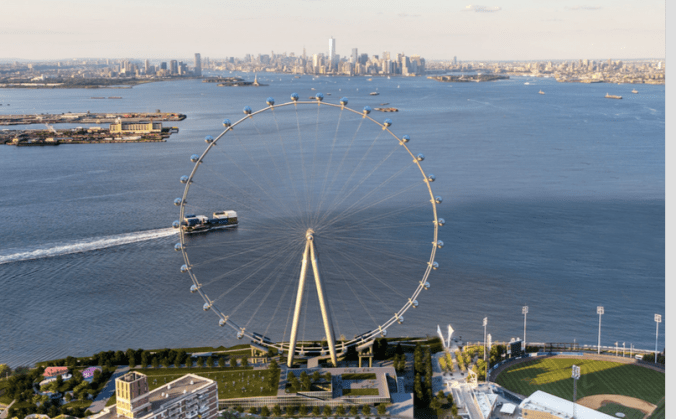
[courtesy of ]S9 Architecture / Perkins Eastman]

Yes, this is again about Staten Island. I have an urgent warning for all of you. BE SCARED! PULL YOUR MONEY FROM YOUR 401-K! HIDE IT UNDER YOUR MATTRESS!

There, I feel better now. You might be wondering what caused that outburst. For once, it wasn’t the current occupant of the White House, who shall not be named. It has something to do with the rendering above. It’s the New York Wheel, and it is the great hope of Staten Island real estate developers.

Here’s the deal: Whenever money was pumped into St. George, bad things have followed. Can you say recession? The last big push was in the mid 2000s, and then 2008’s crash happened. That wasn’t the first time we’ve seen this happen. It’s almost as predictable as the tides.

And so, the latest St. George push. This gigantic Ferris wheel would lure all those tourists off the Staten Island Ferry—the best sightseeing bargain in the city—for a $30 ride. Then they’d see all the wonderful stores in the adjacent outlet shopping mall. Who can resist a Nordstrom Rack? And then knock back with a burger and beer at yet another Shake Shack? It’ll all be there at Empire Outlets.

The construction has turned the area around the Staten Island Ferry terminal into a traffic and construction nightmare. But we’re told it’s all for a good cause. St. George will be the new hot neighborhood—watch out, Williamsburg. We’re looking at you, Bushwick and Astoria! I don’t know about you, Staten Island friends, but I go to Zillow every few days and watch my house’s estimated value grow and grow. I don’t live in St. George, but I’m in the same zip code, and we’re already feeling the love.
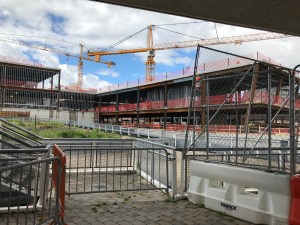
IMG_0729Our excitable local politicians aren’t the only ones wondering if this means a Staten Island renaissance is finally at hand. Press coverage has been consistently breathless, which goes to show that in New York City, it’s all about real estate. We’re obsessed, and our supposedly objective press organs are the official cheerleaders.

But why the panic? My cynical friends and I have been, shall we say, less than sanguine about the whole enterprise’s prospects. Sure, there might be decent views from the wheel, but seriously? The tourists are going to spend a few hours on a big ride and then in a shopping mall when they easily go back to lower Manhattan and annoy the workers trying to get somewhere? Will they forego the pleasures of shopping in the madhouse that is Century 21 for an outlet mall? Won’t this cut into their Wall Street bull posing time?

Okay, so let’s say the tourist turnout isn’t what its backers are projecting. There’s the rest of Staten Island looking for an exciting shopping experience, right? Well, no. See, this complex is on the North Shore. It’s not on the South Shore. This is very significant. There is a highway that runs across the island, about a third down the island from the northernmost point. It connects the Verrazano and Goethals Bridges, to Brooklyn and New Jersey, respectively. It also serves as a sort of Mason-Dixon line. North of the expressway, Staten Island sort of resembles the rest of the city. It’s more urban, diverse, and politically liberal. Most of the borough’s cultural institutions are there, and you know what sort of people work there.

South of the highway is, well, SopranoLand. It’s highly Italian-American, but of a certain kind. Many of these people left their homes in Brooklyn when, back in the 1960s and ’70s, the racial composition changed. Whether their fears of increased crime, etc., were real or not, they left their homes for what they hoped was safe—and where people were like them. There are lots of cops, firefighters, sanitation workers, and trade people. Unsurprisingly, they vote Republican and have sent conservatives to Congress and to the City Council. I doubt whether they’ll drive (basically the only way to get there) to the wheel and the mall there unless a gun is pointed at their heads. Trust me.

So forgive me my doubts about this great project. I’m not alone. As I write, the wheel itself is mired in litigation, with its owners and the contractors who are building it pointing fingers at each other and tossing accusations back and forth in court papers. It ain’t pretty, and it could doom the project itself.

Remember, you read it here first.

L’Isola di Staten

I haven’t written much lately. Or, to be more accurate, I haven’t posted much. It’s a combination of work, some real estate matters and the fact that I’m not in Umbria right now (or Tuscany, for that matter). So I pretty much ran out of new material from there.

But I am on Staten Island most of the time there days, and being here often reminds me of how Italian this borough is. Somewhere just shy of 40 percent of its half-million residents claim Italian descent, and this comes out in various ways, from fig trees in the backyards of old houses, to some architectural kitsch to approximate the villas of the old country.

It’s not all kitsch, though. In the well-heeled neighborhood of Grymes Hill, good taste

IMG_0489

The “Villa Volpe”

mostly prevails. I was walking around one afternoon, and walked past this house. We used to call it the Villa Volpe, because John Volpe, the former chancellor of the College of Staten Island, used to live there. And across the street is Casa Belvedere, now an Italian cultural center, complete with bocce court and a kitchen sponsored by the food importer Colavita. It’s sort of Italianate in design, like a lot of the grand houses on the island, but it in fact was the Stirn-Roebling mansion, built by relatives of the engineers who built the Brooklyn Bridge (also relatives of Caroline, my neighbor, in fact). If you walk around the Villa Volpe and squint a little, you might think you’re somewhere else. Reportedly, one of the Guide Michelin inspectors lived on Staten Island during the inspection tour a dozen years ago, and liked Staten Island because it reminded him of being in Italy.

Some people might get the idea that the island got its Italian vibe from those idiots who starred in MTV’s Jersey Shore, most of whom came from the south shore of the island and speak with distinct Brooklyn accents. But Italians moved onto the island early on. Back in the 1840s, the Italian hero Giuseppe Garibaldi fled a failed revolution and moved his with his compatriot (if it can be called that; Italy wasn’t yet a nation), Antonio Meucci. In the succeeding decades, Italians settled in the neighborhoods now called Rosebank, Arrochar and Tompkinsville. Garibaldi and Meucci left something behind: Meucci’s house is now a museum dedicated to the two men, and you can stop in a read Garibaldi’s notes, or see some of his uniforms. They also hold Italian language classes there, at gentle prices.

Other Italians came to stay, but not for good, or the whole year on Staten Island. Beach colonies grew up along the south shore, and Italians rented or bought bungalows not far
from the beach. My own grandparents, Carlo Ancona and Rosa Urso, originally from Castellammare del Golfo in Sicily, bought a bungalow not far from the home of William

IMG_1896

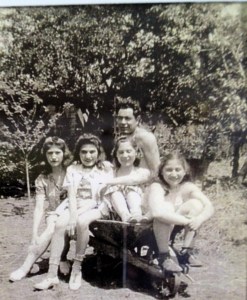
My mother Angie on the right, with her sisters Marie, Kitty, and Sarah, and Sarah’s husband Vito in back

Vanderbilt, one of the famous clan. (Yes, they hailed from Staten Island.) I spent the first few summers of my life in that bungalow. My mother and her sisters moved to the bungalow with us kids, while the dads lived in Brooklyn and went to work during the week and stayed with us on the weekends. [Side note: My grandmother died when I was young, but I continue to marvel at the fact that she bought two houses, one in Brooklyn and the bungalow on Staten Island, in the middle of the Depression. 

Naturally, where Italians go, so does their food. And the island has salumerie and even supermarkets that would make a Manhattan foodie go crazy, especially since the prices are for real people, not the masters of the universe who want to dabble in making pasta like the chef at Marea told them to do.

I’ll confess, there’s a lot of dreck; the kind of inauthentic places that think bruschetta is some chopped vegetables that goes atop bread (it’s the toasted bread, actually), or that serve overcooked spaghetti on the side of a meat or fish dish. But Staten Island has a few really good pizzerias: Denino’s, Joe & Pat’s, and Lee’s Tavern.

But if you want to experience what it’s like to be near the Italian coast on a warm summer day, reserve a table on a Sunday afternoon for Basilio Inn, in Arrochar, the

IMG_6042

Sunday dinner with Kathy at Basilio’s

town where my father-in-law Joe grew up. It’s in a 19th century house, which has always been a tavern. They grow a lot of their own produce, and there’s a bocce court out back. The Asperti family are the latest owners, and they came over to the U.S. in the 1960s. They pay a little homage to Italian-American, as opposed to Italian, food, but they have their limits. Once, a patron complained about the mussels, which are served steamed with white wine, like you’d find anywhere in Italy. “Where’s the sauce?” “We do it this way.” “But I want sauce.” The owner gave the guy $5 to go up to the deli to buy some Ragù, and he offered to heat it up in the microwave.

You can go the DIY route, too. There are lots of local pork stores, or salumerie. And the local franchise Pastosa’s has, I think, three branches on Staten Island. They’re a


IMG_0655

Cheap vacation, an Italian supermarket on Staten Island

little bigger and each one has its own personality. The one in my neighborhood leans a little international and is like a mini-Eataly. But for a full-on Italian food shopping experience, you have to go to LaBella Marketplace, all the way down on the southern tip of the island. It’s a long ride, even from our house. But it’s worth it. They’ve got all sorts of products, from limonata (Italian lemon soda) to packaged cornetti (the Italian equivalent of a croissant, often filled with cream or preserves) to mind bending assortments of olives, cheese, olive oils, and pasta. Espresso beans and coffee are reasonably priced. There’s an Italian-style bar where you can have an espresso and bombolone–think of a cream-filled doughnut) for around $3. The fish counter has tiny clams, octopus, sardines, branzini and orate (sea bass and sea bream, from Italy and Greece). And if you’re really into it you can even buy Italian laundry detergent.

There’s lots more, but this post has already gone on for too long. Maybe I’ll do a part II soon.

[The photo at the top of the page: The Tuscan Garden at Snug Harbor Botanical Garden and Cultural Center]


A Fish Tale

Version 2

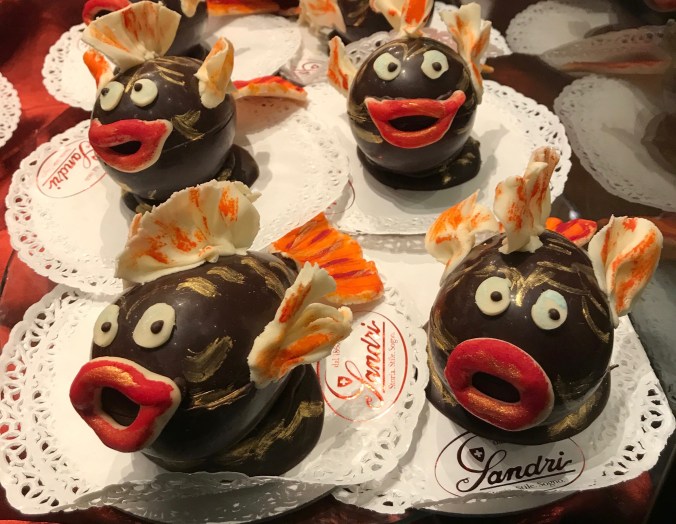
Look at this photo. What do you see? Yeah, it’s a trick question.

The answer, it seems, depends on who’s being asked. But first, a little context. The Spartan Woman and I were walking down Perugia’s Corso Vannucci one fine evening, doing the passeggiata thing that’s a big deal there. The Corso is the main drag downtown, a fairly wide (for a medieval city) pedestrian street dotted with cafés, restaurants, and swank shops. It’s where the city gathers on nice nights. You walk su e giù, up and down, looking at the shop windows, gossiping, people watching. It’s one of the sweet pleasures of life in a small Italian city.

We passed Sandri, the oldest bar-café on the Corso. It’s a Vienna-style place, with frescoes on the ceiling and an Olde Europe feel to it. Waiters and baristas wear smart red vests, white shirts, and bowties. It’s got tables out on the street, where people stop all day for a coffee, a drink, and a bite.

Sandri always has an amazing window display, and it’s usually keyed to the season, or what’s going on in the city. I took this shot on March 31, a day before April 1. In Anglo-Saxon countries, it’s April Fool’s Day. Fun tricks abound—I remember one year, a computer-savvy composing room guy (that’s you, Tom B) installed an extension on the art department Macs that caused them to either shut down automatically once they’d finished their startup sequence, or the cursor got an, um, erection and had a sound effect to match.

There’s an Italian equivalent: the “pesce d’aprile.” It just means April Fool’s joke. Sandri made these pastries, or chocolates, especially for the occasion. They’re brown because Perugia as a city is renowned for its chocolates, especially the Baci made by the hometown company Perugina (now owned by Nestlé, but still based in San Sisto, a Perugia suburb). The red lips are a bit over the top, but you get the idea, a pastry shop doing an April Fool’s tribute.

That’s not how some of my friends saw it, though. I posted an uncropped version of that photo on Facebook, and it sparked a dozen comments. Why? Some people saw it as racially offensive, as blackface, or minstrel imagery. To be honest, that didn’t even occur to me when I saw the fish in the shop window, and I had no intention of approving a racist pastry or image. And I don’t think that was the intention of Sandri’s pastry chefs, either. But to be fair, I’ll post some of the comparison photos my friends posted.

One friend wrote:  “I’m gonna go with “racist”. /runs out of the room” Another: “I’m going with racist too. Blackface caricatures were/are always accompanied with red lips that are exaggerated in both color and size. This caricature lives on in the Netherlands with Black Pete, so I’d say it’s extremely unlikely that you’d see a non-racial use of the exact same features in another European country that’s not that far away.”

I guess I’m kind of innocent, or that being culturally bilingual, I just saw the fish, and my post, as something sort of weird looking, but typical of the artistry of Sandri’s chefs and their sometimes off sense of design and humor.

But the whole affair just tells you how racially charged the U.S. has become, especially after the spate of police killing of unarmed African-Americans, and the despicable campaign that El Cheeto Loco ran last year, and the racism that runs through whole swathes of American society. And it shows how cultural context colors what we see and how we act.

I needed a reality check, so I asked around. My Italian friends said variants of this: They’re April Fool’s fish, and Perugia makes chocolate, so… In fact, some were offended that their city’s premier café would be seen as racist. I posted a comment to explain their view, but few responded. By then, the photo was probably forgotten, being buried way down in people’s Facebook news feeds.

One of my Italian friends really took offense and wanted an apology from you guys in the U.S. She wrote: “A 1,000 thanks Anthony for having explained to your American friends that there was nothing racist in the photo you posted. Simply put, pasticceria Sandri, as you well know, is the oldest in Perugia, and it makes pastries that track events and puts them in its front window. In fact yesterday was 1 April, the day we celebrate jokes we call ‘April fish.’ Don’t forget that chocolate is dark.”

What does all this mean? I’m still not sure, except that when I see something odd in another country, I’ll think hard about its implications before I post of photo of it.

Rent

IMG_0428.jpg

So the other night we celebrated kid number 2’s birthday. We did it like we always do: We go out to eat, and usually it’s at the kind of place that’s more of an occasion than the place up the street. After 10 years of writing restaurant reviews in a prior life, I keep up with what’s happening, more or less. The only thing is that someone isn’t paying the tab any more, so it’s more less than more.

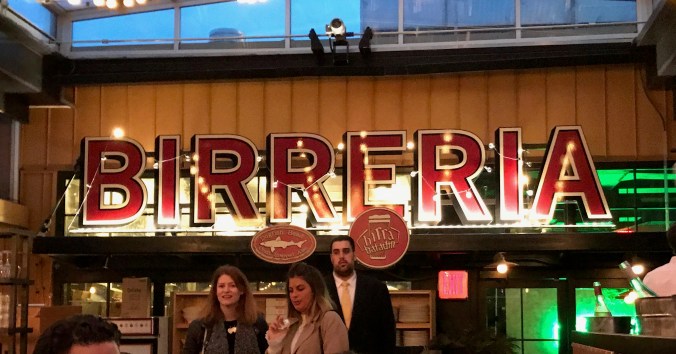
The birthday girl (my wife, kids) or boy (me) gets to choose. Every now and then, Ms. Birthday can’t make up her mind, so The Spartan Woman or I make it up for her. Liv couldn’t decide or think, or probably was too busy to find a Brooklyn hot spot this time. So I saw that Eataly’s Flatiron rooftop restaurant/bar, Birreria, had a cool seasonal popup  called Baita, an Italian Alpine-themed eatery. Supposedly. By mid-spring, polenta had vanished and the food seemed fairly New York dee-luxe Italian, with the exception of Alpine cheeses and wines from northern regions.

Version 2So, fine. It was all delicious, well-prepared. We had a great time. The boyfriend and kid number 1 came, and we enjoyed ourselves immensely. But really: a cheese plate with three bites for $15? A seafood fritto misto in a dainty little bowl? Some reasonably priced wine, but you can get two or three Aperol Spritzes for the price of one at Birreria.
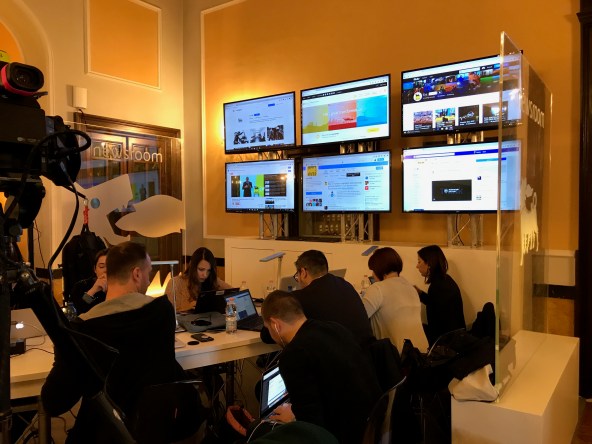
Coming from Perugia, it all seemed faintly ridiculous. I know, I get it. This is New York, and it’s an expensive city. We aren’t just paying for the food and drinks, we’re paying for the privilege of being part of a scene in The Greatest Fucking City on Earth. Rent.

Or is it? I’m a native, but the city seems distinctly Disneyland-New York-themed to me these days. It’s as though the city, especially Manhattan and the more precious Brooklyn precincts, is like a movie set for those not privileged to be native New Yorkers to live out their fantasies. I realize that New York has always been a place to retool oneself and be cooler than…well, out there somewhere. But sheesh, there have always been real people living in Manhattan and Williamsburg. Until, it seems, now.

This Disneyland for the 1 percent quality isn’t accidental. Check out this interview in Gothamist with Kim Phillips-Fein about how this unreal movie set of a city isn’t accidental, but a result of deliberate policies set in motion back during New York’s 1970s financial crisis.

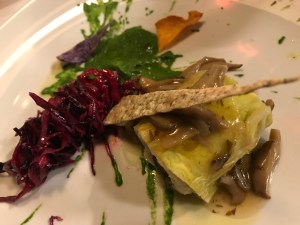
In the meantime, here are a couple of photos of a dinner we had with our pal Fabio Bertoni a couple of weeks ago in Perugia, at l’Officina, probably the city’s biggest scene of a restaurant. It doesn’t lack for creativity; in fact, the food was fancier than what we had at Baita/Birreria. These shots are from the vegetarian tasting menu; a few courses with generous pours of wine throughout cost €25 a head. You read that right.IMG_0209IMG_0208

Enemies of the People Invade!

IMG_0215.jpg

Look what they’ve done to the Brufani, the poshest hotel in Perugia! Wires all over the place. People with badges on lanyards, saying things like “Press,” “Volunteer,” and “Speaker.”  The bar overrun by MacBook Air-wielding journalists, er, enemies of the people. Italian journalists run after the occasional celebrity wielding cameras and microphones, while the public rooms keep everyone buzzing on a happy sugar high with bowls of free, and apparently fresh from the factory Perugina Baci chocolates.

It’s the last day of the International Journalism Festival here, and, as usual, it’s the usual mixture of politics (El Cheeto Loco figured prominently in discussions, but so did Facebook, Google, Amazon and the rest). Journalist, college students, the curious, all racing from session to session, or, as the weather got better, from bar to cafe to restaurant, with a stop every now and then to a session to justify the company expense account or next year’s tax deduction.

IMG_0197As for this enemy of the people, I bounced between doing house stuff, hanging out with the neighbor, and showing my friend and panel discussion partner Fabio Bertoni around town. He was here for an all-too-brief 2 1/2 days, but I think he managed to get in enough to whet his appetite for another go at it next year. Here’s Fabio at an outdoor cafe, where we tried to map out how we’d do our talk. Fabio probably has the best legal job in New York City—he’s the general counsel of The New Yorker, which means that, in addition to the usual lawyerly stuff like guarding the publication’s intellectual property and the like, he gets to read everything. It’s a dream job for someone who has a law degree and a masters from Columbia J-School.

Next up, Richard Sambrook. Richard’s great—a BBC reporter for 30 years, he now teaches and does research on how to move this hallowed profession into IMG_0198the future. We talked about trends in the business, and how media companies in many cases have absolutely no clue what to do, except for the brave exceptions like the Washington Post, which has the benefit of a benefactor’s money (take a bow, Jeff Bezos). Maybe the old family press magnates had it right—not being beholden to shareholders (I’d be a happy man if I never heard the phrase “create shareholder value” again). Companies are on a hiring frenzy, he says, not of journalists (except for the Post) but of consultants, who may talk a good talk, but then implement newsroom changes that simply turn heart-and-soul reporters into interchangeable widgets. Then, when the companies’ private equity owners or public shareholders demand bigger margins, it’s easier to cut staff. And the unvirtuous cycle of layoffs and retrenchment becomes self-perpetuating.

IMG_1801Richard, Fabio, and I had a little session on a beautiful Saturday afternoon. We talked about weighty matters like the right to be forgotten digitally in Europe, and a horrific (for editors) Italian court ruling that ordered a small website to pull an article that its subject had issues with. For good measure, a lower level court impounded the editor’s car as part of money damages. We did okay, though we were competing with other sessions and one of those Italian spring days that bring whole populations out into the piazzas and make you feel as though you’ve leapt into an ad for the Italian tourism board.

As so it ends. And I figure that I’ll give in. Our venue was the Palazzo Sorbello, a beautiful mansion just off Perugia’s Piazza Piccinino, which serves as a house museum, to show off what how the Perugian aristocrats once lived. Our room was decorated with somewhat kitschy frescoes, but the terrace view was another thing entirely. Perugia has lots of terrific museums and churches and all the other things tourists seem to like, but the city itself, I think, is the main attraction. Here’s a bit of evidence.

IMG_1795.jpg

Green Two Ways

IMG_0007.jpgIn the heart of the city, an oasis

We left a cold New York City on Tuesday, a gray day more in keeping with February than late March. And landed in Rome, where it was sunny and approaching 20 degrees C, or 68 Fahrenheit. The weather wasn’t the only incredible thing. If you’ve ever arrived in Rome’s Fiumicino airport, you know what a hell it can be. Not now–spotless, modern, fun to look at. EU citizens can scan their passports and avoid the bored agents. We were through passport control in a few seconds, and got our bags a few minutes after that.( I’m scarred; I’ve seen grownups sit in the old baggage claim area crying.)

I honestly don’t remember much of the drive from there to Perugia; I was so jet-lagged and started to lose it about 25 miles from our destination. Somehow I managed to pilot the Renault Clio close enough to our place, and we survived.

They call Umbria “the green heart of Italy,” and it’s true. Really true, right now. It’s green. How green is it? It’s as though someone turned the color saturation on an old color TV way up. I thought it was my green-lensed sunglasses upping the color, but no. Green. Verde. Vert. Grün. And bright red poppies. It’s really spring here.

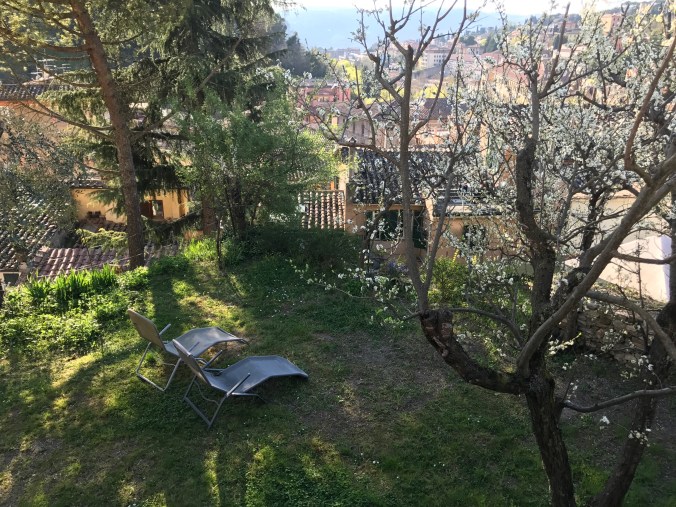
Walking around today, I was into another kind of green—green spaces in the middle of the city. In any Italian city, there are lots of hidden spaces: courtyards, cloisters, gardens. In Perugia, because of the hills, these hidden places aren’t that hidden. You just have to walk around, and in between the terraced buildings, you can see patches of green. A beach chair here and there, a trampoline for the kids, a table under a tree.

IMG_0008I’m really trying to take a break from the all-Trump, all-the-time U.S. news, but I did see the headlines about El Cheeto Loco’s rollback of environmental regs. And it’s just weird, because climate change is a big deal in Europe. And so is some degree of awareness of energy use. You see solar panels everywhere. My favorite application is for the car ports you see at the highway rest stops.

Perugia, like lots of European cities, limits traffic in its core. It can be a pain. We live in the historic center, and we literally can’t drive up our street with our rental unless we want to be fined. So we have to come up the back way and park outside the city gate—but it’s not such a big deal. We can manage.

Another thing we’re starting to see are electric car charge points. Right now, the only electric cars you see are Smart cars and Renaults, but there will be more in the next few years. And they’re doing bike sharing here, which made me laugh—it’s seriously hilly here—until I realized that the bikes have little electric motors to help you get up these hills.

IMG_0024IMG_0021

Fly the Semi-Friendly Skies

Altalia cropped.png

My first flight was on July 4, 1971, to Rome on Alitalia. It was on a new Boeing 747. I was headed to Italy with my family, and it was my father’s first trip back to the land of his birth since he left in 1955. It was the summer between my freshman and sophomore years at Brooklyn Tech.

Back then, flying was exciting and even fun.In coach, they gave us slippers and eyeshades, and dinner centered on a filet mignon with some sort of wine-mushroom sauce. It was all served on real china with real silverware. I’m sure my parents had drinks and wine. When my sister and I got up to wander around the plane, I saw the spiral staircase leading up to the first-class lounge. “Maria, come here,” I said. “No, go there,” said a flight attendant, pointing back toward the coach seats.

I took a lot of Alitalia flights over the years. The meals got less elaborate, the seats got more cramped. The drinks got less lavish, but there was always wine and beer.

I’ve been thinking of Alitalia, because in a way, it symbolizes what’s changed in the global economy generally, and what’s gone down in the Italian economy and the country in particular. Back then, in the golden age of aviation, countries had national carriers—Air France, Alitalia, BOAC, etc. They were the pride of the country, and often were publicly owned. (The U.S. had flagship carriers like Pan Am and TWA, but they were privately owned.)

These national carriers were, over the years, privatized. Why? A combination of European Community (now European Union) rules barring public ownership of companies like these, and the unwillingness of governments to support what often were companies operating with heavy losses.

Alitalia has been a real casualty of these trends. The Italian government(s) sold off chunks of the company over the decades, and it set off rounds of layoffs, strikes, cuts which led to more layoffs, strikes and cuts. Alitalia entered an alliance with Air France, and the two were close to a merger, but the French got cold feet.

If you look today at the Italian economy, you’ll see that a lot of it has been hollowed out. Big companies like the automaker Fiat don’t make nearly as many cars in Italy as they used to. Others, like Telecom Italia, the privatized phone company, have such complex ownership structures (with big shareholders based out of Italy) that you’ll have a hard time figuring who the true owners are.

But big companies aren’t, or weren’t, where Italy’s strengths lie—but that’s been problematic, too. Most of the industrial companies are small and medium-sized enterprises that are family owned. (While the strong food sector is basically owned by small producers and cooperatives, with the obvious exception of companies like Barilla. Formerly regional companies, like Buitoni are now owned by foreigners—Buitoni is now a subsidiary of the Swiss giant Nestlé.) These small companies have come under extreme pressure from, among other things, Chinese competitors that don’t have that nasty baggage of, you know, paying their employees decent wages and having them work reasonable hours.

IMG_5284.JPG

But back to Alitalia. I’ll be boarding a flight bound for Rome in a little while. I’m hoping that I’ll get an upgrade that I bid on (it’s complicated, but you can’t upgrade using points for certain flights, but you can place a bet). I’d love to avoid flying coach again. Until a few years ago, Alitalia’s Boeing 777s had decent seats but the new Airbuses appear to have seats made of padded cardboard.. After a stressful flight, you get to land in Rome’s Fiumicino Airport, with long waits for bags and for non-EU citizens, long passport control lines. The company, now 49 percent owned by Etihad, is basically a low-cost carrier that charges nearly as much as the prestige carriers. And its owners are getting restless. Perhaps the latest industrial plan might restore some stability to the operation. But what it won’t do is restore that old swagger and pride of a bygone era.

Goin’ Up the Mountain

IMG_6517.jpgA couple of summers ago, our younger daughter came with us to Perugia and took a friend along. Another friend joined them there. We have one bedroom, a living room, and a kitchen. You do the math. If you want it expressed like kids are supposed to do these days with math sentences, it could look something like this: Apartment+3 guests=no living room.
The city apartment is fine if it’s just the two of us. When we’re feeling claustrophobic, we take a walk. Perugia has tons of places to hang out, especially when the weather’s nice. For a few euros, you get a table and a drink for as long as you want it. But I’ve been there when the rain is relentless, and I got a little antsy. It doesn’t help that the apartment looks out on an alley way and a neighbor’s patio. On one trip, the Internet was not cooperating, and I hate TV. Drinking my way through the week didn’t appeal, so to relieve the boredom I went out in the rain and bought a cheap but decent guitar.

So when The Spartan Woman started looking at real estate ads for a place in the country, I didn’t immediately go to my default “you’re nuts” reaction. (She has a thing for real estate, possibly a hangover from when she and her sister and parents lived in a four-room apartment. “Very large rooms,” she’s shouting to me from the next room, but I think the experience led to this obsession.)

What helped was an unfortunate thing, a bad economy. Italy’s been suffering from economic stagnation for years. The regime of Silvio Berlusconi (a successful businessman! He loves Putin! Has to be surrounded by women much younger than himself! Sound familiar? Thankfully, it ended a few years ago) didn’t help; the guy basically wanted to be in office to shield himself from prosecution. So real estate prices in Italy have crashed, and houses stay on the market for months.

We did a reality check, and floated the idea of buying a country place at dinner with friends. No one thought we were insane; Laura said it was a good idea since there were lots of good bargains on the market.

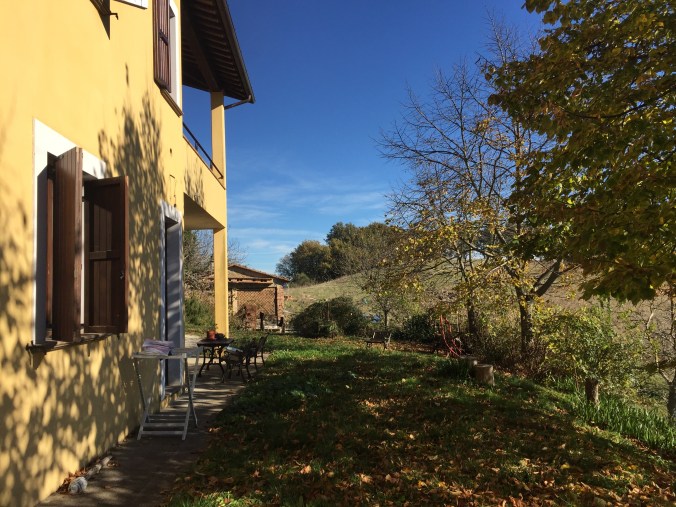
I didn’t reckon on The Spartan Woman’s determination and speed. I thought she meant sometime in the future. But a few months of research and a whirlwind tour of some properties and we were making an offer on a house perched on a mountain above the town of Valfabbrica, about a half hour outside of Perugia. A few months later, paperwork and financials done, we’re the owners.

IMG_6483.jpgIMG_6508.jpg

I’ll go into more detail later, but the house is big enough for guests. We have lots of outdoor space, and it’s right near the Sentiero Francescano, a set of hiking trails that follow the Assisi-to-Gubbio walk of the Umbrian saint.

We’re heading there soon. I’ll post more about the Valfabbrica house and our plans; we’re pretty much caught up now. We still have the apartment, and we aren’t planning on getting rid of it (those low prices make it a stupid thing to do). So we’ll have a city/country life, but in Italian, at some point.

Mambo New York-Italiano

Il_sorpasso.jpgSo I misspoke. More travelogues and adventures will come after this, notwithstanding the above shot of the 1962 cult movie Il Sorpasso (courtesy of Wikipedia italiano; this is in the public domain). For the uninitiated, it’s a buddy/road trip movie that evokes a lost world, when Italy was La Dolce Vita and enjoying the economic miracolo.
A former editor after reading the earlier entries here told me, basically, “dig deeper.” Why do I even bother, why should anyone care about why I’m writing about living in our alternative universe?

I ask myself this a lot. I was born in New York; I carry a U.S. passport. My parents wanted me and my siblings to be American kids, and unlike the case with some of my cousins, they didn’t speak Italian to us.

But I have to. Being here and there speaks to a part of my personality that I can’t control. Growing up as an Italian kid on an immigrant block in New York City, and then going out into the non-immigrant world was bound to have an effect on me and people like me. Trust me, I’ve talked to other kids of immigrants about this; it’s a common obsession.

As if falling between two stools feeling weren’t enough, being a kid in the 1960s and ’70s was a good way to become ambivalent about almost everything anyway. If you’re of a certain bent, you had license to cast aside every tradition, every way of doing things, just because you could. In my case, it helped that I had tolerant, sometimes puzzled parents who just let a strange kid be himself. I had incredible freedom to pick and choose what I wanted to believe. Or not.

So it was like a checklist. Church? No. Food? Mostly Sicilian, but I loved peanut butter and Twinkies. Ethnic traditions? Here’s where it gets complicated.

My parents were both Sicilians, to different degrees, and there was a sort of class war going on in our house. My mother, born on the Lower East Side, was the daughter of tenant farmers who came during and after World War I. My father is a more recent immigrant, from 1955. He’s a city kid, raised in Palermo, and from a middle-class family. We even had two non-English languages going on, the Italian of my father’s side, and Sicilian on the maternal side. We were Italian-American on one side, and Italian-Italian on the other, and that seemed so exotic. Think of ’60s Italian movies like Il Sorpasso (the screenshot up at the top, with a very young Jean-Louis Trintignant and Vittorio Gassman) and you’ll get the idea.

Scan 18Scan

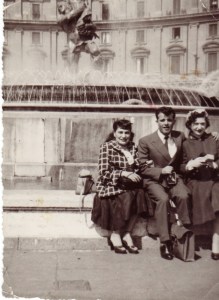
Left, my mother’s family getting together in East New York in Brooklyn. The little baby in the middle is me, and that’s Angie, my mom. On the right, my dad with my Aunt Kitty and my mother, Piazza della Rebubblica in Rome, in 1955.

Identity politics was creeping somewhere in here. To combat the stereotypes of Mafia dons, pizza makers and grandmas stirring spaghetti sauce for hours, magazines started to pop up with the aim of making being Italian something to be proud of. One was a glossy affair called Attenzione (“Attention”) and featured travel stories, profiles of people like Luciano Pavarotti, the onetime patron saint of PBS fundraising drives.

My trips as a teenager to Italy—mostly in Sicily, in and around Palermo—made me feel good about myself, at least culturally. I loved being there, all the pleasures that a teenage boy can enjoy under fairly close adult supervision. (My cousin Giorgio and I would wander around Palermo and when we got back our grandfather gave us a pretty good summary of our route. He had spies.) I didn’t have to run away from my heritage, like a lot of people of my mother’s generation did.

But I didn’t have to take it all if I didn’t want to. As a kid growing up and coming of age in New York in the 1970s, I realized that I could just take what I wanted from the Italian bit, and the American bit. A lot of writers talk about conflict and confusion; what I felt was a liberation. I could be a hippie/punk/whatever in one way, and enjoy what I wanted from my family background. I could learn to cook and play guitar. David Bowie and caponata, coexisting in my psyche, no problem.The one problem, and this is pretty common among us dual-identity types, is that sometimes you’re not entirely occupying either identity. It’s a virtue, if you’re a journalist, or, maybe, a spy. But I can see how some people mind find it unnerving.

And so that brings us—or at least me, my wife and kids—to Perugia now and the Umbrian countryside soon. The region and city are definitely Italian, but there’s an efficiency and civic spirit that is lacking in some other places. Part of it is history; we’re talking about an insular region of under a million. There never was any mass migration to the U.S. or Canada from Umbria. Most people stayed.

I think I’ve set the stage pretty well. Kathy (a/k/a The Spartan Woman) and I leave in a couple of weeks to check out the new place, armed with tape measures and a credit card for furniture. Somehow we’ve got to get the utilities hooked up in our name and get an all-important Internet connection. I’ll let you know how it goes.

Meet the (Adopted) Family

882614_10151311287242540_718505057_o.jpg

Here’s a shot of an extraordinary couple doing a normal thing. It’s the summer of 1996, and I’m with them having lunch in a little restaurant in the town of Norcia in Umbria. It takes about two hours to get there from Perugia, down a highway then up through the mountains on switchbacks and hairpin curves. Franco drove, I rode shotgun, while Giovanna sat across the back seat of her husband’s Mini, chain smoking most of the way.

I’d come calling on these two, my surrogate Umbrian parents, after spending an intense week with my real family, the extended Paonita clan, in Palermo. After a week with my parents, uncles, cousins, and grandmother, I needed a refuge, and these sweet people always provided one, whenever I was in Italy, whether alone or with my wife and kids.

I wouldn’t have known them except for Kathy’s yearlong stay in Perugia attending vet school. And without them, and their family, Kathy probably would have just returned to the States and we would’ve done touristy things, or stayed with my people in Sicily on our Italian vacations.

But Kathy, and then I, were sort of adopted by them. It’s a long story, but friends of Kathy jogged past their house on a hot day. Their daughter saw the two guys looking like death warmed over (they live on a hill. Wait, everyone lives on a hill in Perugia…) and gave them water. One thing led to another and soon Kathy was a regular at their dinner table and a regular passenger with Franco as he wandered the countryside reading electric meters and shopping for food in obscure shops that only insiders like himself knew.

They came to the U.S. and we showed them around New York, we’d drop in on them over the years. We got to know their big family, with brothers, sisters, nieces and nephews. Italians like to visit each other during the aperitivo hours, between 6 and 8 pm, and Giovanna’s kitchen and garden were where they met most of the time. They’d play cards, have a coffee or beer, gossip, tell jokes. Neighbors dropped in.

10548930_10152168846327540_6740030323691364915_oLeft, the guys pose on a chilly day in August 1983: me, Federico, Antonio (aka Toto), and Franco.

We’re not especially Catholic despite our upbringing, but we cemented the relationship when we baptized our younger daughter in their neighborhood church, the Tempietto di Sant’Angelo, an amazing Romanesque temple built in the fifth century on the site of a Roman structure, using the original columns.

After all these years, we feel, I don’t know, privileged to have been part of their lives. Perugians are friendly, but they’re also guarded, and it can take awhile to be part of their lives. Franco, Giovanna, and whole crew have opened their arms and their homes to us, and we now have a circle of friends that kept, and keep us coming back.

Time doesn’t stand still, so the cliché goes. Franco and Giovanna are gone now, taken away too soon. But Giovanna was part of a big family, the Santucci clan, and  down through the years we’ve grown close to her baby brother Antonio and his family. Antonio is my big Perugian brother. He inspected our place and told me to buy it. He doggedly chased down the evil gas company to get us a connection. He looks in on the place, tells me what to do when domestic disaster happens (a busted drain, electrical weirdness). And when I’m there by myself, his sweet wife Rita feeds me and once, when I was sick with the flu, checked in on me to make sure I was still alive.

There’s a newer generation, and they’ve become our pals. Rita and Antonio’s son Federico comes to New York every couple of years to run the marathon, and last year was no exception. He and their friends did an AirBnB in Brooklyn, but we got together one night for a raucous dinner at Ribalta, one of my favorite authentic pizzerias in New York. (Go there; it’s right near the Strand bookstore, which is an added bonus.) And Franco and Giovanna’s daughters are around our age; we’re growing old together. Simona lives nearby, and Franca is in Malaga, which means we have a winter escape.

IMG_1698Here, Toto inspects what eventually became our apartment in Perugia, with its own, real, actual gas main connection.